The gap between Vietnam's two tea worlds is vast. On one side sits tra da, the cheap iced tea served on plastic stools at street corners. On the other stands the formal tea ceremony, a practice tied to Buddhist temples, family altars, and national festivals. Both matter. Both tell you something real about how this country works.
This guide breaks down both worlds, explains where they overlap, and tells you exactly where to experience each one as a traveler in 2026.
Tra da: the everyday tea of the streets
Tra da translates literally as "iced tea." It is the default drink of Vietnam's urban working class, served at thousands of sidewalk stalls from 6 AM until midnight.
The tea itself is cheap green tea, brewed strong, then poured over ice into a glass. The cost: 5,000 to 10,000 VND ($0.20 to $0.40). Refills are often free or cost the same again. The glass comes with a metal lid or a plastic cover to keep out dust and motorbike exhaust.
What makes tra da culturally significant is not the tea. It is the social structure around it.
A tra da stall typically has a few low plastic stools, a small table or two, and a woman or older man running the operation. The customers are taxi drivers waiting for fares, construction workers on break, students killing time, retirees discussing politics, and friends catching up. Nobody rushes. A 5,000 VND glass can last two hours.
For travelers, tra da stalls serve as the most accessible window into everyday Vietnamese social life. The motorbike culture that dominates Vietnamese streets pauses at these stalls. People dismount, drink, talk, and resume.
The practical etiquette is simple. Sit on the small stool. Point at what others are drinking if you cannot read the menu. Pay when you leave. Do not expect a menu, because most stalls do not have one. Do not expect to be served quickly, because speed is not the point.
Where to find tra da:
| City | Neighborhood | What to expect |
|---|---|---|
| Hanoi | Old Quarter, especially around Hang Bac and Ta Hien | Dense clusters of stalls, mix of locals and backpackers |
| Hanoi | Truc Bach Lake area | More local crowd, quieter, better people-watching |
| Ho Chi Minh City | District 3, around Nguyen Thi Minh Khai | Classic Saigon street scene, heavy motorbike traffic |
| Ho Chi Minh City | District 4, near the river | Working-class vibe, very local, almost no tourists |
| Da Nang | My An area near the beach | Younger crowd, students, surfers |
| Hue | Around Dong Ba Market | Traditional atmosphere, older clientele |
The best time to experience tra da culture is late afternoon, between 3 PM and 6 PM. That is when the heat peaks and the stools fill up. The rainy season changes the rhythm. Stalls disappear under tarps or close entirely during downpours.
Pro tip: Tra da is brewed with tap water in most stalls. Foreign stomachs sometimes react badly. If you have a sensitive digestive system, stick to bottled water or order tra da at established restaurants rather than street stalls. The street food safety guide has more details.
The ceremonial side: lotus, jasmine, and the art of slow tea
The formal tea tradition in Vietnam traces back over a thousand years, influenced by Chinese tea culture but developing its own distinct character. The ceremony is slower, quieter, and far more deliberate than anything you will see on a street corner.
Vietnamese ceremonial tea typically uses one of three varieties:
Lotus tea (tra sen). The most prized. Green tea leaves are stuffed inside lotus flowers overnight, absorbing the flower's fragrance. The process repeats multiple times. The result is a subtle, floral tea that costs significantly more than standard green tea. The best lotus tea comes from the West Lake area of Hanoi, where lotus ponds still operate.
Jasmine tea (tra hoa nhai). More common and more affordable. Green tea scented with jasmine blossoms. Sweet, aromatic, and widely served at restaurants and weddings.
Artichoke tea (tra atiso). A specialty of Da Lat in the central highlands. Made from artichoke leaves and stems, it has a slightly bitter, earthy flavor. Served hot or cold, often as a digestive aid after heavy meals.
The ceremony itself involves multiple steps: warming the teapot and cups, rinsing the leaves, the first infusion (poured out immediately to "wake" the tea), then subsequent infusions served in small cups. Each infusion has a different strength and character. The host controls the pace.
This ritual appears in several contexts:
Temple offerings. Incense, flowers, and tea are the three standard offerings at Buddhist altars across Vietnam. The tea is left for the ancestors or deities, then replaced. Travelers visiting pagodas will see this constantly. Do not touch the offerings.
Family gatherings. During Tet and other holidays, the eldest family member serves tea to guests as a sign of respect. The first cup goes to the oldest person present.
Weddings and engagements. The tea ceremony is a fixed part of traditional Vietnamese weddings. The couple serves tea to both sets of parents, symbolizing gratitude and the joining of families.
Formal business meetings. Green tea is served in glass cups or small ceramic pots. Refusing the tea is considered rude. Drinking it slowly signals good faith.
Pro tip: When served ceremonial tea in a home or business setting, hold the cup with both hands. This is a sign of respect. The social etiquette guide covers this and other gestures in more detail.
Where the two worlds meet: tea in daily life
The street stall and the ceremony are not as separate as they seem. Most Vietnamese households own a small tea set, even in cramped city apartments. The same family that drinks tra da all day will bring out the ceramic pot and tiny cups when guests arrive.
Tea also appears in contexts that surprise first-time visitors:
Restaurants. Most local restaurants serve free green tea with your meal. It arrives in a plastic or metal teapot with small glasses. This is not a menu item. It is a standard amenity, like water in a Western restaurant. The dining etiquette guide explains how to handle this gracefully.
Barbershops and hair salons. Customers get tea while they wait. The barber pours, the customer drinks, and conversation flows.
Motorbike repair shops. Mechanics keep a thermos of hot tea and a few glasses on a stool. Customers waiting for repairs drink while they watch the work.
Markets. Food stalls at Vietnam's markets almost always have a kettle of tea boiling. Vendors offer it to regular customers as a gesture of friendship.
The unifying thread is hospitality. Tea in Vietnam is never just a beverage. It is a social lubricant, a sign of welcome, and a way to slow down time.
Where travelers can experience both worlds in 2026
Tra da like a local
The easiest approach: find a stall with plastic stools, sit down, and order. No special knowledge needed. The Hanoi to Hue itinerary passes through cities with excellent street tea scenes.
For a more structured experience, consider these options:
Hanoi's Tea Culture Space (Khong Gian Tra Viet). Located at 5A Nguyen Sieu Street in the old quarter. This small museum and teahouse offers guided tastings of Vietnamese teas, including lotus tea. Tastings run about 150,000 VND ($6) per person. The staff explains the history and ceremony in English.
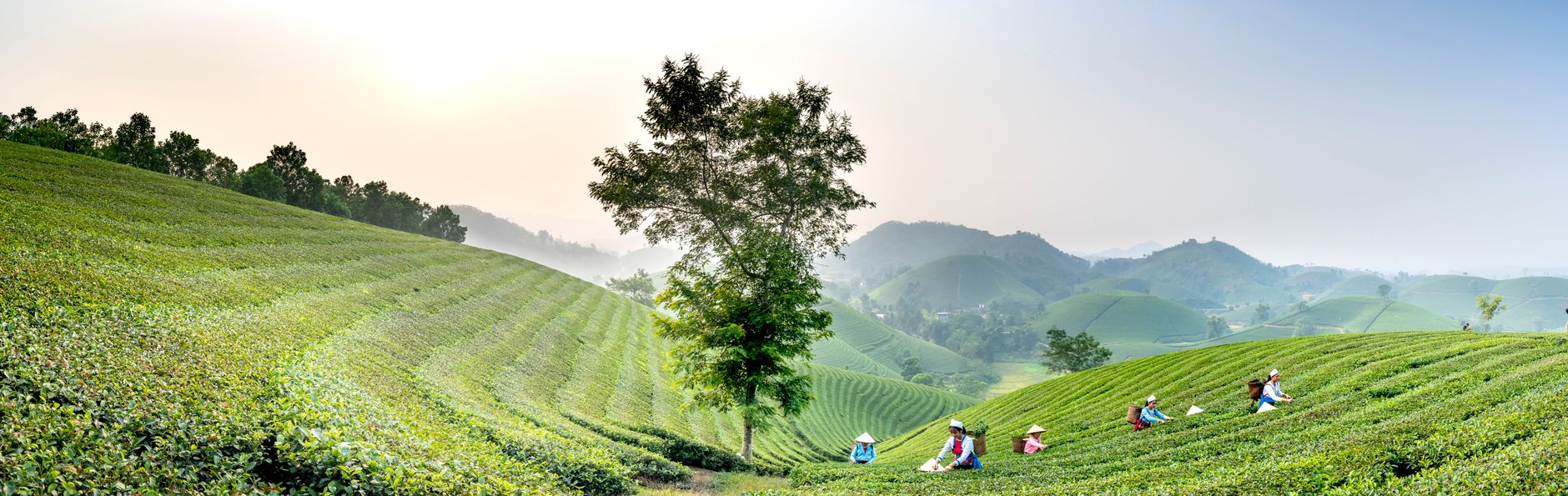
Thai Nguyen tea region. About 80 km north of Hanoi, Thai Nguyen province produces the green tea used in most tra da and ceremonial blends. The Tan Cuong village area has tea plantations you can walk through. Local farms offer tastings and sell directly to visitors. A day trip from Hanoi is feasible, though the Vietnam by train route does not stop in Thai Nguyen. A private car or bus is the practical option.
Da Lat artichoke tea farms. The central highlands city of Da Lat grows most of Vietnam's artichokes. Several farms offer tours and tastings. The central highlands route can be extended to include tea and coffee farm visits.
Ceremonial tea experiences
Temple visits. The most authentic ceremonial tea experiences happen during festivals. The Hung Kings Festival in Phu Tho province includes formal tea offerings. The Hue Festival features tea ceremonies as part of its cultural program.
Traditional teahouses. Hanoi has several traditional teahouses that serve ceremonial tea in a formal setting. Look for places near the Temple of Literature or in the old quarter. Expect to pay 100,000 to 200,000 VND ($4 to $8) per person for a proper service.
Cooking classes. Many cooking classes in Vietnam include a tea component. The better ones explain how tea pairs with Vietnamese food and demonstrate the ceremony.
Pro tip: Do not confuse Vietnamese tea culture with the elaborate Chinese gongfu tea ceremony. Vietnam has its own tradition, which is simpler and less theatrical. A Vietnamese tea ceremony rarely involves the multi-step pouring rituals you see in Chinese teahouses. It is quieter, more intimate, and tied to family and temple life rather than performance.
Tea and food: what to drink with what
Vietnamese cuisine pairs tea with food in ways that make sense once you understand the logic.
| Food type | Tea pairing | Why |
|---|---|---|
| Pho and noodle soups | Hot green tea | Cuts through the rich broth, cleanses the palate |
| Fried foods (banh xeo, cha gio) | Tra da (iced) | The cold temperature balances the oil |
| Grilled meats (bun cha, thit nuong) | Jasmine tea | The floral notes complement charred flavors |
| Seafood | Lotus tea | Light and subtle, does not overpower delicate fish |
| Sweet desserts | Artichoke tea | The bitterness balances the sugar |
| After a heavy meal | Artichoke or ginger tea | Aids digestion |
The regional cuisine guide notes that northern Vietnam prefers lighter, more aromatic teas while the south favors stronger brews. This mirrors the food: northern dishes are subtler, southern dishes are bolder.
Practical tips for tea drinkers in Vietnam
Buying tea as a souvenir. Thai Nguyen green tea and lotus tea are the two best options. Expect to pay 200,000 to 500,000 VND ($8 to $20) for 100 grams of decent quality. Avoid buying tea at tourist markets in the old quarter of Hanoi or Ben Thanh in Ho Chi Minh City. The quality is inconsistent and the prices are inflated. Instead, visit a specialty tea shop or buy directly from producers.
Tea and health. Vietnamese green tea is high in antioxidants. Locals drink it throughout the day for energy and digestion. The Vietnamese tropical fruit guide notes that tea is often served alongside fruit as a light meal.
Language basics. "Tra da" means iced tea. "Tra nong" means hot tea. "Tra sen" is lotus tea. "Tra atiso" is artichoke tea. Pointing at what someone else is drinking works perfectly well.
Timing. Tea stalls are busiest in the early morning (6 to 8 AM) and late afternoon (3 to 6 PM). If you want to observe local life, those are the hours.
The lunar calendar connection. The first day of each lunar month sees increased temple visits and tea offerings. If you happen to be near a pagoda on the first or fifteenth day of the lunar month, you will see more ceremonial tea activity than usual.
Tea beyond the cup: cultural significance
Tea in Vietnam carries weight beyond refreshment. It appears in proverbs, literature, and social codes.
"Nuoc" (water) is the Vietnamese word for both water and tea. The phrase "uong nuoc" (drink water/tea) is a standard invitation to socialize. "Nha co khach" (the house has guests) implies tea will be served.
The concept of face shapes tea etiquette. Pouring tea for someone older or higher in status is a mark of respect. Refusing tea can be interpreted as a slight. Accepting tea, even if you do not drink it, maintains harmony.
Tea also connects to Vietnamese spirituality. Buddhism and pagodas use tea in daily offerings. The H'Mong culture in the northern mountains grows its own tea varieties, often served during homestays. The Red Dao culture uses herbal teas in traditional medicine.
For travelers, the simplest way to engage with tea culture is to accept every cup offered. In a homestay in Mai Chau or Sapa, the host will offer tea within minutes of arrival. Accept it. Drink it slowly. Ask about it. This small gesture opens doors that no amount of sightseeing can.
FAQ
Q: Is tra da safe to drink? A: Tra da is brewed with tap water. Most locals drink it daily without issues, but foreign visitors with sensitive stomachs may react. If you want to be cautious, drink tra da at established restaurants rather than street stalls, or stick to bottled beverages.
Q: How much does tea cost in Vietnam? A: Tra da costs 5,000 to 10,000 VND ($0.20 to $0.40) per glass. Restaurant tea is usually free with a meal. Ceremonial tea experiences range from 100,000 to 300,000 VND ($4 to $12) per person.
Q: Can I visit a tea plantation in Vietnam? A: Yes. The most accessible options are Thai Nguyen province near Hanoi, Moc Chau in the northwest, and Bao Loc in the central highlands. Some plantations offer tours and tastings. The Mekong Delta itinerary does not include tea plantations, but the central highlands route does.
Q: What is the difference between Vietnamese and Chinese tea ceremonies? A: Chinese gongfu ceremonies are elaborate, multi-step performances with specialized equipment. Vietnamese ceremonies are simpler, quieter, and more tied to family and temple contexts. The focus is on hospitality rather than theatrical presentation.
Q: What tea should I buy as a souvenir? A: Thai Nguyen green tea and lotus tea are the best choices. Buy from specialty tea shops or directly from producers. Avoid tourist market stalls. Expect to pay 200,000 to 500,000 VND ($8 to $20) for 100 grams of good quality.
Q: Do Vietnamese people drink tea with meals? A: Yes. Most local restaurants serve free green tea with meals. It is considered a standard amenity. The tea helps cleanse the palate and aids digestion.
Q: Is tea culture different between north and south Vietnam? A: Northern Vietnam favors lighter, more aromatic teas like lotus and jasmine. Southern Vietnam prefers stronger brews. The serving style also differs slightly, with the north favoring ceramic pots and the south more often using glass.