Getting Around Vietnam — Transport Guide 2026
Vietnam has an impressive range of transport options — from budget overnight buses to scenic rail journeys and rock-bottom domestic flights. Knowing which to choose for each leg of your trip can save you hours and significant money. Here's the complete breakdown.
Domestic Flights — Fast and Often Cheap
Vietnam's domestic aviation network is excellent and surprisingly affordable when booked in advance.
Main carriers:
- VietJet Air — budget carrier, largest network, often cheapest
- Bamboo Airways — mid-range, slightly better legroom and reliability
- Vietnam Airlines — full service, slightly more expensive, better for checked baggage
Key routes and prices (if booked 2–3 weeks ahead):
- Hanoi ↔ Ho Chi Minh City: USD 35–80
- Hanoi ↔ Da Nang: USD 25–60
- Ho Chi Minh City ↔ Da Nang: USD 25–55
- Ho Chi Minh City ↔ Phu Quoc: USD 20–50
- Hanoi ↔ Phu Quoc: USD 45–90
Tips:
- Book on the airline websites directly (not OTAs) for best prices
- VietJet charges for checked bags — factor this in
- Last-minute fares can spike to 3–5× the advance price
- The Hanoi–HCMC corridor has flights every 30–60 minutes peak hours
Trains — The Scenic Choice
The Reunification Express (Tàu Thống Nhất) runs the full length of the country from Hanoi to Ho Chi Minh City (1,726 km) with multiple stops. It's slower than flying but far more atmospheric.
Classes available:
- Hard seat (ghế cứng): cheapest, uncomfortable for long distances
- Soft seat (ghế mềm): padded, reasonable for up to 6h
- Hard sleeper (giường nằm cứng): 6-berth compartments, adequate
- Soft sleeper (giường nằm mềm): 4-berth, most popular for overnight travel, USD 20–45
Best train segments:
- Hanoi → Hue (14h overnight): excellent soft sleeper option
- Da Nang → Hue (2.5h): arguably the most scenic coastal rail route in Southeast Asia
- Hanoi → Sapa (via Lao Cai, 8h overnight): the classic highland approach
Booking: Vietnam Railways website (dsvn.vn) or via 12go.asia. Book 1–2 weeks ahead for soft sleepers on popular routes.
Buses — Budget-Friendly Long Distance
Open bus (bus open / sinh cafe bus):
Tourist-oriented buses connecting major stops along the backpacker trail (Hanoi–Hue–Hoi An–Nha Trang–HCMC). Comfortable, air-conditioned, with luggage racks. Tickets sold as a flexible pass or individual legs. USD 10–20 per segment.
Sleeper buses (xe giường nằm):
Vietnam's night buses are unexpectedly comfortable — semi-flat reclinable pods, air-con, blanket provided. Ideal for overnight stretches like Hanoi–Hue (12h) or HCMC–Da Lat (7h). USD 8–18 per journey.
Limousine vans:
Newer option gaining popularity. 9-seat or 16-seat vans, door-to-door for some routes (especially popular for Da Nang ↔ Hoi An ↔ Hue corridor). Faster and more comfortable than standard buses. USD 10–20.
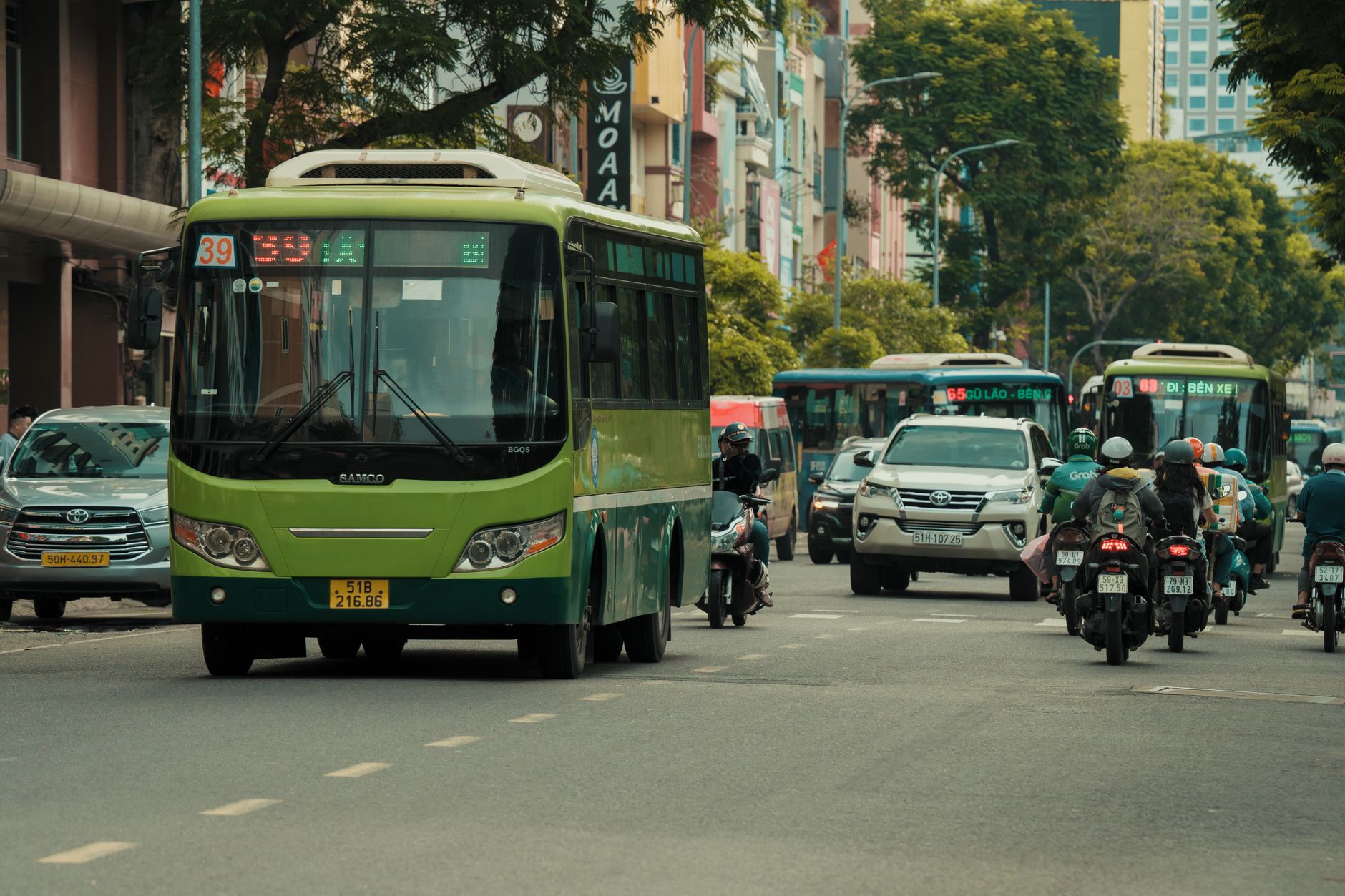
Local government buses:
Cheap (USD 1–5) but slower, crowded, and often don't have luggage space. Fine for short hops within a city or province.
Booking platforms: Baolau.com and Vexere.com for comprehensive listings with online booking.
Grab — The Essential App
Grab is the dominant ride-hailing app in Vietnam and is essential for any visitor. Available on iOS and Android, it covers all major cities and many secondary towns.
Services available:
- GrabCar: Air-conditioned car, metered by GPS — completely transparent pricing
- GrabBike: Motorbike taxi — fastest for urban traffic, cheapest option
- GrabFood: Food delivery (useful for accommodation without restaurant)
- GrabExpress: Package delivery
Why Grab over taxis:
Price is shown before you confirm, no negotiation, driver is rated, payment can be cash or card. Dramatically reduces the risk of taxi scams that plague major tourist areas.
Typical prices:
- Short city ride (3–5 km): USD 0.80–2
- Airport to city centre: USD 5–15 depending on distance
- GrabBike is 40–60% cheaper than GrabCar for the same route
Note: Grab requires a local SIM or a foreign number. Register before arriving if possible.
Motorbike — The Adventure Option
Riding a motorbike is one of the defining Vietnam travel experiences — and perfectly manageable if you have basic riding experience.
Rental options:
- Semi-automatic (xe số): Requires manual gear shifting, USD 5–10/day. More fuel-efficient, preferred by experienced riders
- Automatic (xe ga): No gears, USD 8–15/day. Easier for beginners
- Manual (xe côn): Full manual, USD 7–12/day. For experienced riders only
Long-distance motorbike routes:
- Ho Chi Minh Trail (Hanoi → HCMC inland route): 3–4 weeks, spectacular mountains and villages
- Hai Van Pass (Da Nang ↔ Hue): half-day loop, one of Vietnam's most scenic roads
- Ha Giang Loop (northern highland circuit): 3–4 days from Ha Giang town, jaw-dropping mountain scenery
Practicalities:
- International Driving Permit (IDP) with motorcycle endorsement is technically required. Enforcement varies.
- Wear a helmet at all times — it's the law and it's sensible
- Fuel stations (xăng) are everywhere, prices around VND 22,000–25,000/litre
- Insurance is basic; consider travel insurance with motorbike cover
- The Easy Rider guided motorbike tours (especially from Hue and Da Lat) are highly recommended for those without experience
Getting From Airports
Hanoi Noi Bai International Airport (HAN):
- Grab to Old Quarter: ~45 min, USD 10–15
- Official taxi (Noi Bai Taxi): similar price, metered
- Public bus 86: USD 0.50, 1h to the city — excellent value but infrequent
- Airport transfer shuttle: USD 3–5, runs to/from Hoan Kiem Lake area
Ho Chi Minh City Tan Son Nhat Airport (SGN):
- Grab to District 1: ~20–40 min (traffic dependent), USD 4–8
- Metered taxi (Vinasun): similar price
- Avoid unofficial taxi touts inside the terminal
- Metro line opening: Line 1 (Ben Thanh → Suoi Tien) opened 2024, extension to airport planned 2026
Da Nang International Airport (DAD):
- City centre is only 2–3 km away — Grab costs USD 2–4
- Hoi An is 30 km: Grab or private transfer USD 10–15
Phu Quoc Airport (PQC):
- Grab is limited here; arrange transfers through your hotel or use metered taxis
Frequently Asked Questions
What's the best way to travel from Hanoi to Ho Chi Minh City?
For most travellers, a domestic flight is the best option (1h55, from USD 35). The train is a great experience but takes 30–35 hours. Split the difference: fly one way, take the train on a shorter scenic segment.
Is it safe to rent a motorbike in Vietnam?
Safe with precautions. Vietnam traffic is intense, especially in cities. If you haven't ridden before, practice in a quiet area first. Avoid night riding in unfamiliar areas. Always wear a helmet.
Do I need a Vietnamese SIM for Grab?
You can register Grab with a foreign number, but a local SIM makes it much easier and is needed for the app to function seamlessly. SIM cards cost USD 3–8 at airports and convenience stores.
Are overnight buses comfortable?
Yes, surprisingly so. Vietnamese sleeper buses have individual reclining pods (not full flat), adequate padding, blankets, and air-con. Not as comfortable as a soft sleeper train, but great value for the price.
Can I take a bicycle around Vietnam?
Cycling long distance is popular. The coastal Highway 1 is rideable but heavy with traffic. The inland Ho Chi Minh Road is more scenic and quieter. Allow 6–8 weeks for Hanoi to HCMC by bicycle.
How do I get from Da Nang airport to Hoi An?
Grab is the easiest — fixed price around USD 10–15, 30–40 minutes. Alternatively, book a private transfer through your hotel. There is no direct public bus between Da Nang airport and Hoi An.