Vietnamese Food & Street Food Guide
Vietnamese cuisine is one of the world's great culinary traditions — fresh herbs, bold broths, rice and noodles in infinite combinations. From a steaming bowl of phở at dawn to a late-night bánh mì, eating in Vietnam is an adventure in itself. This guide covers the 20 dishes you can't miss, regional differences, street food safety, and the best drinks to try.
The Essentials: 20 Dishes to Try
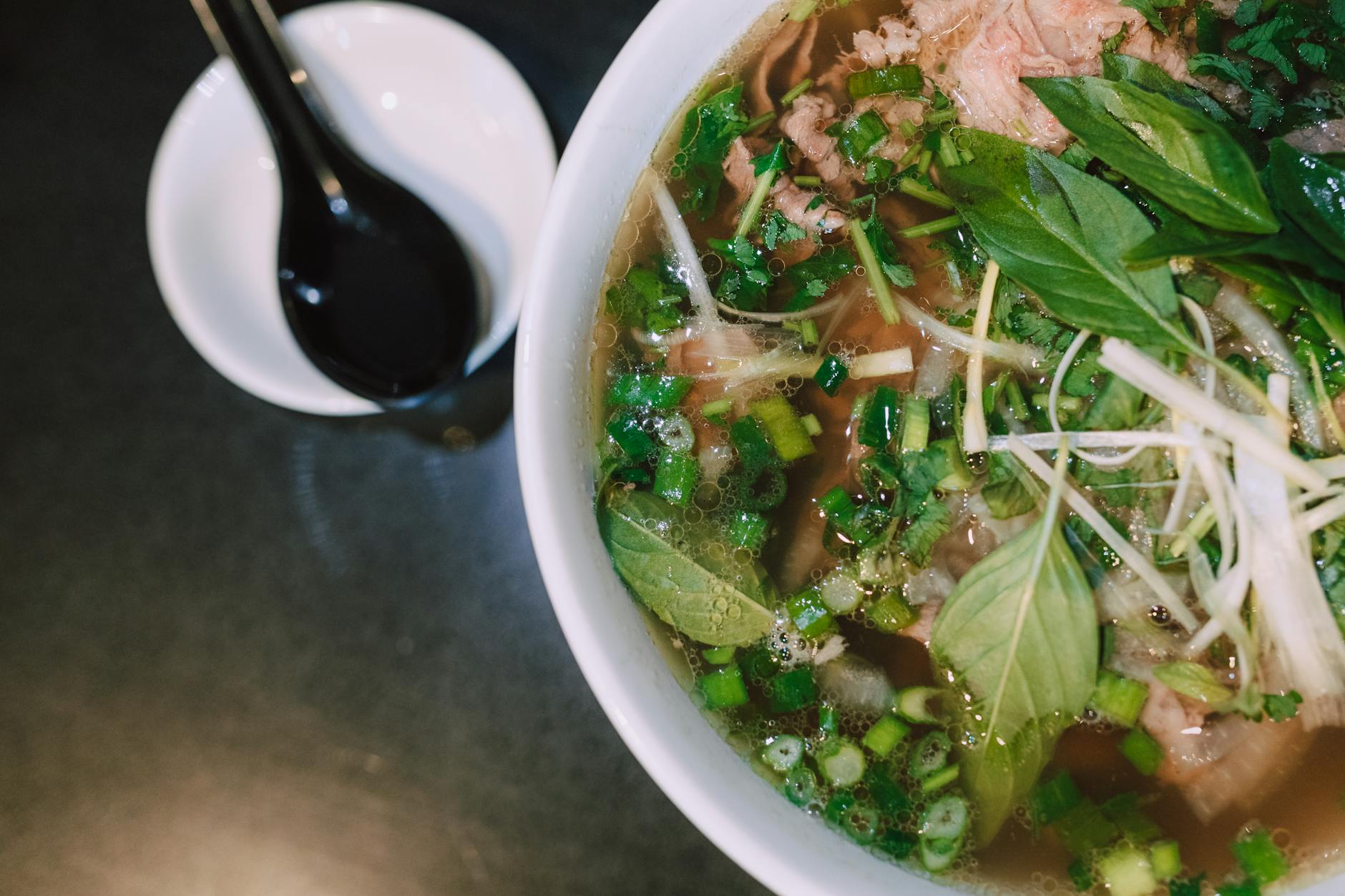
Phở — Vietnam's iconic noodle soup. The Hanoi version (phở bắc) uses a clear, delicate beef broth; the southern version (phở nam) is sweeter, served with a plate of fresh bean sprouts and herbs. Best eaten at breakfast.
Bánh mì — A baguette legacy of French colonialism, stuffed with pâté, charcuterie, pickled daikon, cucumber, coriander and chili. Costs 15 000–30 000 VND (under $1.50) almost everywhere.
Bún bò Huế — Spicy lemongrass beef noodle soup from Hue. Thicker noodles, a deep red chili oil broth, and pork knuckle. More complex than phở and criminally underrated outside Vietnam.
Gỏi cuốn — Fresh spring rolls wrapped in rice paper, filled with shrimp, pork, vermicelli and herbs. Served with hoisin-peanut dipping sauce. Light, refreshing, eaten year-round.
Bún chả — Grilled pork patties and slices over vermicelli noodles, dipped in a sweet-sour fish sauce broth with herbs. A Hanoi lunch staple (made famous by Obama and Bourdain).
Cơm tấm — Broken rice with grilled pork chop (sườn), shredded pork skin (bì), steamed egg meatloaf (chả), and a fried egg. Ho Chi Minh City's defining dish.
Bánh xèo — Sizzling Vietnamese crêpe made with turmeric-flavoured rice batter, filled with shrimp, pork and bean sprouts. Wrap in lettuce leaves and dip in nước chấm.
Cao lầu — A Hoi An exclusive: thick noodles with pork and greens, dressed (not souped) with a dark soy-based sauce. The noodles are made with water from a specific ancient well — you can only eat the real version in Hoi An.
Mì Quảng — Central Vietnamese noodle dish from Da Nang: wide turmeric noodles with pork, shrimp, peanuts, sesame crackers and a small amount of broth. Toppings are the point.
Chả cá Lã Vọng — Hanoi's famous turmeric-marinated catfish, pan-fried tableside with dill and spring onion, served over noodles. Worth the splurge for the experience.
Bánh cuốn — Steamed rice rolls filled with seasoned pork and wood-ear mushroom, topped with fried shallots and served with diluted fish sauce. A northern breakfast dish.
Lẩu — Vietnamese hot pot, served in countless variations: seafood, beef, goat, mushroom. A communal meal — order with a group.
Nem cuốn / Chả giò — Fried spring rolls (chả giò in the south, nem rán in the north). Crispy exterior, pork and glass noodle filling, served with lettuce wraps and dipping sauce.
Bún thịt nướng — Cold noodle bowl with grilled pork, pickled vegetables, peanuts and fish sauce. A southern favourite, served at room temperature — perfect for hot days.
Bánh bao — Steamed buns filled with pork, egg, and mushroom. Sold from street carts in the morning, often as breakfast on the go.
Súp lươn — Eel soup from Nghe An province, flavoured with turmeric and ginger. A regional specialty worth seeking out if you're travelling the central coast.
Cháo — Vietnamese rice porridge (congee), typically with chicken or pork. Gentle, warming, and the go-to dish when you're under the weather.
Thịt kho tàu — Caramelised braised pork belly and eggs in coconut water — a Tet (Lunar New Year) classic, but available in southern home-cooking restaurants year-round.
Gà nướng mật ong — Honey-glazed grilled chicken, common at sidewalk barbecue stalls in the evening. Eaten with rice or baguette.
Chè — Vietnamese sweet soups and desserts: mung bean, coconut, tapioca, lotus seed. Served hot or cold, from street carts and dedicated chè shops.
Regional Food Differences
Vietnamese cuisine splits broadly into three regional styles:
Northern cuisine (Hanoi, Sapa, Ha Long) — Subtler, less sweet, lower on chili. The emphasis is on balance and the quality of broths. Phở originated here and remains its spiritual home. Expect more fermented flavours (mắm tôm, fermented shrimp paste) and dishes dressed with fresh herbs rather than heavy sauces.
Central cuisine (Hue, Da Nang, Hoi An) — The spiciest region. Hue's royal court cuisine brought an emphasis on presentation and complex, multi-dish meals. Bún bò Huế, mì Quảng, bánh xèo, cao lầu — some of Vietnam's most distinctive dishes come from this corridor. The central coast also offers some of the country's best seafood.
Southern cuisine (Ho Chi Minh City, Mekong Delta) — Sweeter and bolder than the north. Coconut milk, palm sugar and a heavier hand with garlic and chili feature across dishes. Greater influence from Khmer and Chinese communities adds diversity. Cơm tấm, hủ tiếu and bún thịt nướng are southern staples. Fresh tropical fruit is abundant year-round.
Street Food: Where, When and How
The best Vietnamese food is almost never in a restaurant. It's on plastic stools at knee-high tables on the pavement, served by vendors who have cooked one dish for 20 or 30 years.
Best times to eat street food:
- 5–8 AM — Breakfast: phở, bún bò Huế, bánh mì, bánh cuốn, xôi (sticky rice)
- 11 AM–1 PM — Lunch: cơm tấm, bún thịt nướng, rice plates
- 5–10 PM — Evening: grilled meats, bánh xèo, lẩu, chè desserts
How to find the best stalls:
1. Follow the crowds — A stall with 10 locals eating is always better than an empty one with an English menu and photos.
2. Specialisation is a good sign — If a vendor only makes one thing, they've been making it for years.
3. Watch the turnover — Busy stalls have fresh ingredients rotating constantly.
4. Markets and wet markets — Ben Thanh (HCMC), Dong Xuan (Hanoi) and local wet markets are reliable clusters of street food.
Useful phrases:
- *Cho tôi một tô/đĩa* — Give me one bowl/plate
- *Không cay* — Not spicy
- *Thêm rau* — More herbs/greens
- *Bao nhiêu tiền?* — How much?
Food Safety and Hygiene
Street food in Vietnam is generally safe when you follow a few principles:
Green flags:
- High turnover (food cooked to order or constantly replenished)
- The vendor eats there themselves
- Broth kept at a rolling boil
- Fresh vegetables washed in clean water
- Plastic cups with lids, or bottles
Red flags:
- Pre-cooked meat left at room temperature for hours
- Flies on uncovered food
- Ice from dirty buckets (ask for đá sạch — clean ice — or skip ice altogether in low-end stalls)
Water and drinks:
Tap water is not safe to drink anywhere in Vietnam. Always drink bottled or boiled water. In quality restaurants and hotels, tap water is filtered. Ice in reputable establishments is made from purified water (the cylindrical ice with a hole is industrial/clean; crushed ice in bags at street stalls is a risk).
Shellfish caution:
Raw or undercooked shellfish (oysters, clams) from street stalls, particularly in hot months (Apr–Sep), carry a higher risk of gastroenteritis. Cooked shellfish in busy seafood restaurants is generally fine.
Vietnamese Drinks
Cà phê sữa đá — Iced coffee with sweetened condensed milk, brewed through a slow-drip metal filter (phin). Extraordinarily strong, sweet, and caffeinated. Vietnam is the world's second-largest coffee producer. Robusta-heavy, distinctly different from Italian espresso.
Bạc xỉu — A milder southern iced coffee: more milk, less coffee. Essentially Vietnamese iced latte.
Trà đá — Iced green tea, served free (or for a few thousand VND) at almost every local restaurant. Refreshing and ubiquitous.
Nước mía — Fresh sugarcane juice, pressed to order at street carts. Watch for the extractor machine with a green stalk being fed through it. About 10 000 VND a glass, served over ice.
Sinh tố — Fresh fruit smoothies. Mango, avocado (bơ), dragon fruit, jackfruit — blended with condensed milk or yoghurt. Thick and sweet.
Bia hơi — Draft fresh beer, brewed daily in small local breweries. Almost zero alcohol content (2–4%), sold by the glass for 5 000–10 000 VND. Best experienced at a bia hơi junction (ngã tư bia hơi) where dozens of stalls compete on the same crossroads.
Rượu đế — Rice wine, the traditional Vietnamese spirit. Clear, strong (40–45% ABV), and very much an acquired taste. Often infused with herbs or snakes (rượu thuốc/rượu rắn) in rural areas.
Trà atiso — Artichoke tea, popular in Da Lat. Mildly sweet, slightly bitter, said to aid digestion. Available hot or cold.
Food Markets and Cooking Classes
Top food markets:
- Bến Thành Market, Ho Chi Minh City — Tourist-heavy but convenient, with a good wet market section in the morning and food stalls around the perimeter in the evening
- Chợ Đồng Xuân, Hanoi — Hanoi's largest covered market; the food section in the early morning is excellent for local street food
- Hội An Central Market — Covers both the wet market and a well-organised food section. Best at 6–8 AM for bánh mì, cao lầu and chè
- Bến Tre floating market (Mekong Delta) — Seasonal; worth combining with a Mekong day trip
Cooking classes are one of the best travel experiences in Vietnam. Most run a morning market tour followed by hands-on cooking of 3–5 dishes.
Top-rated options:
- Hanoi: Highway4 Cooking Class, Hanoi Cooking Centre
- Hoi An: Red Bridge Cooking School (includes a boat ride to the school), Morning Glory
- Ho Chi Minh City: Saigon Cooking Class, Vietnam Cookery Center
Expect to pay $25–$60 USD per person for a half-day class including market visit and lunch.
Frequently Asked Questions
Is Vietnamese street food safe to eat?
Yes, for the most part. High-turnover stalls with freshly cooked food are safe. Avoid pre-cooked meat left at room temperature, raw shellfish in summer, and tap water. Stomach upsets do happen, especially in the first few days as your gut adjusts — carry oral rehydration salts.
Is Vietnamese food suitable for vegetarians and vegans?
It can be challenging. Most Vietnamese dishes contain fish sauce (nước mắm) or shrimp paste. However, Buddhist vegetarian (ăn chay) restaurants exist throughout Vietnam — look for the word 'chay' on signs. Da Lat and Hoi An have the most vegan-friendly options. Tofu (đậu phụ), vegetables and rice are always available as fallbacks.
How spicy is Vietnamese food?
It varies by region. The north (Hanoi) is mild; the centre (Hue, Da Nang) is the spiciest; the south (HCMC) is sweet rather than hot. Fresh chili and chili sauce are always served on the side — you control the heat. Say 'không cay' (not spicy) if you're sensitive.
What does a meal cost in Vietnam?
Street food and local restaurants: 30 000–80 000 VND ($1.20–$3.20) per dish. Mid-range restaurants: 100 000–300 000 VND ($4–$12) per person. Fine dining: 500 000 VND+ ($20+). Bottled water: 5 000–10 000 VND. Bia hơi beer: 5 000–10 000 VND per glass.
What is nước chấm and is it in everything?
Nước chấm is the ubiquitous Vietnamese dipping sauce: fish sauce, lime juice, sugar, garlic and chili. It accompanies fresh spring rolls, grilled meats, bánh xèo, and dozens of other dishes. It is not in everything — phở and soups use their own seasoning — but it's on nearly every table.
Can I find international food in Vietnam?
Yes, especially in Ho Chi Minh City and Hanoi. You'll find pizza, burgers, Japanese, Korean, Indian and French restaurants in the main tourist and expat districts. Hoi An has a particularly good range. In smaller cities and rural areas, local Vietnamese food is essentially your only option.