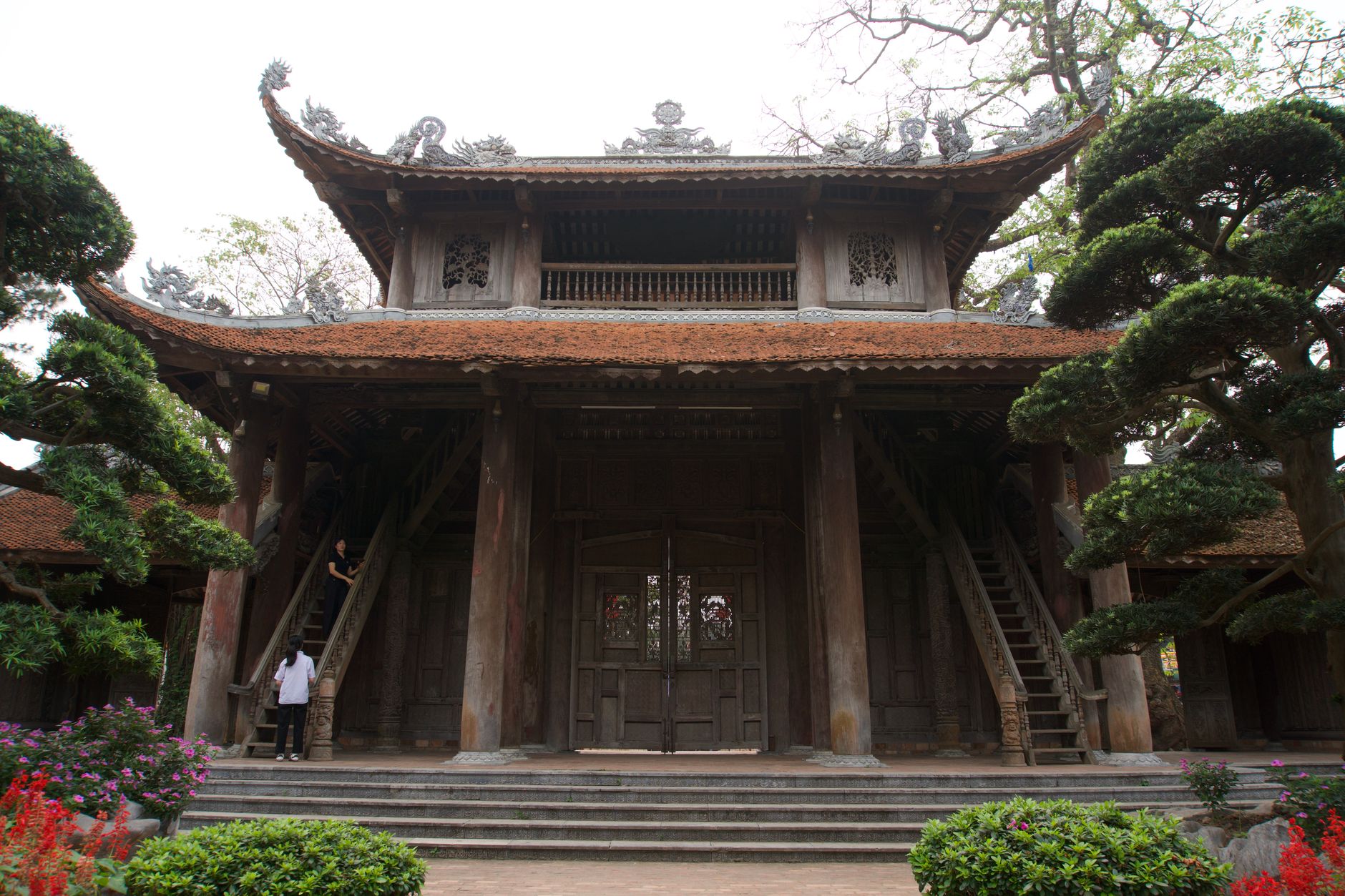
What the Hung Kings Festival actually is (and what it is not)
The festival honors the 18 Hung Kings, the legendary founders of Vietnam. According to myth, the dragon lord Lac Long Quan married the fairy Au Co. She gave birth to a sac containing 100 eggs. Those eggs hatched into 100 sons, the ancestors of the Vietnamese people. The eldest son became the first Hung King and founded the kingdom of Van Lang in present-day Phu Tho province.
Historians debate whether the Hung Kings were real figures or later inventions. The first written records mentioning them date from the 14th century, roughly 3,000 years after their supposed reign. What is not debated is the cultural weight of the tradition. In 2012, UNESCO recognized the Hung Kings worship as an Intangible Cultural Heritage of Humanity. The festival is a national holiday. Schools close. Government offices shut down. Millions of Vietnamese make the pilgrimage to Den Hung, the temple complex on Nghia Linh Mountain.
The festival is not a tourist spectacle. It is a religious event with deep personal meaning for Vietnamese people. Foreign visitors are welcome, but the atmosphere is reverent, not commercial. There are no souvenir stalls lining the main paths. The focus is on incense, prayer, and ancestral remembrance.
When to go: exact dates for the next edition and why timing matters
The festival runs from the 8th to the 11th day of the third lunar month. The main ceremony falls on the 10th day. Here are the Gregorian dates for the next three editions:
| Year | Festival dates | Main ceremony | Day of week |
|---|---|---|---|
| 2027 | April 14-17 | April 16 | Friday |
| 2028 | April 2-5 | April 4 | Tuesday |
| 2029 | April 21-24 | April 23 | Monday |
The 2026 edition is already over. Plan for April 2027 onward.
The main ceremony day draws 500,000 to 1 million visitors. The mountain paths become densely packed. Queues for incense offering can exceed one hour. Travelers who dislike crowds should visit on the day before (April 15 in 2027) or the day after (April 17). The rituals are less elaborate on these days, but you can still see the temple complex, watch Xoan singing performances, and participate in folk games without the crushing crowds.
Warning: If you arrive on the main ceremony day, expect traffic jams starting at 6:00 AM on National Highway 2. The journey from Hanoi, normally 90 minutes, can stretch to 4 hours.
The Den Hung temple complex: a practical walkthrough
The temple complex climbs Nghia Linh Mountain in three main sections. Each temple has a specific purpose and a different elevation.
Ha Temple (Lower Temple) sits at the foot of the mountain. According to legend, this is where Au Co gave birth to the 100 eggs. The temple is a simple structure with a tiled roof and an altar. Most visitors stop here briefly before beginning the climb.
From Ha Temple, you climb 225 stone steps to reach Trung Temple (Middle Temple) . This is where the Hung Kings held court and discussed state affairs. The temple contains a bronze drum replica and several altars. The climb takes about 10 minutes at a moderate pace. There are benches along the way for rest stops.
From Trung Temple, another 180 steps lead to Thuong Temple (Upper Temple) . This is the most sacred spot. According to legend, the 18th Hung King prayed here for rain during a drought. The temple sits at the highest point of the complex, offering views over the Red River Delta. The incense offering ceremony takes place here on the main festival day.
Practical notes:
- Total steps from bottom to top: approximately 405.
- Fitness level required: moderate. The climb is steep in sections but manageable for most healthy adults.
- Shade availability: limited. The path is exposed to direct sun for most of the climb.
- Restroom access: public toilets are available at the base of the mountain and near Trung Temple. They are basic and can be crowded during the festival.
- Time required: 45 minutes to 1 hour for the climb, plus 30 minutes at each temple for a thorough visit.
Which rituals travelers can actually attend
Not all rituals are open to the public. The following table breaks down accessibility:
| Ritual | Time | Location | Public access | Best viewing spot |
|---|---|---|---|---|
| Incense offering ceremony | 7:00 AM, main day | Thuong Temple | Yes, with queue | Stand behind the main altar area |
| Grand procession | 6:30 AM, main day | From foot of mountain to Thuong Temple | Yes, along the route | Near Ha Temple for early procession |
| Nam Giao ritual | 9:00 AM, main day | Open area near Ha Temple | Limited, behind barriers | Elevated area near the main stage |
| Ancestral council ceremony | 5:00 AM, main day | Trung Temple | No | Not accessible |
| Official government offering | 8:00 AM, main day | Thuong Temple | Viewing only from distance | Lower steps of Thuong Temple |
The incense offering ceremony is the most accessible ritual. Visitors line up to offer incense sticks at the altar. You do not need to be Vietnamese to participate. Simply follow the flow of the crowd, bow respectfully, and place your incense in the urn. Avoid taking photos during the actual offering. Wait until you have stepped back.
The Nam Giao ritual is a traditional earth worship ceremony. Government officials and local elders perform it in elaborate costumes. Foreign visitors can watch from behind barriers. The ceremony lasts about 30 minutes.
The grand procession is the most visually striking event. Participants carry palanquins containing statues of the Hung Kings from the foot of the mountain to the Upper Temple. The procession includes musicians, dancers, and local dignitaries in traditional costumes.
The procession: what happens and where to watch
The procession begins at 6:30 AM on the main festival day. Participants gather at the foot of Nghia Linh Mountain. They carry eight palanquins, each decorated with silk and gold leaf. The palanquins contain incense burners, offerings of rice cakes and fruits, and small statues of the Hung Kings.
The procession moves slowly up the stone steps. Musicians play bronze drums and gongs. Dancers in colorful costumes perform traditional movements. Local elders walk at the front, carrying incense and praying.
Best vantage points:
- Near Ha Temple at 6:00 AM for the start of the procession.
- At the midpoint of the steps between Ha and Trung temples for procession photos.
- Near Thuong Temple for the final arrival, but arrive by 7:30 AM as space is limited.
Pro tip: Security barriers line the procession route. Arrive by 5:30 AM to secure a spot near the front. Bring a small stool or mat to sit on while you wait.
Xoan singing and other UNESCO-recognized performances
Xoan singing is a Phu Tho tradition recognized by UNESCO alongside the Hung Kings worship. The performances take place at designated stages within the temple complex. The music features female singers in traditional ao dai costumes, accompanied by drums and bamboo flutes. The songs tell stories of the Hung Kings and the founding of Vietnam.
Where to find Xoan performances:
- Main stage near Ha Temple: performances from 9:00 AM to 11:00 AM and 2:00 PM to 4:00 PM on all festival days.
- Smaller stages near Trung Temple: less crowded but shorter performances.
The performances are free and open to everyone. No tickets required. Seating is on wooden benches or the ground. Arrive 15 minutes early for a good spot.
Bronze drum performances and water puppet shows also take place during the festival. Check the schedule board at the entrance of the complex for specific times.
Folk games and competitions: what travelers can join
Traditional games take place in the open areas around the temple complex. The following games are active during the festival:
Wrestling: Matches take place on a sand pit near Ha Temple. Competitors wear traditional loincloths and oil their bodies. Foreign visitors can watch but cannot participate. Matches run from 10:00 AM to 4:00 PM.
Bamboo swinging: A long bamboo pole is suspended between two frames. Participants stand on the pole and swing back and forth. This game welcomes foreign participation. Staff will show you how to balance.
Rice cooking contests: Teams compete to cook sticky rice over an open fire using traditional methods. This is a spectator event. The cooked rice is offered to the Hung Kings after the competition.
Human chess: Live chess games where participants dress as chess pieces and move on a large board. This takes place near Trung Temple. Foreign visitors can watch and take photos.
Dragon boat racing: Races take place on the Lo River, about 3 kilometers from the temple complex. Teams of 20 rowers compete in long boats decorated with dragon heads. Spectators watch from the riverbank. The races run from 1:00 PM to 4:00 PM on the main festival day.
How to get there from Hanoi (every option compared)
| Mode | Normal duration | Festival duration | Cost (VND/USD) | Safety level | Best for |
|---|---|---|---|---|---|
| Bus from My Dinh station | 2 hours | 3-4 hours | 80,000-120,000 ($3.50-$5) | High | Budget travelers |
| Train to Phu Tho town | 2.5 hours | 2.5 hours | 100,000-200,000 ($4-$8.50) | High | Crowd-averse travelers |
| Private car hire | 1.5 hours | 3-4 hours | 1,500,000-2,500,000 ($65-$110) | High | Groups of 3-4 |
| Motorbike | 2 hours | 3-4 hours | 200,000-300,000 ($8.50-$13) for gas | Medium | Experienced riders |
| Organized group transport | 2 hours | 3-4 hours | 500,000-800,000 ($22-$35) | High | Solo travelers |
Bus from My Dinh station: Buses to Viet Tri City depart every 30 minutes from 5:00 AM to 6:00 PM. Buy your ticket at the station counter. The bus drops you at Viet Tri bus station, 15 kilometers from the temple complex. Take a local taxi or xe om (motorbike taxi) for the final leg. Cost: 50,000-80,000 VND ($2-$3.50).
Train to Phu Tho town: Trains depart from Hanoi station. The journey takes 2.5 hours and is not affected by festival traffic. Phu Tho town is 20 kilometers from the temple complex. Local buses run from the train station to the temple. Cost: 15,000-30,000 VND ($0.65-$1.30).
Private car hire: Book through a reputable company in Hanoi. The driver will wait for you at the temple complex and drive you back. This is the most comfortable option but also the most expensive.
Motorbike: Only recommended for experienced riders. The route follows National Highway 2, which is busy and poorly lit in sections. Wear a helmet and bring a rain jacket.
Warning: Do not drive a motorbike home after dark during the festival. Traffic congestion and limited street lighting make the return journey dangerous.
Where to stay: accommodation near the temple complex
Viet Tri City, 15 kilometers from the temple complex, offers the closest accommodation. Booking is essential. Rooms sell out 2-3 months in advance for the festival period.
Hotels in Viet Tri City:
- Saigon Viet Tri Hotel: 3-star, 800,000-1,200,000 VND ($35-$52) per night. Clean rooms, reliable hot water, restaurant on site.
- Muong Thanh Hotel: 4-star, 1,500,000-2,500,000 VND ($65-$110) per night. Higher standard, pool, breakfast included.
- Local guesthouses: 300,000-500,000 VND ($13-$22) per night. Basic but clean. No English spoken.
Homestays in surrounding villages:
- Homestay options are limited but growing. Expect basic facilities, shared bathrooms, and family-style meals. Prices: 200,000-400,000 VND ($8.50-$17) per night including breakfast.
If you must stay in Hanoi: The commute each day is possible but exhausting. Leave Hanoi by 5:00 AM to avoid the worst traffic. Return after 5:00 PM when the main crowds have dispersed. Total travel time: 6-8 hours round trip.
What to eat during the festival (beyond banh chung)
The festival has specific symbolic foods. These are traditionally offered to the Hung Kings and then eaten by pilgrims.
Banh chung: A square sticky rice cake filled with pork and mung beans, wrapped in dong leaves. The square shape represents the earth. Cost: 20,000-40,000 VND ($0.85-$1.70) per piece.
Banh giay: A round sticky rice cake made from glutinous rice. The round shape represents the sky. Cost: 10,000-20,000 VND ($0.40-$0.85) per piece.
Hue wine: A local rice wine served in small ceramic bottles. Cost: 50,000-100,000 VND ($2-$4) per bottle.
Where to find these foods:
- Food stalls line the road from the parking area to the temple entrance.
- Local families set up small tables offering homemade banh chung and banh giay.
- Restaurants in Viet Tri City serve festival specialties during the week.
Street food options:
- Grilled pork skewers: 10,000-20,000 VND ($0.40-$0.85).
- Fresh spring rolls: 15,000-30,000 VND ($0.65-$1.30).
- Sugarcane juice: 10,000-15,000 VND ($0.40-$0.65).
Food safety note: Stick to cooked foods and bottled water. Avoid raw vegetables and ice from unknown sources. The heat and crowds increase the risk of foodborne illness.
Practical tips for international visitors
Dress code: Cover shoulders and knees inside the temple complex. Remove shoes before entering temple buildings. No hats inside temples.
Weather: April temperatures average 28°C with 80% humidity. Rain is possible. Bring a light rain jacket or umbrella.
What to bring:
- 1.5 liters of water per person
- Sunscreen (SPF 30+)
- Hat with brim
- Comfortable walking shoes with grip
- Cash (VND) in small denominations
- Portable phone charger
- Small towel for sweat
ATMs: ATMs are scarce near the temple complex. The closest bank branches are in Viet Tri City. Withdraw cash before leaving Hanoi.
Photography: Photography is allowed inside temples but not during active ceremonies. Do not use flash. Do not take photos of people praying without their permission.
Pickpocketing: The festival attracts pickpockets. Keep your wallet and phone in a front pocket or a zipped bag. Do not leave bags unattended.
Is the festival worth the trip? An honest assessment
Who will love it:
- Culture enthusiasts interested in Vietnamese mythology and religious practice.
- Photographers looking for dramatic processions, colorful costumes, and large crowds.
- History buffs wanting to understand the foundational myths of Vietnam.
- Travelers who enjoy immersive cultural experiences and don't mind crowds.
Who should skip it:
- Crowd-averse travelers who find large gatherings stressful.
- Families with young children who cannot handle the heat, stairs, and waiting.
- Anyone with mobility issues. The stone steps are steep and uneven.
- Travelers on a tight schedule. The festival requires a full day commitment.
Alternative option: If the main festival feels overwhelming, visit a smaller local temple during the same week. Many villages in Phu Tho province hold their own Hung Kings worship ceremonies. These are less crowded and more intimate. Ask at your hotel for recommendations.
The Hung Kings Festival is not a polished tourist attraction. It is a raw, crowded, and deeply meaningful religious event. For travelers who prepare properly, it offers a rare window into Vietnam's cultural soul. For everyone else, the practical challenges may outweigh the rewards. Decide based on your tolerance for crowds and your interest in Vietnamese tradition.
FAQ
Q: What is the history of the Hung King festival? A: The festival honors the 18 Hung Kings who, according to legend, ruled Vietnam from 2879 BC to 258 BC. The tradition of commemorating them on the 10th day of the third lunar month dates back centuries and was formalized as a national holiday. In 2012, UNESCO recognized the Hung Kings worship as an Intangible Cultural Heritage of Humanity.
Q: What do people do in the Hung King festival? A: Activities include incense offering ceremonies at the temple complex, a grand procession carrying palanquins up Nghia Linh Mountain, Xoan singing performances, traditional games like wrestling and rice cooking contests, and dragon boat races on the Lo River. Families also offer banh chung and banh giay at local temples.
Q: What is the Vietnamese creation myth? A: According to legend, the dragon lord Lac Long Quan married the fairy Au Co, who gave birth to a sac containing 100 eggs. These hatched into 100 sons, the ancestors of the Vietnamese people. The eldest son became the first Hung King and founded the kingdom of Van Lang in present-day Phu Tho province.
Q: What are the hung kings in Vietnam? A: The Hung Kings are the legendary founders and rulers of Vietnam's first state, Van Lang, believed to have reigned for 18 generations from approximately 2879 BC to 258 BC. They are revered as national ancestors, and their worship is a central element of Vietnamese cultural identity.
Q: Is the Hung Kings Festival crowded? A: Extremely. The main day attracts 500,000 to 1 million visitors to the Den Hung complex. Queues for incense offering can exceed one hour, and the mountain paths become densely packed. Travelers who dislike crowds should visit on the day before or after the main ceremony.
Q: Can foreigners attend the Hung Kings Festival? A: Yes, the festival is open to everyone. Foreign visitors are welcome at all public rituals, performances, and games. Modest dress and respectful behavior are expected inside temple areas.
Q: How long does it take to reach Den Hung from Hanoi? A: Normally 90 minutes to 2 hours by car or bus. During the festival, the journey can take 3 to 4 hours due to traffic congestion on National Highway 2 and near the temple complex.
Q: What should I wear to the Hung Kings Festival? A: Modest clothing that covers shoulders and knees is required inside the temple complex. Comfortable walking shoes are essential due to the many stone steps. A hat, sunscreen, and water are recommended as April weather is hot and humid.