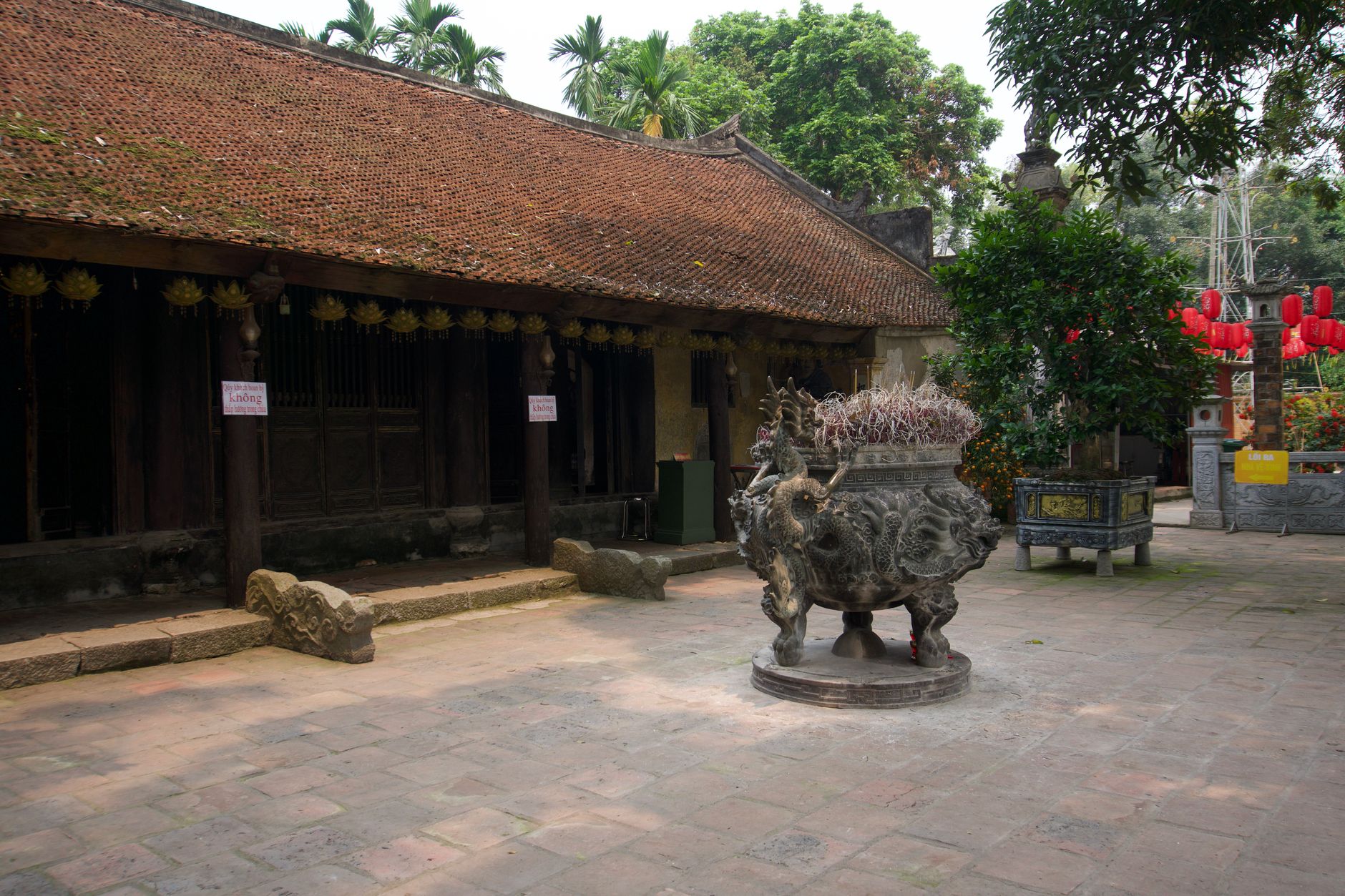
Ancestor worship is not religion in the Western sense. It has no holy book, no clergy, and no weekly service. It is a practice, a set of daily and annual rituals that connect the living with the dead. For travelers, understanding this practice unlocks a deeper layer of Vietnamese culture. It explains why families gather on specific lunar dates, why food is placed on altars, and why certain behaviors in homes and temples are strictly observed.
This guide covers the household altar, the death anniversary ritual, and the etiquette travelers need when visiting Vietnamese homes or sacred spaces.
The household altar: where the living meet the dead
The ancestor altar is the first thing placed in a new home. Before furniture, before appliances, before the television. The altar occupies the most honored position in the house, usually the central wall of the main room, facing the entrance. It is placed at eye level or higher, never below waist height, because the ancestors are considered present and watching.
The standard setup follows a pattern. A wooden table or shelf holds a brass incense burner (bát hương) in the center. Two candle holders flank it. A small bowl for offerings sits in front. Fresh flowers, usually marigolds or lilies, go on one side. A glass of water or small cup of tea on the other. Many families add a framed photograph of the deceased, sometimes several generations of them.
The altar is not decorative. It is functional. Every morning, someone in the family lights a stick of incense, places it in the burner, and sometimes offers fresh fruit or a cup of tea. This takes less than a minute. But it is done daily, without exception, in most traditional households.
The incense burner itself is significant. Once placed on the altar, it is never moved or cleaned out. The accumulated ash represents the accumulated presence of the ancestors. Moving the burner is believed to disturb the spirits. When a family moves house, the burner is carried carefully to the new home, often by the eldest male, and placed on the new altar first.
In southern Vietnam, altars often include a small statue of the Earth God (Ông Địa) or the God of Wealth (Thần Tài), placed on the floor below the main altar. This is a regional difference. Northern altars tend to be simpler, focused solely on ancestors. Central Vietnamese altars, especially in Hue, can be elaborate, reflecting the imperial history of the region.
What goes on the altar: offerings and their meanings
Offerings follow a logic. The dead are believed to need the same things as the living: food, drink, money, and comfort. But the offerings are symbolic, not literal.
Fresh fruit is the most common daily offering. Bananas, pomelos, oranges, and dragon fruit are typical. The fruit should be fresh, not bruised or overripe. Wilted or spoiled fruit is disrespectful, as it suggests neglect.
Incense is essential. The rising smoke carries prayers and intentions to the spirit world. The number of sticks matters. Odd numbers are used for ancestors: one, three, or five. Even numbers are reserved for other purposes, often associated with funeral rites. Three sticks are most common on the family altar, representing heaven, earth, and the ancestor.
Betel leaves and areca nuts appear on altars during important ceremonies. These are traditional symbols of hospitality and respect in Vietnamese culture. Their presence on the altar signals that the ancestors are being welcomed as honored guests.
Paper offerings, called vàng mã, are burned during ceremonies, not placed on the altar. These are paper replicas of money, clothing, houses, cars, and even smartphones. The belief is that burning releases these items to the spirit world. You will see the smoke and charred remains of these offerings on sidewalks and in front of homes during festivals and death anniversaries.
Food offerings vary by occasion. Daily offerings might be just fruit and water. On death anniversaries and Tet, the altar is laden with cooked dishes. The food is placed on the altar for a specific period, usually about 15 to 30 minutes, allowing the ancestors to "consume" the spiritual essence. Afterward, the family eats the food. It is not wasted.
The death anniversary: ngày giỗ
The most important ritual in ancestor worship is the death anniversary, called ngày giỗ. This is not the birthday of the deceased. It is the anniversary of their death, calculated according to the lunar calendar. For this reason, the date shifts on the Western solar calendar each year.
The death anniversary is a family obligation. Adult children are expected to attend, often traveling long distances. In Vietnam, the phrase "ngày giỗ" carries weight. Missing it without a valid reason is considered a serious lapse in filial duty.
Preparations begin days in advance. The family cleans the house thoroughly. The altar is wiped down, fresh flowers are arranged, and new offerings are prepared. The cooking is elaborate. The deceased's favorite dishes are prepared, along with traditional ceremonial foods. Sticky rice (xôi), boiled chicken (gà luộc), and pork dishes are common. In the north, bánh chưng, the square sticky rice cake associated with Tet, often appears. In the south, bánh tét, the cylindrical version, is more typical.
On the day itself, the family gathers. The eldest son or the family patriarch leads the ceremony. He lights the incense, offers prayers, and invites the ancestors to join the family meal. Other family members take turns bowing before the altar, three times, with hands pressed together at chest level.
The food is left on the altar for a set period. Meanwhile, paper offerings are burned outside, often in a dedicated metal container or on the ground. The smoke carries the material goods to the spirit world.
After the offering period, the family shares the meal. This is not a somber occasion. It is a reunion. Relatives catch up, children play, and stories about the deceased are shared. The atmosphere is warm and familial, not mournful. The death anniversary is about honoring the dead by keeping the family connected.
Some families hold a smaller ritual on the 49th day after death, and another on the 100th day. The first death anniversary (giỗ đầu) is the most significant. After three years, the deceased is considered fully integrated into the ancestral lineage, and the annual giỗ becomes a regular family event.
Temple etiquette: how to behave in sacred spaces
Travelers will encounter ancestor worship beyond private homes. Temples, pagodas, and communal houses (đình) all contain altars dedicated to ancestors, local deities, and historical figures. Knowing how to behave in these spaces is essential.
Dress modestly. Cover shoulders and knees. This applies to all genders. Many temples provide loaner clothing at the entrance if you arrive in shorts or a tank top. Some of the larger temples in Hanoi and Ho Chi Minh City have strict dress codes at the main halls.
Remove shoes before entering the main sanctuary. This rule is not universal, but it is common. Look for a shoe rack or a pile of shoes at the entrance. If you see shoes outside, take yours off too. Socks are fine to keep on.
Enter through the main gate, not the side doors. The central entrance is for everyone, but avoid walking directly through the center of the main hall. Walk along the sides instead. The center is reserved for the main altar and for monks or ritual officiants.
Do not point your feet at any altar. In Vietnamese culture, the feet are considered the lowest and dirtiest part of the body. Sitting with your feet pointing toward an altar is deeply disrespectful. Sit with your legs crossed or tucked to the side. If you are kneeling, which is common during prayers, keep your feet tucked under you.
Lighting incense follows a protocol. In most temples, you will find bundles of incense sticks available, often free or for a small donation. Light the stick from a candle or lighter, not from another person's incense. Fan the flame out with your hand, do not blow on it. Then hold the stick with both hands, bow three times, and place it in the incense burner.
Photography is often restricted inside the main halls. Flash photography is almost always prohibited. When in doubt, put the camera away. Some temples allow photos in courtyards and gardens but not inside the sanctuary. Respect the signs. This connects to broader photography etiquette in Vietnam, where asking permission is always the safest approach.
Visiting a Vietnamese home: what to do and what to avoid
If you are invited into a Vietnamese home, you are being given a privilege. Family spaces are private, and the altar is the most sacred part of that space. Here is how to behave.
Remove your shoes at the door. This is standard practice in most Vietnamese homes, regardless of whether an altar is present. You will see a pile of shoes at the entrance. Add yours to it.
Greet the elders first. When entering, acknowledge the oldest person in the room before anyone else. A slight bow or nod of the head, combined with a greeting like "Chào ông" (for an older man) or "Chào bà" (for an older woman), shows respect. This aligns with broader Vietnamese greetings and social etiquette.
Do not touch the altar. Never move items on it, adjust the incense burner, or handle the offerings. If you are curious, ask questions from a distance. Most families will happily explain their altar and its history. Touching it without permission is a violation.
Do not sit or stand with your back to the altar. This is considered turning your back on the ancestors. Position yourself so the altar is visible, ideally on the same side of the room as your hosts.
Accept offerings of food or drink. If you are offered tea, fruit, or a meal, accept it. Refusing can be seen as rejecting the family's hospitality. Even a small sip of tea is better than a flat refusal.
Ask before taking photos. Some families are proud of their altar and happy to show it. Others consider it private. Always ask first. If the answer is no, respect it without pushing.
When you leave, thank the elders again. A simple "Cảm ơn" (thank you) directed at the oldest person present closes the visit properly.
Regional differences in ancestor worship
Ancestor worship is practiced across Vietnam, but the details vary by region. Understanding these differences helps travelers interpret what they see.
In the north, the practice is more formal and tied to Confucian values. The altar is typically placed high, and the rituals are conducted with precision. The death anniversary in the north involves more elaborate food offerings and stricter adherence to protocol. The Hung Kings Festival, held on the 10th day of the third lunar month, is the ultimate expression of this: a national death anniversary for the legendary founders of Vietnam.
In central Vietnam, especially around Hue, ancestor worship carries imperial echoes. The Nguyen dynasty emperors are themselves ancestors, and their tombs and temples in the Hue area are sites of ongoing ritual. Family altars in this region often include more photographs and more elaborate carvings.
In the south, the practice is more practical and blended with other beliefs. The Earth God and God of Wealth statues on the floor below the altar are a southern feature. The offerings are often simpler, and the rituals are less rigid. The Mekong Delta, with its history of frontier settlement, has a more flexible approach to ancestor worship.
Ethnic minority communities have their own traditions. The H'Mong and Red Dao peoples in the northern mountains practice forms of ancestor veneration that differ significantly from the Kinh majority. Their altars may be simpler, placed on the floor or in a corner, and the rituals involve different offerings and timing. If you stay in a homestay in Sapa or Ha Giang, ask your host about their specific traditions.
Ancestor worship during Tet and other festivals
Tet, the Lunar New Year, is when ancestor worship reaches its peak. The altar is cleaned and decorated with special offerings. A tray of five fruits (mâm ngũ quả) is arranged, each fruit carrying symbolic meaning. The kitchen god, Táo Quân, is sent off to report to the heavens on the 23rd day of the 12th lunar month. On New Year's Eve, families welcome the ancestors back for a three-day visit.
During Tet, the altar is laden with food. Bánh chưng, boiled chicken, pickled onions, and candied fruits are standard. The family eats meals together with the ancestors present in spirit. After Tet, the offerings are removed and the altar returns to its daily routine.
Other festivals also involve ancestor worship. The Mid-Autumn Festival includes offerings to ancestors alongside the moon cakes and lanterns. The full moon days of each lunar month, called rằm, see families lighting incense at home altars and visiting temples.
During the Hung Kings Festival, the entire nation honors its mythical founders. The main rituals take place at the Hung Kings Temple in Phu Tho province, north of Hanoi. If you are in Vietnam during this festival, you will see the scale of ancestor worship applied to a national level.
How travelers can observe respectfully
You do not need to participate in ancestor worship to appreciate it. Observation is fine, as long as it is respectful.
In homes, ask questions. Vietnamese people are generally happy to explain their traditions to interested visitors. The concept of face means that showing genuine interest is seen as a compliment, not an intrusion.
In temples, follow the lead of locals. Watch how they light incense, bow, and move through the space. Mimic their behavior. If you are unsure, stand back and observe rather than rushing forward.
Buying incense and offering it at a temple is acceptable for visitors. The monks or attendants will guide you if needed. This is not appropriation. It is participation in a shared cultural practice, and it is generally welcomed.
Do not take anything from an altar. Do not touch the offerings. Do not move the incense burner. These actions are not just rude. They are believed to disturb the spirits.
When photographing altars, ask permission first. This applies in homes and temples. The photography etiquette guide covers this in detail. A quick question and a smile are usually enough.
Common questions travelers ask about ancestor worship
Q: Can I visit a temple during ancestor worship rituals?
Yes. Temples are open to the public during rituals. The key is to observe quietly, avoid blocking the path of worshippers, and follow the dress code. If a ceremony is in progress, stand at the side and watch. Do not walk through the middle of the ritual space.
Q: Is it offensive to light incense at a temple if I am not Vietnamese?
No. Lighting incense is a gesture of respect, and it is generally appreciated. The monks or temple attendants will show you where to place the incense. What matters is your intent. If you light incense to show respect, that is understood.
Q: What should I bring if invited to a Vietnamese home with an altar?
A small gift is appropriate. Fruit, tea, or sweets are all good choices. Flowers are also acceptable, though avoid white flowers, which are associated with funerals. The gift is for the family, not the altar. Hand it to the host with both hands.
Q: Can I take photos of a family altar?
Ask first. Some families are happy to show their altar and allow photos. Others are not. Respect the answer either way. If you are given permission, do not use flash and do not touch anything on the altar.
Q: What happens if I accidentally touch an altar or its items?
Apologize sincerely. A simple "Xin lỗi" (I am sorry) goes a long way. In most cases, the family will understand that it was a mistake. Do not make a fuss or try to fix anything. Just step back and let the family handle it.
Q: Are there any days when ancestor worship is more intense?
Yes. Tet, the full moon days (rằm), the first day of each lunar month (mùng một), and death anniversaries are the main times. If you are traveling during Tet Nguyen Dan, expect to see heightened ritual activity in homes and temples.
Q: Is ancestor worship a religion?
No. It is a cultural practice that predates and coexists with Buddhism, Taoism, and Confucianism. Many Vietnamese who identify as Buddhist, Catholic, or non-religious still practice ancestor worship. It is a family obligation and a cultural identity marker, not a faith system with doctrines.
Practical notes for your trip
If you want to see ancestor worship in action, time your visit around the first or fifteenth day of the lunar month. Temples across Vietnam will have more incense, more worshippers, and more visible ritual activity. The lunar calendar guide explains how these dates shift on the Western calendar.
In Hanoi, the Ngoc Son Temple and the Temple of Literature are good places to observe respectful worship practices. In Hue, the imperial tombs and the Thien Mu Pagoda offer insight into royal ancestor worship. In Ho Chi Minh City, the Jade Emperor Pagoda and the Emperor of Jade Pagoda are active sites. The Buddhism and pagodas guide provides more detail on what to expect.
If you stay in a homestay, ask your host about their family altar. Most will be pleased to explain the photographs, the offerings, and the rituals. This is one of the best ways to understand ancestor worship beyond the tourist trail. The H'Mong homestay guide and the Red Dao homestay guide cover ethnic minority variations.
Ancestor worship is not a performance for tourists. It is a living practice, conducted daily by millions of Vietnamese families. Approach it with the same respect you would want for your own family traditions. Observe, ask questions, and follow the lead of your hosts. That is all that is asked of you.