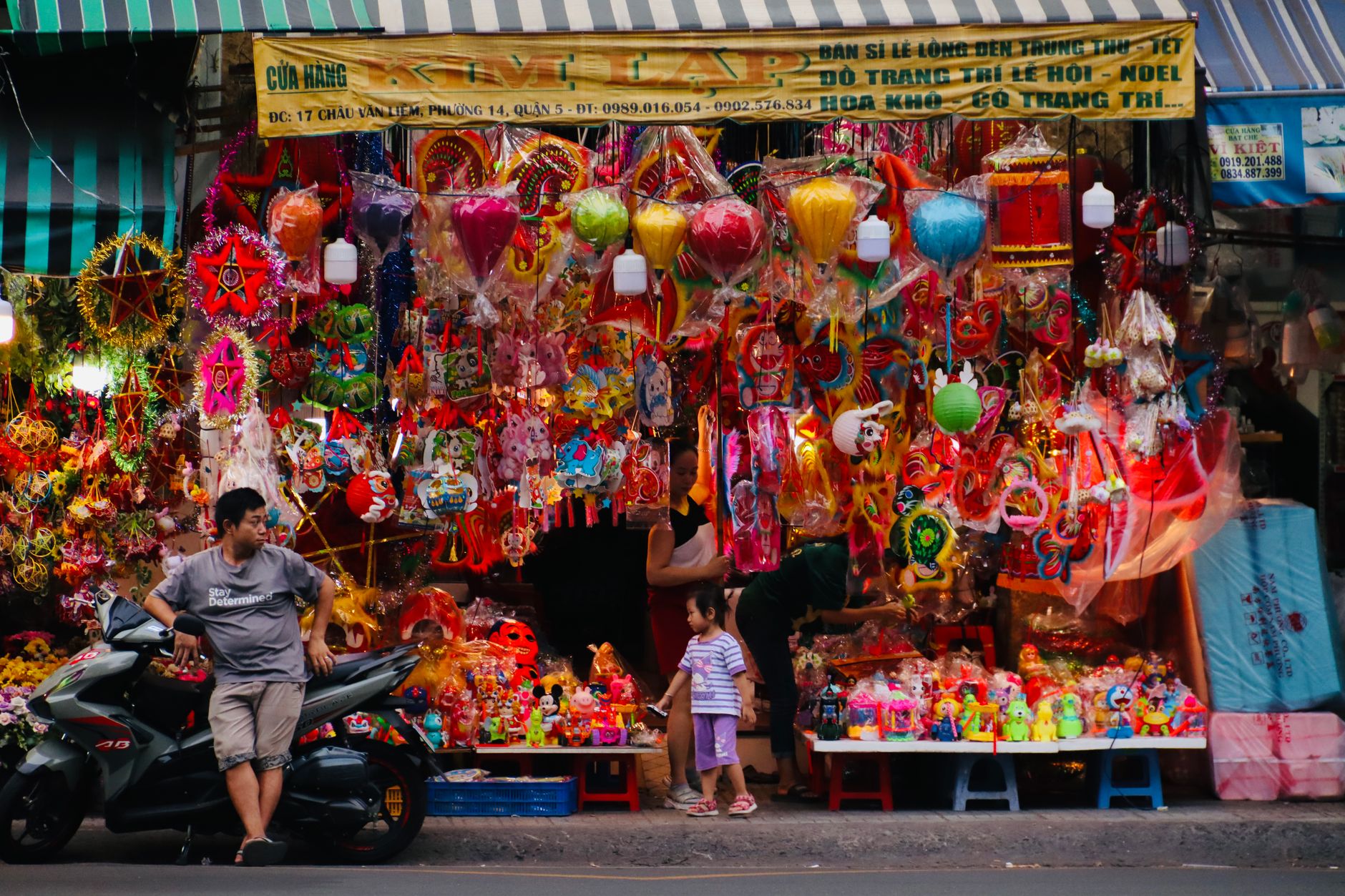
What is Tet Trung Thu and why does it matter for travelers
Tet Trung Thu is Vietnam's Children's Festival. Unlike Lunar New Year (Tet), which involves weeks of travel chaos and business closures, the Mid-Autumn Festival is a single evening of celebration. Families gather for dinner, children parade with lanterns, lion dance troupes perform on street corners, and everyone eats mooncakes.
The festival falls on the 15th day of the 8th lunar month, when the moon is at its fullest and brightest. In Vietnamese folklore, this is the night when the Moon Goddess Chi Hang Nga descends to earth, and the man on the moon Chu Cuoi tries to return home. Children light lanterns to guide Cuoi back, which is why lantern parades are the festival's central activity.
For travelers, Tet Trung Thu offers a rare window into Vietnamese family life. The celebrations are public, accessible, and do not disrupt travel. Hotels remain open, buses run on schedule, and restaurants serve dinner as usual. You can attend the festival without rearranging your entire itinerary.
When is the Mid-Autumn Festival in Vietnam (2026 and beyond)
The festival date shifts each year because it follows the lunar calendar. Here are the exact dates for 2025 through 2028.
| Year | Lunar date | Gregorian date | Day of week |
|---|---|---|---|
| 2025 | 15th day, 8th month | October 6 | Monday |
| 2026 | 15th day, 8th month | September 26 | Saturday |
| 2027 | 15th day, 8th month | September 15 | Wednesday |
| 2028 | 15th day, 8th month | October 3 | Tuesday |
In 2026, the main celebration happens on Saturday, September 26. Most activity occurs on the evening of the full moon itself, but cities typically extend celebrations for 3 to 7 days around this date. Hoi An runs events from the 12th to the 15th lunar day (September 23-26). Lantern streets in Hanoi and Ho Chi Minh City stay decorated for two to three weeks before the festival.
The two Vietnamese legends you need to know
Understanding the folklore makes the lantern parades more meaningful.
Chu Cuoi (the man on the moon). According to legend, Cuoi discovered a magical banyan tree that could heal any illness. He saved a dying woman, but she accidentally uprooted the tree. The tree floated upward, and Cuoi grabbed its roots. He has been stuck on the moon ever since. Children light lanterns on Trung Thu night to guide him back to earth.
Chi Hang Nga (the Moon Goddess). Hang Nga is a celestial being who descends from the moon during the festival. She represents beauty, harmony, and family reunion. Her presence explains why families place offerings of fruit and mooncakes on home altars during the celebration.
These stories are not abstract myths. They shape the festival's visual language. Star-shaped lanterns represent Cuoi's guiding light. Carp lanterns symbolize perseverance. The five-fruit tray on family altars is an offering to Hang Nga and the ancestors.
What actually happens during Tet Trung Thu
Lantern processions
The lantern parade is the festival's main public event. Children walk through streets and alleys carrying lanterns of different shapes and colors. The traditional star lantern (den ong sao) is the most common, but you will also see carp, butterfly, and rabbit designs.
In tourist-friendly cities like Hoi An, you can buy a lantern from street vendors for 15,000-50,000 VND (USD 0.60-2.00) and join the parade. Walking with the crowd is welcomed. Stand on the sidelines if you prefer to watch.
Pro tip: Buy your lantern before dusk. Prices double after the parade starts.
Mooncakes (banh trung thu)
Mooncakes are the festival's essential food. They are dense, sweet pastries filled with various ingredients. Two main types exist.
| Type | Texture | Common fillings | Price range (VND) | Price range (USD) | Where to buy |
|---|---|---|---|---|---|
| Banh nuong (baked) | Firm, golden crust | Lotus seed paste, salted egg yolk, mung bean, mixed nuts | 50,000-200,000 | 2.00-8.00 | Bakeries, department stores, street stalls |
| Banh deo (sticky) | Soft, chewy, white crust | Mung bean paste, pandan, coconut, durian | 40,000-150,000 | 1.60-6.00 | Bakeries, street stalls |
| Premium gift boxes | Baked or sticky | Bird's nest, abalone, ginseng, truffle | 300,000-500,000 | 12.00-20.00 | Kinh Do, Bibica, high-end hotels |
First-time visitors should start with traditional banh nuong filled with lotus seed paste and one salted egg yolk. Avoid durian or savory meat fillings unless you know you like them. Mooncakes are dense and rich. One cake serves two to three people.
Mooncakes are also given as gifts. If a Vietnamese colleague or host offers you one, accept it with both hands. You can offer mooncakes in return, but it is not required.
Lion dances (mua lan)
Lion dance troupes perform on streets, outside shops, and in public squares. The performance involves drumming, cymbal clashes, and acrobatic movements. A performer dressed as Ong Dia (the Earth God) leads the lion, fanning it with a palm leaf and mimicking comedic gestures.
Some troupes perform at businesses to bring good luck. Shop owners give them a red envelope (li xi) containing money. If you watch a performance at a shop, do not assume you need to pay. If a troupe performs specifically for your group, 50,000-100,000 VND (USD 2.00-4.00) is appropriate.
Warning: Stay at least three meters from the lion. Performers swing heavy drumsticks and move unpredictably. Do not let children approach without supervision.
The five-fruit tray and ancestor worship
Families place a tray of five fruits on their home altar as an offering. The fruits vary by region but typically include pomelo, banana, persimmon, grapefruit, and custard apple. Each fruit carries symbolic meaning: round fruits represent family unity, sweet fruits represent good fortune.
This is private family worship, not a public spectacle. Do not photograph home altars without permission. If you are invited to a Vietnamese home during the festival, accept the invitation. It is a genuine gesture of hospitality.
Best cities to experience Tet Trung Thu as a traveler
Hoi An (the top choice)
Hoi An is the best place for the Mid-Autumn Festival. The Ancient Town's year-round lantern culture makes it a natural setting. The city runs a four-day celebration from the 12th to the 15th lunar day (September 23-26 in 2026). Streets in the Old Town become pedestrian-only from 6 PM to 10 PM. The Hoai River fills with floating lanterns.
The downside is extreme crowding. Hoi An's Old Town becomes dangerously packed on the main night. Arrive before 5 PM if you want a good spot. Book accommodation at least two months in advance.
Hanoi
Hanoi's celebrations center on the Old Quarter. Hang Ma Street transforms into a lantern market for three weeks before the festival. On the main night, Hoan Kiem Lake's walking street fills with families and performers. The Youth Theatre hosts children's shows with traditional music and dance.
Hanoi's festival is more local and less tourist-oriented than Hoi An's. Fewer English signs, less crowd management, but more authentic atmosphere.
Ho Chi Minh City (District 5 / Cho Lon)
Saigon's Chinatown hosts the city's best celebrations. Luong Nhu Hoc Street (known locally as Lantern Street) and Nguyen Trai Street fill with decorations and performers. The Chinese-Vietnamese community contributes larger lion dance troupes and more elaborate lantern displays.
Cho Lon offers less tourist crowding than Hoi An. The downside is that the festival is spread across several blocks rather than concentrated in one pedestrian zone.
Nha Trang
Nha Trang holds family-friendly events at the city square and along the beachfront. The atmosphere is relaxed. Crowds are smaller than Hoi An or Hanoi. The trade-off is less visual spectacle.
Da Nang
Da Nang's fire-breathing dragon bridge show runs on weekends, which in 2026 includes the festival date (September 26 is a Saturday). The Son Tra night market holds special events. Da Nang is also a short drive from Hoi An, making it a practical base if you want to visit the main festival during the day and sleep in a quieter city at night.
| City | Crowd level | Best viewing spot | Unique feature | Accommodation booking advice |
|---|---|---|---|---|
| Hoi An | Extreme | Japanese Covered Bridge area | Pedestrian-only Old Town, lantern floating | Book 2+ months ahead |
| Hanoi | Heavy | Hoan Kiem Lake walking street | Hang Ma lantern market (3 weeks) | Book 1 month ahead |
| Ho Chi Minh City (Cho Lon) | Moderate | Luong Nhu Hoc Street | Chinese-Vietnamese lion dances | Book 2 weeks ahead |
| Nha Trang | Light | City square, beachfront | Relaxed family atmosphere | No special booking needed |
| Da Nang | Moderate | Son Tra night market | Proximity to Hoi An | Book 1 month ahead |
What to expect in smaller towns and rural areas
Rural celebrations are more intimate. Village temples host lantern-making workshops. Children carry homemade lanterns instead of store-bought ones. The music is traditional, not amplified. Crowds are small.
If you are staying in a homestay, ask your host if the family celebrates. Many rural families welcome guests to join their dinner and lantern parade. Bring a small gift: mooncakes, fruit, or a lantern for the children.
English is less common in rural areas. Download a translation app before you go.
Practical tips for attending the festival
How to navigate the crowds
Arrive before 5 PM in Hoi An. After that, the Old Town becomes difficult to enter. Use Grab or a taxi to reach the edge of the pedestrian zone, then walk.
In Hanoi and Ho Chi Minh City, avoid driving into festival areas. Park outside and walk in.
Pickpocketing happens in crowded festival areas. Keep your phone in a front pocket or zipped bag. Do not carry your wallet in a back pocket.
What to wear and bring
September and October in Vietnam are hot. Average temperatures range from 28-32°C (82-90°F) in central and southern cities. Wear light, breathable clothing. Bring comfortable walking shoes. You will stand for several hours.
Pack insect repellent. Mosquitoes are active in the evening, especially near water.
Bring a small flashlight. Some streets in Hoi An and Hanoi are poorly lit.
Warning: Do not wear expensive jewelry or watches in crowded festival areas.
Photography etiquette
Photograph lantern processions, lion dances, and street decorations freely. These are public events.
Do not photograph family altars, home ceremonies, or temple rituals without permission. If you want to photograph children in the parade, ask the parents first. A smile and a nod usually works.
Safety considerations
Paper lanterns with candles are fire hazards. Keep your lantern away from your hair and clothing. Do not let children hold candles unattended.
Traffic becomes chaotic in festival areas. Drivers ignore pedestrian zones. Look both ways before crossing, even on pedestrian-only streets.
Street mooncakes are generally safe, but check for visible mold. Avoid mooncakes that have been displayed in direct sunlight for hours. Be cautious with fillings containing fresh egg or meat if you have a sensitive stomach. Packaged mooncakes from bakeries are safer than loose ones from street stalls.
Heat exhaustion is a real risk. Drink water throughout the evening. Take breaks in air-conditioned shops or cafes.
What to do if you miss the main night
Many cities hold celebrations on the weekend closest to the full moon. In 2026, the festival falls on Saturday, so this is not necessary. But if you arrive a day late, check local event listings. Some neighborhoods extend their parades.
Lantern streets stay decorated for two to three weeks before the festival. Hanoi's Hang Ma Street and Ho Chi Minh City's Luong Nhu Hoc Street are worth visiting even if the main night has passed.
Mooncakes are available for purchase three to four weeks before the festival. Bakeries sell them until the mooncake season ends, usually one week after the full moon.
Is Tet Trung Thu worth planning a trip around?
Yes for cultural travelers and families. No for travelers on tight schedules who cannot afford flexibility.
The festival is not a once-in-a-lifetime spectacle like Lunar New Year. It does not have the scale of Songkran in Thailand or Diwali in India. But it offers a genuine, accessible cultural experience without the travel disruptions of Tet.
If you are in Vietnam during September, adjust your itinerary to spend the festival date in Hoi An or Hanoi. If you are planning a trip specifically for the festival, book accommodation early and prepare for crowds. The reward is an evening of lanterns, music, and family celebration that most tourists never see.
FAQ
Q: Where is the best place to celebrate Mid-Autumn Festival in Vietnam?
A: Hoi An is widely considered the best for its pedestrian-friendly Ancient Town, lantern floating tradition, and four-day celebration. Hanoi's Old Quarter and Ho Chi Minh City's Chinatown (District 5) are strong alternatives with less tourist crowding.
Q: Is Tet Trung Thu a public holiday in Vietnam?
A: No, Tet Trung Thu is not a public holiday. Businesses, banks, and government offices remain open. Transport runs normally. This makes it easier for travelers to attend without schedule disruptions.
Q: What do Vietnamese people do on the Mid-Autumn Festival?
A: Families gather for dinner, place a five-fruit tray and mooncakes on the ancestral altar, then take children outside for lantern parades and lion dance performances. Mooncakes are eaten and given as gifts.
Q: When is the Mid-Autumn Festival in Vietnam in 2026?
A: The festival falls on the 15th day of the 8th lunar month. In 2026, this corresponds to Saturday, September 26. Celebrations typically occur on the evening of this date and the surrounding three to five days.
Q: Can tourists participate in the lantern parade?
A: Yes, tourists can join public lantern parades, especially in Hoi An, Hanoi's Old Quarter, and Ho Chi Minh City's District 5. Buying a lantern from street vendors (15,000-50,000 VND / USD 0.60-2.00) and walking with the crowd is welcomed.
Q: What mooncake flavors should first-time visitors try?
A: Start with traditional baked mooncake (banh nuong) filled with lotus seed paste and one salted egg yolk. For a milder option, try sticky mooncake (banh deo) with mung bean paste. Avoid durian or savory meat fillings unless you know you like them.
Q: Is it safe to eat street mooncakes?
A: Generally yes, but check for visible mold, avoid mooncakes displayed in direct sunlight for hours, and be cautious with fillings containing fresh egg or meat if you have a sensitive stomach. Packaged mooncakes from bakeries are safer than loose ones from street stalls.