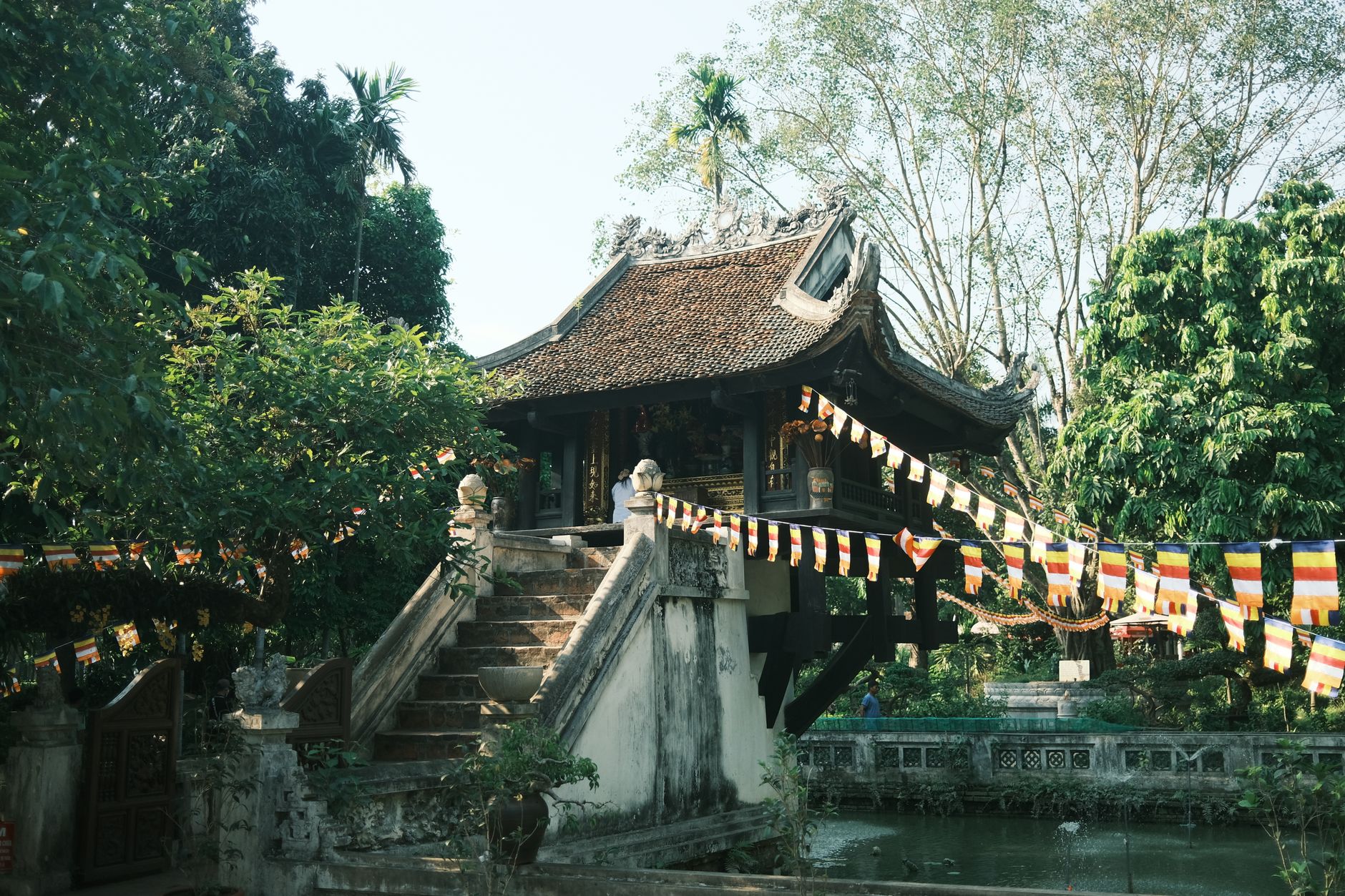
Vietnam has over 18,000 pagodas. Each one tells a story of how Buddhism adapted to local life. Unlike the pure Theravada traditions of Thailand or Myanmar, Vietnamese Buddhism is a layered practice. It mixes Mahayana Buddhist teachings with Confucian ethics, Taoist mysticism, ancestor worship, and folk spirits.
For travelers, pagodas offer more than photo opportunities. They are living spaces where daily rituals connect the past to the present. Understanding how to visit them respectfully opens a door to Vietnamese culture that many tourists miss.
This guide covers the spiritual landscape of Vietnamese Buddhism, the most significant pagodas by region, and the rules for visiting with respect.
How Vietnamese Buddhism differs from other Buddhist traditions
Buddhism arrived in Vietnam around the second century CE through two routes. Mahayana Buddhism came from China via the Red River Delta. Theravada Buddhism arrived later from India and Sri Lanka through the Mekong Delta.
The Mahayana tradition dominates the north and central regions. It emphasizes compassion for all beings and the ideal of the bodhisattva, an enlightened being who delays nirvana to help others. The Theravada tradition, found mainly in the Mekong Delta, focuses on individual enlightenment through monastic discipline.
Vietnamese Buddhism absorbed local beliefs. Ancestor worship predates Buddhism in Vietnam. Families maintain altars at home and visit pagodas during death anniversaries. Folk deities like the Earth God and the Kitchen God share temple space with Buddhist statues.
The result is a practice that feels less rigid than Buddhism in other countries. Vietnamese Buddhists pray for practical things. Good health. Business success. Exam results. A son's safe return from overseas work. The pagoda serves as a community center, a fortune-telling hub, and a place to connect with deceased relatives.
Pro tip: If you see people burning paper offerings at a pagoda, they are not Buddhists performing a standard ritual. They are performing a folk practice of sending material goods to deceased relatives in the afterlife. Observe quietly and do not touch the burning papers.
Pagoda etiquette: how to visit respectfully
Many travelers enter pagodas wearing shorts and tank tops. They talk loudly. They point statues with their feet. They climb on altars for selfies. These actions offend local worshippers.
Here is how to visit properly.
Dress appropriately. Cover your shoulders and knees. Women do not need head coverings, but men should remove hats inside main halls. If you arrive in inappropriate clothing, some pagodas loan out robes at the entrance.
Remove your shoes. Take off shoes before entering any temple building. Leave them on the racks provided. Socks are fine. Bare feet are also fine.
Enter through the side gates. The main central gate is reserved for monks and important ceremonies. Visitors enter through the left or right side doors.
Walk clockwise. When moving around a pagoda, walk in a clockwise direction. Keep the altar on your right side.
Do not touch statues. Many statues are centuries old. Oils from human hands damage the paint and gilding. Look with your eyes, not your hands.
Sit properly. If you sit on the floor, do not point your feet toward the altar or any Buddha statue. Sit cross-legged or tuck your feet behind you.
Photography rules. Most pagodas allow photography in courtyards and outer halls. Many prohibit flash photography inside main sanctuaries. Look for signs or ask a monk.
Offerings and incense. You can buy incense sticks at the gate. Light them at the designated burner. Place them in the sand urn with a slight bow. Do not blow out the flame. Wave it out with your hand.
Warning: Some pagodas near tourist centers charge foreigners for incense or entrance fees that locals do not pay. The Perfume Pagoda charges 100,000 VND (4 USD) for foreigners versus 20,000 VND (0.80 USD) for locals. This is legal but worth knowing in advance.
Northern Vietnam: the spiritual heartland
The north holds Vietnam's oldest and most revered pagodas. The Red River Delta has been a Buddhist center since the Ly dynasty in the 11th century.
Perfume Pagoda (Chua Huong), Hanoi
The Perfume Pagoda is not a single building. It is a complex of Buddhist temples built into the limestone cliffs of Huong Tich Mountain, about 60 kilometers southwest of Hanoi. The main temple, Chua Thien Tru, sits at the base. The inner sanctuary, Chua Huong Tich, is inside a cave halfway up the mountain.
The pilgrimage season runs from the first lunar month to the third lunar month, roughly February to April. During this period, hundreds of thousands of pilgrims arrive. They travel by rowboat along the Yen Stream, past rice paddies and limestone karsts. The boat ride takes about 90 minutes. The hike to the cave temple takes another hour.
The cave itself is dramatic. Stalactites hang from the ceiling. Buddha statues sit among natural rock formations. Pilgrims rub the stalactites for good luck. The ones that produce a ringing sound are believed to grant wishes.
Pro tip: Visit on a weekday during the pilgrimage season. Weekends are overcrowded. The boat queue can exceed two hours.
Tran Quoc Pagoda, Hanoi
Tran Quoc sits on a small island in West Lake. It is the oldest pagoda in Hanoi, dating to the sixth century. The pagoda has been relocated twice due to flooding. Its current location dates to the 17th century.
The centerpiece is a bodhi tree planted from a cutting of the original tree in Bodh Gaya, India, where Buddha attained enlightenment. The pagoda attracts both worshippers and tourists. The lakeside setting makes it one of the most photographed pagodas in Vietnam.
Entrance is free. The pagoda opens from 7:00 AM to 5:00 PM daily.
Bai Dinh Pagoda, Ninh Binh
Bai Dinh is the largest pagoda complex in Southeast Asia. It covers 700 hectares and holds multiple Vietnamese records. The largest bronze Buddha statue in Vietnam weighs 100 tons. The longest corridor of arhat statues has 500 stone figures. The largest bronze bell weighs 36 tons.
The complex combines an ancient pagoda from the 11th century with a massive new temple built in 2010. The new section is enormous. Visitors can take an electric cart from the parking area to the main hall. The walk takes about 20 minutes.
Bai Dinh sits near the Trang An landscape complex, a UNESCO World Heritage site. Many travelers combine a visit to the pagoda with a boat tour through Trang An's cave system. For more on this area, see our guide to Ninh Binh in 2 Days.
Pro tip: Bai Dinh gets crowded during the lunar new year period. If you visit in February, expect heavy traffic. The pagoda is open year-round from 6:00 AM to 10:00 PM.
Central Vietnam: imperial Buddhism
Central Vietnam was the seat of the Nguyen emperors. Buddhism here reflects court traditions and royal patronage.
Thien Mu Pagoda, Hue
Thien Mu Pagoda sits on the north bank of the Perfume River, about five kilometers from Hue city center. It was built in 1601 by Lord Nguyen Hoang. The seven-story Phuoc Duyen Tower, built in 1844, is the symbol of Hue.
The pagoda gained international attention in 1963. A monk named Thich Quang Duc drove from Thien Mu to Saigon and set himself on fire to protest the persecution of Buddhists. The car he used is still parked at the pagoda.
The grounds are peaceful. Pine trees shade the courtyard. Monks tend gardens. The view of the Perfume River from the tower is worth the climb.
Entrance is free. The pagoda opens from 7:00 AM to 5:00 PM.
Marble Mountains, Da Nang
The Marble Mountains are five marble and limestone hills near Da Nang. Each hill is named after a natural element. Thuy Son (Water Mountain) is the largest and most visited. It contains several Buddhist pagodas and cave temples.
Tam Thai Pagoda sits at the base of Thuy Son. Linh Ung Pagoda is higher up, near the summit. The caves contain Buddha statues and altars. Some caves were used as hospitals during the Vietnam War.
The climb involves steep stairs. The views of Da Nang beach and the surrounding countryside are excellent. An elevator is available for 15,000 VND (0.60 USD) one way.
Pro tip: Visit early in the morning before tour groups arrive. By 9:00 AM, the main caves are crowded. The Marble Mountains are open from 7:00 AM to 5:30 PM. Entrance is 40,000 VND (1.60 USD).
Linh Ung Pagoda, Da Nang
This pagoda on Son Tra Peninsula features a 67-meter tall statue of Quan Am, the Goddess of Mercy. The statue stands on a lotus platform overlooking the East Sea. It is visible from Da Nang city and from boats entering the bay.
The pagoda complex includes a main hall, gardens, and a small museum. Monks live on site. The atmosphere is calm compared to the Marble Mountains.
Entrance is free. The pagoda opens from 6:00 AM to 6:00 PM.
Southern Vietnam: Theravada and Khmer influences
The Mekong Delta has a different Buddhist character. The Theravada tradition dominates. Khmer ethnic minorities add their own architectural style.
Vinh Trang Pagoda, My Tho
Vinh Trang Pagoda is in My Tho, about 70 kilometers south of Ho Chi Minh City. It was built in the 19th century. The architecture mixes Vietnamese, Chinese, and European styles. The pagoda has three main Buddha statues. The largest reclining Buddha is 18 meters long.
The gardens are extensive. There are ponds with lotus flowers and bridges in the Japanese style. Monks live on site and welcome visitors.
Entrance is free. The pagoda opens from 6:00 AM to 6:00 PM.
Giac Lam Pagoda, Ho Chi Minh City
Giac Lam is one of the oldest pagodas in Ho Chi Minh City. It was built in 1744. The pagoda has a large bodhi tree in the courtyard. The main hall contains over 100 Buddhist statues.
The pagoda is less touristy than other sites in the city. Local worshippers come regularly. The atmosphere is authentic and quiet.
Entrance is free. The pagoda opens from 6:00 AM to 8:00 PM.
Khmer Theravada Pagodas, Tra Vinh
Tra Vinh province has over 140 Khmer pagodas. The architecture differs from Vietnamese pagodas. The roofs are steep and decorated with naga serpents. The colors are bright gold and red.
Angkor Kraom Pagoda is the most famous. It was built in the 10th century during the Angkor period. The pagoda has a museum displaying Khmer artifacts.
Tra Vinh is about 130 kilometers from Ho Chi Minh City. It requires a dedicated day trip. For more on independent travel in the Mekong Delta, see our guide to Mekong Delta Without a Tour.
Major Buddhist festivals and when to visit
| Festival | Timing | Location | What happens |
|---|---|---|---|
| Buddha's Birthday (Phat Dan) | 15th day of 4th lunar month (May) | Nationwide | Processions, flower offerings, releasing birds |
| Vu Lan Festival | 15th day of 7th lunar month (August) | Nationwide | Ancestor worship, offering robes to monks |
| Perfume Pagoda Festival | 6th day of 1st lunar month to end of 3rd lunar month | Perfume Pagoda, Hanoi | Pilgrimage by boat and foot |
| Tet (Lunar New Year) | Late January to mid-February | Nationwide | Pagoda visits for good luck, incense offerings |
| Vu Lan (Ghost Month) | Full month of 7th lunar month | Nationwide | Offerings to hungry ghosts, prayers for ancestors |
The busiest time for pagoda visits is Tet, the Vietnamese Lunar New Year. Millions of people flock to temples to pray for a prosperous year. If you want to experience this, prepare for crowds. For a complete guide to Tet travel, see Tet Nguyen Dan: The Complete Traveler's Guide.
The best time for a quieter visit is from April to June. The weather is warm but not rainy. Pagodas are less crowded. For weather details, see Vietnam Weather by Month.
How to plan a pagoda-focused trip
A pagoda tour can fit into any Vietnam itinerary. Here is a suggested route.
Day 1-3: Hanoi. Visit Tran Quoc Pagoda in the morning. Take a day trip to the Perfume Pagoda on day two. Visit Bai Dinh Pagoda on day three if you have time.
Day 4-5: Ninh Binh. Combine Bai Dinh Pagoda with Trang An boat tour. Stay overnight in Ninh Binh.
Day 6-8: Hue. Visit Thien Mu Pagoda by bicycle or taxi. Take a boat tour on the Perfume River.
Day 9-10: Da Nang. Visit the Marble Mountains and Linh Ung Pagoda on Son Tra Peninsula.
Day 11-14: Ho Chi Minh City and Mekong Delta. Visit Giac Lam Pagoda in the city. Take a day trip to Vinh Trang Pagoda in My Tho. For more time, explore the Khmer pagodas in Tra Vinh.
For transport between cities, compare options in our guide to Domestic Flights in Vietnam.
Frequently asked questions
Q: Can anyone enter a pagoda in Vietnam? Yes. Pagodas are open to all visitors regardless of religion. Some pagodas restrict entry to certain areas during ceremonies. Respect the rules.
Q: Do I need to pay to enter pagodas? Most pagodas are free. Some tourist-oriented pagodas charge entrance fees. The Perfume Pagoda charges 100,000 VND (4 USD) for foreigners. Bai Dinh Pagoda charges 100,000 VND (4 USD) for the electric cart.
Q: What should I wear to a pagoda? Covered shoulders and knees. No tank tops. No shorts above the knee. No see-through clothing. Remove shoes before entering temple buildings.
Q: When is the best time to visit pagodas? Early morning from 6:00 AM to 8:00 AM. The light is good for photos. The air is cool. Fewer tourists are present.
Q: Can I take photos inside pagodas? Yes in most outer areas. No flash photography inside main sanctuaries. Some pagodas prohibit all photography. Look for signs or ask a monk.
Q: What is the difference between a pagoda and a temple in Vietnam? The terms are used loosely. Pagoda (chua) usually refers to a Buddhist place of worship. Temple (den) often refers to a place dedicated to a national hero or a folk deity. Many sites combine both.
Q: Are there vegetarian restaurants near pagodas? Many pagodas have vegetarian canteens serving simple meals. Some charge a small fee. Others offer free food to visitors. The food is usually rice, tofu, and vegetables.