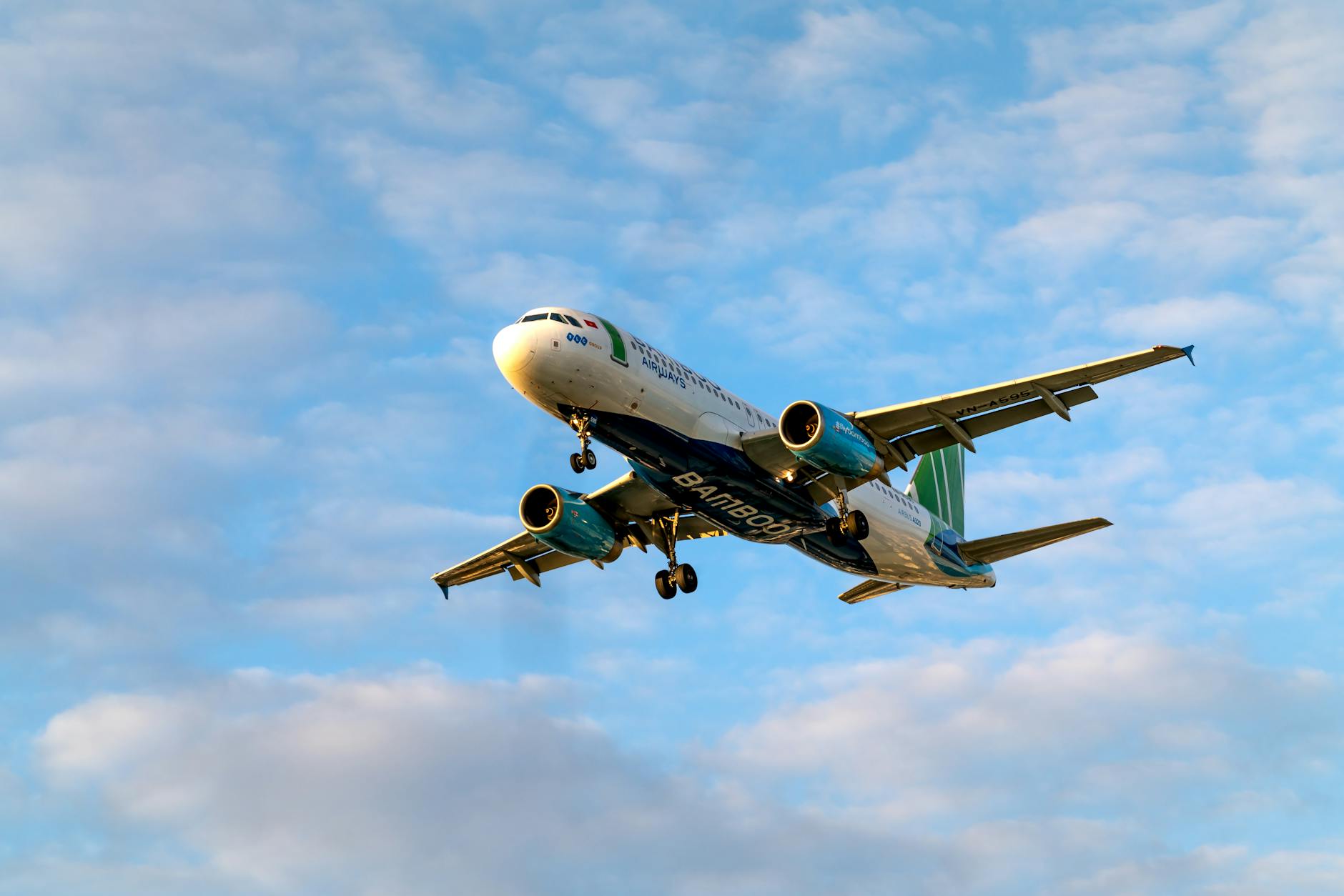
But choosing between Vietjet Air, Bamboo Airways, and Vietnam Airlines is rarely as simple as picking the cheapest fare. Delay rates differ wildly, baggage rules contain expensive traps, and the "low-cost" option sometimes ends up costing more than the flag carrier. Here is an honest, data-grounded comparison of how the three main domestic carriers actually perform in 2026.
The Three Airlines at a Glance
Vietnam's domestic market is dominated by three players. Vietravel Airlines and Pacific Airlines exist but operate limited routes; for the vast majority of travellers, the choice comes down to these three.
| Airline | Type | Hub | Domestic Routes | On-Time Performance (Q1 2026) |
|---|---|---|---|---|
| Vietnam Airlines (VN) | Full-service flag carrier | HAN / SGN | 22 | 86.4% |
| Bamboo Airways (QH) | Hybrid | HAN | 14 | 81.2% |
| Vietjet Air (VJ) | Low-cost | SGN / HAN | 28 | 72.9% |
Source: Civil Aviation Authority of Vietnam (CAAV) monthly reports, Q1 2026.
Vietnam Airlines is consistently the most punctual and includes 23 kg of checked baggage, meals, and seat selection in its base fare. Vietjet flies the most routes and the cheapest fares — but charges for nearly everything, including printed boarding passes at the counter (50,000 VND / ~$2). Bamboo Airways sits in the middle: it once challenged Vietnam Airlines on service but has shrunk significantly since its 2022–2023 financial restructuring, with a smaller fleet and reduced frequencies.
Delay Rates: The Number That Actually Matters
If a traveller has a connection, a cruise departure, or a sleeper train to catch, on-time performance matters more than fare. CAAV publishes monthly statistics, and the gap between carriers is real.
In Q1 2026, Vietjet's on-time rate hovered around 73%, meaning roughly one in four Vietjet flights was delayed by more than 15 minutes. Vietnam Airlines averaged 86%, and Bamboo around 81%. Cancellations are rare on all three — typically under 1% — but Vietjet's late-night flights (after 8 PM) are particularly prone to cascading delays of 2–4 hours, especially during the rainy season (May–October in the south, September–November in the central coast).
Pro tip: If a delayed flight would derail your itinerary, book a morning departure. First flights of the day (5:30–7:30 AM) have on-time rates 10–15 percentage points higher than evening flights across all three airlines, because the delays haven't had time to compound.
When Low-Cost Actually Costs More
Vietjet's headline fares are tempting. A Hanoi–Da Nang flight can appear for 599,000 VND (~$24). But the base fare is bare to the point of absurdity: no checked bag, no carry-on over 7 kg, no seat selection, no meal, no changes. Adding what most travellers actually need brings the real price much closer to — and sometimes above — Vietnam Airlines.
Here is a realistic cost breakdown for a one-way Hanoi (HAN) → Ho Chi Minh City (SGN) flight booked three weeks out in March 2026:
| Item | Vietjet (Eco) | Bamboo (Economy Smart) | Vietnam Airlines (Economy Classic) |
|---|---|---|---|
| Base fare | 890,000 VND | 1,450,000 VND | 1,790,000 VND |
| 20–23 kg checked bag | 350,000 VND | Included (20 kg) | Included (23 kg) |
| Seat selection (standard) | 120,000 VND | 80,000 VND | Included |
| Meal | 95,000 VND | Included (snack) | Included |
| Payment surcharge | 55,000 VND | 0 | 0 |
| Total (USD approx.) | 1,510,000 VND (~$60) | 1,530,000 VND (~$61) | 1,790,000 VND (~$72) |
For roughly $12 more, Vietnam Airlines delivers a real meal, a better on-time record, lounge access on certain fare classes, and zero baggage anxiety. The price advantage of "low-cost" evaporates the moment one bag enters the equation.
Vietjet still wins for backpackers travelling with carry-on only, or for travellers booking a flash sale far in advance. But the "low-cost" label is misleading once a 15 kg backpack joins the trip.
Baggage Traps to Know Before You Book
Excess baggage fees at the airport counter are punitive on all three airlines — and especially on Vietjet, where they can exceed the original ticket price.
- Vietjet: Carry-on limit is 7 kg total (including personal item). Checked baggage must be pre-purchased online; airport rates are roughly double. Overweight charges at the counter are 100,000 VND per kg.
- Bamboo Airways: 7 kg carry-on, 20 kg checked included on most fares. Counter excess: 80,000 VND per kg.
- Vietnam Airlines: 10 kg carry-on (rarely strictly enforced for tourists), 23 kg checked included. Counter excess: 70,000 VND per kg.
Warning: Vietjet weighs carry-on bags at the gate, not just at check-in. Travellers regularly get caught at boarding for a backpack that passed check-in unweighed. If using Vietjet, weigh everything at the hotel before leaving.
A specific trap: travellers connecting from an international flight to a Vietjet domestic leg often assume their 30 kg international allowance carries over. It does not. The domestic ticket is a separate contract, and the full excess fee applies.
Booking Sweet Spots
Domestic Vietnamese fares behave differently from Western markets. Last-minute fares can sometimes be cheaper than mid-range advance fares, and Tuesday/Wednesday is consistently the cheapest day to fly.
General booking patterns observed across 2025–2026:
- 3–6 weeks out: Sweet spot for Vietnam Airlines and Bamboo. Fares stabilise at their lowest published levels.
- 1–2 weeks out: Vietjet often releases flash sales for under-booked flights. Risky but viable for flexible travellers.
- Within 72 hours: Prices climb sharply across all carriers.
- Tết (Lunar New Year, mid-February 2026): Book at least 8 weeks ahead. Domestic fares triple, and Hanoi-bound flights in the days before Tết sell out completely.
- April 30 / May 1 holiday and September 2 National Day: Similar surge, book 6+ weeks ahead.
Booking directly on each airline's website is usually 5–15% cheaper than third-party aggregators, and refunds are faster when something goes wrong. The Traveloka and Booking.com prices include hidden markups, particularly on Vietjet.
Pro tip: When booking Vietjet directly, switch the website language to Vietnamese (the toggle is in the top right). Promotional fares sometimes appear in Vietnamese first and are not always mirrored on the English site.
Airport Hacks: SGN, HAN, and DAD
The three main domestic airports each have their own quirks. Understanding them saves time and frustration.
Tan Son Nhat (SGN) — Ho Chi Minh City
SGN is chronically congested. The domestic terminal (T1) is separate from the international terminal (T2) but only a 5-minute walk between them. Traffic getting to the airport from District 1 can take 90 minutes during rush hour (5–8 PM) for what should be a 25-minute drive.
- Use Grab Bike, not Grab Car, during evening rush. It costs about 70,000 VND (~$2.80) and cuts journey time roughly in half.
- The domestic terminal has a poorly signposted second security line on the far right side, usually 10 minutes shorter than the main queue.
- Vietjet uses gates 14–20, which are at the far end. Allow extra walking time.
Noi Bai (HAN) — Hanoi
HAN is calmer and better organised than SGN. The domestic terminal (T1) handles all three carriers; international flights use T2, a 5-minute shuttle ride away (free, every 10 minutes).
- The airport bus 86 runs from Hanoi Old Quarter to T1 for 45,000 VND (~$1.80), taking about 50 minutes — significantly cheaper than the 400,000 VND (~$16) taxi.
- Winter fog (December–February) causes morning delays. First flights are often the most affected, not the most reliable, during this season specifically.
Da Nang (DAD) — Central Vietnam
DAD is the easiest of the three: domestic and international share one compact terminal, and the airport is 10 minutes from the city centre.
- No need to arrive more than 75 minutes early for domestic flights, even at peak times.
- The taxi mafia outside arrivals is aggressive. Use Grab, which has a designated pickup point on the second floor of the parking garage — not at arrivals curbside.
Routes Where Each Airline Genuinely Wins
Despite the headline numbers, each carrier has routes where it is the clear best choice.
- Vietnam Airlines: Best for HAN–SGN trunk route (highest frequency, ~30 daily flights), and the only carrier on some regional routes like HAN–Dien Bien or SGN–Ca Mau.
- Bamboo Airways: Strong on HAN–Con Dao via Hai Phong, and competitive pricing on HAN–Quy Nhon (its founder's home province, which the airline has historically prioritised).
- Vietjet: Wins on sheer route count, including direct flights between secondary cities that Vietnam Airlines routes through HAN or SGN — e.g., Hai Phong–Da Lat, or Vinh–Da Nang.
Refunds, Changes, and What Goes Wrong
When flights are cancelled, all three airlines are legally obliged to offer a refund or rebooking. In practice:
- Vietnam Airlines processes refunds within 7–14 days and rebooks on the next available flight, including competitor flights in some cases.
- Bamboo Airways refunds have slowed since the 2023 restructuring; expect 30–45 days.
- Vietjet is technically compliant but notoriously slow with cash refunds (often 60+ days). Travel vouchers are processed faster but expire in 12 months.
Travel insurance that covers flight delays over 3 hours is genuinely worth having if domestic flights are central to the itinerary, particularly during typhoon season (August–November) on central coast routes.
FAQ
Is it safe to fly Vietjet? Yes. Despite the operational delays, Vietjet has a strong safety record and operates a modern Airbus A320/A321 fleet. CAAV's safety oversight meets ICAO standards. The complaints are about service and punctuality, not safety.
Can foreigners book domestic flights with a foreign credit card? Yes on all three airlines' websites, though Vietjet occasionally rejects foreign cards — particularly American Express. PayPal is accepted on Vietnam Airlines and is the most reliable backup.
Do I need to show my passport for domestic flights? Yes. Foreign passengers must present the same passport used at booking. A photo or photocopy is not accepted at security. Vietnamese citizens can use a national ID card or a VNeID app.
How early should I arrive at the airport for a domestic flight? 90 minutes is standard. At SGN during 4–8 PM, allow 2 hours. At DAD, 75 minutes is usually enough. Check-in counters close exactly 40 minutes before departure on all three airlines — they will not wait.
Are flight prices cheaper in VND on the Vietnamese-language site? Sometimes, yes, particularly on Vietjet. Bamboo and Vietnam Airlines display identical prices across languages. Always pay in VND rather than USD to avoid the airline's currency conversion markup.
What happens if my flight is delayed more than 2 hours? Vietnamese aviation regulation requires the airline to provide meals after 2 hours, accommodation after 6 hours overnight, and a refund or rebooking option after 5 hours. Vietnam Airlines applies this proactively; Vietjet requires passengers to ask, sometimes repeatedly, at the service desk.
Is Bamboo Airways going to survive? As of early 2026, Bamboo continues to operate with a reduced fleet of around 8 aircraft, down from 30 in 2022. It remains a viable choice for the routes it still flies, but travellers should be aware that schedule cuts have happened with little notice. Booking with a credit card that offers purchase protection is sensible.