This guide breaks down seven distinct banh mi styles across Vietnam. Each has a recommended vendor, a price range, and the specific details that make it worth hunting down.
1. Banh mi thit (classic cold cuts)
This is the original. The standard. The banh mi that started it all.
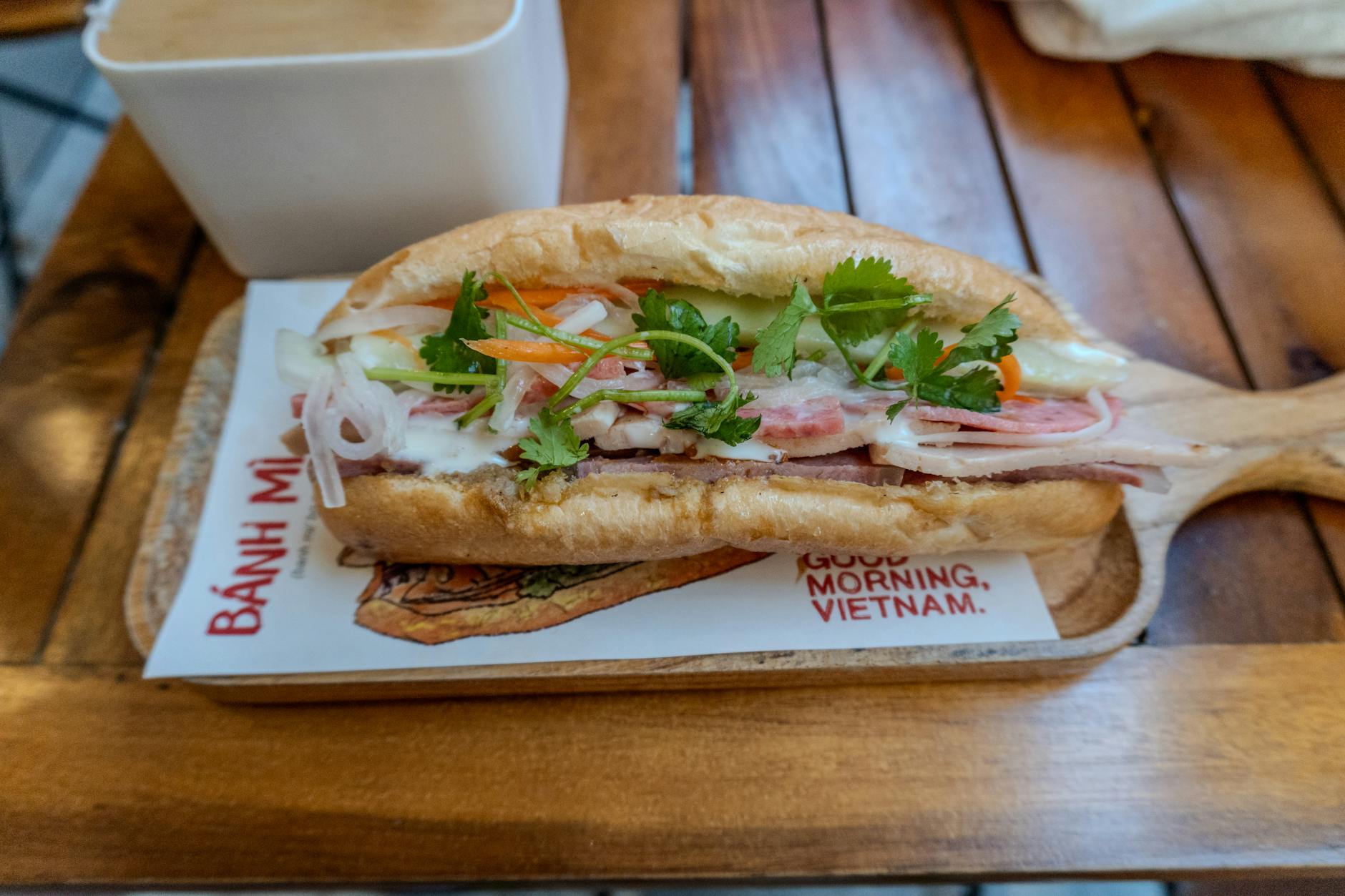
A proper banh mi thit starts with a light, airy baguette that crackles when squeezed. The baker slices it lengthwise, spreads a thin layer of pork liver pate, then adds Vietnamese mayonnaise. Into the slot go sliced cha lua (pork roll), thit nguoi (Vietnamese ham), and sometimes head cheese. Pickled daikon and carrot provide acidity. Cucumber strips add crunch. Fresh cilantro and sliced chili finish the assembly.
The best version in Saigon comes from Banh Mi Huynh Hoa at 26 Le Thi Rieng Street in District 1. This shop operates like a factory. Staff assemble sandwiches in an assembly line, each person adding one component. The queue stretches down the block every evening from 4 PM to midnight. A standard sandwich costs 45,000 VND ($1.80). The bread stays crisp because they toast it twice: once empty, once filled.
Banh Mi Hoa Ma at 53 Cao Thang Street in District 3 offers a quieter alternative. Same quality, shorter line. Sandwiches cost 30,000 VND ($1.20). They use less pate and more cold cuts, which some locals prefer.
Pro tip: Ask for "banh mi dac biet" (special combo) to get the full range of meats. Skip the cheese. Vietnamese cheese on banh mi is a tourist invention.
2. Banh mi cha ca (fish cake)
Central Vietnam owns this variant. Da Nang and Hoi An produce the best versions.
Fish cake banh mi uses grilled or fried fish cakes made from fresh mackerel or tuna. The cakes get sliced thin and stuffed into a smaller, denser baguette. The bread in central Vietnam has less air than Saigon's version. It holds up better against the moisture of the fish.
Banh Mi Ba Lan at 4 Nguyen Thi Minh Khai Street in Da Nang serves the definitive version. The shop has operated since 1979. Fish cakes are grilled over charcoal right on the sidewalk. Customers watch the process while waiting. A sandwich costs 20,000 VND ($0.80). The fish cake has a smoky flavor that processed cold cuts cannot replicate.
In Hoi An, Banh Mi Phuong at 2B Phan Chau Trinh Street offers a fish cake version alongside their famous roasted pork. Anthony Bourdain ate here during his show. The queue is real. Arrive before 11 AM or after 2 PM to avoid the worst of it. Prices range from 25,000 to 40,000 VND ($1.00 to $1.60).
Warning: Fish cake banh mi does not travel well. Eat it immediately. The bread turns soggy within 15 minutes.
3. Banh mi heo quay (roasted pork)
Hoi An perfected this style. The city's Chinese culinary heritage shows in the roasted pork, which uses five-spice powder and honey glaze.
The pork belly is roasted until the skin shatters like glass. The meat underneath stays moist. The baker slices it thin and piles it into a baguette with the standard pickled vegetables. The key difference is the sauce. Hoi An vendors add a thin soy-based dipping sauce that soaks into the bread's bottom layer.
Banh Mi Queen at 115 Nguyen Hue Street in Hoi An serves the best roasted pork banh mi in Vietnam. The shop is a tiny counter with two plastic stools. The owner, a woman named Lan, has been making banh mi since 1990. She roasts the pork herself every morning. A sandwich costs 30,000 VND ($1.20). The crackling stays crisp because she assembles the sandwich with the pork skin facing up, away from the pickled vegetables.
Madam Khanh's Banh Mi at 111 Tran Cao Van Street also deserves attention. Locals call it "The Banh Mi Queen." The bread is slightly softer, which some prefer. Same price point.
Pro tip: Order "banh mi heo quay them da" (extra crackling). It costs 5,000 VND ($0.20) more. Worth every dong.
4. Banh mi op la (fried egg)
Breakfast banh mi. Simple. Cheap. Essential.
A fried egg gets laid directly onto the baguette, often with a smear of pate and a drizzle of soy sauce. Some vendors add a slice of Vietnamese ham. Others keep it strictly egg and bread. The egg should have a runny yolk that breaks when you bite into the sandwich.
Banh Mi Hong Hoa at 54 Dinh Tien Hoang Street in Da Lat serves the definitive egg banh mi. Da Lat's cool climate means the bread stays fresh longer. The vendor cracks the egg onto a tiny frying pan, fries it in pork fat, then slides it directly into the baguette. Cost: 15,000 VND ($0.60). The sandwich comes wrapped in a single sheet of newspaper.
In Hanoi, Banh Mi 25 at 25 Hang Ca Street serves an excellent egg version with a twist. They add a thin layer of pork floss on top of the egg. The floss absorbs the yolk and creates a texture that works. Price: 25,000 VND ($1.00).
Warning: Egg banh mi is messy. Eat it leaning forward. The yolk will drip.
5. Banh mi xiu mai (meatball)
Saigon breakfast staple. The meatballs are pork-based, seasoned with garlic and fish sauce, and simmered in a tomato-based broth.
The vendor pulls meatballs from the simmering pot, slices them in half, and stuffs them into the baguette. A spoonful of the broth goes over the meatballs before the vegetables are added. This makes the sandwich wetter than other styles. The bread must be sturdy enough to hold the liquid.
Banh Mi Xiu Mai Ba Dau at 87 Dinh Tien Hoang Street in District 1 serves the gold standard. The shop opens at 6 AM and sells out by 10 AM. Meatballs are made fresh daily. The broth has a slight sweetness from caramelized sugar. A sandwich costs 25,000 VND ($1.00). The shop provides plastic gloves because the sandwich leaks.
Banh Mi Xiu Mai Nguyen Trai at 293 Nguyen Trai Street in District 5 offers a spicier version. The vendor adds chopped chili directly to the broth. Same price. Same early sell-out.
Pro tip: Order an extra portion of meatballs on the side. Dip the sandwich ends into the leftover broth.
6. Banh mi chay (vegetarian)
Vietnam has a strong Buddhist vegetarian tradition. Banh mi chay proves that meat is not required for a satisfying sandwich.
The fillings vary by region. In the south, vendors use tofu skin, mushroom pate, and mock meats made from soy. In the north, the focus shifts to fresh herbs and pickled vegetables. The bread is often smaller and denser, since vegetarian fillings have less moisture than meat versions.
Banh Mi Chay Thanh at 38 Nguyen Van Troi Street in Da Lat serves the best vegetarian banh mi in the country. Da Lat has a large Buddhist population. The shop uses a mushroom-based pate that mimics the texture of pork liver pate. Tofu skin is fried until crispy and added as a textural element. A sandwich costs 20,000 VND ($0.80). The shop also sells vegetarian spring rolls for 5,000 VND ($0.20) each.
In Hoi An, Banh Mi Chay Hoa at 30 Tran Hung Dao Street offers a different approach. They use grilled eggplant as the main protein. The smokiness of the eggplant replaces the char from roasted pork. Price: 25,000 VND ($1.00).
Warning: Many vendors claim their banh mi is vegetarian but cook it on the same grill as meat. Ask explicitly: "Co dam bao chay hoan toan khong?" (Is it guaranteed completely vegetarian?)
7. Banh mi que (breadstick sandwich)
Northern Vietnam specialty. Popular in Hanoi and the surrounding provinces.
Banh mi que uses a long, thin breadstick instead of a full baguette. The breadstick is hollow inside. The vendor fills it with a thin layer of pate, a slice of cha lua, and a single strip of cucumber. The result is a narrow, crunchy sandwich that you eat like a cigar.
Banh Mi Que Ba Thin at 10 Hang Bac Street in Hanoi's Old Quarter serves the definitive version. The breadsticks are baked fresh every hour. The pate is made with pork liver and a secret blend of spices. A single breadstick costs 10,000 VND ($0.40). Most customers order three or four.
Banh Mi Que 67 at 67 Hang Chieu Street offers a version with added pork floss. The floss sticks to the pate and prevents it from sliding out as you eat. Same price.
Pro tip: Eat banh mi que within five minutes of purchase. The thin bread goes stale fast.
Comparison table: Banh mi styles at a glance
| Style | City | Key ingredient | Price range | Best time to eat |
|---|---|---|---|---|
| Cold cuts | Saigon | Pork pate, cha lua | 30,000-45,000 VND ($1.20-1.80) | Late afternoon |
| Fish cake | Da Nang | Grilled mackerel | 20,000-25,000 VND ($0.80-1.00) | Morning |
| Roasted pork | Hoi An | Five-spice pork belly | 25,000-40,000 VND ($1.00-1.60) | Lunch |
| Fried egg | Da Lat | Runny yolk, pork fat | 15,000-25,000 VND ($0.60-1.00) | Breakfast |
| Meatball | Saigon | Pork in tomato broth | 20,000-25,000 VND ($0.80-1.00) | Breakfast |
| Vegetarian | Da Lat | Mushroom pate, tofu | 20,000-25,000 VND ($0.80-1.00) | Anytime |
| Breadstick | Hanoi | Hollow bread, pate | 10,000-15,000 VND ($0.40-0.60) | Snack |
Where to find the best bread
The baguette makes or breaks a banh mi. Good bread has a paper-thin crust that shatters. The interior should have large air pockets with some chew. Bad bread is dense, gummy, or too hard.
Saigon produces the best baguettes in Vietnam. The city's high humidity and strong flour create the ideal texture. Tiem Banh Mi Tho at 275 Nguyen Trai Street in District 5 supplies many of the city's top banh mi shops. They bake continuously from 5 AM to 8 PM. A fresh batch comes out every 30 minutes.
Hanoi's baguettes are smaller and denser. The colder climate means less rising time. This works for banh mi que but not for full sandwiches. Visitors accustomed to Saigon's airy bread often find Hanoi's version disappointing.
Da Nang and Hoi An fall somewhere in between. The bread has good structure but less air than Saigon's. It holds up better against wet fillings like roasted pork.
Pro tip: Watch the vendor handle the bread before ordering. If they squeeze the baguette and it springs back, buy it. If it cracks or compresses flat, walk away.
How to order banh mi like a local
The ordering process follows a specific sequence. Learn it. It makes the interaction smoother.
Step one: Point at the bread. Say "Mot chiec banh mi" (one banh mi). The vendor will ask "An gi?" (what filling?). Respond with your choice: "Thit" (cold cuts), "Heo quay" (roasted pork), "Cha ca" (fish cake), "Op la" (egg), "Xiu mai" (meatball), or "Chay" (vegetarian).
Step two: Specify bread preference. "Banh mi gion" (crispy bread) or "Banh mi mem" (soft bread). Most shops default to crispy.
Step three: Customize toppings. "Khong ot" (no chili), "It ot" (less chili), "Nhieu rau" (more vegetables), "Khong rau" (no vegetables). "It muoi" (less salt) works if you want to reduce sodium.
Step four: Pay after assembly. Most vendors wrap the sandwich in a paper sleeve and then a plastic bag. Remove the plastic immediately to keep the bread crisp.
Frequently asked questions
Q: How much should a banh mi cost in 2026?
Street prices range from 15,000 to 50,000 VND ($0.60 to $2.00). Tourist area shops charge more. A 60,000 VND ($2.40) banh mi in Hoi An's Ancient Town is overpriced. Walk two blocks away for the same quality at half the price.
Q: Can I eat banh mi if I have dietary restrictions?
Vegetarian options exist in most cities. Vegan versions are harder to find because many vegetarian shops use eggs in the bread. Gluten-free bread does not exist in Vietnamese banh mi. Celiac travelers should avoid banh mi entirely.
Q: Is banh mi safe for travelers with sensitive stomachs?
Banh mi thit (cold cuts) and banh mi chay (vegetarian) are the safest options. The bread is baked at high temperatures. The pickled vegetables are acidic enough to kill most bacteria. Avoid banh mi xiu mai (meatball) from vendors who leave the broth simmering for hours without refreshing it.
Q: What is the best time of day to eat banh mi?
Breakfast (6 AM to 9 AM) offers the freshest bread. Lunch (11 AM to 1 PM) has the widest selection of fillings. Late afternoon (3 PM to 5 PM) is when Saigon's best shops reopen after their midday break. Evening banh mi is often made from leftover bread.
Q: Can I bring banh mi across Vietnam's borders?
No. Fresh sandwiches are prohibited at international borders. The banh mi contains meat and fresh vegetables. Customs at airports and land borders will confiscate them. Eat your banh mi before crossing.
Q: How do I find good banh mi vendors in unfamiliar cities?
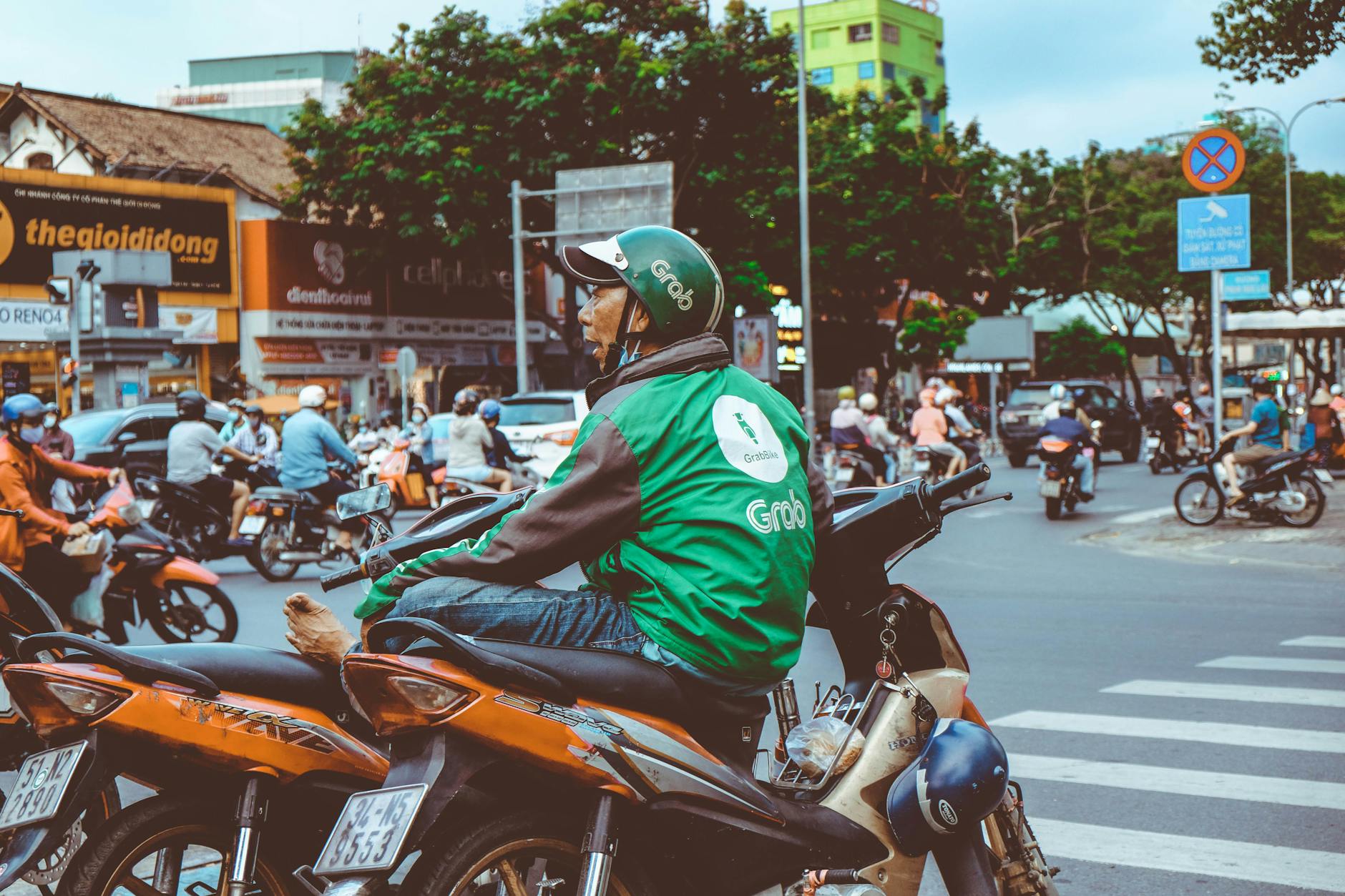
Look for shops with a queue of motorbikes parked outside. Locals know which vendors use fresh bread. Avoid shops with display cases full of pre-assembled sandwiches. A good vendor assembles each sandwich to order.
Q: Should I tip the banh mi vendor?
Tipping is not expected. The price you pay is the final price. Leaving a few thousand dong as a tip is appreciated but unusual. Most locals do not tip for street food.