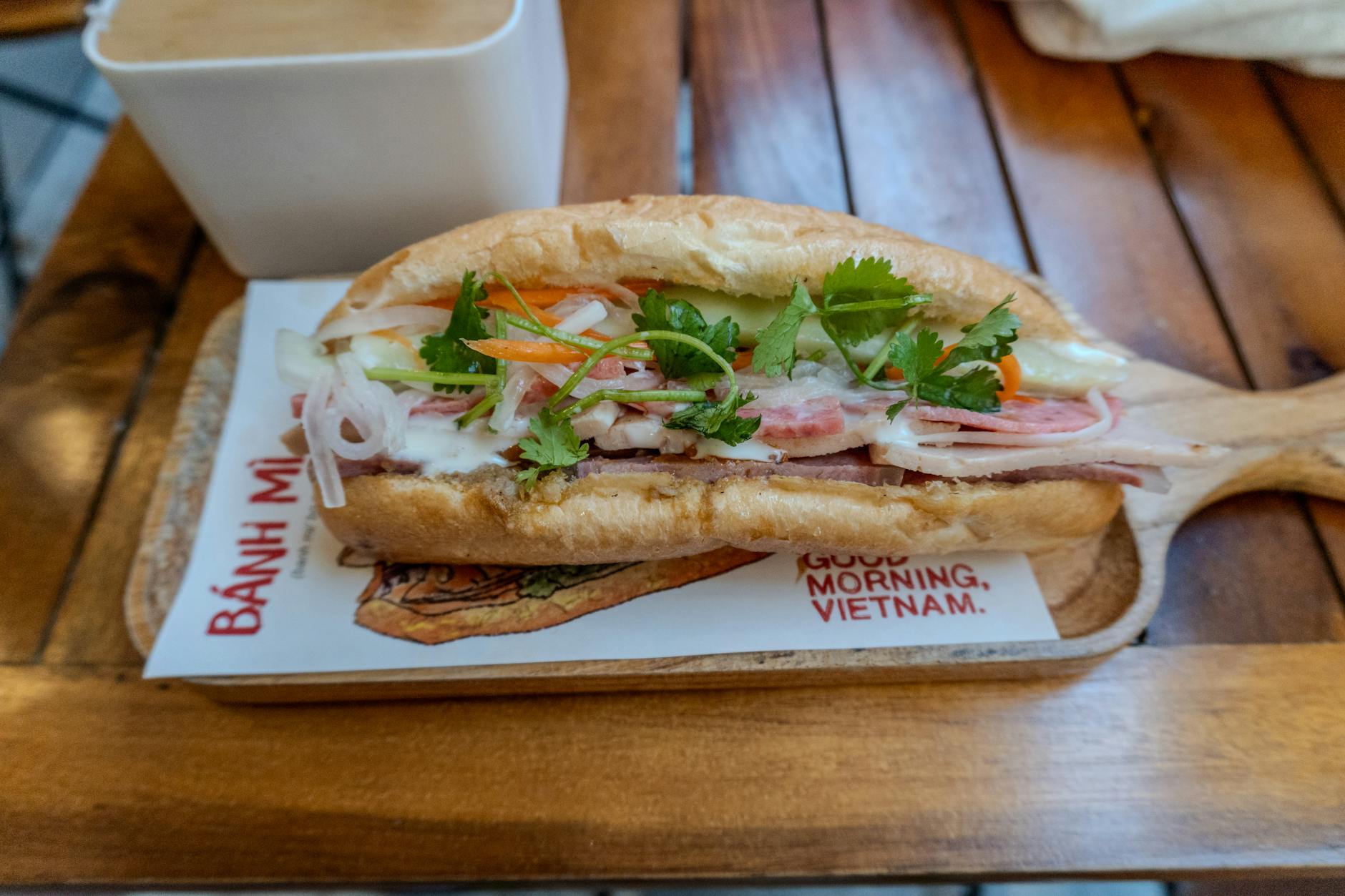
What Exactly is Vietnamese Mayonnaise?
This section establishes the fundamental difference between Western mayonnaise and its Vietnamese version. Vietnamese mayonnaise (sốt mayonnaise kiểu Việt) is characterized by a lighter texture, a more pronounced acidity (lime instead of vinegar), and the almost systematic absence of mustard. Understanding this difference is essential so you don't just spread French mayonnaise on a banh mi – that would be a culinary contradiction.
The Colonial Origins of an Adaptation
Mayonnaise arrived in Vietnam during the French colonial period. Vietnamese cooks adapted it to local ingredients and Asian palates. They replaced vinegar with lime, which was easier to find and more fragrant. They removed mustard, which is rarely used in Vietnamese cuisine. They added sugar to balance the acidity. The result is a thinner, glossier sauce that coats food without weighing it down.
What Distinguishes the Vietnamese Version from the French Version
| Ingredient | French Mayonnaise | Vietnamese Mayonnaise | Role in the Vietnamese Version |
|---|---|---|---|
| Base | Egg yolk + mustard | Egg yolk alone | Lighter texture, more neutral taste |
| Acidifier | Vinegar (white or wine) | Lime juice | Brighter acidity, fresh fragrance |
| Sugar | Rarely | Always (1/2 tsp) | Balances acidity, adds roundness |
| Oil | Sunflower, rapeseed, olive | Soybean, sunflower, grapeseed | Neutral taste, fluid texture |
| Texture | Thick, firm | Fluid, creamy | Spreads easily, soaks into the bread |
Essential Ingredients for Authentic Vietnamese Mayonnaise
The choice of ingredients determines the success of the recipe. Each element has a specific role.
Choosing the Oil: Neutral, But Not Just Any Oil
A neutral and light oil is essential. Soybean oil is the most commonly used in Vietnam. Sunflower or grapeseed oil works perfectly. Avoid olive oil; its taste is too strong and masks the delicacy of the lime. Also avoid sesame oil; its aroma is too powerful.
Why Lime is Preferable to Lemon
Lime (chanh) provides a brighter acidity and a characteristic fragrance that lemon cannot replicate. In Vietnam, lime is used in almost all sauces. If you can't find it, use lemon, slightly reducing the quantity as it is more acidic.
The Role of Sugar: The Umami-Sweet-Tangy Balance
Sugar is not optional. Half a teaspoon of white sugar or cane sugar balances the acidity of the lime and softens the taste of the egg. Without sugar, the mayonnaise tastes bland and too acidic. Vietnamese people use sugar in almost all their sauces to create this characteristic balance.
Step-by-Step Recipe: Traditional Whisking Method
The manual whisking method is preferred because it gives the best results and allows you to feel the emulsion forming.
Step 1: Prepare Ingredients at Room Temperature
Take the eggs out of the refrigerator 30 minutes before starting. Cold ingredients prevent the emulsion from forming. Squeeze the lime and strain out the seeds. Measure the oil. Prepare the sugar, salt, and white pepper.
Step 2: The Emulsion Technique, The Crucial Gesture
In a bowl, place one egg yolk. Add the sugar, a pinch of salt, and one teaspoon of lime juice. Whisk vigorously for 30 seconds to dissolve the sugar.
Start pouring the oil in a very thin stream, almost drop by drop, while whisking constantly. The movement should be steady and circular. After one minute, the emulsion starts to take shape. The texture thickens and whitens.
Continue pouring the oil in a thicker stream. After 3 to 4 minutes, all the oil is incorporated. The mayonnaise should be shiny, creamy, and slightly thinner than French mayonnaise.
Step 3: Adjust the Seasoning Like a Vietnamese Chef
Add the rest of the lime juice. Taste. Adjust the salt and sugar. The taste should be balanced between the acidity of the lime, the sweetness of the sugar, and the salt. Add a pinch of ground white pepper.
Summary Table: Exact Proportions
| Number of Banh Mi | Egg Yolk | Oil (ml) | Lime Juice | Sugar | Salt |
|---|---|---|---|---|---|
| 2 | 1 | 100 | 1 tbsp | 1/2 tsp | 1 pinch |
| 4 | 2 | 200 | 2 tbsp | 1 tsp | 1/4 tsp |
| 6 | 3 | 300 | 3 tbsp | 1.5 tsp | 1/3 tsp |
The Blender Method: For Those in a Hurry (and Travelers)
The immersion blender is the most effective tool. The tall glass method guarantees a successful emulsion even for beginners.
The Glass Technique: The Foolproof Method
Take a tall, narrow glass (a mixing glass or a jar). Put all the ingredients in the glass: the egg yolk, sugar, salt, lime juice, and oil. Do not mix. Place the immersion blender at the bottom of the glass, directly on the egg yolk. Turn the blender on at full power without moving it for 10 seconds. The emulsion forms immediately at the bottom. Slowly lift the blender while continuing to blend. In 20 seconds, the mayonnaise is ready.
Mistakes to Avoid with a Blender
Do not blend for too long, the mayonnaise could become too thick or split. Use a narrow container so the blender is well surrounded by oil. If the mayonnaise doesn't emulsify, it's because the glass is too wide or the ingredients are too cold.
Regional Variations of Vietnamese Mayonnaise
Vietnam doesn't have just one mayonnaise, but several regional traditions. Each variant has its characteristics.
Southern Mayonnaise (Sài Gòn): The Generous Version
The Southern version is sweeter, thinner. It sometimes contains sweetened condensed milk, which gives it a silky texture and a milder taste. It accompanies Saigon-style banh mi, which are more filled and generous.
Central Mayonnaise (Huế): The Spicy Version
The Huế version is spicier. Fermented chili or chili sauce is added. It is more pungent, redder. It accompanies Huế-style banh mi, often filled with grilled pork and pâté.
Northern Mayonnaise (Hanoi): The Traditional Version
The Northern version is plainer, closer to the original French version. Less sweet, less fatty, it highlights the freshness of the ingredients. It accompanies Hanoi-style banh mi, which are lighter and more balanced.
| Region | Characteristic | Key Ingredient | Typical Dish |
|---|---|---|---|
| South (Sài Gòn) | Sweet, liquid, silky | Condensed milk | Banh mi thịt nướng |
| Center (Huế) | Spicy, red, pungent | Fermented chili | Banh mi Huế |
| North (Hanoi) | Simplicity, balance, lightness | Lime only | Banh mi Hanoi |
Spicy Mayonnaise (sốt mayonnaise cay): The Street Food Version
The most popular version in street-side banh mi. The mayonnaise base is enriched with Sriracha sauce, soy sauce, and sometimes Maggi seasoning.
The Basic Recipe for 4 Banh Mi
Take 200 ml of basic Vietnamese mayonnaise. Add 1 to 2 tablespoons of Sriracha sauce. Add 1 teaspoon of soy sauce. Add 1/2 teaspoon of sugar. Mix well. Taste and adjust.
Adjusting the Spiciness: From Mild to Very Spicy
| Level | Sriracha Quantity | Crushed Fresh Chili Quantity | Result |
|---|---|---|---|
| Mild | 1 tbsp | 1/2 chili | Slightly pungent |
| Medium | 2 tbsp | 1 chili | Spicy but balanced |
| Hot | 3 tbsp | 2 chilies | Very spicy, for enthusiasts |
| Extreme | 4 tbsp | 3 chilies | Caution, taste first |
Brands of Chili Sauce Used in Vietnam
Tuong Ot Sriracha brand Sriracha (the green bottle with the rooster) is the most common. Cholimex sauce is also widely used. In the North, you can sometimes find homemade chili sauce, fermented with garlic.
Most Frequent Mistakes and How to Avoid Them
This troubleshooting section addresses concrete problems faced by home cooks.
The Mayonnaise Won't Emulsify: Causes and Fixes
Several possible causes: ingredients too cold, oil poured too quickly, lack of emulsifier (egg yolk). Solution: start again with a new egg yolk in a clean bowl. Add the failed mayonnaise drop by drop while whisking vigorously. The emulsion should restart.
The Mayonnaise is Too Greasy: How to Save It
Add a teaspoon of lime juice or cold water. Whisk energetically. The mayonnaise will relax and become lighter. If it remains greasy, add a new egg yolk and incorporate the greasy mayonnaise drop by drop.
The Mayonnaise Tastes Bitter: Ingredients to Check
The bitter taste often comes from rancid or poor-quality oil. Check the expiration date of the oil. It can also come from an excess of lime zest if you used lime with the peel. Use only the juice.
Storage and Use: Best Practices
How Long Can You Keep It?
Maximum 48 hours in the refrigerator, in an airtight container. Unlike industrial mayonnaises, it contains no preservatives. Never keep it at room temperature. Take it out 10 minutes before use so it regains its texture.
In Which Dishes to Use It (Beyond Banh Mi)
Vietnamese mayonnaise accompanies spring rolls (gỏi cuốn), chicken salads (gỏi gà), seafood (shrimp, crab), and even some rice dishes. It can also serve as a dip for crunchy vegetables or spring rolls (nems).
Can You Freeze It?
No. Freezing destroys the emulsion. Upon thawing, the mayonnaise separates and becomes liquid and greasy. It's better to make small quantities and consume them quickly.
Where to Find Ingredients in Vietnam and France
In Vietnam: Local Brands and Markets
In Vietnamese supermarkets, look for Cholimex or Viet Huong mayonnaise. They are sold in sachets or jars. At local markets, street vendors prepare their own homemade mayonnaise. Ask for "sốt mayonnaise" (sote ma-yo-nèz). Count on about 15,000 to 25,000 VND ($0.65 to $1.10) for a 200 ml sachet.
In France: Asian Grocery Stores and Alternatives
In Asian grocery stores (Tang Frères, Paris Store), you will find imported Vietnamese mayonnaise. Look for the Cholimex or Viet Huong brand. In supermarkets, Japanese Kewpie mayonnaise is a good alternative (creamier, slightly sweet). Avoid French mayonnaises that are too acidic or too fatty.
Acceptable Substitutes When You Can't Find the Exact Ingredient
If you can't find lime, use lemon with an extra pinch of sugar. If you can't find soybean oil, use sunflower oil. If you can't find white pepper, use black pepper but in a reduced quantity (the taste is stronger).
Frequently Asked Questions About Vietnamese Mayonnaise
Q: What is the difference between Vietnamese mayonnaise and French mayonnaise? A: Vietnamese mayonnaise is lighter, more acidic (lime), contains sugar, and generally does not contain mustard. Its texture is thinner and its taste less fatty than the traditional French version.
Q: Can I replace lime with lemon? A: Yes, but the result will be different. Lime provides a brighter acidity and a characteristic fragrance. Use lemon as a last resort, slightly reducing the quantity (lemon is more acidic).
Q: How long does homemade Vietnamese mayonnaise keep? A: Maximum 48 hours in the refrigerator, in an airtight container. Unlike industrial mayonnaises, it contains no preservatives. Never keep it at room temperature.
Q: Why won't my Vietnamese mayonnaise emulsify? A: Several possible causes: ingredients too cold, oil poured too quickly, lack of emulsifier (egg yolk). Solution: start again with a new egg yolk and add the failed mayonnaise drop by drop while whisking.
Q: What oil should I use for authentic Vietnamese mayonnaise? A: A neutral and light oil: sunflower, grapeseed, or soybean oil. Avoid olive oil (taste too strong) and sesame oil (aroma too powerful). Vietnamese people use soybean oil.
Q: Does Vietnamese mayonnaise contain mustard? A: Traditionally no, unlike French mayonnaise. Some modern or Westernized versions add it, but it is not authentic. Mustard masks the delicacy of the lime.
Q: Can I make Vietnamese mayonnaise without eggs? A: Yes, with unsweetened condensed milk (a technique used in some Vietnamese families) or with cornstarch for vegan diets. The result will be different but acceptable for a homemade banh mi.
Q: How to make spicy Vietnamese mayonnaise? A: Add 1 to 2 tablespoons of Sriracha sauce (or 1 crushed fresh chili) to the base mayonnaise, with 1 teaspoon of soy sauce and 1/2 teaspoon of sugar. Adjust the chili according to your tolerance.