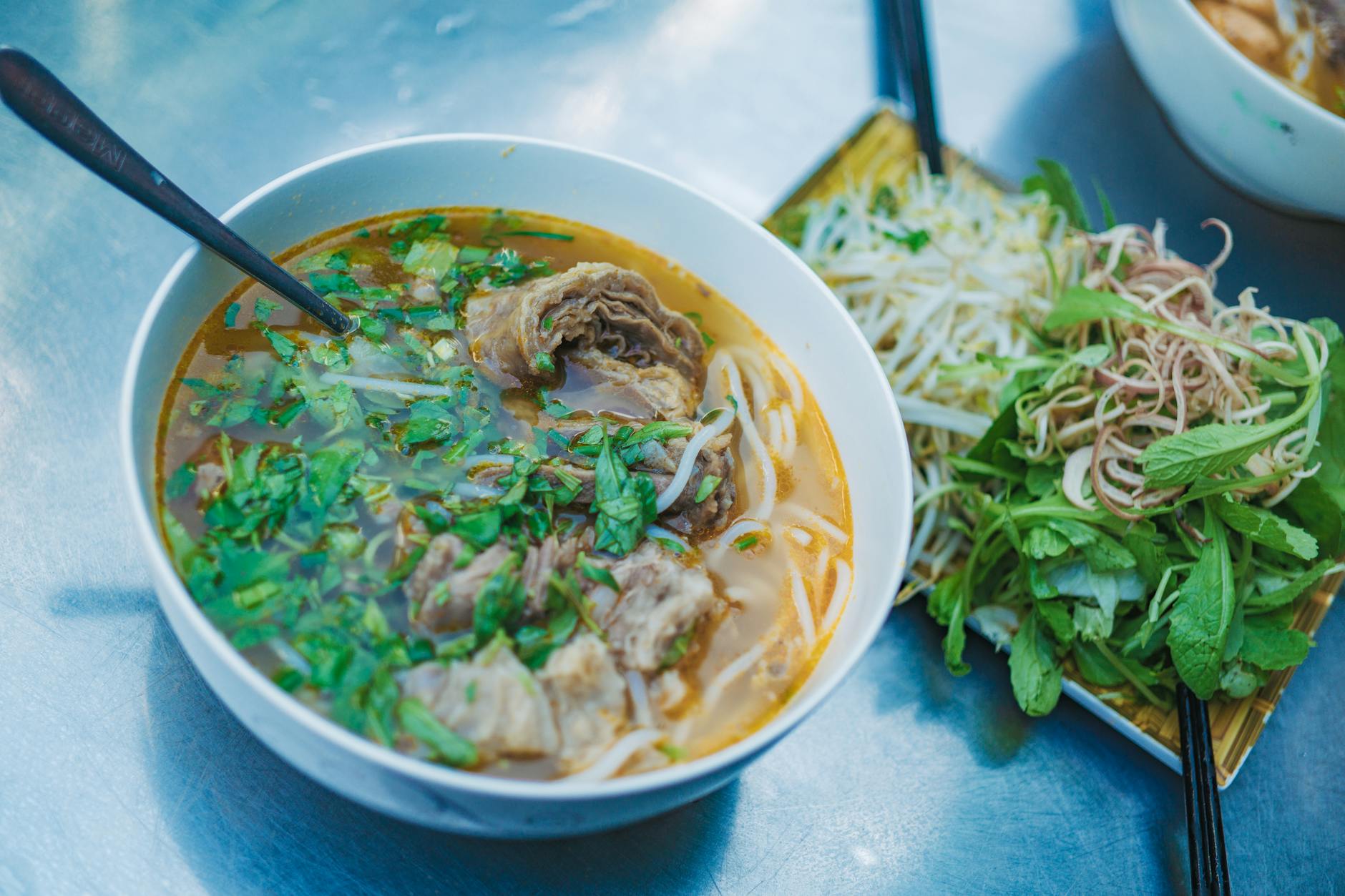
The reality is more nuanced. Most visitors to Vietnam in 2026 will eat street food daily without consequence, while a small percentage will get sick regardless of where they eat. The difference between these outcomes is rarely about luck — it's about reading the right signals, knowing which warnings still hold true, and which have become outdated travel folklore.
This guide separates myth from reality and gives practical, ground-level advice for eating confidently across Vietnam.
Practical tip: don't forget travel insurance before heading to Vietnam — Heymondo applies an automatic 15% discount through our partner link, no code needed.
The Ice Cube Myth: What's Actually True in 2026
The single most repeated piece of travel advice — "don't drink the ice" — is largely outdated. Vietnam's commercial ice industry has been regulated for over two decades, and the ice served in cafés, restaurants and reputable street stalls is industrially produced from filtered water.
There are two types of ice to recognise:
- Tube ice (đá viên): Cylindrical cubes with a hole through the middle. These are machine-produced at licensed factories, sealed in clear plastic bags, and delivered daily. This is safe.
- Block or crushed ice (đá cây): Large opaque blocks chipped manually with a pick. Historically used for chilling seafood and beer crates, occasionally repurposed for drinks at low-end stalls. This is the ice to avoid in beverages.
Tip: If your iced coffee arrives with neat cylindrical cubes that have a hole through the middle, you can drink it without worry. If the ice is irregular, cloudy or chipped, politely decline.
The vast majority of cà phê sữa đá served in Hanoi, Ho Chi Minh City, Đà Nẵng, Hội An and Nha Trang in 2026 uses tube ice. Travellers who refuse all ice are missing out unnecessarily.
The Busy Stall Rule and Other Reliable Signals
The most useful single heuristic for choosing where to eat is turnover. A stall with constant local customers has fresh ingredients, hot oil, and food that hasn't been sitting around. A stall with no customers has the opposite.
Signals that suggest a safe stall
| Signal | Why it matters |
|---|---|
| Constant queue of locals | High turnover means fresh ingredients daily |
| Visible, active cooking | Food cooked to order kills bacteria |
| Specialises in one dish | Owner has mastered hygiene and timing |
| Clean prep surfaces and aprons | Reflects daily cleaning routines |
| Refrigerated or iced raw ingredients | Proteins held at safe temperatures |
| Separate utensils for raw and cooked | Cross-contamination control |
| Family-run, long-established | Reputation depends on no one getting sick |
Signals that suggest you should walk on
| Warning sign | Risk |
|---|---|
| Empty stall at peak hours | Slow turnover, possibly old food |
| Pre-cooked proteins sitting at room temperature | Bacterial growth |
| Flies on raw meat or fish | Contamination |
| Cook handles money then food without washing | Cross-contamination |
| Greying or pungent seafood | Spoilage |
| Reheated noodle broths in lukewarm pots | Should be at rolling boil |
| Located beside open drainage or rubbish piles | Environmental contamination |
Tip: Eat where Vietnamese office workers, taxi drivers and grandmothers eat. They have the strongest incentive of anyone to avoid bad food, and they've been eating at the same stall for years.
The Tap Water Reality
Tap water in Vietnam is not safe to drink directly anywhere in the country, including major cities. This is not because the water leaves treatment plants contaminated, but because the distribution pipework — particularly in older neighbourhoods — is often compromised.
What this means practically:
- Bottled water is essential for drinking. A 500ml bottle costs 8,000–12,000 VND (around 0.30–0.50 USD) at convenience stores. Larger 1.5L bottles run 15,000–20,000 VND (0.60–0.80 USD).
- Brushing teeth with tap water is generally tolerated by most travellers without incident, but those with sensitive systems should use bottled water.
- Cooked food made with tap water — including broths, rice and boiled vegetables — is safe because heat sterilises the water.
- Washed raw vegetables are the genuine grey area, discussed below.
- Coffee, tea and other hot drinks are made with boiled water and are safe.
Tip: Look for the seal on every bottled water purchase. Counterfeit refilling does still occur at remote roadside stops. If the cap twists without a clear breaking sound, choose another bottle.
Many cafés and restaurants now offer filtered water free or for a nominal fee — this is genuinely filtered and safe.
What to Actually Avoid
After ice cube paranoia is set aside, the real risks become clearer. The following are the items most likely to cause traveller's stomach upset:
Raw herbs and lettuce served alongside dishes: Vietnamese cuisine includes generous plates of fresh herbs (rau sống) with phở, bún chả, gỏi cuốn and bánh xèo. These are usually rinsed in tap water. At high-volume restaurants the throughput keeps risk low, but sensitive travellers in their first few days should consider skipping raw greens until their system adjusts.
Pre-prepared rice paper rolls and salads: Items assembled hours in advance and held at room temperature in display cases pose more risk than food cooked to order.
Shellfish from unverified sources: Oysters, clams and undercooked prawns at very cheap seafood stalls carry real risk. At reputable seafood restaurants in coastal cities like Nha Trang, Vũng Tàu or Phú Quốc, shellfish is generally fine.
Sugarcane juice (nước mía): Delicious and refreshing, but the cane is often stored on the ground and the pressing machine can harbour bacteria. Choose stalls where the machine is visibly cleaned and the cane is stored off the ground.
Blood pudding (tiết canh): A traditional dish of raw duck or pig blood. Even Vietnamese health authorities advise against this. Skip it entirely.
Buffet items at budget hotels: Counter-intuitively, hotel breakfasts left under heat lamps for hours cause more illness than freshly cooked street food.
A Practical Stomach Medication Guide
Even careful travellers occasionally experience digestive issues — sometimes from food, sometimes simply from a different microbial environment, climate and diet. Having the right items ready prevents a minor inconvenience from ruining your trip.
| Medication / Item | Purpose | Approx. Price in Vietnam (2026) |
|---|---|---|
| Loperamide (Imodium) | Stops diarrhoea quickly when travel is essential | 25,000–40,000 VND (1.00–1.60 USD) per strip |
| Oral rehydration salts (Oresol) | Replaces lost electrolytes — the most important item | 5,000–10,000 VND (0.20–0.40 USD) per sachet |
| Activated charcoal tablets | General digestive upset, mild food poisoning | 30,000–50,000 VND (1.20–2.00 USD) |
| Berberine tablets | Traditional Vietnamese remedy, widely available, effective for mild cases | 20,000–40,000 VND (0.80–1.60 USD) |
| Smecta (diosmectite) | Coats the stomach, reduces diarrhoea | 60,000–90,000 VND (2.40–3.60 USD) |
| Probiotics | Restoring gut flora during/after a course of upset | 100,000–180,000 VND (4.00–7.20 USD) |
| Paracetamol | Cramps, mild fever | 15,000–25,000 VND (0.60–1.00 USD) |
Pharmacies (nhà thuốc) are abundant in every Vietnamese city and pharmacists frequently speak basic English. No prescription is needed for any of the above.
Tip: Oral rehydration salts are more important than anti-diarrhoeal medication. Most cases of traveller's stomach resolve in 24–48 hours; the real danger is dehydration in Vietnam's heat, not the illness itself.
Seek a doctor or international clinic if symptoms include high fever, blood in stool, severe abdominal pain, or symptoms lasting beyond three days. International medical clinics in Hanoi, Ho Chi Minh City and Đà Nẵng charge approximately 1,500,000–3,500,000 VND (60–140 USD) for a consultation.
Reading Hygiene Signals at a Glance
Before sitting down, take ten seconds to observe:
- The cook's hands and station: Are they wiping surfaces between orders? Using tongs and chopsticks rather than bare hands for cooked food?
- The dishwashing setup: Look for stalls that wash in three basins (soap, rinse, sanitise) or use disposable items. A single bucket of grey water is a poor sign.
- The chopsticks and utensils: Wooden disposable chopsticks come in sealed paper sleeves. Reusable metal or melamine chopsticks should be visibly dry and clean.
- The broth pot: For noodle soups, the broth should be at a vigorous boil or close to it. Lukewarm broth is a warning sign.
- The protein storage: Raw meats and seafood should be in iced or refrigerated displays, not sitting in open air for hours.
Tip: If a stall provides a small bowl of hot tea or boiling water at the start of a meal, this is often intended for rinsing your bowl and chopsticks. Use it — locals do.
Regional Considerations
Food safety standards vary somewhat by region and setting:
- Hanoi and Ho Chi Minh City: Strong street food cultures with high turnover. Food safety inspections occur regularly. Both cities are very safe for street food when basic precautions are followed.
- Hội An and Đà Nẵng: Heavy tourist throughput means many stalls cater to foreign stomachs and are well-practiced in hygiene. Cao lầu and mì Quảng are generally safe at established stalls.
- Mekong Delta and Central Highlands: More rustic setups, less refrigeration in some areas. Stick to hot, cooked dishes and bottled water.
- Coastal areas: Excellent seafood, but choose busy restaurants where the day's catch turns over quickly.
- Mountain regions (Sapa, Hà Giang, Mộc Châu): Cooler temperatures actually reduce some food spoilage risks, but water sources can be less treated. Stick to bottled water rigorously.
Frequently Asked Questions
Is it safe to eat phở from a street stall? Yes, phở is among the safest street foods in Vietnam. The broth is held at near-boiling temperatures, beef is added raw and cooked by the hot broth, and the dish is assembled to order. The only caveat is the plate of raw herbs served alongside — those with sensitive stomachs may skip these in the first few days.
Should travellers take probiotics before arriving? There is moderate evidence that starting a probiotic regimen a week before travel can reduce digestive upset. It's not essential, but harmless and worth considering for those with sensitive systems.
Are bánh mì sandwiches risky because of the pâté and cold cuts? At busy bánh mì stalls with high turnover, the risk is low. Pâté is cooked and held in covered containers, and the bread is toasted to order. Avoid sandwiches that look like they've been pre-made and sitting in displays.
Is it safe to eat at night markets? Night markets vary considerably. Established markets in major tourist cities — Bến Thành, Đà Nẵng's Sơn Trà, Hội An's riverside — are reasonably reliable. Apply the busy stall rule and prefer items cooked to order in front of you over pre-prepared dishes.
What about fresh fruit and juices? Whole fruit you peel yourself (bananas, mangosteen, rambutan, dragon fruit) is essentially zero-risk. Pre-cut fruit on display carries some risk because of the water used to rinse it and the exposed cutting surfaces. Fresh juices made with tube ice and whole fruit blended on the spot are generally safe.
Are vegetarian dishes safer than meat dishes? Not necessarily. Vegetarian dishes still involve washed greens, prep surfaces and water, so the risk profile is similar. The hottest, freshest meat dish from a busy stall may be safer than a cold tofu salad.
Is travel insurance necessary just for food illness? Travel insurance is worth having for many reasons, but a minor stomach upset is rarely a claim-worthy event. Insurance becomes valuable if symptoms escalate to require hospitalisation, which is uncommon but does happen.
Final Thoughts
Eating street food in Vietnam is not a calculated risk to be minimised — it is the single best way to experience the country's culture, economy and creativity. The vast majority of travellers who follow basic rules eat freely and joyfully for weeks without illness.
The framework is simple: choose busy stalls, eat food that's hot and recently cooked, drink bottled water, accept that tube ice is fine, and keep a small medical kit ready. Then sit down on a plastic stool, order whatever the person next to you is having, and enjoy one of the world's great food cultures the way it was meant to be experienced.