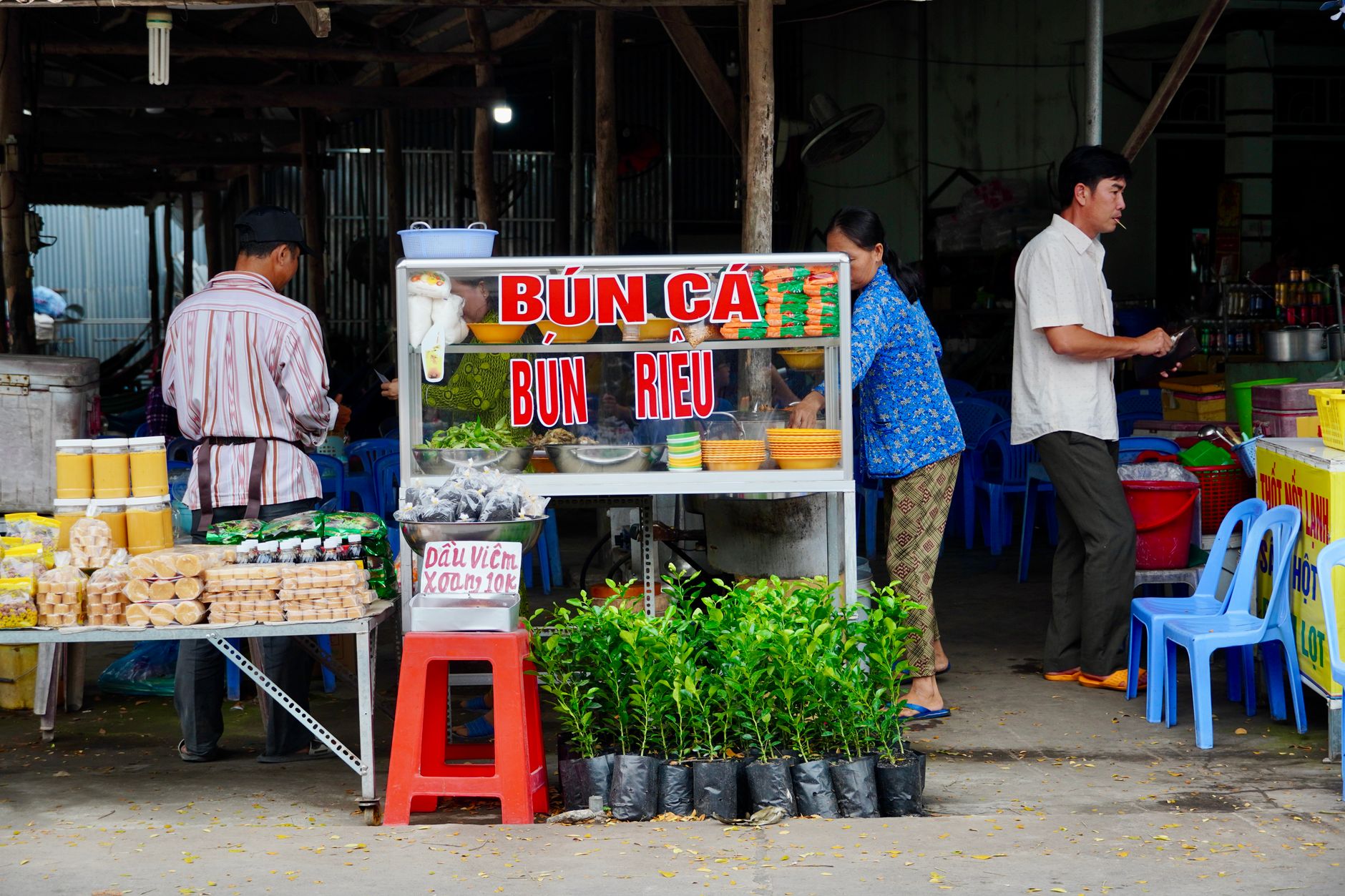
This is not accidental. Vietnam's geography shaped its cooking. The north has limited arable land and colder winters. The center has an imperial culinary tradition dating back to the Nguyen dynasty. The south has year-round sunshine, abundant farmland, and a history of trade with Cambodia, Thailand, and France.
Understanding these regional differences is the key to eating well in Vietnam. This guide breaks down the flavor logic of each region, lists the signature dishes you cannot miss, and tells you exactly where to eat them.
Northern Vietnam: subtlety and balance
Northern Vietnamese cuisine is the oldest and most traditional. It is also the most restrained. The flavors are subtle, the ingredients are simple, and the seasoning is precise.
The north has a cooler climate than the rest of the country. Fresh herbs and vegetables are less abundant. The cuisine relies more on black pepper than chili. Fish sauce is used sparingly compared to the south. The goal is balance, not boldness.
The Chinese influence is strongest here. Stir-frying, steaming, and braising are common techniques. The Vietnamese imperial court moved to Hue in the 19th century, but the cooking traditions of the Red River Delta remained unchanged for centuries.
Signature northern dishes
Pho. This is Vietnam's most famous export, but northern pho is different from what most foreigners know. The broth is clear and clean, made from beef bones, star anise, cinnamon, and ginger. It is not sweet. It is not heavy. It is served with a minimal plate of herbs: a few sprigs of basil, some lime, and chili on the side. Northerners consider it sacrilege to add hoisin sauce or sriracha. The best pho in Hanoi is at Pho Thin (13 Lo Duc Street) and Pho Gia Truyen (49 Bat Dan Street). A bowl costs 50,000-70,000 VND ($2-3).
Bun cha. Grilled pork patties and pork belly served in a bowl of sweet-sour dipping sauce with cold rice noodles and fresh herbs. This is a Hanoi specialty. The dish gained international fame when Barack Obama and Anthony Bourdain ate it together at Bun Cha Huong Lien on Le Van Huu Street. A standard order costs 50,000-70,000 VND ($2-3).
Cha ca. Turmeric-marinated fish, typically snakehead fish, pan-fried at your table with dill, green onion, and peanuts. It is served with rice noodles, shrimp paste, and chili. The most famous restaurant is Cha Ca Thang Long (6B Duong Thanh Street) in Hanoi's Old Quarter. A portion costs 120,000-150,000 VND ($5-6).
Banh cuon. Steamed rice rolls filled with minced pork and wood ear mushrooms, topped with fried shallots and served with fish sauce. The best versions are made fresh in the morning. Look for Banh Cuon Gia Truyen at 14 Hang Ga Street in Hanoi. A plate costs 30,000-50,000 VND ($1.25-2).
Where to eat in the north
Hanoi is the culinary capital of the north. The Old Quarter has the highest concentration of street food stalls. The area around Hoan Kiem Lake is tourist-friendly but still authentic. For a deeper dive, explore the markets: Dong Xuan Market for breakfast, and the night market on the weekends for grilled meats and seafood.
For travelers heading north to the mountains, the ethnic minority communities in Sapa, Mai Chau, and Ha Giang have their own culinary traditions. The H'Mong culture in Vietnam: markets, textiles and homestays in the northern mountains guide covers the food you will find in these regions. Thang co (horse meat stew) and com lam (sticky rice cooked in bamboo tubes) are local specialties worth trying.
Central Vietnam: imperial heat and complexity
Central Vietnam is the spicy middle child. The cuisine here is the most complex, the most colorful, and the most chili-forward in the country.
The imperial court of Hue was the driving force. For nearly 150 years, the Nguyen dynasty ruled from Hue. The royal kitchen developed hundreds of intricate dishes designed to impress visiting dignitaries and satisfy the emperor's palate. Portions were small, presentation was elaborate, and flavors were layered.
The climate also plays a role. Central Vietnam is hot and prone to typhoons. The food is designed to stimulate appetite in punishing heat. Chili, shrimp paste, and fermented fish sauces are used liberally. The result is a cuisine that is bold, spicy, and unforgettable.
Signature central dishes
Bun bo Hue. This is the region's most famous export. A beef noodle soup with a deep, reddish broth made from beef bones, lemongrass, and annatto seeds. It is served with thick rice noodles, slices of beef shank, pork knuckles, and cubes of congealed pig blood. The heat comes from fresh chili and a spoonful of shrimp paste. The best bowl in Hue is at Bun Bo Hue O Phuong (38 Nguyen Dinh Chieu Street). A bowl costs 40,000-60,000 VND ($1.50-2.50).
Mi Quang. A turmeric-yellow noodle dish from Quang Nam province, served with a small amount of broth, pork, shrimp, quail eggs, and crushed peanuts. It is more a salad than a soup. The noodles are wide and flat. The broth is concentrated and intensely flavored. The best versions are in Hoi An and Da Nang. Try Mi Quang Ba Mua (6 Thai Phien Street, Hoi An) or Mi Quang 1A (1A Hai Phong Street, Da Nang). A bowl costs 30,000-50,000 VND ($1.25-2).
Cao lau. A Hoi An specialty that cannot be replicated anywhere else. The noodles are made with local water and ash from local trees. The dish combines thick, chewy noodles with slices of roasted pork, fresh greens, and crispy rice crackers. It is served dry with a small amount of broth on the side. The most famous bowl is at Cao Lau Thanh (26 Thai Phien Street, Hoi An). A bowl costs 35,000-50,000 VND ($1.50-2).
Banh khoai. Hue's version of a crispy pancake, filled with shrimp, pork, and bean sprouts. It is smaller and crispier than the southern banh xeo. It is eaten with a dipping sauce made from liver pate and peanuts. Look for it at Hanh Restaurant (11 Pho Duc Chinh Street, Hue). A portion costs 40,000-60,000 VND ($1.50-2.50).
Where to eat in the center
Hue's Dong Ba Market is the best place to sample imperial cuisine at street food prices. The market has dozens of stalls selling banh beo (steamed rice cakes), banh bot loc (tapioca dumplings), and nem lui (grilled pork skewers). Arrive before 10 AM for the best selection.
Hoi An's Old Town is a UNESCO World Heritage site and a food lover's paradise. The streets are lined with restaurants, but the best food is found in the alleyways. The night market on Nguyen Hoang Street has excellent banh mi and grilled seafood.
Da Nang is the region's largest city and a seafood destination. The beaches have hundreds of seafood restaurants serving clams, crabs, and fish caught that morning. My Khe Beach and the Son Tra Peninsula are the best areas to eat.
For travelers planning a trip between Hanoi and Hue, the Hanoi to Hue 4 Days 3 Nights by Flight: Independent Travel or Package Tour – Which is More Cost-Effective? guide helps you decide the best way to travel between these two culinary worlds.
Pro tip: Central Vietnamese food is genuinely spicy. If you have a low tolerance for chili, ask for "khong cay" (not spicy) when ordering. Even then, some dishes like bun bo Hue will still have heat from shrimp paste.
Southern Vietnam: sweetness and abundance
Southern Vietnamese cuisine is the most generous. It is sweet, it is bold, and it uses ingredients that grow in abundance year-round.
The Mekong Delta is the rice bowl of Vietnam. It also produces coconuts, tropical fruits, and freshwater seafood. The southern kitchen makes full use of this bounty. Coconut milk and coconut cream appear in curries, soups, and desserts. Sugar is added to savory dishes. Fresh herbs are piled high on every plate.
The Khmer and French influences are strongest here. The Khmer contributed curries and fermented fish preparations. The French contributed baguettes, pates, and dairy. The result is a cuisine that feels more tropical, more indulgent, and more open to outside influence than the rest of the country.
Signature southern dishes
Hu tieu. This is the south's answer to pho. The broth is made from pork bones and dried shrimp. It is sweeter and lighter than pho broth. The noodles are thin and translucent. It is served with pork, shrimp, quail eggs, and a mountain of fresh herbs. The best version is hu tieu Nam Vang, a Cambodian-influenced variety with offal and a rich, dark broth. Try it at Hu Tieu Nam Vang Binh Tay (57 Ha Ton Quyen Street, Cho Lon). A bowl costs 40,000-60,000 VND ($1.50-2.50).
Com tam. Broken rice served with grilled pork chop, shredded pork skin, a steamed egg meatloaf, and a side of pickled vegetables. It is the quintessential Saigon lunch. The rice is cheap and filling. The pork is marinated in a sweet-savory sauce and grilled over charcoal. The best com tam in Ho Chi Minh City is at Com Tam Bui (84 Bui Huu Nghia Street, District 4). A plate costs 35,000-55,000 VND ($1.50-2.25).
Banh xeo. A crispy, crepe-like pancake filled with shrimp, pork, and bean sprouts. The southern version is larger and thinner than the central version. It is cooked with coconut milk for extra richness. It is eaten by wrapping pieces in lettuce leaves with herbs and dipping in fish sauce. The best place in Saigon is Banh Xeo 46A (46A Dinh Cong Trang Street, District 1). A pancake costs 40,000-60,000 VND ($1.50-2.50).
Goi cuon. Fresh spring rolls made with shrimp, pork, rice vermicelli, and herbs wrapped in rice paper. They are served with a peanut dipping sauce. The Spring Rolls in Vietnam: Goi Cuon vs Nem, the Real Difference guide explains the difference between fresh and fried versions. Goi cuon are found everywhere in the south, but the best are at street stalls in District 4.
Where to eat in the south
Ho Chi Minh City is the food capital of the south. District 4 is the best neighborhood for street food. The area around the Tan Dinh Church has excellent banh mi stalls. The Ben Thanh Street Food Market is touristy but convenient for first-timers.
The Mekong Delta towns of Can Tho, My Tho, and Ben Tre have their own specialties. Can Tho is famous for its floating markets and riverfront seafood restaurants. The Can Tho Night Market: 2026 Practical Guide for an Authentic Evening guide covers the best places to eat in the delta's largest city.
Pro tip: Southern food is noticeably sweeter than northern or central food. If you prefer savory dishes, ask for "it ngot" (less sweet) when ordering. Street food vendors will adjust the seasoning on request.
Regional flavor comparison table
| Aspect | Northern | Central | Southern |
|---|---|---|---|
| Dominant flavor | Salty, savory | Spicy, complex | Sweet, rich |
| Key seasoning | Fish sauce, black pepper | Chili, shrimp paste | Sugar, coconut milk |
| Noodle preference | Thin pho noodles | Thick round noodles | Thin hu tieu noodles |
| Herb usage | Minimal | Moderate | Abundant |
| French influence | Low | Moderate | High |
| Khmer influence | None | Low | Moderate |
| Best for first-time visitors | Pho, bun cha | Bun bo Hue, mi Quang | Com tam, hu tieu |
| Average meal cost | 40,000-70,000 VND ($1.50-3) | 35,000-60,000 VND ($1.50-2.50) | 35,000-60,000 VND ($1.50-2.50) |
How to eat across regions without getting sick
Vietnamese street food is safe when vendors follow basic hygiene. The Vietnamese Street Food Safety: How to Eat Everywhere Without Getting Sick guide covers the rules in detail.
The general principle is simple: eat where locals eat. A busy stall with high turnover means fresh ingredients. Avoid places where food sits out for hours. Watch for clean cooking surfaces and separate cutting boards for raw and cooked food.
For travelers concerned about stomach issues, the What to eat in Vietnam to not get sick: A practical guide for travelers guide has specific recommendations for each region.
The best time to eat your way through Vietnam
The weather affects both what is available and where you want to be. The Vietnam Weather by Month: The Best Time to Visit Each Region guide breaks down the optimal timing.
For northern food, visit between October and April. The weather is cool and dry. Street food stalls are busiest in the morning and evening. Avoid July through September when the heat and rain make eating on the street less pleasant.
For central food, visit between February and August. The dry season means fewer disruptions. Typhoon season runs from September to November. The Typhoon Season in Central Vietnam: What Happens If One Hits Your Trip guide explains the risks.
For southern food, the dry season from December to April is ideal. The Mekong Delta floods during the rainy season from May to November, but the floating markets still operate. The What are the Most Beautiful Floating Markets in Vietnam? Complete Guide 2026 guide has timing advice.
Frequently asked questions
Q: Is pho really different in the north and south?
Yes. Northern pho has a clear, savory broth with minimal sweetness. Southern pho has a sweeter broth and is served with more herbs, bean sprouts, and hoisin sauce. Many southerners add sriracha and hoisin directly to the bowl, which northerners consider disrespectful.
Q: Which region has the spiciest food?
Central Vietnam, specifically Hue. Bun bo Hue and other Hue dishes use fresh chili, chili oil, and shrimp paste for heat. Northern food uses black pepper for mild warmth. Southern food uses chili but balances it with sugar and coconut milk.
Q: Can I find vegetarian versions of these dishes?
Yes, but with limitations. Northern and central cuisines rely heavily on fish sauce and shrimp paste. Southern cuisine has more Buddhist vegetarian traditions. The Which City Has the Strongest Vegan Presence in Vietnam? Complete 2026 Guide guide covers the best cities for plant-based eating.
Q: What is the most expensive dish in Vietnamese cuisine?
Imperial Hue cuisine is the most elaborate and expensive. Dishes like banh khoai and banh beo are cheap at street stalls, but royal banquet versions with multiple courses can cost 500,000-1,000,000 VND ($20-40) per person at high-end restaurants in Hue.
Q: How do I order food if I don't speak Vietnamese?
Pointing at what others are eating works well. Most street food stalls have pictures. The Vietnamese greetings and social etiquette: a practical guide for travelers guide covers basic phrases. Learning "mot pho bo" (one beef pho) and "khong cay" (not spicy) will cover most situations.
Q: Which region has the best seafood?
Central Vietnam, specifically Da Nang and Hoi An. The central coast has the freshest seafood due to the proximity of fishing ports. Southern seafood is also good but often comes from aquaculture rather than wild catch. Northern seafood is limited due to the colder waters of the Gulf of Tonkin.
Q: Should I tip at restaurants in Vietnam?
Tipping is not expected at street food stalls. At mid-range and upscale restaurants, 5-10% is appreciated but not required. The Do you tip at Vietnamese restaurants? The complete guide for travelers guide has the full breakdown.