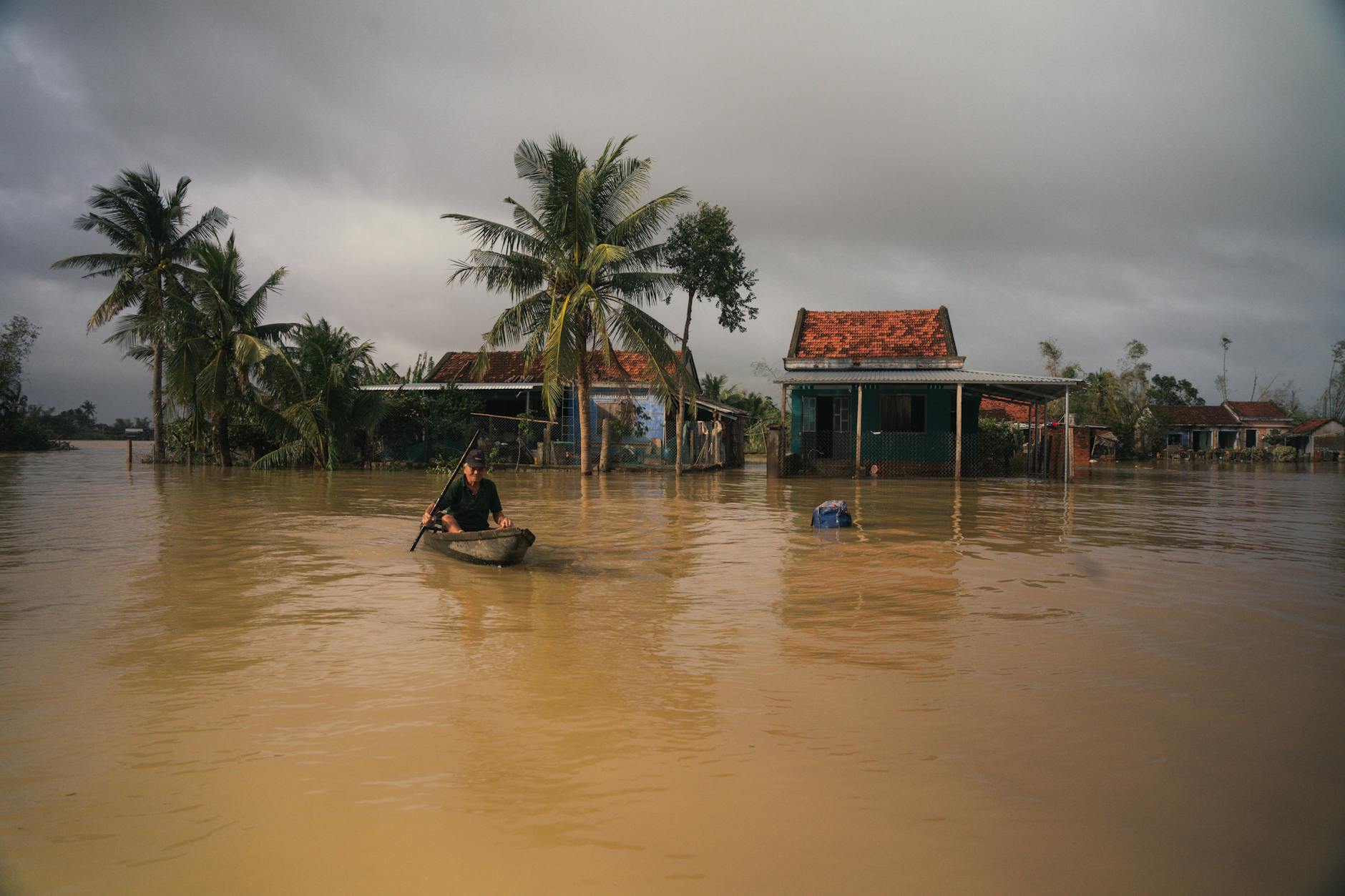
Why September to November Is the Riskiest Window
Central Vietnam's typhoon season technically runs from July to December, but the peak intensity falls squarely between mid-September and mid-November. During this window, warm sea surface temperatures combine with shifting monsoon patterns to produce storms that often make landfall between Quang Binh and Quang Ngai provinces — putting Hue, Da Nang, and Hoi An directly in the firing line.
Recent seasons have driven the point home. In October 2024, Typhoon Trami dumped more than 600mm of rain on Hoi An in 72 hours, submerging the lantern-lit streets of the Ancient Town under waist-deep water and stranding thousands of travellers. In September 2025, Tropical Storm Bualoi forced the closure of Da Nang International Airport for nearly 48 hours, cancelling more than 180 flights and leaving cruise passengers from Chan May port without shore excursions.
The numbers tell the story:
| Month | Avg. Typhoons Affecting Central VN | Rainfall (Da Nang, mm) | Flight Disruption Risk |
|---|---|---|---|
| September | 1–2 | 280–350 | Moderate |
| October | 2–3 | 550–700 | High |
| November | 1–2 | 400–500 | Moderate–High |
| December | 0–1 | 200–250 | Low–Moderate |
Tip: If your trip is locked into October, build in two buffer days at each end. A single typhoon can easily knock out 48–72 hours of travel plans.
What Actually Happens When a Typhoon Hits
The first sign for most travellers is not the weather itself but a notification from the airline. Vietnam Airlines, Bamboo Airways, Vietjet, and VietravelAirlines typically begin issuing cancellation alerts 24 to 36 hours before a storm's projected landfall. Da Nang International Airport — the regional hub — closes when sustained winds exceed roughly 60 km/h, which corresponds to a moderate tropical storm.
Once airspace closes, the cascade begins. Roads from Hue to Hoi An flood within hours, the Hai Van Pass is often shut for safety, and the rail line through the Lang Co tunnel may suspend service. Hoi An's Ancient Town, sitting in the Thu Bon River floodplain, frequently submerges to depths of 1–2 metres. Boutique hotels along Bach Dang Street become inaccessible by foot, and many shift guests to upper floors or move them entirely to properties in An Bang or Cam Thanh.
Cruise lines respond by skipping Chan May port altogether. In the 2024 and 2025 seasons, lines including Princess Cruises, Royal Caribbean, and Silversea rerouted multiple sailings to Ha Long Bay or extended sea days when typhoons were forecast within 500 nautical miles of the central coast. Passengers do not receive refunds for missed ports under most cruise contracts — only onboard credit, typically between 1,500,000 VND and 3,500,000 VND (60–140 USD) per cabin.
Flight Cancellations: What Airlines Owe You
Vietnamese aviation law treats typhoons as force majeure events. This is critical because it means airlines are not required to compensate you for delays or cancellations — they are only required to rebook you on the next available flight or refund the ticket.
Here is how the main carriers handled disruptions in 2024–2025:
| Airline | Rebooking Window | Refund Processing | Hotel Compensation? |
|---|---|---|---|
| Vietnam Airlines | Within 7 days, no fee | 14–21 business days | No (force majeure) |
| Bamboo Airways | Within 10 days, no fee | 30–45 business days | No |
| Vietjet Air | Within 5 days, no fee | 30–60 business days | No |
| VietravelAirlines | Within 7 days, no fee | 21–30 business days | No |
International carriers like Singapore Airlines, Korean Air, and Cathay Pacific generally offer more flexible rebooking and sometimes hotel vouchers, but only if the disruption originates from their hub — not from a closed Da Nang airport.
Tip: Book domestic connections to Da Nang on the same ticket as your international flight whenever possible. Separate bookings leave you stranded with no recourse if one leg cancels.
For 2026, expect ticket prices on the Hanoi–Da Nang and HCMC–Da Nang routes to range from 1,200,000 to 2,800,000 VND (48–112 USD) one-way in shoulder season, climbing to 3,500,000 VND (140 USD) during rebooking surges immediately after a storm passes.
Travel Insurance: Reading the Fine Print
This is where most travellers get caught out. Standard travel insurance policies sold in 2026 fall into three broad tiers, and only the top tier reliably covers typhoon disruption.
| Policy Tier | Typical Cost (10-day trip) | Typhoon Coverage |
|---|---|---|
| Basic | 350,000–600,000 VND (14–24 USD) | Medical only — no trip interruption |
| Mid-tier | 800,000–1,500,000 VND (32–60 USD) | Trip delay after 12 hrs, capped at 5,000,000 VND |
| Comprehensive / "Cancel for Any Reason" | 2,500,000–4,500,000 VND (100–180 USD) | Full trip interruption, hotel, rebooking |
The traps to watch for:
- "Known event" clauses. If a typhoon has already been named by the Japan Meteorological Agency before you purchase your policy, claims related to it will be denied. Always buy insurance at the same time as booking flights.
- Documentation requirements. Most insurers require an official airline cancellation notice, original receipts for replacement expenses, and a weather authority bulletin. Screenshots from apps are usually not accepted.
- Per-day caps. Mid-tier policies often cap accommodation reimbursement at 1,500,000 VND (60 USD) per night — well below the rate of any decent Da Nang beachfront hotel in shoulder season.
- Cruise carve-outs. Many policies exclude missed cruise ports from interruption coverage, treating them as itinerary changes rather than disruptions.
Tip: "Cancel for Any Reason" (CFAR) upgrades typically reimburse only 50–75% of non-refundable costs, but they are the only product that pays out if you simply decide to abandon a trip because a typhoon is forecast.
How to Prepare Before You Travel
Preparation is unglamorous but pays for itself the first time a storm rolls in.
Two to three months out: Book refundable or flexible-rate hotels wherever possible. Properties like the Anantara Hoi An, Four Seasons The Nam Hai, and Furama Resort Da Nang offer free cancellation up to 48 hours prior on most rates in 2026, with peak shoulder-season rates running 4,500,000–14,000,000 VND (180–560 USD) per night.
Two weeks out: Begin checking the Vietnam National Centre for Hydro-Meteorological Forecasting (nchmf.gov.vn) and the Joint Typhoon Warning Centre. Both publish 5-day outlooks that are reasonably accurate for the central coast.
Three days out: If a system is named and tracking toward central Vietnam, contact your airline proactively. Most carriers will allow free changes once a storm advisory is officially issued, even before they formally announce cancellations.
Pack a typhoon kit: A waterproof phone pouch, a power bank of at least 20,000 mAh, a basic first-aid kit, paper copies of insurance documents and passport, and around 3,000,000 VND (120 USD) in cash. ATMs frequently go offline during extended power cuts, and Hoi An lost grid power for 60+ hours during Trami.
Tip: Save your hotel's WhatsApp or Zalo contact before arrival. During the 2024 floods, hotels in Hoi An coordinated guest evacuations almost entirely through messaging apps when phone lines failed.
Real Stories from the 2024 and 2025 Seasons
A British couple on a 14-day Vietnam tour in October 2024 found themselves stranded in Hue after Typhoon Trami flooded the road south. Their tour operator rebooked the Hoi An portion as a Hanoi extension, and their comprehensive insurance reimbursed roughly 18,000,000 VND (720 USD) in additional accommodation and transport — but the claim took four months to settle.
A Singaporean family of four on a Princess cruise in September 2025 missed both Chan May (for Hue/Da Nang) and Nha Trang due to Tropical Storm Bualoi. They received 2,400,000 VND (96 USD) in onboard credit per cabin and nothing more. Their travel insurance denied the missed-port claim on the basis that the ship continued sailing.
An Australian solo traveller flying Vietjet from HCMC to Da Nang in October 2025 had her flight cancelled three hours before departure. Vietjet offered a refund or rebooking five days later. With a non-refundable hotel in Hoi An, she paid 4,200,000 VND (168 USD) for a Bamboo Airways flight the next day. Her mid-tier policy reimbursed only the first night of the lost hotel — about 1,500,000 VND (60 USD) — because of the daily cap.
The pattern is clear: travellers with comprehensive insurance, flexible bookings, and a built-in buffer recover; those without absorb the losses.
What to Do If You're Already There
If a typhoon is forecast within 48 hours of your location, the priorities are simple: get to higher ground, stay connected, and follow hotel staff instructions. Most international-standard hotels in Da Nang and Hoi An have detailed typhoon protocols, including generator backup, stockpiled water, and emergency food.
Avoid coastal roads, the Marble Mountains area, and any river crossings during and immediately after the storm. The most common injuries during the 2024 season were not from wind but from people wading through floodwater that contained downed power lines, debris, and displaced wildlife including snakes.
If your flight out has been cancelled, do not queue at the airport. Call the airline, use the app, or have your hotel concierge handle the rebooking. Da Nang airport during a post-typhoon surge in 2025 saw queues of 6+ hours at airline counters.
Tip: If you are flexible, sit tight for 48–72 hours after a storm rather than scrambling to leave. Prices spike, roads are dangerous, and the weather immediately after a typhoon is often spectacular.
Frequently Asked Questions
Is it worth travelling to central Vietnam in October at all? Yes, with caveats. October offers lower prices (often 30–40% below peak), fewer crowds, and dramatic light between storms. But it requires flexible bookings, comprehensive insurance, and a tolerance for itinerary changes.
Will my hotel refund me if I cannot reach it because of a typhoon? Only if you booked a flexible rate or if the hotel itself is closed. Non-refundable rates are generally not refunded for guest no-shows, even due to weather. This is where insurance fills the gap.
Are there any parts of central Vietnam that are safer during typhoon season? Inland areas like Ba Na Hills and the Bach Ma highlands are less affected by storm surge and flooding, though landslides are a separate risk. Hue is somewhat more sheltered than Hoi An but still floods regularly.
Do cruise lines refund missed Vietnamese ports? Almost never in cash. Standard practice is onboard credit of 1,500,000–3,500,000 VND (60–140 USD) per cabin. Read your cruise contract's port substitution clause before booking.
Can I buy travel insurance after a typhoon is named? You can buy it, but the named storm will be excluded from coverage as a "known event." Always insure at the time of booking.
How accurate are typhoon forecasts for central Vietnam? The 72-hour forecast track is generally accurate to within 100–150 km. The 5-day forecast is less reliable but useful for early decision-making. Trust the Vietnamese national meteorological service over private weather apps.
What is the safest month to visit central Vietnam if I want beach weather? February to May. The sea is calm, rainfall is minimal, and humidity is manageable. June through August is hot but largely typhoon-free, though crowds and prices peak in July.
Central Vietnam in typhoon season is not a region to avoid — it is a region to respect. Travellers who understand the risks, prepare properly, and accept that flexibility is part of the experience can still have a remarkable trip. Those who do not may end up paying for the lesson twice.