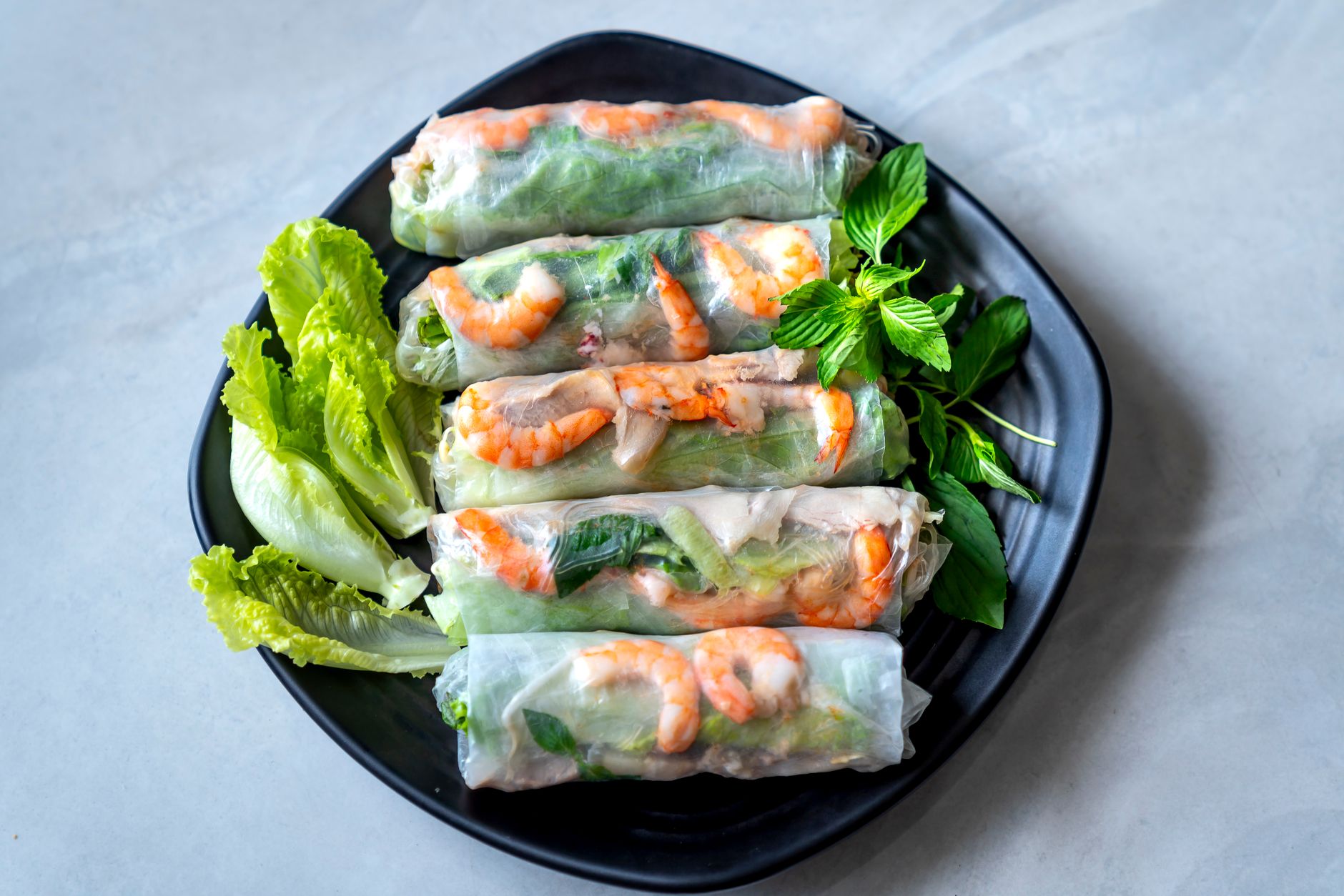
This guide breaks down what you are actually getting, how to order what you want, and why the North-South divide matters more than you think.
What travelers get wrong about Vietnamese spring rolls
The English term "spring roll" covers both fresh and fried versions in Vietnam. Locals use completely different names. This creates confusion for travelers who expect one thing and get another.
In Hanoi, ask for "spring rolls" and you might get fresh rice paper rolls stuffed with herbs. In Saigon, the same English phrase could bring you deep-fried pork rolls. Tourist menus often translate both versions as "spring rolls" with no distinction.
The North-South naming divide is the root of the problem. Northerners call fresh rolls nem cuon and fried rolls nem ran. Southerners call fresh rolls goi cuon and fried rolls cha gio. Central Vietnam has its own variations.
Pro tip: Never rely on English menu descriptions alone. Look at the Vietnamese name or point at what other customers are eating.
The two main families: fresh rolls vs fried rolls
Goi cuon / nem cuon (fresh rolls)
Fresh rolls belong to the same family across Vietnam. The differences are subtle but matter to locals.
Goi cuon (southern name) and nem cuon (northern name) are the same dish. Standard ingredients include rice paper, shrimp, pork, vermicelli noodles, fresh herbs, and lettuce. The rice paper is softened in water, filled, and rolled tight. No cooking required.
Regional variations exist. Southern versions use more vermicelli and sweeter herbs like Thai basil. Northern versions use leaner pork and more aromatic herbs like perilla and fish mint. Central versions sometimes substitute grilled pork for boiled pork.
The rolls are served cold or at room temperature. They arrive with a dipping sauce and sometimes a side of fresh lettuce and herbs for wrapping.
Cha gio / nem ran (fried rolls)
Fried rolls are the other major family. Cha gio (southern name) and nem ran (northern name) share the same basic concept but differ in execution.
The filling typically includes minced pork, wood ear mushrooms, glass noodles, and egg. Northern versions are smaller and crispier. Southern versions are larger and sometimes use different wrappers, including wheat-based wrappers instead of rice paper.
Central Vietnamese fried rolls often include whole shrimp. Southern versions add taro or jicama for sweetness. Northern versions sometimes include crab.
The rolls are deep-fried until golden brown. They are served hot with a dipping sauce and a plate of fresh herbs and lettuce for wrapping.
| Feature | Fresh rolls (goi cuon / nem cuon) | Fried rolls (cha gio / nem ran) |
|---|---|---|
| Northern name | Nem cuon | Nem ran |
| Southern name | Goi cuon | Cha gio |
| Wrapper | Rice paper (softened) | Rice paper or wheat wrapper |
| Filling base | Shrimp, pork, herbs, vermicelli | Minced pork, mushrooms, glass noodles |
| Cooking method | None (assembled fresh) | Deep-fried |
| Typical dipping sauce | Peanut sauce or nuoc cham | Nuoc cham (fish sauce) |
| Texture | Soft, cool, refreshing | Crispy, hot, savory |
Regional naming guide: what to say where
| City | Fresh roll name | Fried roll name | Typical sauce |
|---|---|---|---|
| Hanoi | Nem cuon | Nem ran | Nuoc cham (fish sauce) |
| Saigon | Goi cuon | Cha gio | Mam nem (fermented anchovy) or peanut sauce |
| Da Nang | Goi cuon or nem cuon | Cha gio or nem ran | Tuong xao (peanut sauce) |
| Hoi An | Goi cuon | Cha gio | Peanut sauce |
| Hue | Nem cuon | Nem ran | Tuong xao (peanut sauce) |
In tourist areas, English menus blur these distinctions. A vendor in Saigon might list "spring rolls" and serve fried rolls. A vendor in Hanoi might serve fresh rolls under the same English name. Always confirm.
If you want fresh rolls in Hanoi, say "nem cuon." If you want fried rolls in Saigon, say "cha gio." If you are in Da Nang or Hoi An, either name might work, but the sauce will be peanut-based.
Dipping sauces: the real regional divide
The dipping sauce matters more than the roll itself. Locals judge a spring roll vendor by their sauce.
Northern style: nuoc cham
Fish sauce based, lighter, with vinegar and less chili. The default in Hanoi. Served with fried rolls and sometimes fresh rolls. The acidity cuts through the richness of fried food.
Central style: tuong xao / peanut sauce
Fermented bean paste with peanut butter, coconut water, and garlic. Sweeter and thicker. Dominates in Hue and Da Nang. Often served with fresh rolls. The sweetness balances the herbal freshness of the filling.
Southern style: mam nem
Fermented anchovy sauce with pineapple, garlic, and chili. Pungent and polarizing. Common in Saigon and the Mekong Delta. Travelers should be warned about the strong smell. Some love it. Many do not.
Other sauces
Tuong dau phong (peanut and soybean paste) appears in some regions. Sweet chili sauce is a tourist adaptation, common in overseas Vietnamese restaurants but rare on the street. Hoisin-based dips appear in Westernized settings.
Warning: Dipping sauces left out at room temperature can spoil. Busy vendors with high turnover serve safer sauces. If the sauce looks separated or smells off, skip it.
What is actually inside: filling variations by region
Northern fresh rolls (nem cuon)
Leaner fillings with more herbs and less vermicelli. Common herbs include perilla leaves, mint, and fish mint. Pork belly with a higher meat-to-fat ratio. The rolls are tighter and more compact.
Southern fresh rolls (goi cuon)
More vermicelli and sweeter herbs like Thai basil. Some vendors add lettuce wraps inside the roll. Pork belly with more fat. Shrimp are placed cut-side up for presentation. The rolls are looser and more visible.
Central fresh rolls
Simpler fillings. Often served with grilled pork or nem nuong (grilled pork sausage) instead of boiled pork. The dipping sauce is the star. The roll itself is a vehicle for the sauce.
Fried roll fillings across regions
Northern fried rolls (nem ran) use minced pork, wood ear mushrooms, glass noodles, and sometimes crab. Southern fried rolls (cha gio) add taro or jicama for sweetness. Central versions may include whole shrimp for texture.
How to eat spring rolls like a local
Fresh rolls: dip and eat immediately. Do not let them sit. The rice paper continues to absorb moisture and becomes gummy.
Fried rolls: wrap in lettuce with herbs, then dip. The lettuce adds crunch and freshness. The herbs add flavor. The sauce adds the final layer.
Proper dipping technique: hold the roll by one end. Dip only the other end into the sauce. Do not soak the entire roll. This keeps the roll from falling apart.
The accompanying plate of herbs and lettuce is not decorative. Use it. Stuff a few herbs into your roll before dipping. Wrap the entire roll in lettuce if you want.
Common tourist mistakes: ordering too many rolls at once (they get soggy), skipping the herbs, drowning the roll in sauce, eating fried rolls without lettuce.
Pro tip: Start with 2-3 rolls. Order more if you are still hungry. Fresh rolls do not keep well.
Vegetarian and vegan spring rolls
Vegetarian versions exist but are not always labeled. Goi cuon chay (vegetarian fresh rolls) use tofu, mushrooms, and extra vegetables. Fried vegetarian rolls use tofu and vegetables.
The problem is the dipping sauce. Almost all sauces contain fish sauce. Vegans should request soy sauce or a dedicated vegetarian sauce. Some vendors can accommodate, but not all.
Pro tip: Say "khong mam" (no fish sauce) or "toi an chay" (I eat vegetarian). Some vendors have separate vegetarian dipping sauce.
For more on navigating food restrictions in Vietnam, read our guide on what to eat in Vietnam to not get sick.
Where to find the best spring rolls in Vietnam
Street vendors vs restaurants
Street vendors offer the most authentic experience at 10,000-20,000 VND per roll ($0.40-$0.80). Restaurants charge 50,000-100,000 VND ($2-$4) but offer more consistency and cleaner preparation. Try both.
Recommended locations by city
Hanoi: Old Quarter, Dong Xuan Market area for nem ran. Saigon: Ben Thanh Market area, Bui Vien walking street for goi cuon. Da Nang: Con Market, Son Tra night market. Hoi An: Central market, night market area.
What to look for in quality
Fresh rolls: rice paper should be translucent but not tearing. Shrimp should be pink and visible. Herbs should be fresh and not wilted.
Fried rolls: should be golden brown, not greasy. The filling should be moist and flavorful. Avoid pre-made rolls sitting out for hours.
Health and safety considerations
Fresh rolls are generally safe because ingredients are boiled or raw and assembled to order. The risk comes from ingredients sitting out at room temperature.
Fried rolls are cooked at high temperature, reducing bacterial risk. The frying process kills most pathogens.
Dipping sauces left out at room temperature can spoil. Sugar and salt act as preservatives, but sauces left uncovered for hours can develop bacteria.
Choose busy vendors with high turnover. Avoid rolls that look dried out or have been sitting uncovered. If the vendor is popular with locals, the food is fresh.
For more on street food safety, read our guide on Vietnamese street food safety.
Common misconceptions and tourist traps
"Summer rolls" is a Western marketing term, not a Vietnamese name. No vendor in Vietnam calls them summer rolls.
Fried rolls are not always called spring rolls. In Vietnam, the name depends on the region and the cooking method.
The number of shrimp visible on the outside does not match the number inside. Some vendors use one shrimp cut in half to create the illusion of two.
Some restaurants charge tourist prices for pre-made rolls. Look for vendors making rolls to order. Watch them assemble the roll.
Warning: Some vendors in tourist areas charge double or triple the local price. Ask the price before ordering.
How to order spring rolls in Vietnamese
"Mot phan nem ran" (one order of fried rolls, Hanoi). "Mot dia goi cuon" (one plate of fresh rolls, Saigon).
To specify sauce preference: "Khong mam nem" (no fermented fish sauce). "Nuoc cham" (fish sauce). "Tuong dau phong" (peanut sauce).
For vegetarian versions: "Goi cuon chay" (vegetarian fresh rolls). "Cha gio chay" (vegetarian fried rolls).
To say no pork or no shrimp: "Khong thit heo" (no pork). "Khong tom" (no shrimp).
Pro tip: Point at what other customers are eating. Smile. Say "Mot phan giong vay" (One portion like that). This works every time.
For more on navigating Vietnamese food culture, read our guide on Vietnamese coffee decoded and beyond pho: 15 Vietnamese noodle soups.
FAQ
Q: What is the difference between spring rolls and nem rolls?
A: In Vietnam, "spring roll" is an English catch-all term. Nem rolls specifically refer to fresh rolls in northern Vietnam (nem cuon) or fried rolls in southern Vietnam (cha gio, sometimes called nem). The key is knowing which region you are in.
Q: What are the different types of Vietnamese spring rolls?
A: Two main families: fresh rolls (goi cuon in the South, nem cuon in the North) made with rice paper, shrimp, pork, herbs, and vermicelli. Fried rolls (cha gio in the South, nem ran in the North) made with minced pork, mushrooms, and glass noodles wrapped in rice paper and deep-fried.
Q: What does goi cuon mean in Vietnamese?
A: Goi cuon translates to "salad roll." The name comes from the fresh vegetable and herb filling, essentially a salad wrapped in rice paper instead of tossed in a bowl.
Q: What is the difference between North and South Vietnamese spring rolls?
A: Northern spring rolls (nem cuon fresh, nem ran fried) use lighter dipping sauces with more vinegar, leaner fillings, and smaller, crispier fried rolls. Southern versions (goi cuon fresh, cha gio fried) use sweeter, thicker sauces like peanut sauce or fermented anchovy sauce, more vermicelli in fresh rolls, and larger fried rolls with taro or jicama added.
Q: Are Vietnamese spring rolls healthy?
A: Fresh rolls are generally healthy: boiled protein, fresh vegetables, rice paper, and herbs with minimal oil. Fried rolls are deep-fried and higher in calories and fat. Both can be part of a balanced meal, but the dipping sauce can add significant sugar and sodium.
Q: Can vegetarians eat Vietnamese spring rolls?
A: Yes, but with caution. Vegetarian fresh rolls (goi cuon chay) exist and use tofu and vegetables. The problem is dipping sauces, which almost always contain fish sauce. Request soy sauce or a dedicated vegetarian sauce, or ask for plain nuoc cham made without fish sauce (some vendors can accommodate).
Q: Why do some Vietnamese spring rolls look different than others?
A: The appearance varies by region and vendor. Southern fresh rolls often show shrimp halves arranged cut-side up for presentation. Northern fresh rolls may appear more uniform with the filling fully enclosed. Fried rolls vary in size, wrapper type (rice paper vs wheat-based), and color depending on the recipe.
Q: How many spring rolls should I order per person?
A: For a snack or appetizer, 2-4 fresh rolls or 4-6 fried rolls per person. For a main meal, 6-8 fresh rolls or 8-10 fried rolls. Street vendors sell by the roll, so start with a small order and add more if needed.