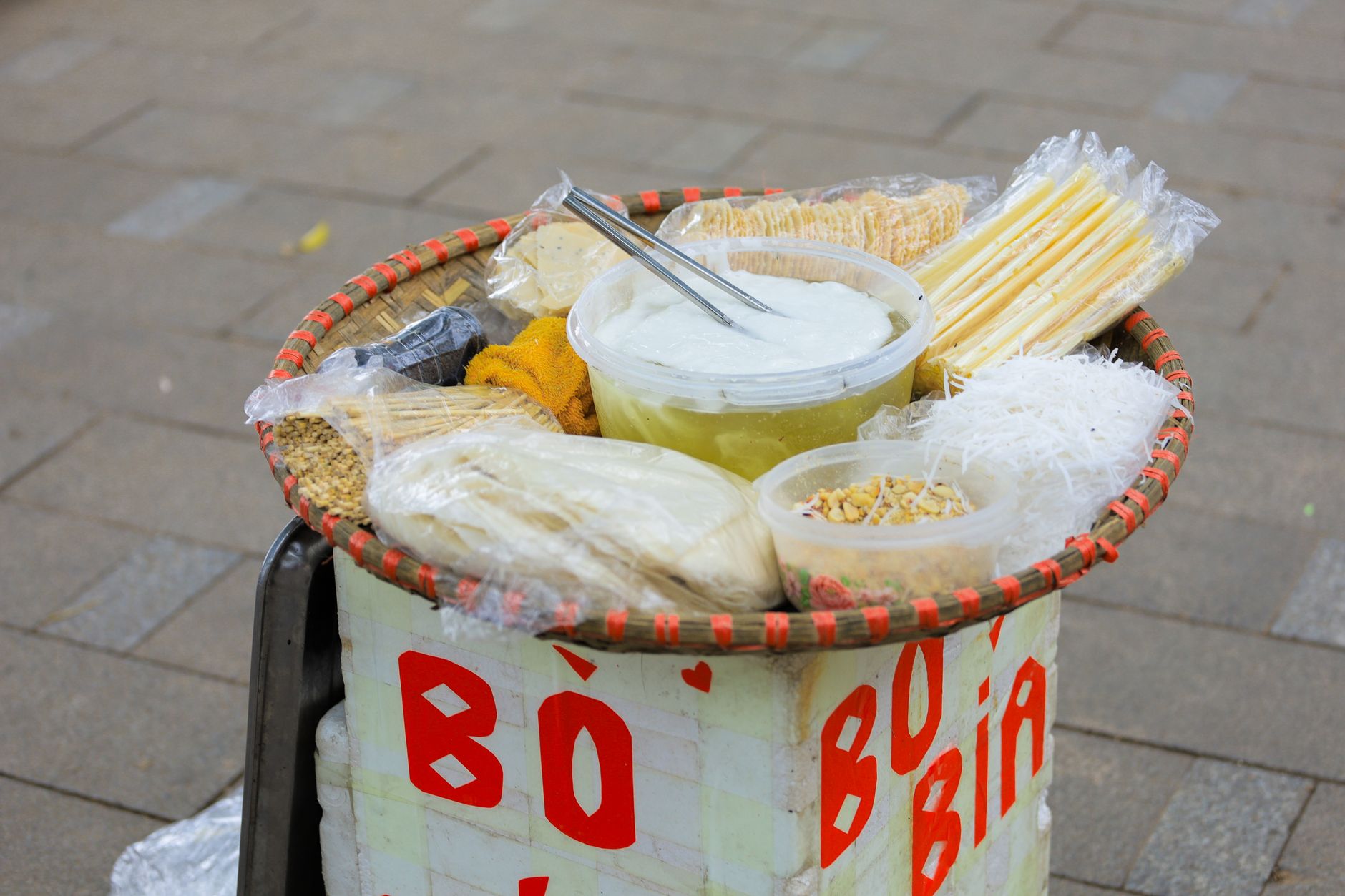
Vietnam has two distinct market universes. The wet market (chợ truyền thống) operates in the morning and sells raw ingredients. The night market (chợ đêm) emerges after sunset and sells prepared food, clothes, and souvenirs. Understanding the difference is the first step to shopping like a local.
This guide covers both. It explains when to go, what to eat, how to bargain, and which markets deserve a spot on your itinerary. No tours. No affiliate links. Just practical knowledge from the ground.
Wet markets vs night markets: what's the difference?
Wet markets get their name from the constant hosing down of concrete floors. Vendors spray water to keep fish fresh and vegetables crisp. These markets serve local households buying ingredients for the day's meals. They start before dawn and wind down by noon. The remaining stock gets sold cheaply after 11am.
Night markets are a different animal. They cater to evening strollers, tourists, and young locals looking for cheap street food and social atmosphere. Stalls sell grilled seafood, noodles, sugarcane juice, and fried snacks. The quality varies. The prices are higher than wet markets but lower than restaurants.
Pro tip: For the best food experience, visit a wet market at breakfast time (6-8am) and eat at the stalls inside. For a social evening with beer and grilled meats, hit a night market after 7pm.
Some cities blur the line. Ben Thanh Market in Ho Chi Minh City operates as a wet market in the morning and transforms into a night market after 6pm, with tourist-oriented prices at both ends.
The best markets by city
Hanoi: Dong Xuan Market and the Old Quarter night market
Dong Xuan Market is Hanoi's largest covered market. It sits near the northern edge of the Old Quarter, a massive French-colonial building that survived the 1947 fire. Inside, the ground floor sells fresh produce, meat, and fish. The upper floors sell textiles, electronics, and household goods.
The food section is chaotic in the best way. Women chop pork on wooden blocks. Fish gasp in shallow tubs. Bunches of mint, basil, and coriander sit in woven baskets. The market's perimeter has small eateries serving bún chả (grilled pork with noodles) and phở bò (beef noodle soup).
On weekend evenings, the streets around Dong Xuan become the Hanoi Night Market. This stretches from Hang Dao Street to Dong Xuan Gate. It sells mostly clothes and souvenirs. The food is decent but not exceptional. The real draw is the atmosphere: thousands of people walking through lantern-lit streets.
Pro tip: Eat at the stalls inside Dong Xuan Market, not at the night market. The inside stalls cook for locals who have shopped there for decades.
Ho Chi Minh City: Ben Thanh Market and Binh Tay Market
Ben Thanh Market is the most famous market in Vietnam. It is also the most expensive. Located in District 1, it attracts tourists by the busload. Vendors quote prices three to four times higher than local rates. Bargaining is expected but exhausting.
The food court at the back of Ben Thanh is solid. Try the bánh xèo (crispy pancake) and cơm tấm (broken rice). Prices run 40,000-80,000 VND ($1.60-3.20) per dish. Not cheap by local standards but reasonable for the convenience.
For a more authentic experience, go to Binh Tay Market in Cholon (Chinatown). This market serves the local Chinese-Vietnamese community. The building is a faded yellow beauty with a central courtyard. Vendors here barely acknowledge tourists. They are too busy selling wholesale goods to restaurant owners and shopkeepers.
The food stalls at Binh Tay are exceptional. Try hủ tiếu Nam Vang (Phnom Penh-style noodle soup) and bánh bò (steamed rice cakes). Prices are 20,000-40,000 VND ($0.80-1.60).
Da Nang: Han Market and Con Market
Han Market sits across from the Han River, a short walk from the Dragon Bridge. It is smaller than Ben Thanh but less touristy. The ground floor sells fresh seafood, tropical fruits, and dried goods. The upper floor sells fabric and souvenirs.
Con Market is larger and more local. It sits west of the city center. The food section is enormous. Vendors sell mì Quảng (turmeric noodles), bánh tráng cuốn thịt heo (rice paper rolls with pork), and chè (sweet dessert soup). Prices are consistently lower than Han Market.
Hoi An: Central Market
Hoi An's Central Market sits on the banks of the Thu Bon River. It opens at 5am when fishing boats unload their catch. By 7am, the market is in full swing. Women balance baskets of shrimp and squid on their heads. Tourists wander through with cameras.
The food stalls here serve the famous Cao Lầu (thick noodles with pork and herbs) and bánh mì. The market also has cooking classes where you can learn to make spring rolls and phở. These classes cost 300,000-500,000 VND ($12-20) and include a market tour.
Can Tho: Cai Rang Floating Market
Cai Rang is not a market you walk through. It is a market you boat through. Located on the Mekong Delta's waterways, it starts at 5am and peaks around 7am. Vendors tie goods to long poles attached to their boats. Buyers pull up alongside in smaller vessels.
The floating market sells fruit, vegetables, and noodles. Some boats serve breakfast: hủ tiếu (pork noodle soup) and cà phê sữa đá (iced coffee with condensed milk). Tour boats charge 200,000-300,000 VND ($8-12) per person. Local ferries cost 5,000 VND ($0.20) per crossing.
Pro tip: Arrive at Cai Rang by 6am. After 8am, the market thins out and the heat becomes oppressive.
Bac Ha Market (Sunday market)
Bac Ha Market in Lao Cai province is the most famous ethnic minority market in northern Vietnam. It operates only on Sundays. The H'Mong, Dao, and Tay people come down from the mountains to trade. They wear traditional clothing: indigo-dyed hemp, silver jewelry, embroidered headscarves.
The market sells everything. Livestock in one section. Textiles in another. Fresh herbs and vegetables. Grilled meats on skewers. The food stalls serve thắng cố (horse meat stew) and mèn mén (steamed corn flour). These are acquired tastes.
Bac Ha Market is about a 3-hour drive from Sapa. Most visitors combine it with a trip to the northern mountains. Read the complete guide to Bac Ha Market for detailed logistics.
When to go: timing your market visit
Wet markets follow the sun. Arrive at 5am to see the full spectacle: trucks unloading, fish still flopping, the first bowls of phở being served. By 8am, the crowds peak. By 11am, vendors start packing up. After noon, most stalls are closed.
Night markets start at 6pm and run until 11pm or midnight. The best time is 7-9pm, when the food stalls are fully operational and the crowds create energy without being suffocating.
Pro tip: Avoid visiting any market between 12pm and 4pm. The wet markets are closed. The night markets are not yet open. This is siesta time in Vietnam.
Seasonal considerations matter. Markets in northern Vietnam (Hanoi, Sapa, Bac Ha) are most pleasant from October to April when temperatures are cool. Markets in southern Vietnam (Ho Chi Minh City, Can Tho) are best from November to February, the dry season. Read the Vietnam weather by month guide for regional details.
Hygiene reality check: what to know before you eat
Street food in Vietnam is generally safe. Millions of locals eat it daily without issue. But markets present specific challenges. Raw ingredients sit in the open. Flies land on meat. Water for washing dishes may come from buckets.
Here is the honest reality: the risk is low but real. Most travelers experience nothing worse than mild digestive upset. A small percentage get food poisoning. The key is choosing wisely.
What to eat without worry:
- Food that is cooked in front of you at high heat. Grilled meats, fried spring rolls, boiling noodle soups.
- Seafood that looks fresh and smells like the ocean, not ammonia.
- Fruit with thick skins that you peel yourself: bananas, oranges, dragon fruit, mangosteen.
What to approach with caution:
- Raw vegetables and herbs. They are rinsed in tap water. Locals have built immunity. Travelers do not.
- Ice. Most market vendors buy bagged ice from commercial producers. It is safe. But some use homemade ice from questionable water.
- Pre-cut fruit. It sits out for hours. Ask vendors to cut a fresh piece for you.
Pro tip: Carry hand sanitizer and use it before eating. Watch what the vendor does. If they touch money and then food without washing, choose another stall.
For a deeper dive into street food safety, read the Vietnamese street food safety guide.
Bargaining norms: how to negotiate without being rude
Bargaining is expected at markets but not at fixed-price shops or supermarkets. The rule is simple: negotiate at markets, pay the listed price at restaurants and convenience stores.
The technique:
- Ask the price first. "Bao nhiêu?" (How much?)
- Offer about 50-60% of the quoted price for tourist-oriented markets like Ben Thanh. Offer 70-80% at local markets.
- Let the vendor counter. Smile. Do not get aggressive.
- Settle at 70-80% of the original quote. Both sides walk away happy.
What not to do:
- Do not bargain for small items under 20,000 VND ($0.80). It is poor form.
- Do not argue over 5,000 VND ($0.20). It is not worth the bad energy.
- Do not touch items you have no intention of buying.
- Do not get angry. Bargaining is a game. Keep it light.
For a complete breakdown of negotiation techniques, read the bargaining in Vietnam guide.
What to eat at market food stalls
Market food stalls serve dishes that restaurants often get wrong. The best versions come from women who have been cooking the same recipe for 30 years. Here is what to order at different markets.
| Dish | Description | Best at | Price range |
|---|---|---|---|
| Phở bò | Beef noodle soup with herbs | Hanoi's Dong Xuan Market | 30,000-50,000 VND ($1.20-2) |
| Bún chả | Grilled pork with vermicelli | Hanoi's Old Quarter | 35,000-60,000 VND ($1.40-2.40) |
| Bánh mì | Vietnamese sandwich with various fillings | Hoi An Central Market | 15,000-30,000 VND ($0.60-1.20) |
| Cơm tấm | Broken rice with grilled pork | Ben Thanh Market, HCMC | 30,000-50,000 VND ($1.20-2) |
| Hủ tiếu | Pork and shrimp noodle soup | Binh Tay Market, HCMC | 25,000-40,000 VND ($1-1.60) |
| Mì Quảng | Turmeric noodles with shrimp and pork | Con Market, Da Nang | 20,000-40,000 VND ($0.80-1.60) |
| Bánh xèo | Crispy pancake with shrimp and bean sprouts | Ben Thanh Market, HCMC | 30,000-50,000 VND ($1.20-2) |
| Chè | Sweet dessert soup with coconut milk | Any market's dessert section | 10,000-20,000 VND ($0.40-0.80) |
The table above covers the essentials. For more depth, read the beyond pho guide to lesser-known noodle soups.
Practical tips for market shopping
Bring small bills. Vendors rarely have change for 500,000 VND notes ($20). Carry 10,000, 20,000, and 50,000 VND notes.
Bring a reusable bag. Plastic bags are common but increasingly frowned upon. Some markets now charge for them.
Wear closed-toe shoes. Market floors are wet and slippery. Sandals invite foot injuries.
Keep your phone and wallet in a front pocket or zipped bag. Markets are crowded. Pickpocketing happens, though not as frequently as in other Southeast Asian countries.
Learn basic Vietnamese numbers. One (một), two (hai), three (ba), four (bốn), five (năm), ten (mười), one hundred (một trăm), one thousand (một nghìn). This alone will earn you better prices.
Do not photograph without asking. Some ethnic minority vendors consider it disrespectful. Others will demand payment. Ask first with a smile and a gesture toward your camera.
Markets and cultural etiquette
Vietnamese markets operate on a code of mutual respect. Vendors work hard, often starting their day at 3am to prepare goods. They appreciate customers who are polite and patient.
Greet vendors with a nod and a smile. A simple "xin chào" (hello) goes a long way. Read the Vietnamese greetings and social etiquette guide for more context.
Use two hands when giving money or receiving change. It shows respect.
Do not touch people's heads. The head is considered sacred in Vietnamese culture. This applies to vendors and their children.
Do not point with your finger. Use your whole hand, palm facing up.
Remove your shoes if entering a market stall that has a raised platform or mat. Some vendors eat and sleep in their stalls. Treat the space like a home.
For broader cultural norms, read the guide on what is considered disrespectful in Vietnamese culture.
Market tours vs going solo
You do not need a tour to visit any market in Vietnam. Markets are public spaces. Anyone can walk in and buy food. Tour guides add context but also add cost and constraint.
Go solo if: you want to move at your own pace, eat what you want, and practice bargaining. Download Google Translate for menu items. Download the Grab app for transport.
Consider a tour if: you want to visit a floating market like Cai Rang and do not want to negotiate boat rental. Or if you want to visit Bac Ha Market and need transport from Sapa.
Pro tip: If you join a market tour, choose one that starts early (before 6am). Tours that start at 8am miss the best parts of wet markets.
Markets near popular destinations
If you are traveling to specific regions, these markets are worth planning around:
Cat Ba Island: The main market in Cat Ba Town sells fresh seafood caught that morning. Buy shrimp, squid, and fish for around 50,000-100,000 VND ($2-4) per kilogram. Some guesthouses will cook it for you. Read the Cat Ba Town restaurants guide for dining options.
Mai Chau: The weekend market in Mai Chau village sells H'Mong textiles and local produce. It is smaller than Bac Ha but less crowded. Read the Mai Chau itinerary for planning.
Phong Nha: The town has a small morning market selling vegetables and meat. For a proper market experience, go to Dong Hoi, 45 minutes away. Read the Phong Nha travel guide for logistics.
Cao Bang: The Cao Bang Market operates daily but is busiest on Sunday mornings. It sells local specialties like smoked buffalo meat and forest honey. Read the Cao Bang market guide for details.
Seasonal markets and festivals
Some markets only exist for specific seasons or festivals. The most famous is the Tet Market, which appears in every city during the weeks leading up to Vietnamese Lunar New Year. These markets sell peach blossoms, kumquat trees, and special holiday foods like bánh chưng (square sticky rice cake).
During the Mid-Autumn Festival (September or October), markets fill with mooncakes, lanterns, and toys. The night markets in Hanoi and Ho Chi Minh City become especially festive.
For Tet travel logistics, read the traveling during Tet survival guide.
Frequently asked questions
Q: What is the best time of day to visit a wet market in Vietnam? The best time is between 6am and 8am. This is when the freshest produce arrives and food stalls are fully operational. After 10am, selection thins and quality drops.
Q: Is it safe to eat raw vegetables at market food stalls? The risk exists but is low. Locals eat raw herbs daily. Travelers with sensitive stomachs should ask for cooked vegetables or skip the raw garnish. The herbs are rinsed in tap water, which may cause issues for some.
Q: How much should I tip at market food stalls? Tipping is not expected at market food stalls. Locals do not tip. If you receive exceptional service, rounding up to the nearest 5,000 or 10,000 VND is appreciated but not required. Read the tipping in Vietnam guide for more details.
Q: Can I use credit cards at Vietnamese markets? No. Markets are cash-only. Some larger stalls at Ben Thanh Market accept cards but charge a 3% fee. Always carry cash in small denominations.
Q: Which market has the best vegetarian food? Ho Chi Minh City's Binh Tay Market has the strongest vegetarian section, thanks to the Chinese-Vietnamese Buddhist community. Hanoi's Dong Xuan Market also has several vegetarian stalls. Read the vegan scene in Vietnam guide for more options.
Q: Are night markets worth visiting for food? Yes, but choose carefully. Night markets in Hanoi and Ho Chi Minh City have tourist-oriented food that is fine but not exceptional. The night market in Hoi An is better for atmosphere than food. For the best night market food, go to Da Nang's Helio Night Market.
Q: How do I find the best food stalls in a market? Look for stalls with long queues of locals. Avoid stalls with empty seats and English menus. Watch how the vendor handles food. Clean hands, clean surfaces, and high turnover are good signs. Trust your nose. If it smells good, it probably tastes good.