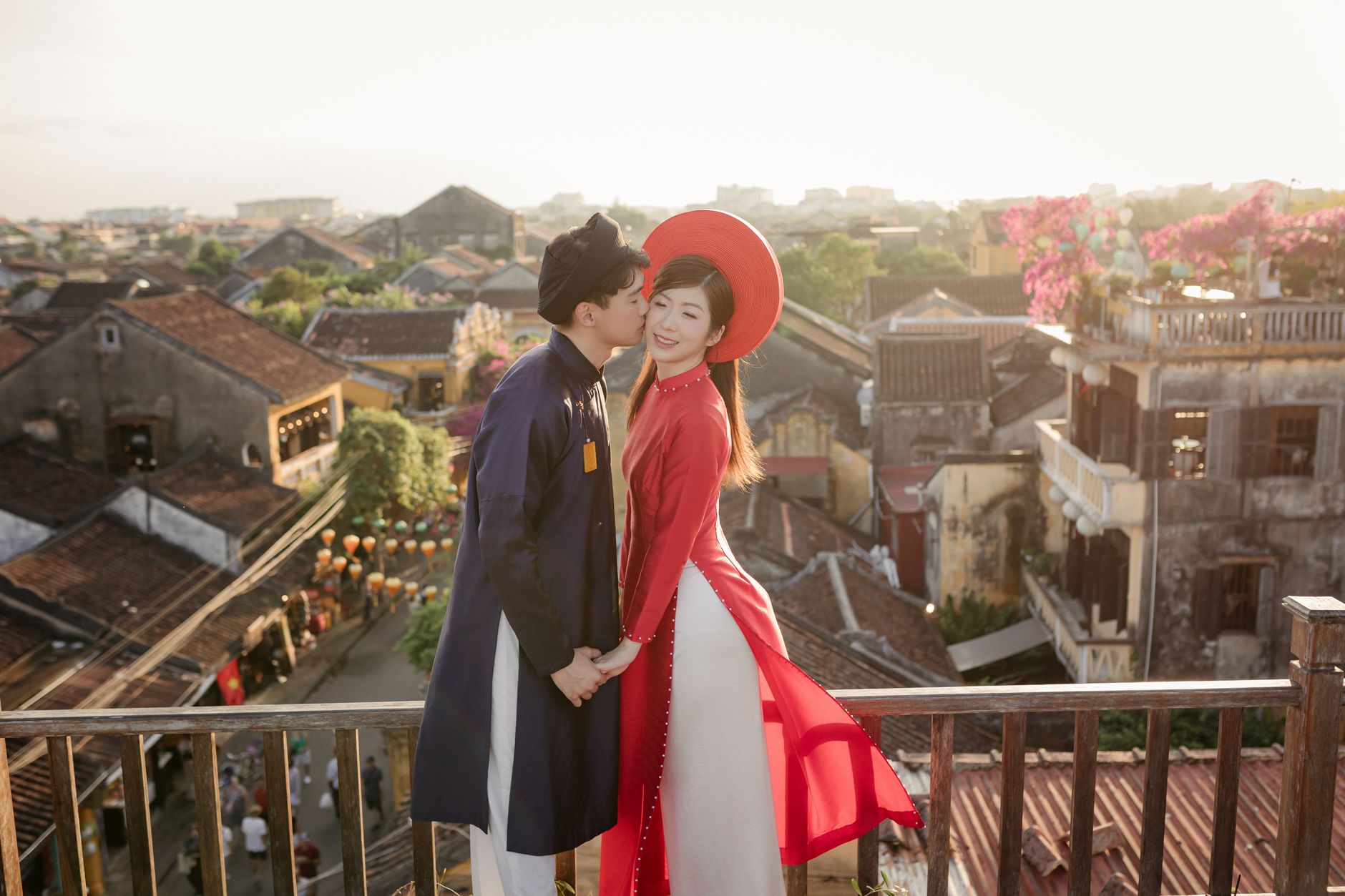
This 10-day route links the two regions that do romance best: the north around Hanoi and Halong Bay, and the central coast from Hue to Hoi An and Da Nang. It skips the crowded south entirely. That keeps travel times short, weather manageable and the focus on each other.
The itinerary works across three budget levels. A couple can do it for about 3,500,000 VND ($140) per day including hotels, food and activities. Mid-range travelers should plan for 6,000,000 VND ($240) per day. Luxury honeymooners can easily spend 15,000,000 VND ($600) or more, especially with a five-star resort stay in Hoi An or Da Nang.
Why this route works for a honeymoon
Vietnam is a long, thin country. Trying to see all of it in 10 days means spending half the trip in airports. This itinerary keeps the geography tight. Hanoi to Halong Bay is a 2.5-hour drive. Halong to Hue is a short flight. Hue to Hoi An is a 3-hour drive along the coast. Hoi An to Da Nang is 40 minutes.
The mix of scenery matters too. You get the misty mountains of the north, the calm waters of Halong Bay, the imperial history of Hue and the beaches of the central coast. Each stop has a different texture. That variety is what makes a Vietnam honeymoon feel like more than just a beach holiday.
For those considering a longer trip, the Vietnam and Cambodia combo itinerary extends this route into the Mekong and Angkor Wat. But for 10 days, the north-central axis is the right call.
Day 1 to 2: Hanoi, slow mornings and old quarter evenings
Start in Hanoi. Not because it is the capital, but because it is the gateway. Most international flights land at Noi Bai Airport, 30 minutes from the city center.
Spend the first day adjusting. The pace of Hanoi is chaotic, but the rhythm is gentle. Morning coffee at a sidewalk cafe on Hoan Kiem Lake, a walk through the old quarter's narrow streets, a late afternoon beer at a bia hoi corner. For a honeymoon, the key is not to overplan. The city rewards wandering.
On the second day, book a morning visit to the Temple of Literature. It is Vietnam's oldest university and the gardens are quiet enough for conversation. Then walk to the Hoa Lo Prison museum for context on Hanoi's history. The afternoon belongs to the French colonial heritage quarter around the Opera House, where wide boulevards and yellow villas feel a world away from the old quarter's density.
For dinner, skip the tourist restaurants on Ta Hien Street. Walk to the intersection of Hang Buom and Ma May, where families run charcoal grills from their doorways. Order grilled pork skewers, steamed rice rolls and a plate of morning glory stir-fried with garlic.
Where to stay: The old quarter keeps you close to the action. Mid-range couples should look at the boutiques around Hang Gai Street, which are quieter than the backpacker zone. Luxury options cluster around Hoan Kiem Lake, with rooftop views over the water.
Pro tip: Book the first night in a hotel with a bathtub. The flight into Hanoi is long, and a soak beats a rushed sightseeing agenda.
Day 3: Halong Bay on a one-night cruise
Halong Bay is a two-hour drive from Hanoi, and the standard way to see it is a one-night cruise. These depart from Tuan Chau Island around noon and return the following morning.
The bay is not subtle. Limestone pillars rise from emerald water, and the junk boats move slowly between them. The experience is best taken at face value. Sit on the upper deck, watch the karsts slide past, eat the seafood lunch. Some couples find the bay too touristed. Others find it genuinely magical. The difference usually comes down to the boat. Smaller vessels with 12 to 20 cabins feel intimate. The large party boats do not.
Book a cruise that includes kayaking. Paddling into the quiet lagoons around Luon Cave, away from the main channel, is the closest the bay gets to private. Sunset on the deck with a bottle of local wine is the honeymoon moment most people picture.
Warning: Halong Bay cruises vary wildly in quality. Read recent reviews, not the marketing photos. A mid-range cruise costs 2,500,000 to 4,000,000 VND ($100 to $160) per person per night. Anything cheaper usually means cramped cabins and mediocre food.
For those who prefer land-based stays, Cat Ba Island is the alternative. It is less polished but more authentic, with better beaches and a national park for hiking.
Day 4 to 5: Hue, imperial history and the Perfume River
Fly from Hanoi to Hue on the morning of day 4. Vietnam Airlines and Vietjet both run the route, and the flight takes just over an hour. The Hanoi to Hue 4 Days 3 Nights by Flight comparison is useful for deciding whether to fly or take the train. For a 10-day honeymoon, flying is the right call.
Hue is Vietnam's imperial city, and the scale of it surprises most first-time visitors. The Citadel alone covers 520 hectares. Inside its walls are palaces, temples, gardens and the ruins of the Forbidden Purple City. Set aside a full morning to walk the grounds. The temple etiquette guide covers what to wear and how to behave inside the pagodas.
The afternoon belongs to the Perfume River. Hire a private dragon boat for 500,000 VND ($20) per hour and drift south to Thien Mu Pagoda, the seven-story tower that marks Hue's skyline. The boat ride is slow, the river is wide and the pagoda grounds are peaceful.
Hue's food is distinct from the rest of Vietnam. The imperial city developed a cuisine of tiny, intricate dishes. Try banh khoai (crispy pancakes), bun bo Hue (beef noodle soup) and the vegetarian dishes served at the pagodas. For a deeper dive, the North vs Central vs South guide explains how central cooking differs from what you ate in Hanoi.
Where to stay: The area around the Citadel is atmospheric but quiet. The south bank of the Perfume River has better hotels and restaurants. Luxury couples should consider the former governor's residence turned boutique hotels along Le Loi Street.
Day 6 to 8: Hoi An, lanterns, cooking classes and the beach
The drive from Hue to Hoi An takes three hours. The route crosses the Hai Van Pass, and the views over the South China Sea are worth stopping for. Drivers can pause at the summit for photos. The Hoi An vs. Hue breakdown helps decide how to split time between the two cities.
Hoi An is the most romantic town in Vietnam. The old town is pedestrian-only after dark, and the Japanese Covered Bridge and the yellow-walled alleys glow under hundreds of lanterns. It is also the most touristy place on this itinerary. The crowds peak between 5pm and 9pm, when the lanterns are lit and every tour group in central Vietnam seems to be walking the same streets.
The trick is to use Hoi An as a base, not just a sightseeing stop. Spend day 6 walking the old town in the morning, when the streets are empty and the light is soft. Book a cooking class for the afternoon. Most classes start with a trip to the market, then move to a riverside kitchen where you cook three or four dishes. It is a shared activity that produces lunch.
Day 7 is for the beach. An Bang Beach, 15 minutes from the old town, is the best option. Rent two loungers, order fresh coconut water and do nothing until the afternoon. For couples who want more activity, the Tra Que vegetable village is a 30-minute cycle away. The farming cooperative offers half-day tours where you plant herbs and ride through the fields.
Day 8 is for the tailor shops. Hoi An is Vietnam's custom clothing capital. A tailored ao dai, suit or dress costs 1,500,000 to 4,000,000 VND ($60 to $160) and takes 24 to 48 hours. The ao dai guide explains what to expect. For couples, getting matching outfits made is a honeymoon souvenir that actually gets worn.
Where to stay: The old town is charming but loud. The riverside area between the old town and An Bang Beach offers the best balance. Mid-range couples should look at the homestays along the rice paddies. Luxury couples should book a resort with a private pool.
Pro tip: Hoi An's full-moon lantern festival is beautiful, but it is also the busiest night of the month. Book dinner reservations a week ahead if visiting during that time.
Day 9 to 10: Da Nang, beach time and the mountains
Da Nang is 40 minutes from Hoi An and has the region's best airport. Spend the final two nights here, partly for the beach and partly for the mountains.
The city's My Khe Beach is wide, clean and less crowded than Hoi An's beaches. The stretch near the Son Tra Peninsula is where locals swim. The Marble Mountains, five marble and limestone hills a short drive away, offer cave temples and viewpoints over the coast.
For a mountain experience with less effort, the Ba Na Hills cable car runs from the foothills to a French-inspired hill station at 1,487 meters. The Golden Bridge, held up by two giant stone hands, is the main draw. It is crowded, and the site is more theme park than mountain retreat, but the cable car ride itself is genuinely spectacular. The Golden Bridge weather in December guide gives a sense of what to expect in cooler months.
The final evening should be simple. Walk the beach at sunset, eat seafood at one of the open-air restaurants along Ho Xuan Huong Street, and toast the trip with a bottle of Vietnamese rice wine.
Where to stay: The beachfront hotels along Vo Nguyen Giap Street have direct beach access. The luxury tier here is exceptional value compared to equivalent resorts in Thailand or Bali. Five-star properties with private pools cost 5,000,000 to 9,000,000 VND ($200 to $360) per night.
Budget breakdown for couples
| Expense | Budget tier | Mid-range | Luxury |
|---|---|---|---|
| Hotels (9 nights) | 5,400,000 VND ($216) | 16,200,000 VND ($648) | 54,000,000 VND ($2,160) |
| Flights (2 domestic) | 2,400,000 VND ($96) | 3,600,000 VND ($144) | 6,000,000 VND ($240) |
| Halong cruise (2 people) | 4,000,000 VND ($160) | 6,000,000 VND ($240) | 12,000,000 VND ($480) |
| Food (10 days, 2 people) | 6,000,000 VND ($240) | 10,000,000 VND ($400) | 20,000,000 VND ($800) |
| Activities & transport | 3,000,000 VND ($120) | 5,000,000 VND ($200) | 10,000,000 VND ($400) |
| Total per couple | 20,800,000 VND ($832) | 40,800,000 VND ($1,632) | 102,000,000 VND ($4,080) |
Prices are estimates for 2026. Domestic flights vary by season. The Vietnam Airlines domestic flight ticket prices guide has current rates and booking tips.
Best time for this itinerary
The route covers two climate zones. Hanoi and Halong Bay are at their best from October to April, when temperatures are mild and rain is limited. Central Vietnam, including Hue, Hoi An and Da Nang, is driest from February to August.
The overlap is February, March and April. These months offer pleasant weather in both regions. May is workable but hot in central Vietnam. September and October bring typhoon risk to the central coast. The Visiting Vietnam in the rainy season guide covers how to adjust if those months are the only option.
For a full month-by-month breakdown, the best month to travel to Vietnam guide is the place to start.
Getting around
The route uses three transport modes: private car, flight and boat.
Hanoi to Halong Bay is a private car or shuttle bus, 2.5 hours. Halong to Hue is a flight from Van Don or Cat Bi airport, 1 hour. Hue to Hoi An is a private car with a stop at the Hai Van Pass, 3 hours. Hoi An to Da Nang is a 40-minute taxi or private car.
Private cars with drivers cost 1,500,000 to 2,500,000 VND ($60 to $100) per leg. The Vietnam by train guide covers the rail alternative, which works for couples with more time and a preference for slow travel.
FAQ
Q: Is 10 days enough for a Vietnam honeymoon? Yes, if you stick to two regions. The north-central route in this itinerary keeps travel times under three hours between stops. Trying to add Ho Chi Minh City or the Mekong Delta would add two flights and cut into relaxation time.
Q: What is the best month for a Vietnam honeymoon on this route? February, March and April offer dry weather in both the north and central Vietnam. December and January are cooler but still pleasant. Avoid September and October, when typhoons can disrupt the central coast.
Q: How much should we budget per day as a couple? A comfortable mid-range budget is 4,000,000 to 6,000,000 VND ($160 to $240) per day including hotels, food, activities and transport. Budget travelers can manage on half that. Luxury resorts and private tours will push it higher.
Q: Should we book the Halong Bay cruise in advance? Yes. The good boats sell out, especially from November to April. Book at least two weeks ahead. For the best experience, choose a boat with fewer than 20 cabins and check recent reviews.
Q: Is Hoi An too touristy for a honeymoon? The old town is crowded in the evening, but the surrounding area is not. Staying outside the old town and visiting the beaches and villages gives you the romance without the crowds. The morning hours in the old town are quiet and worth the early start.
Q: Do we need to speak Vietnamese? No. English is widely spoken in hotels, restaurants and tourist services along this route. Learning a few phrases like "cam on" (thank you) and "xin chao" (hello) goes a long way. The Vietnamese greetings and social etiquette guide covers the basics.
Q: What should we pack for this itinerary? Light, breathable clothing for the coast, a light jacket for Hanoi's cooler mornings and the Halong Bay deck, and modest clothing for temples and pagodas. Comfortable walking shoes for Hue's Citadel and Hoi An's old town. Sunscreen and insect repellent are essential year-round.