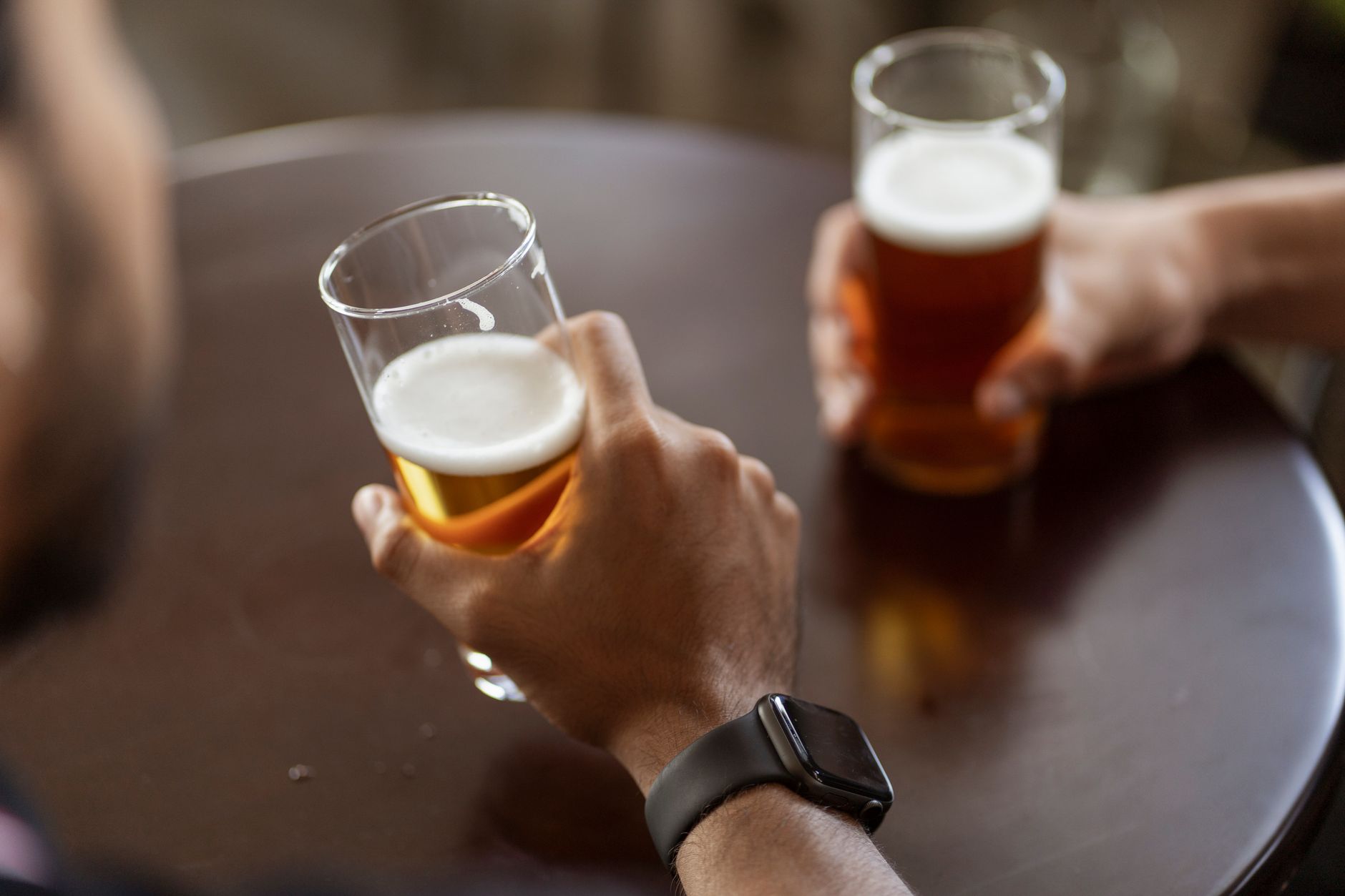
No other drinking experience in Vietnam captures the city's rhythm like this one. It is not about the beer itself. It is about the ritual, the price, the chaos of Hanoi's traffic swirling past your plastic stool, and the strangers who become drinking companions before the next round arrives.
What is bia hoi?
Bia hoi translates to "fresh beer" or "draft beer." It is an unpasteurized, unfiltered lager brewed daily without preservatives. The alcohol content is low, typically around 3-4%. The flavor is light, slightly bitter, and best described as crisp water with a beer afterthought.
The beer arrives at corner stalls in metal kegs every morning. It must be consumed within 24 hours. This short shelf life is the reason bia hoi exists as a daily ritual. You cannot stockpile it. You cannot bottle it for later. You drink it today or it spoils.
Breweries across Hanoi produce bia hoi using a method inherited from the French colonial heritage in Vietnam: architecture, history and where to find it. The French introduced commercial brewing to Vietnam in the late 19th century. Local producers adapted the technique, stripped out the pasteurization step, and created a beer that costs less than a bottle of water.
The result is a hyper-local beverage ecosystem. Each neighborhood has its preferred bia hoi supplier. The beer tastes slightly different at every corner. Some stalls serve it colder. Some let it sit too long and it turns sour. Regulars know which stalls get fresh kegs at 10 AM and which ones are selling yesterday's leftovers.
Why does bia hoi cost under 15,000 VND?
The price defies logic for most travelers. A glass of bia hoi costs between 5,000 and 10,000 VND ($0.20 to $0.40). Even in Hanoi's most tourist-heavy Old Quarter corners, the price rarely exceeds 15,000 VND ($0.60).
Three factors keep the price low.
First, the beer is not taxed as alcoholic beverage. Vietnamese law classifies bia hoi as a fresh food product due to its short shelf life and lack of preservatives. This exempts it from the special consumption tax applied to bottled beer and spirits.
Second, the production cost is minimal. Bia hoi uses cheap rice as a fermentable base instead of malted barley. The brewing process takes only a few days instead of weeks. No packaging, no bottling, no distribution network. The keg goes from brewery to corner in a few hours on the back of a motorbike.
Third, the margins are built on volume, not price. A busy bia hoi corner can sell 300 to 500 glasses in a single evening. The stall owner makes a modest profit on each glass but sells enough to earn a living. The business model depends on customers staying for multiple rounds and ordering food.
Pro tip: If a bia hoi stall charges more than 15,000 VND ($0.60) per glass, you are in a tourist-targeted spot. Walk two blocks away and find the locals' corner.
The corner-stool ritual
The plastic stool is the defining furniture of Vietnamese street culture. It is small, unstable, and forces your knees to rise above your hips. Foreigners look ridiculous on these stools. That is the point.
Sitting on a street corner in Hanoi is an act of participation. You are not observing the city from behind glass. You are in the exhaust fumes, the motorbike horns, the hawkers selling fried snacks, and the old men playing Chinese chess on the next stool.
The ritual follows a predictable sequence. You arrive at a bia hoi corner. You choose a stool facing the street. The server arrives with a tray. She places a glass of bia hoi in front of you. No order is taken. No menu is consulted. The assumption is that you want bia hoi. If you want something else, you must specifically ask.
You drink. You order snacks. You drink more. The server keeps track of your empty glasses by stacking them on your table. When you are ready to leave, she counts the stack and charges you accordingly. This honor system works because the stakes are low. A stack of five glasses costs 50,000 VND ($2.00). Nobody cheats over that amount.
Warning: Do not put your phone on the table. Condensation from beer glasses creates puddles. Phones slide off and hit the concrete. Keep your phone in your pocket or bag.
The session lasts anywhere from 30 minutes to three hours. Regulars stay longer. Tourists typically drink two or three glasses, take a photo, and move on. Both approaches are valid.
Best bia hoi spots in Hanoi's Old Quarter
The Old Quarter is the epicenter of Hanoi's bia hoi culture. Ta Hien Street is the most famous corner, sometimes called "beer street" by tourists. It is crowded, loud, and full of foreigners. Locals avoid it on weekends. But it remains the easiest entry point for first-time visitors.
Here are the best bia hoi corners in the Old Quarter, ranked by authenticity and beer quality:
| Corner | Location | Price per glass | Vibe | Best for |
|---|---|---|---|---|
| Ta Hien Street | Junction with Luong Ngoc Quyen | 10,000 VND ($0.40) | Chaotic, tourist-heavy, vibrant | First-timers, people-watching |
| Luong Ngoc Quyen | Mid-block near Ma May | 8,000 VND ($0.32) | Mixed locals and tourists | Late-night sessions |
| Ma May Street | Corner with Hang Buom | 7,000 VND ($0.28) | Mostly locals | Authentic experience |
| Bat Dan Street | Near Hoan Kiem Lake | 6,000 VND ($0.24) | Working-class regulars | Cheapest option |
| Hang Tre Street | Junction with Hang Vai | 8,000 VND ($0.32) | Quiet, residential | Escaping crowds |
Ta Hien remains the most accessible for travelers who do not speak Vietnamese. The servers are used to foreigners. Many understand basic English orders. The food menu includes grilled meats, fried spring rolls, and peanuts. The energy is electric.
For a more local experience, walk to Ma May Street or Bat Dan Street. The beer is cheaper. The crowd is older. The conversation is entirely in Vietnamese. Nobody will bother you, but do not expect English service. Point at what others are eating and nod when the server brings you the same thing.
Bia hoi etiquette: How to drink like a local
Vietnamese greetings and social etiquette: a practical guide for travelers applies at bia hoi corners, but the rules are looser here. This is a casual environment. Still, a few norms exist.
Do not pour your own beer. When drinking in a group, the youngest or most junior person pours for others. If you are the guest, someone will pour for you. If you are alone, the server handles it.
Raise your glass before drinking. The gesture is minimal. A slight lift of the glass toward your companions. You do not need to clink glasses. A nod and a raised glass suffice.
Say "mot, hai, ba, yo" before drinking. This translates to "one, two, three, cheers." The group shouts it together. Then everyone drinks. This happens before every round.
Do not leave your chopsticks sticking upright in your rice bowl. This resembles incense sticks used in funerals. Place them flat on the table or across the bowl.
Pace yourself. Bia hoi is low alcohol but easy to drink fast. The heat, the humidity, and the empty stomach combine quickly. Drink a glass of water between every two beers. Many stalls provide free tea. Drink that too.
Pro tip: Bring wet wipes or hand sanitizer. Bia hoi corners do not have sinks. You eat fried snacks with your hands. Wet wipes are essential gear.
What to eat with bia hoi
Bia hoi is never drunk alone. Food is part of the experience. Most corners offer a short menu of snacks designed to complement the beer.
The classic pairing is lac (roasted peanuts with salt and chili). A small bowl costs 5,000 VND ($0.20). The saltiness makes you thirsty. You drink more beer. The cycle continues.
Khoai tay chien (fried potato wedges) are another staple. They arrive hot, salty, and slightly greasy. Perfect with cold beer. A plate costs 15,000 VND ($0.60).
Thit nuong (grilled pork skewers) are the premium option. The meat is marinated in fish sauce, sugar, and lemongrass, then grilled over charcoal. A skewer costs 10,000-15,000 VND ($0.40-0.60). Order three or four.
Banh da (fried sesame crackers) provide crunch and texture. They are thin, brittle, and addictive. A bag costs 5,000 VND ($0.20).
Some bia hoi corners also serve nem chua ran (fried fermented pork rolls) and cha gio (fried spring rolls). Both work well with beer.
Warning: Avoid seafood at bia hoi corners. The turnover is high but the storage conditions are questionable. Stick to fried foods and grilled meats.
Beyond the Old Quarter: Bia hoi in other Hanoi neighborhoods
The Old Quarter is not the only place for bia hoi. Some of the best corners exist in residential neighborhoods where tourists rarely go.
Truc Bach Lake has several bia hoi corners along the waterfront. The view of the lake makes up for the slightly higher prices. Locals gather here after work. The atmosphere is relaxed and family-friendly.
Nguyen Khuyen Street near the Temple of Literature hosts a cluster of bia hoi stalls popular with students. Prices are the lowest in the city. The beer is cold. The crowd is young and loud.
Giang Vo Street in Ba Dinh district has bia hoi corners frequented by government workers. The vibe is more subdued. The beer quality is consistent. The food menu leans toward grilled meats rather than fried snacks.
Bach Mai Street in Hai Ba Trung district serves workers from the nearby hospital and market. The corners open early, around 10 AM, and stay busy until late evening. This is the most authentic working-class bia hoi experience in Hanoi.
When to drink bia hoi
Bia hoi is an afternoon and early evening activity. Most corners open around 10 AM for the lunch crowd. The busiest hours are 4 PM to 7 PM, when workers finish their shifts and stop for a few glasses before heading home.
Weekends are busier. Friday and Saturday evenings see the largest crowds. Ta Hien Street becomes almost impassable on weekend nights. If you want a quieter experience, go on a Tuesday or Wednesday afternoon.
The weather matters. Hanoi's summer months (May to September) are hot and humid. Bia hoi is most refreshing during this period. The winter months (December to February) are cold and damp. Fewer people drink outdoors. Some bia hoi corners close entirely during cold snaps.
Pro tip: Traveling to Vietnam in May is the start of the hot season. Bia hoi consumption peaks. Bring light clothing. What to wear in Vietnam in May female includes breathable fabrics that handle the humidity.
How bia hoi fits into Hanoi's drinking culture
Bia hoi is one layer of Hanoi's drinking scene. The city also has craft beer bars, rooftop lounges, and traditional rice wine shops. Each serves a different purpose.
Craft beer in Hanoi costs 60,000-120,000 VND ($2.40-4.80) per glass. The flavors are complex. The atmosphere is air-conditioned. The crowd is younger and wealthier. Craft beer is for dates and business meetings.
Bia hoi is for everyone else. It is the democratic drink. A retired professor drinks next to a construction worker. A backpacker shares a table with a grandmother. The plastic stool equalizes everyone.
The ritual extends beyond the beer itself. Bia hoi corners function as community living rooms. Regulars know each other by face if not by name. Newcomers are tolerated but not actively welcomed. You earn your place by showing up consistently.
The future of bia hoi
Bia hoi faces pressure from rising rents and changing tastes. The Old Quarter's property values have increased dramatically. Some corners have closed or moved to side streets. The city government has attempted to regulate sidewalk seating, though enforcement remains inconsistent.
Younger Vietnamese drinkers increasingly prefer bottled beer or craft options. Bia hoi is seen as old-fashioned by some. Yet the tradition persists. The low price point ensures a steady customer base. The cultural attachment to the plastic stool ritual runs deep.
For now, bia hoi remains one of the few truly affordable experiences in Hanoi. It costs less than a cup of coffee. It requires no reservation, no dress code, and no language skills. You sit down. You drink. You pay. You leave.
Frequently asked questions
Q: Is bia hoi safe to drink? Yes. The beer is brewed daily and consumed quickly. The alcohol content kills most bacteria. The ice served with drinks is commercially produced and safe. The glassware is washed in the same buckets all day, which is the only hygiene concern. Stick to busy corners with high turnover.
Q: How much should I tip at a bia hoi corner? Tipping is not expected. Round up the bill to the nearest 5,000 or 10,000 VND as a courtesy. If your bill is 47,000 VND, hand over 50,000 VND and say "cam on" (thank you). The server will appreciate it but will not chase you for more.
Q: Can I drink bia hoi alone? Yes. Solo drinking is common. Many regulars sit alone for one or two glasses. Bring a phone or a book. The server will not rush you. You can stay as long as you keep ordering.
Q: What if I do not drink alcohol? Bia hoi corners serve soft drinks and bottled water. The selection is limited. You will still pay the plastic stool tax. Order a Coca-Cola or a bottle of water and enjoy the atmosphere. Nobody will pressure you to drink beer.
Q: Is bia hoi available outside Hanoi? Yes, but the quality varies. Bia hoi exists in every Vietnamese city. The best versions are in Hanoi and northern provinces. Southern bia hoi tends to be sweeter and less crisp. The culture is strongest in the north.
Q: How do I find the best bia hoi corner? Look for the largest cluster of plastic stools. Follow the sound of conversation and clinking glasses. Avoid corners with English menus and laminated price lists. The best corners have handwritten signs in Vietnamese and no prices posted anywhere.