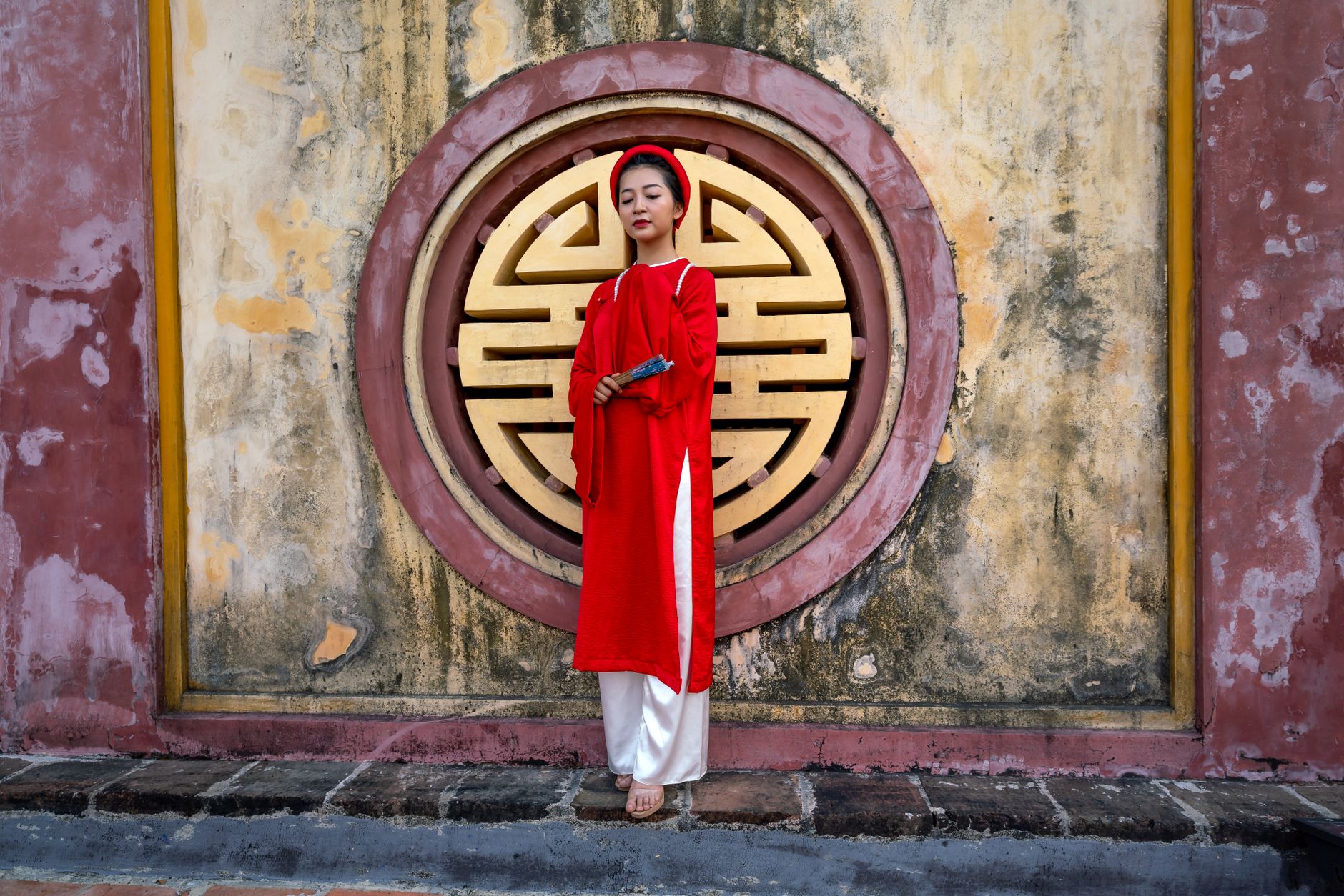
This article traces the history of Vietnam's national dress, explains its symbolism, and gives you practical advice on where to see it, how to get one tailored, and what to pay. Whether you are planning a trip for Tet or just want to bring home a custom garment, this guide covers everything.
The history of the ao dai: from royal courts to national symbol
The ao dai as we know it today emerged in the 18th century under the Nguyen lords in Hue. Before that, Vietnamese women wore a four-panel dress called the ao tu than, which was looser and more practical for farming. The Nguyen court wanted something more refined.
The first ao dai was a five-panel gown worn over wide trousers. It was modest, covering the body completely, but it also emphasized elegance through its fitted bodice and flowing panels. The five panels represented the five cardinal virtues of Confucianism: humanity, righteousness, propriety, wisdom, and fidelity.
French colonization in the 19th and early 20th centuries brought Western tailoring techniques to Vietnam. Designers in Hanoi and Saigon began to cinch the waist, raise the collar, and use lighter fabrics. The ao dai became a symbol of modernity and national pride simultaneously.
During the Vietnam War, the ao dai was worn by women in both the North and the South. In the North, it was sometimes seen as bourgeois and discouraged. In the South, it remained a staple of daily life. After reunification in 1975, the ao dai experienced a decline. It was associated with the old regime and impractical for socialist labor.
The revival came in the 1990s. Designers like Sy Hoang and Minh Hanh reintroduced the ao dai to runways and daily life. Today, it is worn by flight attendants, schoolgirls, office workers, and brides. It has become a symbol of Vietnamese identity that transcends politics.
Pro tip: The ao dai you see today in Hoi An is often a modern interpretation. For the most traditional cuts, look for tailors in Hue, where the original court style is still preserved.
Symbolism and meaning: what the ao dai represents
Every element of the ao dai carries meaning. The high collar represents modesty and dignity. The fitted bodice shows respect for the female form without revealing it. The long panels that flow to the ankles symbolize grace and continuity.
The fabric choices also matter. Silk is traditional and used for formal occasions. Cotton and linen are common for daily wear. The patterns on the fabric often carry symbolic meanings. Dragons represent power and nobility. Phoenixes represent beauty and virtue. Lotus flowers represent purity and enlightenment.
Colors carry their own messages. White is for schoolgirls and represents innocence. Red is for weddings and represents luck and prosperity. Black is for mourning and represents solemnity. Bright colors like yellow and pink are for festivals and celebrations.
For men, the ao dai is simpler. It has fewer panels and is often in darker colors. Men wear it for weddings, funerals, and formal ceremonies. The men's version is called the ao dai nam. It is less common than the women's version but equally important in traditional contexts.
Pro tip: If you see someone wearing an ao dai in black or dark navy, they may be in mourning. Avoid asking for photos in these situations. Read our guide on what is considered disrespectful in Vietnamese culture for more etiquette tips.
Where to see the ao dai worn today
You do not need to attend a festival to see the ao dai in Vietnam. It is part of daily life in specific contexts.
Schools. Every weekday morning, millions of Vietnamese schoolgirls wear white ao dai to class. This is the most common sighting for travelers. Walk past any secondary school between 6:30 AM and 7:30 AM, and you will see them.
Offices. Many government offices, banks, and hotels require female employees to wear ao dai. The receptionists at luxury hotels in Hanoi and Ho Chi Minh City almost always wear them.
Weddings. Vietnamese weddings are the most elaborate occasions for ao dai. The bride typically wears three to five different ao dai during the ceremony and reception. If you are invited to a wedding, you will see the full range of colors and fabrics.
Tet Nguyen Dan. During Lunar New Year, everyone wears ao dai. Families dress up for temple visits and ancestor worship. The streets of Hanoi and Hoi An fill with color. Our guide to Tet Nguyen Dan has more details on timing and what to expect.
Temples and pagodas. On the first and fifteenth day of the lunar month, many Vietnamese women wear ao dai to temple. If you visit a pagoda on these days, you will see them.
Festivals. The Hue Festival, held every two years, features ao dai parades and fashion shows. The Ao Dai Festival in Ho Chi Minh City is another major event. Both are excellent for photography.
Pro tip: For the best photo opportunities, visit the Temple of Literature in Hanoi on a Sunday morning. Many bridal parties go there for pre-wedding photos in ao dai.
Getting an ao dai tailored in Hoi An or Hanoi
Having an ao dai custom-made is one of the most popular souvenirs from Vietnam. The process is straightforward, but there are things you need to know.
Hoi An: the tailoring capital
Hoi An is famous for its tailors. The old town has hundreds of shops that can make an ao dai in 24 hours. Prices start at 800,000 VND ($33) for basic cotton and go up to 3,000,000 VND ($125) for silk with embroidery.
The process takes two to three hours. You choose the fabric, get measured, and return the next day for a fitting. Most tailors will make adjustments on the spot.
Recommended shops in Hoi An:
- Yaly Couture: High-end, English-speaking staff, good for complex designs
- A Dong Silk: Reliable, fast, good for first-time buyers
- Bich Thuy: Budget-friendly, basic designs only
Hanoi: the capital of tradition
Hanoi has fewer tourist-oriented tailors but more traditional ones. The prices are similar to Hoi An. The quality is often higher because the tailors work with silk directly from the villages around Hanoi.
Recommended shops in Hanoi:
- Khai Silk: Luxury brand, expensive but excellent quality
- Tan My Design: Mid-range, good for modern interpretations
- Duyen Silk: Traditional, family-run, best for classic cuts
The tailoring process step by step
Choose your fabric. Cotton is cheapest. Silk is traditional. Linen is good for hot weather. If you are traveling in May, read our guide on what to wear in Vietnam in May female for fabric recommendations.
Get measured. The tailor will take about 10 measurements. Stand straight and wear thin clothing. Do not wear a padded bra because it will distort the fit.
Choose the design. Decide on collar height, sleeve length, and panel style. For men, the design options are fewer but still important.
First fitting. Return after 24 hours. Try on the ao dai. Check the shoulders, waist, and hips. The fit should be snug but not tight.
Final adjustments. Most tailors will make minor adjustments in 30 minutes. If the fit is wrong, do not accept it. A good tailor will redo the garment.
Pro tip: Bring a reference photo of the ao dai style you want. This helps the tailor understand your expectations. Also, bring your own shoes. The ao dai length depends on the heel height you plan to wear.
Price comparison table
| City | Basic cotton | Silk | Silk with embroidery | Rush fee (24h) |
|---|---|---|---|---|
| Hoi An | 800,000 VND ($33) | 1,500,000 VND ($63) | 2,500,000 VND ($104) | +200,000 VND ($8) |
| Hanoi | 900,000 VND ($38) | 1,800,000 VND ($75) | 3,000,000 VND ($125) | +300,000 VND ($13) |
| Hue | 700,000 VND ($29) | 1,200,000 VND ($50) | 2,000,000 VND ($83) | +150,000 VND ($6) |
Prices are for women's ao dai. Men's ao dai costs about 20% less because it has fewer panels and less fabric.
Photo etiquette: how to photograph the ao dai respectfully
Photographing people in ao dai is one of the most rewarding experiences in Vietnam. But it requires sensitivity.
Always ask first. This is the golden rule. A smile and a gesture toward your camera is usually enough. If the person says no, respect that. Do not take photos of children without a parent's permission.
Do not photograph mourners. If someone is wearing a black or dark ao dai and looks solemn, they may be going to a funeral. Give them space.
Respect religious spaces. Temples and pagodas are active places of worship. Do not block doorways or interrupt prayers. Turn off your flash. Our guide on what is considered disrespectful in Vietnamese culture covers temple etiquette in detail.
Offer to share the photo. If you take a portrait, show the person the result. Many Vietnamese people enjoy seeing themselves in ao dai photos. You can send them the photo via Facebook or email.
Do not touch the fabric. The ao dai is often made of delicate silk. Do not grab someone's sleeve or panel to pose them. Let them adjust themselves.
Pro tip: The best time for ao dai photos is early morning, between 6:00 AM and 8:00 AM. The light is soft, and the streets are empty. Schoolgirls are walking to class, and bridal parties are setting up for photos.
Frequently asked questions about the ao dai
Q: Can men wear the ao dai? Yes. Men wear the ao dai for weddings, funerals, and formal ceremonies. The men's version has fewer panels and is usually in darker colors. It is less common than the women's version but equally traditional.
Q: How long does it take to tailor an ao dai? Most tailors in Hoi An and Hanoi can complete an ao dai in 24 to 48 hours. Rush orders are possible for an extra fee. For the best results, allow at least two days.
Q: How much does a custom ao dai cost? Prices start at 800,000 VND ($33) for basic cotton in Hoi An. Silk with embroidery can cost up to 3,000,000 VND ($125). Men's ao dai costs about 20% less.
Q: Is it appropriate for foreigners to wear the ao dai? Yes. Vietnamese people generally appreciate foreigners who wear the ao dai respectfully. Avoid wearing it to political events or in a way that mocks the culture. For weddings and festivals, it is welcome.
Q: What is the best fabric for an ao dai in hot weather? Cotton and linen are best for hot weather. Silk is traditional but can be warm. If you are traveling to Vietnam in May, read our guide on traveling to Vietnam in May for weather and fabric advice.
Q: Can I buy a ready-made ao dai instead of tailoring one? Yes. Many shops in Hoi An and Hanoi sell ready-made ao dai. The fit will not be as good as a custom-tailored one. Ready-made ao dai cost 300,000 to 600,000 VND ($13 to $25).
Q: What should I wear under an ao dai? Women typically wear a white or nude bra and seamless underwear. Some women wear a thin white camisole under the ao dai. Men wear a white undershirt and boxers. The ao dai is not designed for pockets, so carry a small bag.
Final advice for your ao dai experience
The ao dai is a garment with history, meaning, and beauty. Whether you see it on a schoolgirl in Hanoi, a bride in Hoi An, or a bride in Hue, take a moment to appreciate what it represents.
For your own ao dai, plan ahead. If you are traveling from Hanoi to Hue, consider getting your measurements taken in Hanoi and having the ao dai made in Hue. The tailors there are the most traditional. Our guide on Hanoi to Hue 4 days 3 nights by flight can help you plan the logistics.
If you are visiting during Tet, expect every tailor to be busy. Book your appointment at least a week in advance. The streets will be filled with ao dai, and you will understand why this garment has survived for centuries.
The ao dai is not a costume. It is a living tradition. Treat it with respect, and it will reward you with one of the most meaningful souvenirs you can bring home from Vietnam.