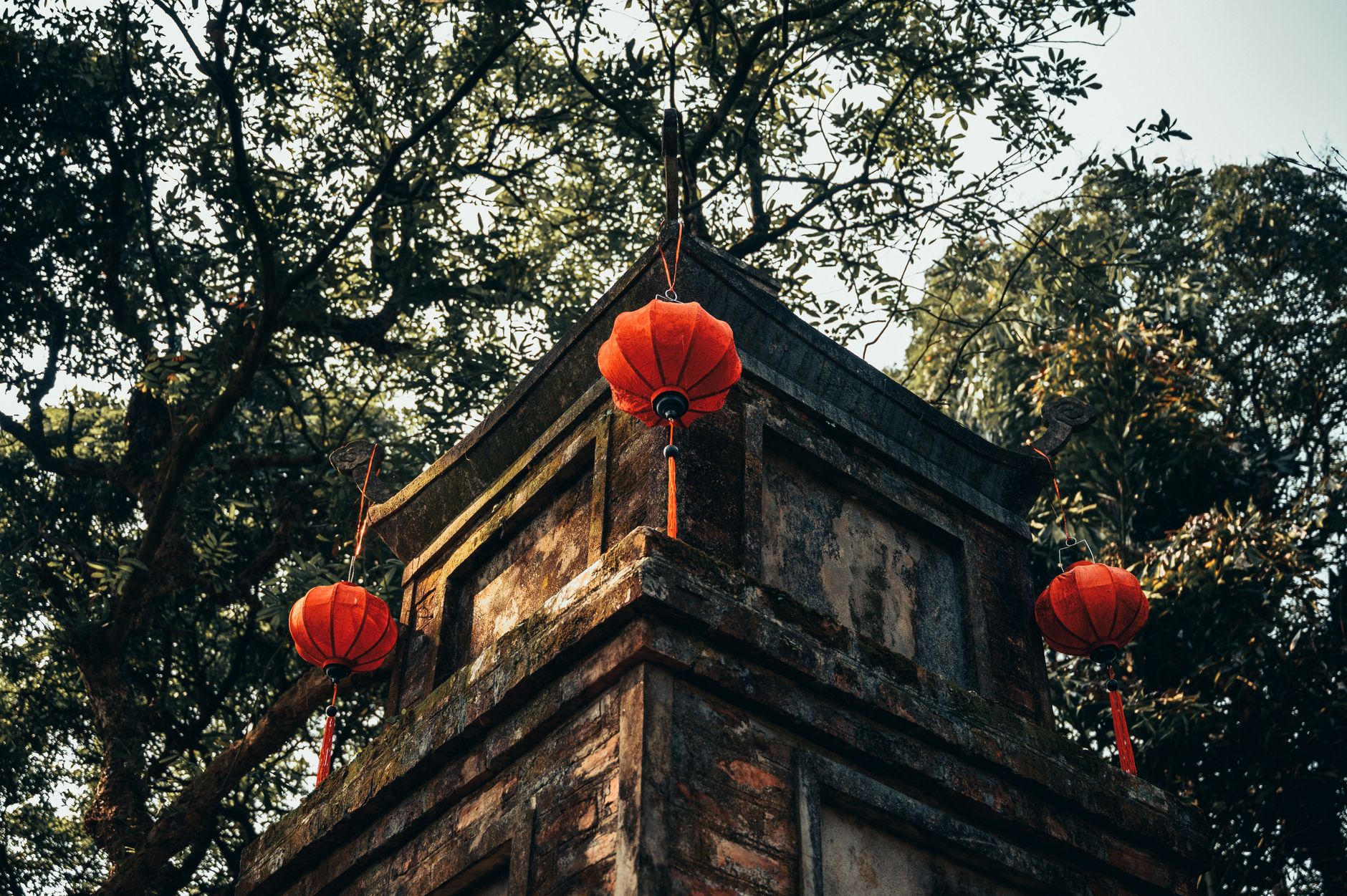
These are not museums. They are active places of worship. Locals come here to pray for luck, to honor ancestors, to mark festivals like Tet Nguyen Dan. They burn incense, leave offerings, and bow before Buddha. As a visitor, you are welcome. But you must follow the rules.
This guide covers exactly what to wear, what to do, and what to avoid. It applies to Buddhist pagodas (chùa), Hindu temples, Cao Dai holy sees, and most communal houses (đình). Use it as a checklist before you step through any gate.
What to wear: the complete dress code
The rule is simple. Cover your shoulders and cover your knees. This applies to men and women equally.
For women:
- Long pants or a skirt that falls below the knee
- A top with sleeves (short sleeves are fine, tank tops are not)
- A scarf or shawl to cover bare shoulders if your top is sleeveless
- Avoid tight or revealing clothing. Leggings worn as pants are not appropriate
For men:
- Long pants or jeans. Shorts are not acceptable
- A shirt with sleeves. T-shirts are fine. Singlets are not
- Avoid hats inside temple buildings
Footwear:
- Sandals or shoes that are easy to remove. You will take them off many times
- Socks are fine. Bare feet are also fine inside the sanctuary
What happens if you show up dressed wrong? Most major temples in tourist areas have loaner clothes. A long robe or a sarong. You will be asked to put it on. At the Perfume Pagoda near Hanoi, attendants hand out oversized tunics at the entrance. At the Marble Mountains in Da Nang, monks will point at your bare legs and gesture toward a rack of wrap-around pants.
Do not argue. Put the garment on. It takes thirty seconds and saves everyone embarrassment.
For a complete packing guide, see What to wear in Vietnam in May female or How to dress for Vietnam in October.
Shoes off: when and where to remove them
Shoes come off at the threshold. Not before. Not after. At the exact line between outside and inside.
Look for the shoe rack. If there is no rack, look for a pile of shoes near the door. That is your cue. Place your shoes neatly beside the others. Do not leave them in the middle of the walkway.
Where you must remove shoes:
- Inside any temple sanctuary or prayer hall
- Inside the main hall of a pagoda
- On any raised platform where an altar sits
- Inside a Cao Dai temple
Where you can keep shoes on:
- In temple courtyards and gardens
- In covered walkways between buildings
- In most museum-like sections of temple complexes
The Temple of Literature in Hanoi is a common point of confusion. Visitors walk through five courtyards with shoes on. But the innermost sanctuary, where Confucius is honored, requires bare feet. Watch what locals do and follow.
Incense and offerings: how to participate
Lighting incense is the most common act of worship in Vietnamese temples. You can do it too. It is not reserved for Buddhists. It is a gesture of respect.
How to offer incense correctly:
- Buy a bundle of incense sticks at the temple gate. They cost 5,000 to 20,000 VND ($0.20 to $0.80).
- Light the tips using a candle or lighter. Let them burn for a few seconds.
- Wave the sticks gently to extinguish the flame. Do not blow them out. Blowing is considered unclean.
- Hold the sticks between your palms, thumbs touching the base of the sticks.
- Raise the sticks to forehead level. Bow three times.
- Place the sticks upright in the incense urn. Do not push them deep. Leave them standing straight.
- Bow once more before stepping away.
How many sticks? Three is standard. Three represents the Three Jewels of Buddhism: Buddha, Dharma (teachings), and Sangha (monastic community). One stick is acceptable in small shrines. Two sticks are never used. Two is for ancestor worship at home altars, not for temples.
Offerings beyond incense:
- Fruit: a plate of bananas, oranges, or dragon fruit is common. Do not eat the offerings.
- Flowers: lotus buds are ideal. Avoid artificial flowers.
- Money: drop bills into donation boxes. Small denominations are fine. 10,000 VND ($0.40) is normal.
- Food: some temples accept packaged snacks or rice. Ask before leaving anything.
What not to offer:
- Meat or alcohol at Buddhist temples. Buddhism prohibits killing.
- Incense made from synthetic materials. Stick to natural sandalwood or aloeswood.
- Anything that looks like it was bought from a street vendor hawking "temple offerings." Those are often overpriced and low quality.
Photography rules: what you can and cannot shoot
Most Vietnamese temples allow photography in outdoor areas. Inside sanctuaries, the rules tighten.
Allowed:
- Courtyards, gardens, and architecture
- Exterior statues and decorative elements
- Monks going about their daily activities (ask first with a smile and a nod)
- Group photos in front of the temple gate
Not allowed:
- Photographs of Buddha statues inside the sanctuary. Many temples post a crossed-out camera icon. Obey it.
- Flash photography anywhere inside. Flash damages old paintings and disturbs worshippers.
- Selfies with your back to the main altar. This is considered disrespectful.
- Photographing people at prayer without explicit permission
The gray zone: Some major temples like the Jade Emperor Pagoda in Ho Chi Minh City allow interior photos. Others like the Tran Quoc Pagoda in Hanoi strictly forbid them. When in doubt, look for signs. If there are no signs, watch local visitors. If they are not taking photos, neither should you.
For more on cultural sensitivities, read What is considered disrespectful in Vietnamese culture?
Behavior at altars: the complete dos and don'ts list
Altars are the most sacred spaces in any temple. Treat them with the same care you would treat an altar in a church, mosque, or synagogue.
Do:
- Bow slightly when passing in front of an altar
- Keep your hands visible. Do not put them in your pockets
- Speak in a low voice or whisper
- Sit on the floor if a meditation session is in progress. Sit quietly. Leave when you want
- Ask permission before touching any object on the altar
- Donate respectfully. Place money in the donation box, not directly on the altar
Do not:
- Touch Buddha statues. Do not hug them, lean on them, or climb on them
- Point your feet at the altar. When sitting, tuck your feet beneath you or sit cross-legged. Never stretch your legs toward the altar
- Eat or drink inside the sanctuary. Finish your snack in the courtyard
- Smoke anywhere on temple grounds
- Bring pets inside temple buildings
- Walk between a person praying and the altar. Go around
- Touch monks. Women especially should not touch monks. Handing something to a monk? Place it on a cloth or table instead
- Raise your voice. Even in anger or frustration. Temple grounds are quiet zones
Pro tip: The most common mistake tourists make is posing for photos in front of altars with their hands in a prayer gesture. This mimics genuine worship and can offend locals. If you want a respectful photo, stand to the side, not directly in front of the altar.
Women and temple access: what you need to know
Vietnamese Buddhism does not restrict women from entering temples during menstruation. This is a common misconception. Some more conservative temples in rural areas may have old customs, but the vast majority welcome women at all times.
Specific rules for women:
- Dress modestly as described above
- Do not touch monks. If you need to hand something to a monk, place it on a nearby surface
- Some temples have separate seating areas for women during ceremonies. Follow the lead of local women
- Nursing mothers can sit in quiet corners of the temple grounds. No one will object
Special cases: Cao Dai temples, Hindu temples, and communal houses
Cao Dai temples: The Cao Dai religion blends Buddhism, Taoism, Confucianism, and Christianity. The Holy See in Tay Ninh is the main center. Rules are stricter here.
- Remove shoes at the entrance
- Women enter through the left door, men through the right
- Do not walk across the central aisle during prayer sessions
- Photography is banned during the midday prayer (exactly 12:00 PM)
- Dress code is strictly enforced. Loaner robes are provided
Hindu temples: Found mainly in Ho Chi Minh City (Mariamman Temple) and a few other cities. Rules are similar to Buddhist temples with one addition: remove leather items (belts, wallets, bags) before entering. Hindus consider leather impure.
Communal houses (đình): These are village community halls dedicated to local guardian spirits. They are less touristy than pagodas.
- Dress code is the same
- Offerings are often stronger. You may smell rice wine and cooked meat. This is normal
- Do not touch the ceremonial palanquins or ritual objects
- If a ceremony is in progress, watch from the doorway. Do not walk through
When to visit: timing and festivals
Temples are open daily, usually from 6:00 AM to 6:00 PM. The best time to visit is early morning, before 9:00 AM. The air is cooler, the incense smoke is fresh, and locals are praying. You can observe genuine worship without crowds.
Peak times to avoid:
- The first and fifteenth day of the lunar month. These are full moon and new moon days. Temples are packed
- Tet (Lunar New Year). Temples are overwhelmed. Read Traveling in Vietnam During Tet for survival tips
- Major Buddhist holidays like Vesak (Buddha's birthday, usually May)
Best months for temple visits:
- February to April and October to December. Weather is mild across most of the country
- May can be hot and rainy. See Traveling to Vietnam in May for details
- July is hot in the north and rainy in the south. See Is Vietnam too hot in July?
Temple etiquette checklist: print this before you go
| Item | Do | Don't |
|---|---|---|
| Clothing | Covered shoulders and knees | Tank tops, shorts, miniskirts |
| Shoes | Remove before entering sanctuary | Wear inside prayer hall |
| Incense | Light, bow three times, place in urn | Blow out flame, use two sticks |
| Photography | Outdoor architecture, ask monks | Flash inside, selfies at altar |
| Behavior | Speak softly, bow when passing | Point feet at altar, touch statues |
| Offerings | Fruit, flowers, small cash | Meat, alcohol, fake flowers |
| Monks | Smile, nod, keep distance | Touch, hand objects directly |
| Donations | Drop in box, 10,000-50,000 VND | Place directly on altar |
Frequently asked questions
Q: Can I visit a temple during my period? Yes. There is no restriction in Vietnamese Buddhism. Visit as you normally would.
Q: Do I need to cover my hair? No. Head coverings are not required in Buddhist temples. Hats should be removed inside the sanctuary.
Q: Can I take photos of monks? Ask first. A smile and a gesture toward your camera usually works. Some monks will nod. Others will wave no. Respect their answer.
Q: What should I do if I accidentally break a rule? Bow slightly with your palms together and say "xin lỗi" (sin loy), which means "I'm sorry." Then move away. Locals appreciate the gesture.
Q: Is it okay to meditate in a temple if I am not Buddhist? Yes. Many temples welcome silent meditation. Sit quietly in a corner. Do not disrupt others. Leave when you are ready.
Q: Can I buy temple souvenirs? Temple gift shops sell books, incense, and small Buddha statues. Buying from the temple itself supports its upkeep. Avoid buying from street vendors who claim their goods are "blessed."
Q: Do I need to pay an entrance fee? Most village pagodas are free. Major tourist temples charge 20,000 to 150,000 VND ($0.80 to $6.00). The Imperial Citadel in Hue costs 200,000 VND ($8.00). The Temple of Literature costs 30,000 VND ($1.20). These fees go toward maintenance.
Q: What is the difference between a pagoda and a temple? In Vietnam, "pagoda" (chùa) refers to a Buddhist place of worship. "Temple" (đền) usually refers to a place dedicated to a national hero, a king, or a local deity. Both follow similar etiquette rules.