What Tet actually means for travelers on the ground
Tet 2026 falls on February 17 (Tet eve) and February 18 (New Year's Day). The effective shutdown period runs from February 14 through February 22. These dates shift each year based on the lunar calendar.
The holiday has two distinct phases. Pre-Tet (February 12-16) is chaos. Millions of Vietnamese return to their hometowns. Cities empty out. Post-Tet (February 20-25) is the return wave, equally chaotic but in reverse.
During the actual Tet days (February 17-20), the country slows to a crawl. Most businesses close. Streets go quiet. This is not a system failure. It is intentional. Tet is for family, not commerce.
Understanding this distinction matters. If you arrive on February 14 expecting normal operations, you will be frustrated. If you arrive on February 17 knowing what to expect, you can adapt.
The real closure calendar: What shuts down and when
Competitors say "things close" but avoid specifics. Here is the day-by-day breakdown for Tet 2026.
| Day/Date | Banks | Restaurants | Museums | Supermarkets | Transport |
|---|---|---|---|---|---|
| Feb 12-13 (pre-Tet) | Open, long lines | Most open, some close early | Open | Normal hours | Peak exodus, sold out |
| Feb 14-16 (pre-Tet) | Closing from Feb 14 | 50% close by Feb 15 | Most close Feb 15-16 | Reduced hours | Fully booked, surge pricing |
| Feb 17 (Tet eve) | Closed | 80% closed | Closed | Limited hours | Very limited |
| Feb 18-19 (Tet) | Closed | 90% closed | Closed | Some convenience stores open | Minimal |
| Feb 20-21 | Closed | 30% reopen | 20% reopen | Normal hours resume | Return wave begins |
| Feb 22-23 | Reopen Feb 22 | 60% reopen | 50% reopen | Normal | Still crowded |
| Feb 24+ | Normal | Most reopen | Normal | Normal | Normalizing by Feb 25 |
Banks close for 7+ days. Government offices close for 7+ days. Street food stalls close for 7+ days. Smaller restaurants close for 5-7 days. Museums and attractions close for 3-5 days.
What stays open? Larger hotels. International chains like KFC, Lotteria, and Pizza Hut. Some Korean and Japanese restaurants in expat areas. Convenience stores like Circle K and FamilyMart in major cities.
Pharmacies have limited access. Emergency rooms remain open. Non-emergency medical services are reduced.
Pro tip: Assume everything is closed from February 14 to February 22. Anything that stays open is a bonus, not a guarantee.
Transport chaos: How to navigate the busiest travel period of the year
The pre-Tet exodus (February 12-16) is the most intense travel period in Vietnam. Millions of people return to their hometowns. Trains and flights sell out 2-3 weeks in advance.
Here are the real numbers for Tet 2026.
A Hanoi-Ho Chi Minh City flight that normally costs 1.5 million VND ($60) jumps to 5+ million VND ($200) during Tet. Train tickets from Hanoi to Da Nang go from 800,000 VND ($32) to 3+ million VND ($120). Sleeper bus prices triple.
Booking deadlines are strict. For flights, book by January 25 at the latest. For trains, book by February 1. For buses, book by February 5. After these dates, availability drops to near zero.
Road safety deteriorates during Tet. Vietnam sees a spike in traffic fatalities during the holiday period. Drunk driving increases, especially on Tet eve and New Year's Day. Vehicles are overloaded. Enforcement is relaxed.
Warning: Avoid traveling on February 16 (the day before Tet eve) and February 17 (Tet eve itself). Transport is nearly impossible to find, and what exists is dangerous.
Getting around during Tet: What actually works
When the country shuts down, your transport options narrow significantly.
| Mode | Availability | Price range (normal vs. Tet) | Booking required | Best for |
|---|---|---|---|---|
| Grab/ride-hailing | Available, surge pricing | Normal: 20,000-50,000 VND; Tet: 50,000-150,000 VND | App, instant | Short trips in cities |
| Taxis | Limited availability | Normal: metered; Tet: 2-3x with negotiation | Call ahead | Airport transfers |
| Private driver | Available but expensive | Normal: 500,000-1,000,000 VND/day; Tet: 1,500,000-3,000,000 VND/day | 1-2 weeks ahead | Full-day trips |
| Motorbike rental | Available | Normal: 100,000-200,000 VND/day; Tet: 150,000-300,000 VND/day | Walk-in | Experienced riders only |
| Public bus | Very limited | Normal prices, but few routes running | N/A | Not recommended |
Ride-hailing apps like Grab, Be, and Xanh SM continue operating during Tet. Expect surge pricing of 2-3x normal rates. Availability drops on Tet eve and New Year's Day.
For airport transfers, book a private car at least one week in advance. Confirm the booking 24 hours before. On Tet eve and New Year's Day, even pre-booked drivers may cancel.
Motorbike rental is available but carries higher risk. Roads are emptier, which sounds safer. In practice, emptier roads mean higher speeds and less traffic to "protect" inexperienced riders. Combine this with more drunk drivers and limited emergency services. Not recommended for anyone without significant Vietnam riding experience.
For more on ride-hailing, see Does Grab Work in Vietnam? Complete Guide 2026.
Food survival: Where to eat when everything is closed
This is the biggest practical challenge for travelers during Tet. Street food stalls close. Local restaurants close. Even some hotel restaurants reduce their hours.
Here is what stays open.
Hotel restaurants are your most reliable option. Most mid-range and luxury hotels keep their restaurants running during Tet. Expect limited menus and higher prices (200,000-500,000 VND per meal). Breakfast buffets may be reduced or replaced with set menus.
International chains are the backup. KFC, Lotteria, Pizza Hut, and McDonald's in major cities remain open. These are not the Vietnam food experience you came for, but they will keep you fed. Expect longer wait times.
Korean and Japanese restaurants in expat areas (District 2 in Ho Chi Minh City, Tay Ho in Hanoi) often stay open. Their owners are not Vietnamese and do not celebrate Tet. These are good options for decent food at reasonable prices.
Convenience stores are lifesavers. Circle K and FamilyMart stock instant noodles, sandwiches, pastries, drinks, and basic toiletries. They remain open in major cities. Stock up on February 14-15.
| Restaurant type | Likely open? | Price level | Reliability |
|---|---|---|---|
| Hotel restaurant | Yes | 200,000-500,000 VND | High |
| KFC, Lotteria, Pizza Hut | Yes | 50,000-150,000 VND | High |
| Korean/Japanese in expat areas | Mostly yes | 100,000-300,000 VND | Medium-high |
| Local pho shop | No | N/A | Low |
| Street food stall | No | N/A | Very low |
| Convenience store | Yes | 10,000-50,000 VND | High |
Stock up on February 14-15. Buy bottled water, instant noodles, crackers, fruit, nuts, and any snacks you want. Also buy toilet paper, hand sanitizer, and any medications. These supplies should cover 2-3 days.
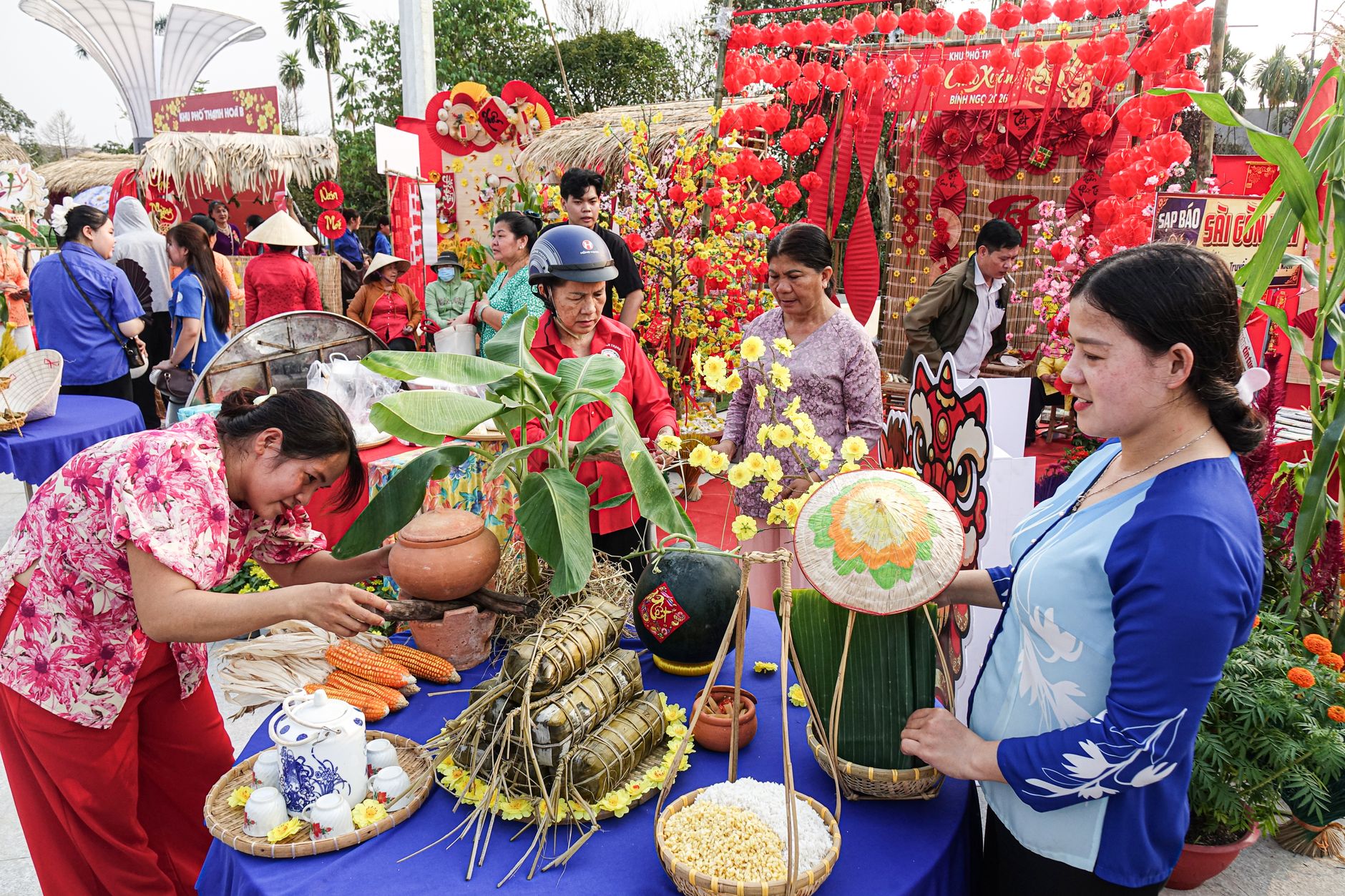
Pro tip: Tet markets operate until the afternoon of February 16 (Tet eve). These sell traditional Tet foods like bánh chưng (sticky rice cake) and boiled chicken. Buy from these markets for an authentic Tet food experience.
For more on eating safely in Vietnam, see What to eat in Vietnam to not get sick: A practical guide for travelers.
Accommodation during Tet: What to expect
Hotels do not close during Tet. Most have plenty of rooms because domestic travel drops significantly. Vietnamese travel to their hometowns, not to hotels.
Price increases are moderate. Nice hotels raise rates by 20-50%. Budget hotels and hostels see smaller increases or none at all. The real issue is reduced services.
Housekeeping may be reduced or suspended for 1-2 days. Breakfast buffets may be replaced with set menus. Front desk staffing may be limited. Check-in and check-out times may be less flexible.
Book directly with the hotel rather than through booking platforms. Direct bookings give you a direct line to confirm services. Call or email to ask: "Will your restaurant be open on February 18? Will housekeeping be available? Is breakfast included on Tet day?"
If the hotel cannot confirm these details, consider switching. Some hotels effectively abandon their guests during Tet.
For specific accommodation guides, see Where to stay in Phong Nha: The complete guide for 2026 and Cat Ba Island Accommodation: The Complete Guide for 2026.
Money matters: Banks closed, ATMs empty, cards declined
This is the most overlooked trap for Tet travelers. ATMs run dry by February 14-15. They are not refilled until February 20-22. Banks are closed for 7+ days.
Many vendors accept cash only during Tet. Even hotels and restaurants that normally take cards may have their payment systems offline. Staff may not know how to process card transactions.
Withdraw 5-8 million VND minimum before February 14. For a couple traveling together, withdraw 10-15 million VND. This covers meals, transport, tips, and emergencies for 5-7 days.
Use international bank ATMs in major cities. Vietcombank, Techcombank, and HSBC ATMs are most reliable. Avoid ATMs at remote locations or inside small shops. These run out first.
Carry a backup payment method. A Wise card or Revolut card works at ATMs that accept international cards. Keep a small amount of USD as emergency backup. Some hotels accept USD during Tet.
Warning: Do not arrive in Vietnam on February 15 expecting to withdraw cash at the airport. Airport ATMs run dry early. Bring enough cash from your home country to cover 2-3 days.
For more on costs, see Cost of living in Vietnam for single person.
What to do during Tet: Activities that actually work
Tet is not a dead zone for activities. It is a different kind of experience.
Walking tours of empty cities. Hanoi's Old Quarter and Hoi An Ancient Town are eerily quiet during Tet. This is a rare opportunity to see these normally crowded places without the crowds. Walk the streets on the morning of February 18. You will have entire blocks to yourself.
Temple visits. Temples are busiest during Tet, not closed. Vietnamese flock to temples on New Year's Day to pray for good luck. Join them. Visit Ngoc Son Temple in Hanoi, the Jade Emperor Pagoda in Ho Chi Minh City, or any local temple. Watch the rituals. Observe respectfully.
Flower markets. Before Tet (February 12-16), flower markets are vibrant and crowded. The biggest is Quang Ba Flower Market in Hanoi, operating overnight. Also visit Nguyen Hue Flower Street in Ho Chi Minh City. These close by Tet eve.
Firework displays. Major cities have firework displays on Tet eve (February 17). Hanoi has displays at Hoan Kiem Lake and West Lake. Ho Chi Minh City has displays at the Saigon River tunnel and Landmark 81. Arrive early. Streets close.
Parks and lakes. Hoan Kiem Lake in Hanoi, Lake Xuan Huong in Da Lat, and Tao Dan Park in Ho Chi Minh City remain open. These are pleasant for walks during the quiet Tet days.
Beaches. Beaches in Da Nang, Nha Trang, and Phu Quoc are less crowded during Tet. Most beachfront restaurants close, but the beaches themselves are accessible.
Museums and galleries close for 3-5 days. The War Remnants Museum in Ho Chi Minh City, the Vietnam Museum of Ethnology in Hanoi, and most other indoor attractions shut down. Plan museum visits for after February 22.
For more on what to do in specific destinations, see What to do in Phong Nha: The Complete 2026 Travel Guide and Cat Ba Island things to do: The complete 2026 guide.
Safety and health during Tet
Vietnam sees a spike in traffic fatalities during Tet. The National Traffic Safety Committee reports 30-50% more accidents during the holiday period. Drunk driving is the main cause.
Roads are emptier, which encourages higher speeds. On Tet eve and New Year's Day, alcohol consumption is heavy. Avoid riding motorbikes during these days. If you must ride, do so only during daylight hours and on major roads.
Hospital staffing is reduced. Emergency rooms remain open, but non-emergency services are limited. If you have a medical condition, bring enough medication to cover the entire Tet period. Pharmacies have limited hours and stock.
Food poisoning risks increase during Tet. Traditional Tet foods like bánh chưng and boiled chicken are often prepared days in advance and stored at room temperature. If you eat at a local home, ask when the food was prepared. If it has been sitting out for more than 4 hours, skip it.
Petty theft increases in crowded areas. Flower markets and temple grounds are prime targets. Keep your phone and wallet in front pockets or a secure bag. Do not carry all your cash at once.
Emergency numbers: 113 (police), 114 (fire), 115 (ambulance). Save these in your phone. English-speaking operators are not guaranteed.
For more on safety, see Is Vietnam Safe in 2026? An Honest Country-Wide Risk Assessment.
The Tet experience: How to join the celebration respectfully
Tet is a family holiday. Travelers who participate respectfully are welcomed warmly.
What to say: "Chúc Mừng Năm Mới" (Happy New Year). Pronounced "chook mung nam moi". This simple greeting opens doors.
What to wear: Red, yellow, or bright colors. Avoid black or white. These are associated with death and funerals.
What to bring: If invited to a Vietnamese home, bring a small gift. Fruit (a bag of oranges or apples), tea, or small gifts for children. Lucky money in red envelopes (lì xì) for children is appreciated. Amounts should be small (10,000-50,000 VND).
What not to do: Do not break objects. Do not argue or raise your voice. Do not sweep floors on New Year's Day (you sweep away good luck). Do not refuse food or drink offered by hosts.
Traditions you will witness:
- Lì xì (lucky money): Elders give red envelopes with money to children and unmarried adults.
- Xông đất (first visitor): The first person to enter a home on New Year's Day determines the family's luck for the year. Families often choose someone with a good zodiac sign.
- Ancestor worship: Families set up altars with food and incense to honor deceased relatives.
For more on cultural etiquette, see Nod, Smile, and Swipe: How to Survive Vietnam Without Speaking Vietnamese.
Pre-Tet checklist: What to do 1-2 weeks before the holiday
| Task | When to do it | Why it matters |
|---|---|---|
| Book transport | 3-4 weeks before Tet | Flights and trains sell out completely |
| Withdraw cash | 3-5 days before Tet (by Feb 12) | ATMs run dry by Feb 14-15 |
| Stock up on supplies | 2 days before Tet (Feb 15) | Shops close by Feb 16 afternoon |
| Confirm hotel is open | 1 week before Tet | Some hotels reduce services |
| Download offline maps | Before arrival | Google Maps works but data may be slow |
| Download translation app | Before arrival | Google Translate with offline Vietnamese pack |
| Purchase medications | 1 week before Tet | Pharmacies have limited hours during Tet |
| Arrange airport transfer | 1-2 weeks before Tet | Drivers book up early |
| Check visa validity | 2 weeks before Tet | Visa offices close for 7+ days |
For visa information, see Vietnam E-Visa 2026: Step-by-Step Guide, Rejections & Traps.
Post-Tet: What to expect when the country wakes up
The country does not snap back to normal overnight. The reopening is gradual.
February 20-22: Restaurants and shops begin reopening. About 30% are open by February 20, 60% by February 22. Transport remains crowded with returning travelers.
February 22-25: The post-Tet return wave peaks. Roads from provinces to major cities are congested. Train and bus stations are chaotic. Avoid traveling during these days if possible.
February 23-25: Transport normalizes. Most restaurants and shops are open. Banks and government offices resume normal hours.
March 1: Full recovery. Everything operates normally.
During the transition period (February 20-25), accommodation prices drop. Hotels that raised rates for Tet lower them again. This is a good time to book nicer hotels at lower prices.
For itinerary planning around Tet, see Two Weeks in Vietnam 2026: The Only First-Timer Itinerary You Need.
FAQ
Q: What should you avoid during Tet? A: Avoid arriving or departing on Tet eve or New Year's Day (February 16-17 in 2026). Transport is extremely limited. Avoid wearing black or white, breaking objects, or sweeping floors on New Year's Day. Avoid expecting normal business operations from February 14-22.
Q: Is $1000 enough for 2 weeks in Vietnam? A: For a budget traveler in 2026, $1000 USD (approximately 25 million VND) is tight but possible during Tet if accommodation is booked early and most meals come from hotel restaurants or convenience stores. Tet transport costs can consume 30-50% of this budget. A more comfortable budget is $1,500-2,000 to account for Tet price surges.
Q: Should you travel to Vietnam during Tet? A: Yes, but only with proper preparation. Tet offers a unique cultural experience with empty streets, festive decorations, and welcoming locals. However, travelers should plan for closures, book transport 3-4 weeks in advance, withdraw enough cash, and accept that some planned activities may not be available.
Q: What is one of the biggest mistakes you can make in Vietnam? A: Arriving during Tet without cash. ATMs run dry 2-3 days before the holiday and are not refilled for 5-7 days. Many vendors accept cash only, and even some hotels may have card payment systems offline. Withdraw 5-8 million VND minimum before Tet begins.
Q: Can you use credit cards during Tet? A: In major hotels and some international chains, yes. In most restaurants, street food stalls, taxis, and smaller shops, no. Card payment systems at many businesses are offline during the holiday period. Cash is king during Tet.
Q: Are trains and buses running during Tet? A: Yes, but most are fully booked 2-3 weeks in advance by Vietnamese traveling to their hometowns. Limited seats remain on the actual holiday days (February 17-20), but prices are 3-5x normal. After February 20, return tickets are extremely scarce until February 25.
Q: What food is available during Tet? A: Hotel restaurants, international chains (KFC, Lotteria), and some Korean/Japanese restaurants in expat areas remain open. Convenience stores (Circle K, FamilyMart) have basic supplies. Traditional Tet foods like bánh chưng and boiled chicken are widely available at markets before Tet and in some hotel buffets.
Q: Is it safe to ride a motorbike during Tet? A: Roads are less congested during Tet, which may seem safer, but risks increase. More drunk drivers, especially on Tet eve and New Year's Day. Higher speeds on empty roads. Limited emergency medical services. Not recommended for inexperienced riders.