What you need to know before going
Phong Nha is not a city. It is a small town officially called Son Trach village. It functions as the gateway to Phong Nha-Ke Bang National Park, a UNESCO World Heritage site covering more than 1,000 square kilometers.
The area remains relatively undeveloped compared to Ninh Binh or Halong Bay. There are no high-rise hotels, no nightclubs, and no shopping malls. The main street runs about two kilometers along the Son River. Beyond that, you find rice paddies, jungle, and limestone karsts.
A frank note: unexploded ordnance (UXO) from the Vietnam War still litters the region. The park is marked with warning signs. Stick to marked trails at all times. This is not a suggestion. It is a safety requirement.
Is Phong Nha worth visiting in 2026?
Yes, if you want caves, rural scenery, and outdoor activities. No, if you need nightlife, luxury resorts, or cultural attractions.
Phong Nha is often compared to Ninh Binh and Halong Bay. Here is the honest difference:
- Halong Bay offers seascape karsts from a boat deck. The experience is passive.
- Ninh Binh offers river karsts with temples and rice paddies. It is scenic and calm.
- Phong Nha offers underground karsts. The experience is active. You hike, climb, swim, and crawl.
The "off the beaten path" narrative is outdated. Phong Nha has been on mainstream travel itineraries for years. Paradise Cave gets thousands of visitors daily in peak season. The Duck Stop is crowded. But the park is vast enough that you can find solitude on a bicycle or on a multi-day trek.
Skip Phong Nha if you have mobility issues (most caves require walking on uneven surfaces and stairs), if you are on a very tight schedule (one day is possible but rushed), or if you expect beachfront accommodation.
How many days should you spend in Phong Nha?
This is the most common question travelers ask. Here are the realistic scenarios:
1 day: Rush job. Only possible if coming from Hue by early morning bus. Visit Paradise Cave in the morning, Phong Nha Cave by boat in the afternoon. Depart by evening bus. You will be tired.
2 days: Minimum for the main caves. Day one: Paradise Cave and Phong Nha Cave. Day two: Dark Cave or a countryside cycling loop. This covers the essentials.
3-4 days: Comfortable pace. Add a day for the Bong Lai Valley by bicycle, kayaking on the Son River, and a hike in the Botanic Garden. This is the recommended duration for most travelers.
5+ days: For treks and expeditions. Hang En Cave requires two days. Tu Lan Cave system requires one to three days. Son Doong requires four days. You need a base in Phong Nha and patience for booking logistics.
Pro tip: Most travelers arrive from Hue or Dong Hoi and leave toward the same direction. Plan your transport before you arrive. Sleeper buses from Hue arrive around 6am, which works well for a full day of exploration.
For a more detailed breakdown, read our guide on how long do you need in Phong Nha national park?
Best time to visit Phong Nha
The weather in Phong Nha is tropical monsoon. It has two main seasons: dry and rainy.
February to August (dry season): This is the best time to visit. Temperatures range from 25°C to 35°C. Rain is possible but not persistent. All caves are open, including Son Doong (February to August only). Expect crowds in June, July, and August.
September to November (rainy season): Flooding is common. Many caves close temporarily or entirely. Son Doong and other expedition caves shut down. Paradise Cave and Phong Nha Cave may close after heavy rain. Travel insurance is essential if visiting during this period.
December to January (cool season): Temperatures drop to 15-22°C. Rain is less frequent than in autumn. Good for hiking and cycling. Fewer tourists. Some caves remain open but check conditions before booking.
Warning: Do not visit Phong Nha in October unless you have flexible plans and travel insurance. Flash floods close roads and caves without warning.
For more on regional weather patterns, see our Vietnam Weather by Month guide.
How to get to Phong Nha
Phong Nha has no airport and no train station. You must reach Dong Hoi first, then transfer.
| Mode | From | Duration | Cost (VND/USD) | Best for |
|---|---|---|---|---|
| Bus | Hue | 4-5 hours | 150,000-250,000 ($6-10) | Budget travelers |
| Bus | Da Nang | 5-6 hours | 200,000-350,000 ($8-14) | Connecting from Hoi An |
| Bus | Hanoi | 10-12 hours | 350,000-500,000 ($14-20) | Overnight travel |
| Train + bus | Hanoi to Dong Hoi | 8-10 hours + 45 min | 400,000-800,000 ($16-32) | Comfort seekers |
| Flight + bus | Hanoi/Da Nang to Dong Hoi | 1 hour + 45 min | 1,000,000-2,000,000 ($40-80) | Time-conscious travelers |
The bus from Dong Hoi to Phong Nha takes 45-90 minutes depending on the bus type. A taxi costs VND 400,000 ($16). A public bus costs VND 40,000 ($1.60).
Pro tip: Sleeper buses from Hanoi arrive in Phong Nha around 3am. You will be dropped on the main road. Most homestays have 24-hour reception and can arrange pickup. Confirm this before you book.
Grab does not operate in Phong Nha. Do not rely on ride-hailing apps.
For complete transport details, read Dong Hoi to Phong Nha: The complete transport guide for 2026.
Where to stay in Phong Nha
Accommodation in Phong Nha falls into three zones:
In town (Son Trach): Convenient. Walking distance to restaurants, tour agencies, and the bus drop-off point. Noisier but practical. Budget hostels and mid-range homestays dominate.
Outside town along the river: Quieter. Better views of the karsts. Most homestays offer free bicycle rental and free airport pickup. This is where the best-value accommodation sits.
Bong Lai Valley: Rural and remote. Rice paddies and buffalo instead of streetlights. Requires a bicycle or motorbike to reach town. Best for travelers who want isolation.
| Type | Price per night (VND/USD) | Examples |
|---|---|---|
| Hostel dorm | 150,000-300,000 ($6-12) | Central Backpackers, Phong Nha Farmstay |
| Homestay private room | 400,000-800,000 ($16-32) | Chay Lap Farmstay, Phong Nha Lake House |
| Upper mid-range villa | 1,000,000-2,000,000 ($40-80) | Victory Road Villas, Phong Nha Eco Stay |
For a full breakdown, read Where to stay in Phong Nha: The complete guide for 2026.
The best caves in Phong Nha (and how to choose)
Five main caves are accessible to tourists. Each offers a different experience.
Paradise Cave (Thien Duong)
The most visually stunning cave in Phong Nha. 31 kilometers long, with 1 kilometer open to the public via wooden walkways. The formations are massive, well-lit, and easy to see. Entry costs VND 250,000 ($10). No guide required.
Who it is for: Everyone. This is the "if you only do one thing" cave.
Phong Nha Cave
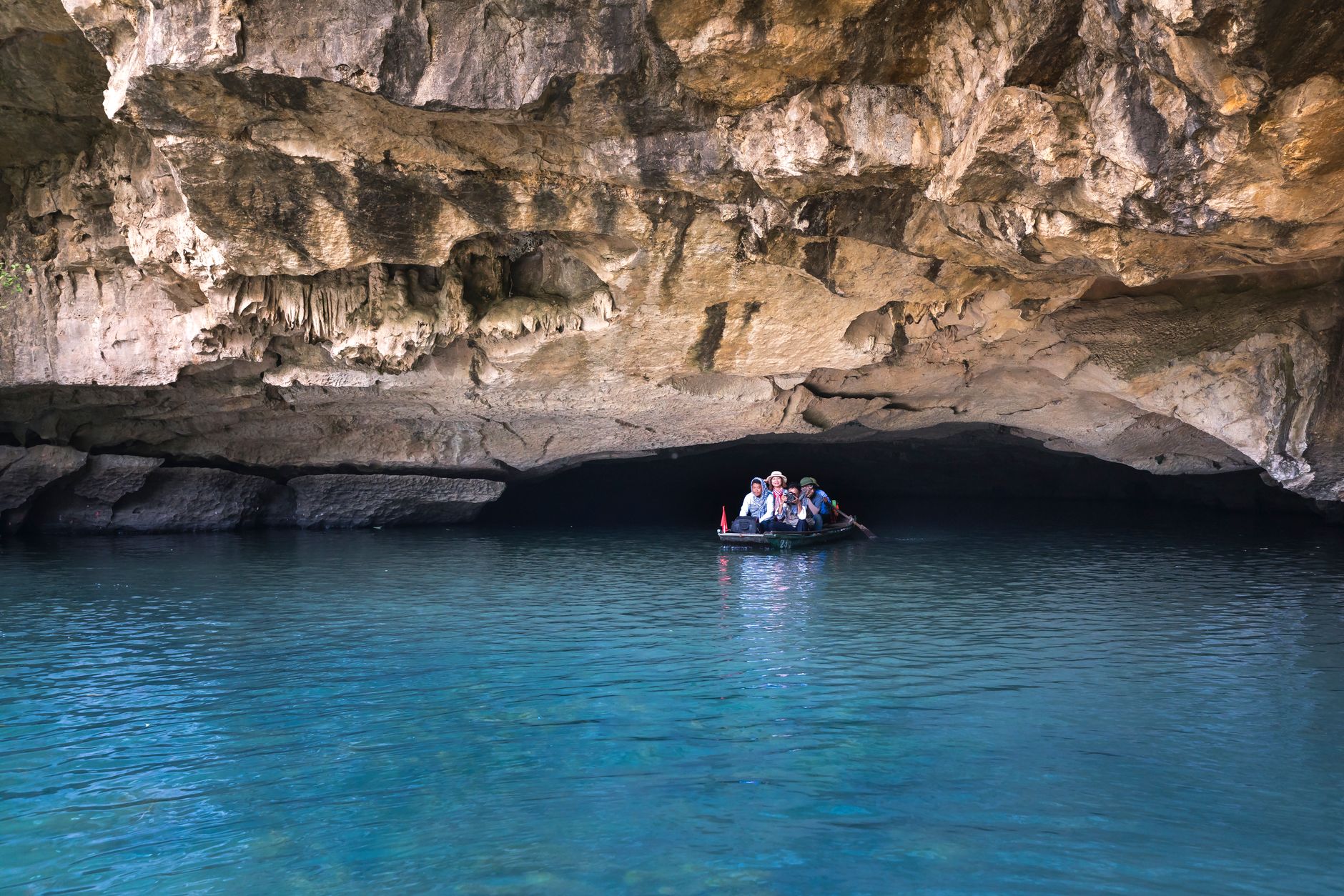
Entry by boat from the river. Entry costs VND 150,000 ($6) plus VND 550,000 per boat (shared with up to 12 people). Quieter and more atmospheric than Paradise Cave. The boat ride through the river entrance is memorable.
Who it is for: Travelers who want a boat experience without a tour. Best visited first to avoid disappointment (Paradise Cave is more impressive).
Dark Cave (Hang Toi)
Zipline across the Son River, swim through a dark cave, and take a mud bath. Entry costs VND 450,000 ($20). This is adventure-focused, not a traditional caving experience.
Who it is for: Adrenaline seekers, families with older kids. Not for claustrophobic travelers.
Hang En Cave
The world's third largest cave. Requires a two-day overnight trek (moderate difficulty). Costs $200-400. Booked exclusively through Oxalis. You camp inside the cave entrance.
Who it is for: Adventurous travelers who want a multi-day experience without the Son Doong price tag.
Son Doong Cave
The world's largest cave. A four-day expedition costing $3,000. Books out months to years in advance. Requires moderate fitness.
Who it is for: Serious adventurers with deep pockets and long planning horizons.
| Cave | Difficulty | Cost (VND/USD) | Duration | Best for |
|---|---|---|---|---|
| Paradise | Easy | 250,000 ($10) | 2-3 hours | First-time visitors |
| Phong Nha | Easy | 150,000 + boat ($6 + $22) | 2-3 hours | Boat experience |
| Dark Cave | Moderate | 450,000 ($20) | 3-4 hours | Adventure seekers |
| Hang En | Moderate | $200-400 | 2 days | Multi-day trek |
| Son Doong | Hard | $3,000 | 4 days | Serious cavers |
For a complete price guide, read Phong Nha-Ke Bang National Park Tickets: Complete 2026 Price Guide and Cave Selection.
Beyond the caves: What else to do in Phong Nha
Cycling the Bong Lai Valley
A 15-kilometer loop through rice paddies and villages. Free bicycles from most homestays. The route includes the Duck Stop (VND 100,000-150,000 for duck feeding and lunch) and the Monkey Bridge challenge. Honest assessment: fun but touristy. Go early morning to avoid crowds.
Kayaking on the Son River
Available from several homestays and Victory Road Villas. Costs VND 100,000-200,000 for rental. Best done early morning for calm water and fewer boats. The river winds through karst formations.
Hiking the Botanic Garden
Not a garden in the English sense. This is 41.8 hectares of forest with trails to Gio Waterfall and Vang Anh Lake. Entry costs VND 40,000 ($1.50). Trails are steep and muddy. Not suitable for casual walkers. Wear proper hiking shoes.
Easy Rider countryside tours
Half-day or full-day motorbike tours with local drivers. Costs VND 400,000-800,000. Best arranged through homestays. Covers rural villages, the Ho Chi Minh Trail, and the former DMZ. Good for solo travelers who do not drive.
The Pub with Cold Beer
A rural pub in Bong Lai Valley where you can catch your own chicken. Novelty experience, not a culinary destination. Best combined with a cycling route. The beer is cold. The chicken is fresh.
How to get around Phong Nha
By bicycle: Best option for exploring town and Bong Lai Valley. Free at most homestays. Flat terrain near town, hills further out.
By motorbike: Rental available in town for VND 150,000-200,000 per day. Roads are quiet but in poor condition. An International Driving Permit (IDP) is required for legality. Many travelers ride without one, but this carries risk. Read Renting a Motorbike in Vietnam: The Legal Truth Nobody Tells Tourists before you decide.
By taxi or xe om: Taxis are available but limited. Xe om (motorbike taxi) can be hired for the day at VND 300,000-500,000. No Grab.
By tour: Group tours for cave visits cost VND 500,000-1,000,000 for a combined Paradise Cave and Phong Nha Cave day tour. Worth it for solo travelers or those short on time.
Where to eat in Phong Nha
Food options are limited compared to larger cities. The best meals come from homestays, where families cook local dishes.
Homestay meals: Most authentic. Expect local dishes like banh xeo (crispy pancakes), mi quang (turmeric noodles), and fresh spring rolls. Cost: VND 30,000-80,000.
Town restaurants: Lantern, Bamboo Cafe, and Momma D's Rooftop offer Vietnamese and Western food. Quality varies. Cost: VND 80,000-150,000 for Western dishes.
Street food: Limited but available near the market. Try banh mi and com tam (broken rice).
Vegetarian options are limited but available. Most homestays can prepare vegetarian versions of local dishes if you ask in advance.
Phong Nha travel costs for 2026
| Item | Budget | Mid-range | Notes |
|---|---|---|---|
| Accommodation (per night) | VND 150,000-300,000 | VND 400,000-800,000 | Hostel vs homestay |
| Meals (per day) | VND 100,000-200,000 | VND 200,000-400,000 | Street food vs restaurant |
| Cave entry (Paradise) | VND 250,000 | VND 250,000 | Same price for all |
| Cave entry (Dark Cave) | VND 450,000 | VND 450,000 | Same price |
| Transport (per day) | VND 50,000 (bike) | VND 300,000 (taxi) | Free bike vs hired transport |
| Daily total | VND 550,000-1,000,000 | VND 1,200,000-2,000,000 | Excluding expeditions |
For a detailed budget breakdown, read How much does it cost to go to Phong Nha caves?
Safety and practical tips
UXO risks: Stick to marked trails. Do not venture off-path in the national park. This is not fear-mongering. It is a real risk.
Cave safety: Follow guide instructions. Do not touch cave formations. Wear sturdy shoes with grip. Headlamps are provided for deeper cave tours.
Weather preparedness: Carry a rain jacket even in dry season. Afternoon showers are common.
Insect repellent: Mosquitoes and leeches are present on forest trails. Use DEET-based repellent.
Cash: ATMs exist in town but are unreliable. Bring enough cash from Dong Hoi. Most homestays accept credit cards, but street vendors and small restaurants do not.
Travel insurance: Essential for adventure activities. Standard policies may not cover caving or ziplining. Check the fine print.
Sample Phong Nha itinerary (3 days)
Day 1: Arrival and countryside cycling
- Arrive in Phong Nha (morning bus from Hue recommended)
- Check into homestay, rent a free bicycle
- Afternoon: cycle the Bong Lai Valley loop
- Visit the Duck Stop (early to avoid crowds)
- End at the Pub with Cold Beer
- Dinner at homestay
Day 2: Caves
- Morning: Paradise Cave (arrive by 8am to beat crowds)
- Lunch in town
- Afternoon: Phong Nha Cave by boat
- Evening: dinner at Bamboo Cafe
Day 3: Water and departure
- Morning: kayaking on the Son River or hike in the Botanic Garden
- Lunch
- Afternoon departure
Backup plan for rain: If caves close, spend the day cycling in light rain (the valley is still beautiful) or visit the Botanic Garden (forest canopy provides cover).
FAQ
Q: Is Phong Nha worth visiting? A: Yes, for travelers interested in caves, rural scenery, and outdoor activities. It is not worth visiting for nightlife, luxury resorts, or cultural attractions. Best suited for 2-4 days as part of a Central Vietnam itinerary.
Q: How many days should I spend in Phong Nha? A: 2 days minimum (one for caves, one for countryside). 3-4 days allows a comfortable pace with cycling, kayaking, and hiking. 5+ days for multi-day cave treks like Hang En.
Q: Is it better to stay in Dong Hoi or Phong Nha? A: Stay in Phong Nha. Dong Hoi is a 45-90 minute drive away and staying there adds unnecessary transit time. Phong Nha has sufficient accommodation, food, and activities for a multi-day stay.
Q: Can you visit Phong Nha without a tour? A: Yes. Paradise Cave, Phong Nha Cave, the Botanic Garden, and the Bong Lai Valley can all be visited independently. Multi-day treks to Hang En, Son Doong, and Tu Lan require a licensed tour operator.
Q: Is Phong Nha safe for solo travelers? A: Yes. The town is safe, locals are friendly, and crime is rare. Solo travelers should use licensed guides for off-trail hiking due to UXO risks. Boat sharing for Phong Nha Cave may require waiting for a group.
Q: What should I pack for Phong Nha? A: Sturdy hiking shoes (not sandals), insect repellent, rain jacket, swimwear for Dark Cave and kayaking, headlamp (for deeper cave tours), cash (limited ATMs), and a reusable water bottle.
Q: When do caves close in Phong Nha? A: Many caves close during the rainy season (September to November) due to flooding. Son Doong expeditions run February to August. Paradise Cave and Phong Nha Cave may close temporarily after heavy rain. Check conditions before booking.