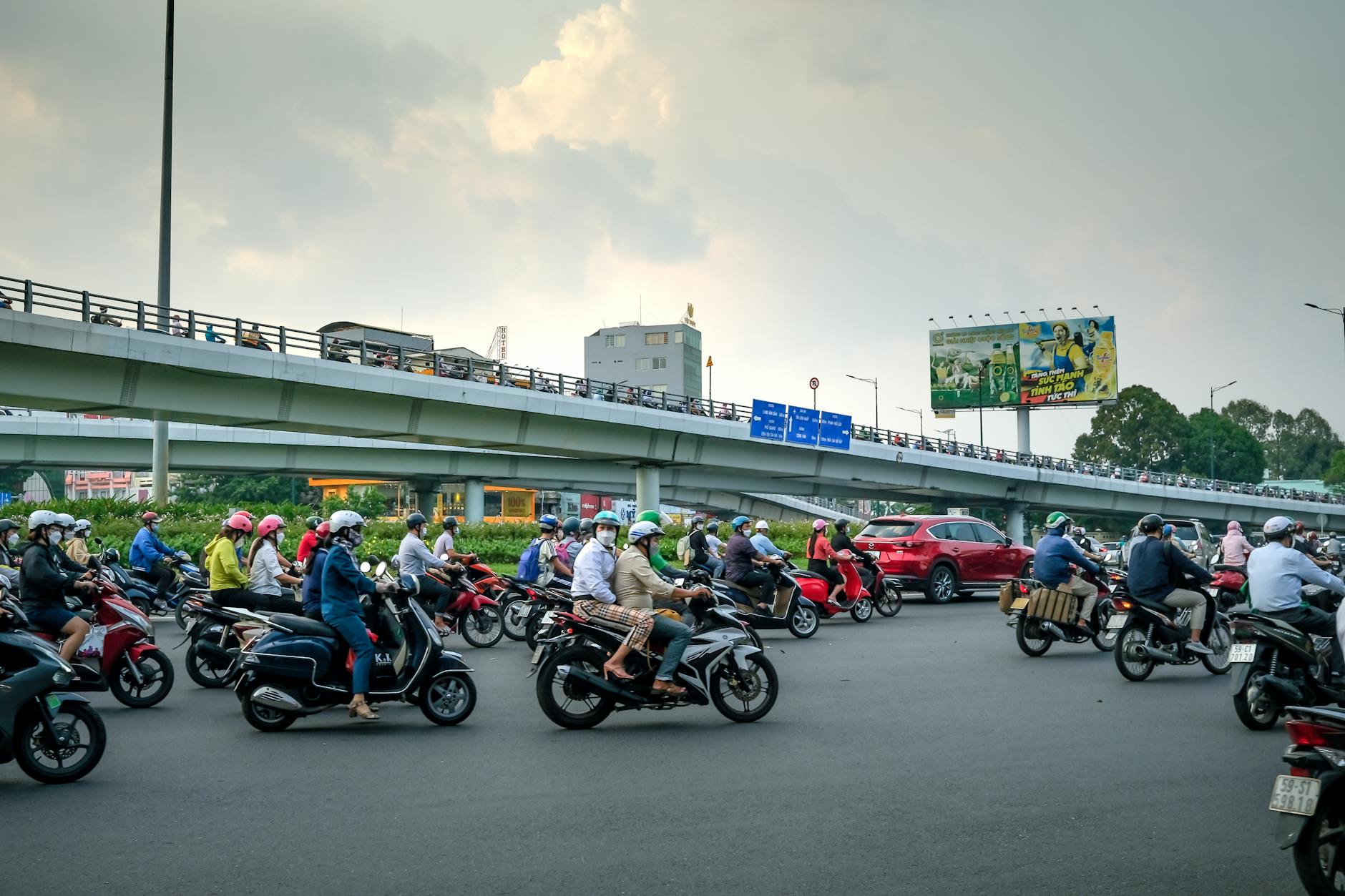
Since the 2024 traffic law overhaul and the stricter enforcement that followed, the rules around foreigners riding motorbikes have hardened considerably. Fines are higher, checkpoints are more frequent, and insurance companies have become aggressive about denying claims. This article lays out what's actually true in 2026 — not what rental shops want you to believe.
The License Reality: 1968 vs 1949 IDP
Vietnam is a signatory to the 1968 Vienna Convention on Road Traffic. It is not a signatory to the older 1949 Geneva Convention. This single fact catches out tens of thousands of tourists every year.
Here's what that means in practice:
- An International Driving Permit (IDP) issued under the 1968 Convention is legally valid in Vietnam, provided your home country also signed that convention.
- An IDP issued under the 1949 Convention is not legally valid in Vietnam, no matter what the booklet itself says.
The problem: most English-speaking countries — including the United States, United Kingdom, Canada, Australia, Ireland, New Zealand, and most of the EU outside Germany and a handful of others — only issue 1949 IDPs. If you walked into your national automobile club at home and got an IDP, it is almost certainly a 1949 document.
Countries that issue 1968 IDPs (and therefore have citizens who can legally ride in Vietnam with one) include Germany, Switzerland, Austria, Russia, Brazil, South Korea, and several Eastern European nations.
The hard truth: If you are American, British, Australian, Canadian, or Irish, your IDP is not legally valid for driving in Vietnam. You can still rent a bike — shops will hand you the keys without asking — but you are riding illegally.
On top of the IDP, your home licence must cover the engine size you're riding. In Vietnam, anything over 50cc requires a motorcycle endorsement. A standard car licence does not cover you for a 110cc scooter.
The only fully legal route for long-term travellers is to convert a valid foreign licence into a Vietnamese driving licence through the Department of Transport, which requires a residence permit or long-term visa, a health check, and translated documents. For two-week tourists, this isn't realistic.
Insurance — The Part Nobody Explains
This is where the consequences become financial rather than theoretical.
Every reputable travel insurance policy contains a clause stating that coverage for motorbike accidents is contingent on the rider holding a valid licence for the vehicle in the country of the accident. Read your policy. The wording is nearly identical across providers: World Nomads, SafetyWing, Allianz, AXA, IMG, Cigna — they all use some version of this language.
If you crash in Vietnam without a 1968 IDP plus a motorcycle endorsement, your insurer has clear legal grounds to refuse the claim. They do refuse them. Routinely.
What that looks like in real numbers:
- A serious accident requiring evacuation to Bangkok or Singapore for surgery: USD 80,000–150,000, paid by you.
- A broken leg with surgery and a week in a private hospital in Da Nang or Ho Chi Minh City: USD 8,000–20,000.
- A head injury requiring ICU care: easily USD 30,000+.
Reality check: Vietnam has no helicopter medevac service for tourists. If you crash on the Hai Van Pass or in the Ha Giang loop, you will be transported by road ambulance, often for hours, to the nearest provincial hospital. That hospital may not have the trauma capacity to treat serious injuries, and onward transfer must be arranged and paid for privately.
The rental shop's "insurance" — usually a 50,000 VND/day add-on — covers damage to the bike, not to you. It is not health insurance. It is not liability insurance. It is a deposit waiver.
Police Checkpoints & Real 2026 Fines
Police enforcement has tightened significantly since 2024. Checkpoints are now common in:
- Da Nang, particularly on the approaches to the Dragon Bridge and along My Khe Beach
- Hoi An, on the road to An Bang Beach and the Da Nang highway
- Ha Giang, at the start and end of the famous loop
- Mui Ne, on the coastal road
- Sa Pa, on the Lao Cai approach
- Phong Nha, especially around Ho Chi Minh Highway entries
Police look for foreigners specifically. The standard process: you're waved over, asked for licence and registration, and the situation is assessed.
Current fine ranges as of 2026 under the updated traffic decree:
| Offence | Fine (VND) | USD equivalent |
|---|---|---|
| Riding without valid licence | 2,000,000–4,000,000 | $80–160 |
| No helmet | 400,000–600,000 | $16–24 |
| Bike not registered to rider/no papers | 800,000–2,000,000 | $32–80 |
| Drink-driving (any alcohol detected) | 6,000,000–8,000,000+ | $240–320+ |
| Speeding (varies by amount over) | 800,000–6,000,000 | $32–240 |
The bike can also be impounded for 7 days, which effectively ends your travel plans and forces you to abandon the rental or pay storage fees.
The on-the-spot "fine": Travellers report negotiated payments of 200,000–500,000 VND ($8–20) at checkpoints in exchange for being waved on. This still happens, but less reliably than in previous years. Younger officers and those in major cities are increasingly unwilling to negotiate, especially when body cameras are in use.
Types of Motorbikes Explained
Knowing what you're renting matters — both for legality and for survival on Vietnamese roads.
Automatic scooters (Honda Vision, Yamaha Janus, Honda Air Blade) — twist and go. Easy for beginners. Small wheels, low clearance, terrible on bad roads or mountain passes. Fine for city use and short coastal rides.
Semi-automatic (Honda Wave, Honda Blade, Yamaha Sirius) — foot-shifted gears but no clutch. The workhorse of Vietnam. Better fuel economy, more durable, handles rough roads. Slightly steeper learning curve.
Manual motorbikes (Honda XR150, Honda CRF250, Yamaha XTZ) — proper clutch and gears. Required for serious terrain like the Ha Giang loop or the Ho Chi Minh Trail. Requires actual motorcycle experience.
"Detech Win" / Honda Win 110cc clones — the classic backpacker bike. Cheap, semi-manual, mechanically simple, and often poorly maintained. Many of the "Wins" on the market are Chinese clones, not Honda originals.
Daily Rental Costs (2026)
| Bike type | Daily rate (VND) | Daily rate (USD) | Best for |
|---|---|---|---|
| Honda Vision (auto scooter) | 120,000–180,000 | $5–7 | Cities, beach roads |
| Yamaha Janus (auto scooter) | 130,000–200,000 | $5–8 | Cities, day trips |
| Honda Wave (semi-auto) | 150,000–220,000 | $6–9 | Mixed terrain, long distance |
| Honda Win clone (semi-auto) | 120,000–180,000 | $5–7 | Budget long trips |
| Honda XR150 (manual) | 350,000–500,000 | $14–20 | Ha Giang, mountains |
| Honda CRF250 / 300 | 700,000–1,200,000 | $28–48 | Off-road, serious touring |
Long-term rentals (one month or more) typically drop the daily rate by 30–50%. Renting in Ho Chi Minh City or Hanoi and dropping off in the other city carries a one-way fee of around 800,000–1,500,000 VND ($32–60).
What Happens If You Crash
Strip away the romance and the reality is grim. Vietnam has one of the highest road traffic fatality rates in Southeast Asia. The most common foreigner accidents involve loose gravel on mountain corners, sudden rain on oil-slicked city roads, and collisions with cattle, dogs, or children darting into traffic.
Here's the actual chain of events when something goes wrong:
The crash. If you can walk, locals will usually stop to help. If you can't, someone will eventually call 115 (the Vietnamese ambulance service). Response times in cities are 15–30 minutes; in rural areas, an hour or more.
The hospital. Provincial hospitals treat trauma but lack many specialist services. Private hospitals in major cities (Vinmec, FV Hospital, Family Medical Practice) offer Western-standard care but charge accordingly and require upfront payment or insurance guarantee.
The bill. No insurance guarantee, no treatment beyond stabilisation in many private facilities. Public hospitals will treat you but quality varies dramatically and English-speaking staff are rare.
The legal aftermath. If a Vietnamese person was injured in the accident, you may not be allowed to leave the country until civil compensation is settled. Cases involving foreigners and serious injury to locals routinely take weeks to resolve and can cost tens of thousands of dollars.
The rental shop. Expect to pay for the bike. A totalled Honda Wave costs around 25,000,000 VND ($1,000) to replace. A wrecked CRF250 can run to 80,000,000 VND ($3,200) or more.
Worth knowing: Vietnam does not have an organised search-and-rescue service for civilians. There is no helicopter rescue from the Ha Giang loop, no mountain rescue team for the passes around Sa Pa. If you go off the road in a remote area, getting help depends entirely on who finds you.
Alternatives If You Don't Have a Licence
For travellers without the proper papers — which is most travellers — there are legitimate alternatives.
Easy Rider is Vietnam's unofficial institution: experienced local motorbike guides who carry passengers (and luggage) on the back of their bikes for multi-day tours. The original network started in Da Lat in the 1990s and now operates across the country.
Car with private driver is an increasingly popular option, particularly for couples and small groups. A driver knows the road rules, handles the navigation, and removes all legal risk.
Organised motorbike tour uses guides who handle the legal and insurance side, often providing bikes registered to a tour company with proper documentation.
Comparison Table
| Option | Cost per day | Pros | Cons |
|---|---|---|---|
| Self-ride rental | $5–20 | Total freedom, cheapest | Illegal for most, no insurance, full risk |
| Easy Rider | $50–80 | Local knowledge, off-the-tourist-track stops, you ride pillion | Less independence, depends on guide quality |
| Car + driver | $70–120 | Comfort, A/C, luggage, safe in rain | Removed from the landscape, less "Vietnam feel" |
| Organised tour | $80–150 | Legal cover, support vehicle, group | Fixed itinerary, less spontaneity |
For the Ha Giang loop specifically, the Easy Rider model has become the dominant choice for foreigners. Riding pillion behind an experienced local at $50–70 per day including accommodation is, by almost any measure, a better experience than white-knuckling unfamiliar mountain roads in the rain.
How to Rent Safely
If you've read this far and still want to rent, do it properly.
Choose a reputable shop, not a hostel rack-rate rental. Established names like Tigit Motorbikes, Style Motorbikes, and Rentabike Vietnam maintain their fleets, provide proper helmets, and offer roadside support. Their rates are 20–40% higher than corner shops but the bikes actually work.
Inspect the bike before paying. Check:
- Brakes (front and rear, separately)
- Tyres (tread depth and sidewall cracks)
- Lights and indicators
- Horn — essential, not optional, in Vietnam
- Mirrors (both, properly adjusted)
- Chain tension and lubrication
- Fuel gauge
- Odometer
Photograph and video the bike from every angle before riding off. Existing scratches and dents will otherwise be charged to you on return.
Helmets. Use the better helmet, not the cheapest plastic shell the shop offers. Reputable rental shops provide proper full-face or three-quarter helmets. If yours doesn't, buy one — a decent helmet costs 400,000–800,000 VND ($16–32) and is the single best investment you'll make.
Deposits. Cash deposits of 1,000,000–3,000,000 VND ($40–120) are standard. Never leave your passport. It is technically illegal under Vietnamese law for rental shops to hold your passport, and it puts you in an impossible position if anything goes wrong. A photocopy is acceptable.
Read the contract. Understand what happens if the bike is stolen, damaged, or impounded. Some contracts make you liable for the full replacement value plus "lost income" for the rental period.
Pro tip: Tigit Motorbikes publishes detailed road condition reports and bike-buying guides on their website that are useful even if you rent elsewhere. They've become the de facto reference source for foreign riders in Vietnam.
FAQ
Do rental shops actually check for a licence? No. Almost none of them ask. They'll hand keys to anyone with cash. The check happens at the police checkpoint, not the rental counter.
Is it true police only stop foreigners on big bikes? That used to be the case. Since 2024, checkpoints stop foreigners on any motorbike, including 110cc scooters. The size of the bike no longer protects you.
Can I get a Vietnamese motorbike licence as a tourist? Not on a tourist visa. The process requires either a temporary residence card or a long-term visa (typically 3+ months), a Vietnamese address, a medical certificate, and translated documents. Plan on 4–6 weeks.
What about renting in countries that recognise the 1949 IDP and just riding into Vietnam? Vietnamese police don't care where your bike came from. The legal requirement to hold a licence valid in Vietnam applies to whoever is riding, regardless of bike origin.
Is the Ha Giang loop really as dangerous as people say? The road itself is reasonably maintained, but conditions change with weather, traffic includes overloaded trucks and livestock, and many crashes involve inexperienced riders on unfamiliar bikes. The Easy Rider option exists precisely because the route exposes weak riders quickly.
If I'm only riding 5km to the beach in Hoi An, do all these rules really apply? Yes. Hoi An has active checkpoints on the road to An Bang and Cua Dai beaches. Short rides are not legally different from long ones.
What's the safest realistic option for someone who really wants to see Vietnam by motorbike but doesn't have a 1968 IDP? Hire an Easy Rider for the stretches you most want to experience — typically Ha Giang, the Hai Van Pass, or the central highlands — and use buses, trains, or cars for the rest. You'll see more, ride safer, and spend less than the cost of one serious accident.