January in Vietnam at a glance: three climates, one packing strategy
January is the coldest month in the north, the tail end of drizzle on the central coast, and the driest, sunniest stretch in the south and Central Highlands. No single national average makes sense, so pack for 10°C and 32°C, not for a middle figure.
The layer system does the work: a base layer against the skin, insulation for warmth, and a shell against wind and rain. In the north all three are in play. In the south you carry the base and maybe the shell, and the insulation stays in the bag until the flight home. For the opposite month, see the October guide, when the north is warm and the centre is wet.
Cold snaps (rét đậm) can push Hanoi down to 6-9°C for several days and Sapa below 0°C. Treat the figures below as typical ranges and cold snaps as exceptions that happen most winters.
The quick-reference table
| Zone | Typical day | Typical night | Rain and humidity | What to wear |
|---|---|---|---|---|
| Hanoi and Ninh Binh | 16-20°C | 11-13°C | Drizzle, about 80% humidity | Base layer, fleece, windproof shell, long trousers, closed waterproof shoes |
| Sapa, Ha Giang, Mu Cang Chai | 6-16°C | 0-8°C, below 0°C on Fansipan | Fog, drizzle, frost | Merino base, down jacket, waterproof shell, gloves, beanie, trail boots |
| Ha Long and Lan Ha Bay | 15-20°C | 12-17°C | Mist, low cloud, deck wind | Layers plus windproof jacket, beanie, gloves, non-slip shoes |
| Central coast (Hue, Hoi An, Da Nang, Phong Nha) | 17-25°C | 15-20°C | Drizzle easing, damp | Light long sleeves, light fleece, packable rain shell, grippy shoes |
| Central Highlands (Da Lat, Buon Ma Thuot) | 22-31°C | 10-17°C | Dry, dusty, strong UV | T-shirt by day, fleece and light down after 5pm, closed shoes |
| Ho Chi Minh City and Mekong Delta | 31-33°C | 22-24°C | Dry, almost no rain | Loose breathable clothes, light long sleeves for A/C, hat, sunscreen |
| Phu Quoc, Con Dao, Mui Ne | 24-31°C | 22-25°C | Dry, windy in Mui Ne and Con Dao | Swimwear, rash guard, cover-up, light windbreaker, sandals |
Tet 2027 and what it changes in January
Tet (Lunar New Year) 2027 falls on 6 February, with the official holiday expected around the days either side and exact dates confirmed by government decree. The next Tet, on 26 January 2028, lands inside January itself.
Late January is the pre-Tet rush. Flower and peach blossom markets fill Hanoi, kumquat trees line the streets, and trains, buses and flights sell out. Locals dress up in new clothes, so visitors should aim for neat, modest outfits at markets and temples. Many shops, tailors and restaurants close for several days around Tet, so buy anything tailored well before the holiday.
Plan tailors and shopping in Hoi An and Hanoi for the first half of your trip. By late January, many close for a week or more.
1. What to wear in northern cities: Hanoi and Ninh Binh
Hanoi in January is damp, grey, and colder indoors than outdoors. This is the section where most guides are weakest, because they quote a single temperature and ignore how the cold actually feels.
Hanoi
Typical days run 16-20°C, nights 11-13°C, with cold snaps reaching 6-9°C. Humidity sits around 80%, sunshine is scarce, and fine drizzle (mưa phùn) drifts for hours without producing heavy rain.
There is no central heating in hotels, cafés or homes, so rooms hold the outdoor chill. Many hotels offer an A/C heating mode, so ask at check-in.
The outfit formula: a merino or synthetic long-sleeve base, a fleece or light down jacket, a windproof shell, long trousers (quick-dry or lined, not wet denim), a scarf, and thin gloves for motorbike taxis. Footwear should be closed and water-resistant. Old Quarter pavements, wet tiles and puddles soak canvas sneakers within minutes. Wear wool socks, not cotton.
Evenings at open-fronted restaurants and street-food stools feel colder than the thermometer suggests. Wear the jacket you would wear in a European autumn city, plus a hat.
Winter air quality in Hanoi is often poor. An N95 or KN95 mask helps on walks and motorbike rides, especially for anyone with respiratory issues.
For the water puppet theatre, dress as you would for an unheated hall: warm layers you can keep on. The Temple of Literature and Old Quarter walking tours are outdoors, so add the windproof shell.
Ninh Binh (Tam Coc, Trang An, Hang Mua)
Conditions mirror Hanoi, often a degree or two colder on the water with morning mist. Rowing boats at Tam Coc and Trang An are exposed with no cover, so bring a windproof layer, gloves and a hat. Operators hand out or sell rain ponchos, but a proper shell is better.
The roughly 500 steps at Hang Mua warm you up fast. Wear zip layers you can shed, and shoes with grip rather than sandals. Rice fields are bare or harvested in January, so the green photo outfits belong to May, June and September.
2. What to wear in the northern mountains: Sapa, Ha Giang, Mu Cang Chai, Mai Chau and Pu Luong
This is the real cold zone. Night temperatures, wind and wet make or break the trip.
Sapa and Fansipan
Sapa town runs roughly 0-8°C at night and 6-13°C by day. Fog and drizzle are common, frost appears on cold mornings, and snow or sleet falls in some winters.
Fansipan summit at 3,143 m sits below freezing with strong wind and ice on the steps. Cable car operations can be suspended in fog or wind, and authorities have restricted trekking on icy days in some winters.
The layer system here: merino base, mid fleece, insulated down or synthetic jacket, waterproof shell, thermal leggings or trousers, gloves, beanie, neck gaiter and thick socks.
Trekking routes such as Cat Cat, Lao Chai, Ta Van and the Muong Hoa valley turn to slick mud. Wear waterproof trail shoes or boots with real tread, plus gaiters or trousers that tolerate mud. Local women sell plastic-sole sandals, but they offer no insulation.
Homestays and hotels have limited heating. Some provide electric blankets or charcoal braziers.
Never sleep in a closed room with a charcoal burner. Carbon monoxide kills silently. If a brazier is lit, keep ventilation open or ask for it to be removed.
Bring sleep socks, thermal pyjamas and a buff. Even a short walk to the night market calls for a down jacket.
Ha Giang and the Ha Giang loop
Ha Giang town runs roughly 6-16°C. The Dong Van and Meo Vac plateau sits at 2-10°C, and wind chill on a motorbike at speed drops far lower. Black ice and fog form on passes such as Ma Pi Leng and Quan Ba.
For the loop: a windproof and waterproof outer layer, thermal base, insulated mid, thermal gloves rather than knit, neck gaiter, full-face helmet, waterproof trousers over regular trousers, and closed boots. Cold fingers and toes are the first failure points.
Ride only with the correct licence and insurance, avoid fog and early morning ice, and consider an easyrider or a van in the worst weather.
Peach and plum blossom appear from late January in some areas. Buckwheat flower season is November to December.
Mu Cang Chai
Temperatures run roughly 3-14°C. Terraces are brown and harvested in January, not green or flooded as in the summer photos. Expect fog, wet roads and steep drops. Pack an insulated jacket, waterproof shell and grippy shoes, plus a bag liner for damp homestays.
Mai Chau and Pu Luong
Mai Chau valley runs roughly 9-19°C, a few degrees warmer than the high north. Pu Luong mornings are cold and misty.
Stilt-house homestays have gaps in floors and walls, so bring warm socks and thermals to sleep in. Blankets are usually provided, but a fleece liner adds lightweight comfort. For trekking and cycling, wear layers that come off easily, waterproof trail shoes, and plastic bags or dry bags for electronics.
3. What to wear on Ha Long Bay and Lan Ha Bay cruises
Cruise conditions run roughly 12-17°C at night and 15-20°C by day. Mist and low cloud are frequent, so views can be soft or hidden entirely. Open deck wind makes it feel several degrees colder, and evenings on deck are genuinely cold.
Layers work best: base layer, fleece, windproof shell, beanie, thin gloves and a scarf. Sunrise tai chi and sunset drinks both need a proper jacket, not a cardigan.
Cabins are usually heated or air-conditioned, but check before booking. Pack thermal sleepwear.
Kayaking and bamboo boats put you near water at around 16-18°C, with a real wet-hem risk. Wear quick-dry trousers rather than jeans, a synthetic top and a windproof layer. Operators supply a life jacket but not warm clothing, so pack a dry set to change into.
Most travellers will not want to swim in January, and many operators skip swim stops. Bring swimwear only as an option, and remember a towel is not enough warmth afterwards.
Footwear should be non-slip and closed, or sandals with socks. Wet decks are slick, and cave visits at Sung Sot and Thien Cung have damp steps.
Fog or high wind can force operators to cancel or reroute cruises. Keep an indoor-friendly outfit for unexpected time on land.
4. What to wear on the central coast: Hue, Da Nang, Hoi An, Phong Nha, Nha Trang and Quy Nhon
The central coast is a transitional zone: cool and damp in the north of it, comfortable in the south. The rainy season is easing but not over.
Hue
Expect roughly 17-23°C with drizzle and overcast days, and high humidity. Hue's rainy season peaks in October and November and tapers by January, but wet days remain common.
Wear a light merino or cotton-blend long-sleeve, a light fleece, a packable rain shell and long trousers. The Imperial City and the royal tombs involve plenty of walking on wet stone, so choose shoes with grip. Shoulders and knees stay covered at tombs and pagodas.
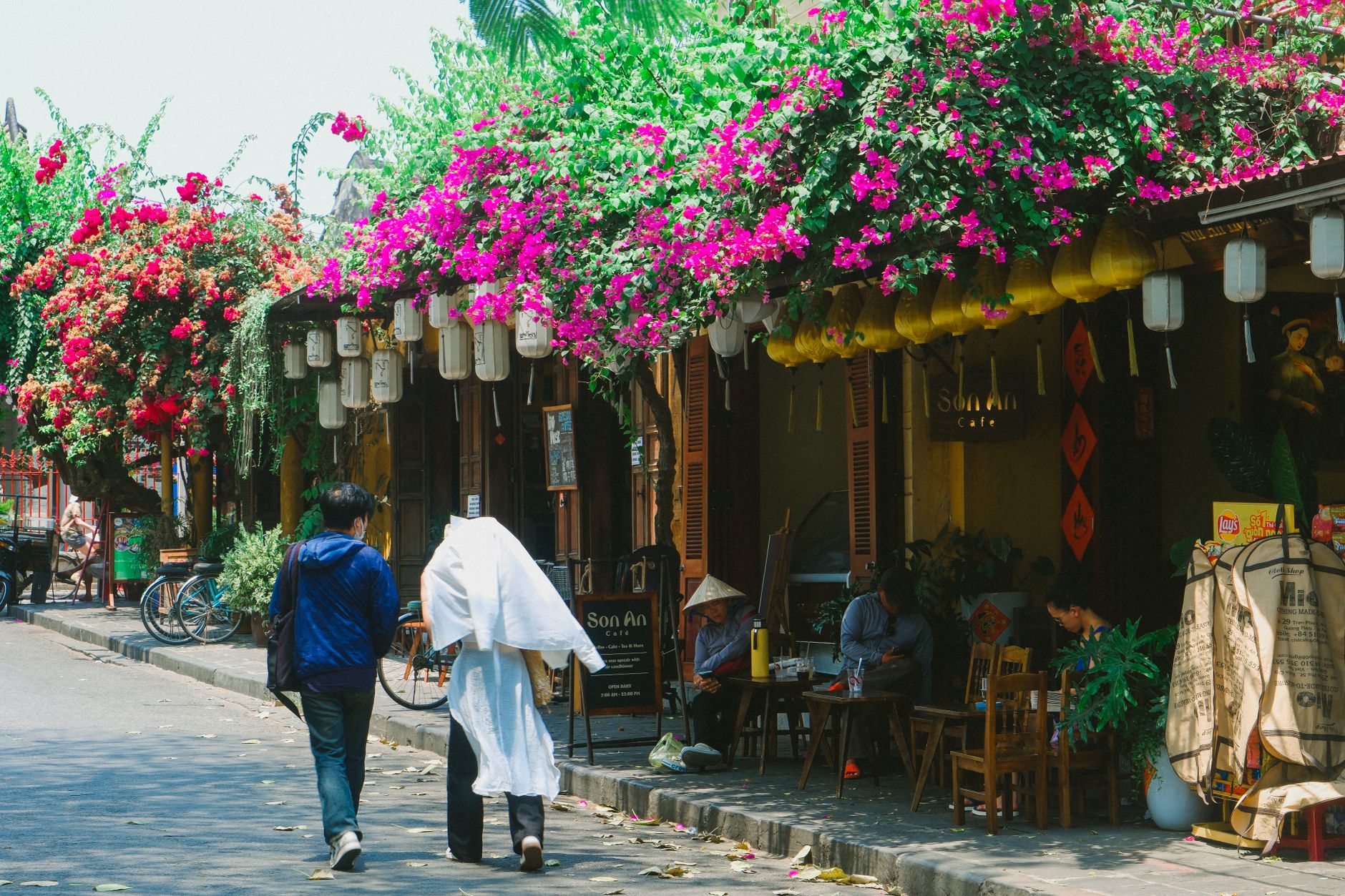
Da Nang and Hoi An
Temperatures run roughly 18-25°C, with drizzle and some heavier showers easing through the month. The sea sits around 21-23°C, cool and often rough, with red-flag days.
Wear lightweight long sleeves, a light jacket for evenings and scooter or bicycle rides, and carry a compact umbrella or poncho. Lantern-lit evenings in the Old Town are cool. The Hai Van Pass brings wind and fog, so add a windproof layer.
Hoi An tailors can turn around clothes in 24-72 hours, so check lining and fabric before committing. A light jacket or pair of trousers can be a useful cheap buy. Swimming is possible for hardy travellers but not guaranteed.
Phong Nha and Ke Bang
At roughly 15-22°C, this is one of the cooler spots on the coast, and it is damp. Caves sit around 20°C or cooler. Paradise Cave involves a long stairway, while Dark Cave and Tu Lan involve cold muddy water.
Wear quick-dry layers, a synthetic top and shoes that can get wet. Helmets, life jackets and headlamps are normally supplied on tours. Spare dry clothes are essential.
Nha Trang and Quy Nhon
Expect roughly 22-28°C, drier and sunnier than Hue, with occasional showers and windy periods. The sea sits around 24-25°C and is swimmable.
Pack summer clothes plus one light layer for evening wind and boat trips, a rash guard for sun and sea, and reef-safe sunscreen. Island-hopping boats can be breezy and splashy. Quy Nhon, including Ky Co and Eo Gio, is similar, with strong sun and a windy coast.
5. What to wear in the Central Highlands: Da Lat and Buon Ma Thuot
The Highlands are their own zone, never grouped with the south. Warm sun by day, cold nights, and dry-season dust.
Da Lat
Days run roughly 22-25°C and nights 10-14°C, dropping to 6-9°C on cold snaps. It is dry season, with lots of sunshine and strong UV at 1,500 m.
Wear a T-shirt by day, then add a fleece and light down jacket after 5pm, with long trousers, closed shoes and a scarf. Layers are the whole point here.
Wild sunflowers bloom in autumn, and cherry blossom (mai anh đào) appears from late December to February. Light layers are easy to shed for photos. Canyoning usually includes a wetsuit but the water is cold, and waterfall hikes, pine forest cycling and motorbike rides all feel the morning wind chill.
Buon Ma Thuot
Days run roughly 28-31°C and nights 15-17°C. It is very dry and dusty, with red basalt dust that stains.
Wear lightweight long sleeves for sun and dust, a light fleece for evenings, and dark shoes. Avoid white linen, because red dust stains permanently. Waterfalls and elephant-related sites involve uneven wet ground, so bring good-grip shoes. Coffee-farm visits call for closed shoes, not sandals.
6. What to wear in the southern cities: Ho Chi Minh City and the Mekong Delta
Ho Chi Minh City runs roughly 23-24°C at night and 31-33°C by day. It is dry season, sunny, with moderate humidity, making this the least sticky time of year. Rain is almost absent.
Wear loose, breathable cotton, linen or technical fabric. Cotton works better here in January than in the wet months. Light long sleeves help with sun and with aggressive air conditioning in malls, museums and buses. Add a hat, sunglasses and strong SPF.
Footwear can be breathable walking shoes or sturdy sandals, since pavements are dry. For motorbike taxis, closed shoes are better. At the War Remnants Museum, Reunification Palace, Notre-Dame Cathedral and Jade Emperor Pagoda, keep shoulders and knees covered.
The Mekong Delta runs roughly 22-32°C. Dry season means little rain, but the river breeze at dawn is cool, so bring a light scarf or shirt for early floating market trips. Sun protection matters on open boats, mosquito repellent matters at dusk, and shoes should handle muddy orchard paths.
Pre-Tet flower markets, including the Nguyen Hue flower street preparations, the Binh Dong flower market and Sa Dec flower village, draw heavy foot traffic. Neat casual dress fits the occasion.
7. What to wear on southern beaches and islands: Phu Quoc, Con Dao and Mui Ne
Phu Quoc
Expect roughly 24-31°C, dry season, calm seas and high season. The sea sits around 27-28°C, the best beach weather in Vietnam in January.
Pack swimwear, a rash guard, a cover-up, a sun hat, reef-safe sunscreen, sandals and a light layer for evening boat trips. Temples and Cao Dai or Buddhist sites still require covered shoulders and knees.
Con Dao
Temperatures run roughly 24-29°C. Northeast monsoon winds can make crossings and east-facing beaches rough, and ferry or flight disruption is possible, so allow buffer days.
Bring a light windbreaker, quick-dry clothes, water shoes for rocky beaches, and modest clothes for the cemetery and prison sites. Hang Duong Cemetery is a place of pilgrimage, especially before Tet.
Mui Ne
Expect roughly 22-31°C, very dry and windy. This is peak kitesurf season, with strong wind and fine sand blowing.
Wear a windproof light layer, wrap-around sunglasses, a buff for sand, and long sleeves for sun on the dunes. Closed shoes work for dune visits, or sandals you can empty out. The sea is a bit cooler and rougher than Phu Quoc.
8. What to wear at temples, pagodas and the Ho Chi Minh mausoleum
The general rule is shoulders and knees covered, no sleeveless tops, no short shorts and no see-through fabrics. January cold makes this easy in the north. In the south, carry a light scarf or shirt to cover up.
Remove shoes where signs or locals indicate, so slip-on shoes help. Wear socks without holes, and warm ones in January. Hats come off inside halls. Speak quietly and do not point feet at altars.
The Ho Chi Minh mausoleum in Hanoi has the strictest dress code: long trousers or knee-length skirts, covered shoulders, no hats, hands out of pockets, silence, and bags and cameras left at the deposit. It closes Mondays and Fridays, opens in the morning, and shuts for annual maintenance usually in autumn and early winter, so verify the reopening date for January 2027 on official sources before planning. Queues are outdoors and cold, so dress in layers.
Pre-Tet pilgrimage season fills pagodas, so dress neatly. Rules are stricter in rural and religious sites than in beach resorts, and the blanket claim that shorts and tank tops are unacceptable everywhere is overstated in big cities and resorts.
9. Clothing strategy: men's and women's notes, footwear and fabrics
Men's and women's notes
Women: a scarf or pashmina doubles as a shawl and neck warmer, leggings or thermals work under skirts and dresses, and higher necklines suit temples and the north. A packable jacket with pockets helps. Larger bra and clothing sizes, plus shoes above EU 40, are hard to find locally, so bring them.
Men: long trousers for temples and the mausoleum, quick-dry shorts only for the south and beaches. Shirts and shoes above size 43-44 are hard to find locally.
Both: motorbike wind chill gear, gloves and a neck gaiter. Children and older travellers need extra thermal layers, because the north has no indoor heating.
Footwear strategy (maximum three pairs)
Pair one: waterproof trail shoes or light boots for the north, treks and caves, broken in before departure. Pair two: breathable sneakers or comfortable walking sandals for cities and the south. Pair three: flip-flops or slides for beaches, showers and temple removals.
Socks should be merino or synthetic, three to four pairs, plus one warm pair for sleeping. Avoid cotton in the north. Do not rely on canvas shoes in Hanoi drizzle or leather dress shoes anywhere.
Fabrics that work and fail in January
| Fabric | North (cold, damp) | Central coast | Highlands | South and islands | Verdict |
|---|---|---|---|---|---|
| Merino base layers | Excellent | Good for evenings | Good for nights | Too warm by day | Pack for the north |
| Synthetic fleece | Excellent | Good | Good after 5pm | Rarely needed | Essential mid layer |
| Light down or synthetic insulation | Excellent | Useful in Hue and Phong Nha | Useful in Da Lat | Leave at home | Core north item |
| Waterproof breathable shell | Excellent | Essential | Rarely needed | Not needed | One per trip |
| Quick-dry trousers | Excellent | Good | Good | Good | Better than jeans everywhere |
| Cotton jeans and hoodies | Poor, slow to dry and cold when damp | Poor in drizzle | Acceptable | Fine | Avoid in the north |
| Linen | Too cold | Marginal | Good by day | Excellent | South only |
| White linen | Impractical | Impractical | Stains in Buon Ma Thuot dust | Fine at the beach | Avoid in dust |
10. Packing lists by itinerary type
Two weeks from north to south
Hanoi, Sapa, Ha Long, Hue, Hoi An, Da Lat or Nha Trang, then Ho Chi Minh City. Pack two merino base layers, one fleece, one light down jacket, one waterproof shell, two pairs of long trousers, one pair of shorts, three to four tops, gloves, beanie, scarf, wool socks, trail shoes, sandals, swimwear, and a compact umbrella.
Budget airlines in Vietnam typically allow about 7 kg of carry-on and sell checked baggage separately, so verify the current allowance. Leave bulky northern layers at the Hanoi hotel if you return there, or post them ahead.
Beach week
Phu Quoc, Con Dao, Nha Trang or Mui Ne. Pack two to three swimsuits, a rash guard, a cover-up, light long sleeves, a windbreaker for Mui Ne and Con Dao, sandals, water shoes, a hat and sunscreen.
Trekking trip
Sapa, Ha Giang, Pu Luong or Phong Nha. Pack layers, a shell, optional trekking poles, gaiters, dry bags, a headlamp, spare dry clothes, a sleeping liner, motorbike gear for Ha Giang, and remember the charcoal brazier warning.
City and culture trip
Hanoi, Hue, Hoi An and Ho Chi Minh City. Pack smart-casual layers, temple-appropriate outfits, shoes for wet stone and hot pavements, a compact umbrella, a scarf and a light layer for air conditioning.
11. What to buy in Vietnam instead of packing, and how laundry works in January
Buy on arrival
| Item | Buy or pack | Where to buy | Approximate price | Caution |
|---|---|---|---|---|
| Fleece or padded jacket | Buy | Hanoi Old Quarter, Sapa | 300,000-800,000 VND ($12-31) | Check zips and stitching, fake brands lack real insulation |
| Beanie, gloves, scarf | Buy | Hanoi, Sapa markets | 50,000-150,000 VND ($2-6) | Thin knit gloves fail on motorbikes |
| Thermal tops and thick socks | Buy | Hanoi, Sapa | 80,000-200,000 VND ($3-8) | Quality varies |
| Rain poncho | Buy | Everywhere | 20,000-60,000 VND ($1-2) | Fine for cities, poor for trekking |
| Lightweight trousers and sun shirts | Buy | Hoi An, city markets | 200,000-500,000 VND ($8-19) | Allow time for tailoring |
| Hiking boots | Pack | Home | Varies | Local options are limited and unreliable |
| Technical shell | Pack | Home | Varies | Local waterproofing is often cosmetic |
| Large clothing and shoe sizes | Pack | Home | Varies | Above EU 40 for women and 43-44 for men is hard to find |
| Quality reef-safe sunscreen | Pack | Home | Varies | Imported sunscreen is expensive, local products are often whitening formulas |
Laundry and drying
Laundry shops charge roughly 20,000-40,000 VND per kg ($0.80-1.55), usually same or next day. Hotels charge per item, typically more.
In Hanoi, Sapa and Hue in January, air drying takes two to three days or more, so ask for machine drying and use the A/C dehumidify mode. Items packed damp smell musty. In the south and Highlands, clothes dry in hours.
Quick-dry fabrics and a travel clothesline solve most problems. Plan one laundry stop just before leaving the north.
What to wear in other months: February · March · April · June · July · August · September · October · November · December
FAQ
Q: What is the weather like in Vietnam in January? It depends on the region. The north is cold and damp, with Hanoi around 11-20°C and Sapa near or below freezing at night. The central coast is cool with easing drizzle at about 17-25°C. The Central Highlands have warm days and cold nights, and the south is dry, sunny and hot at about 23-33°C.
Q: What should I pack for a trip to Vietnam in January? Layers for the north, including a base layer, fleece, insulated jacket, shell, gloves and beanie. Light summer clothes for the south. One rain shell, closed waterproof shoes plus sandals, a scarf, and modest outfits for temples and the mausoleum.
Q: Do I need a winter coat for Hanoi in January? Not a heavy parka for most days, but a warm layer system with a light down or insulated jacket and a windproof shell is advisable, because rooms and restaurants are unheated and cold snaps reach 6-9°C. A real winter coat is only needed for Sapa, Ha Giang and Fansipan. Bulky items can be bought cheaply locally.
Q: Will I see snow in Sapa or on Fansipan in January? Frost and ice are likely, while snow or sleet is possible but not reliable and occurs in some winters only. Do not plan the itinerary around snow, and expect fog, wet trails and possible closures or restrictions on cold days.
Q: Can I swim in Vietnam in January? Yes in the south, Phu Quoc, Nha Trang and Mui Ne, where the sea runs about 24-28°C. It is marginal in Da Nang and Hoi An at about 21-23°C with rough seas. It is not recommended in Ha Long and Cat Ba, where the water is about 16-18°C and the air is cold.
Q: Can I wear shorts and sleeveless tops in Vietnam in January? Yes in the south, Phu Quoc, Nha Trang and on Ho Chi Minh City streets, though covered shoulders and knees are required in pagodas and at the mausoleum. In the north it is simply too cold for most days.
Q: How does Tet affect travel in January? Tet 2027 falls on 6 February, so late January brings pre-Tet crowds, flower markets, packed transport and early closures. Many shops, tailors and restaurants shut for several days around the holiday. Book transport and tailoring early, and carry enough of your own cold-weather gear in case shops close.