For the same approach in a cooler month, see our October packing guide.
July at a glance: six climates, one month
July is the hot, wet summer monsoon month for most of the country, but the pattern is uneven. The north sweats through its hottest stretch of the year. The central coast enjoys its best weather window. The mountains and Highlands turn cool, muddy and misty. The south and the southwestern islands are deep in the rainy season.
The headline contrasts:
- Hottest and stickiest: Hanoi and the northern lowlands.
- Hot and mostly dry: the central coast from Hue to Quy Nhon.
- Cool and wet: Sapa and the Central Highlands.
- Rainiest island: Phu Quoc.
- Driest beach pocket in the south: Mui Ne.
This guide is for anyone planning a July trip, whether a two-week north-to-south route or a single beach base. Domestic school holidays run from June to August, which puts Vietnamese families on the beaches and fills resorts. That affects crowds and bookings, not the clothing list.
| Zone | Typical day/night | Rain | What to wear |
|---|---|---|---|
| Hanoi, Ninh Binh | 33-34°C / 26°C | 300 mm, 15+ days | Loose quick-dry tops, shorts, sandals, poncho |
| Sapa, Ha Giang | 23-26°C / 16-18°C | 400 mm+ | Base layer, fleece, waterproof shell, trail shoes |
| Ha Long Bay | 32-33°C / 26°C | 300-400 mm | UPF shirt, hat with strap, grip shoes, dry bag |
| Hue to Quy Nhon | 34-35°C / 25°C | 40-100 mm | Light loose clothing, wide hat, closed breathable shoes |
| Da Lat, Buon Ma Thuot | 24-29°C / 16-21°C | 230 mm | Fleece, rain jacket, long trousers, closed shoes |
| HCMC, Mekong Delta | 32°C / 25°C | 300 mm, 20 days | Quick-dry tops, shorts, waterproof sandals, umbrella |
| Phu Quoc, Con Dao | 30°C / 25°C | 400 mm+ | Swimwear, cover-ups, poncho, wet sandals |
| Mui Ne | 31-32°C / 25°C | 50-80 mm | Swimwear, wind layer, strap sandals, headscarf |
Northern cities (Hanoi, Ninh Binh)
Hanoi
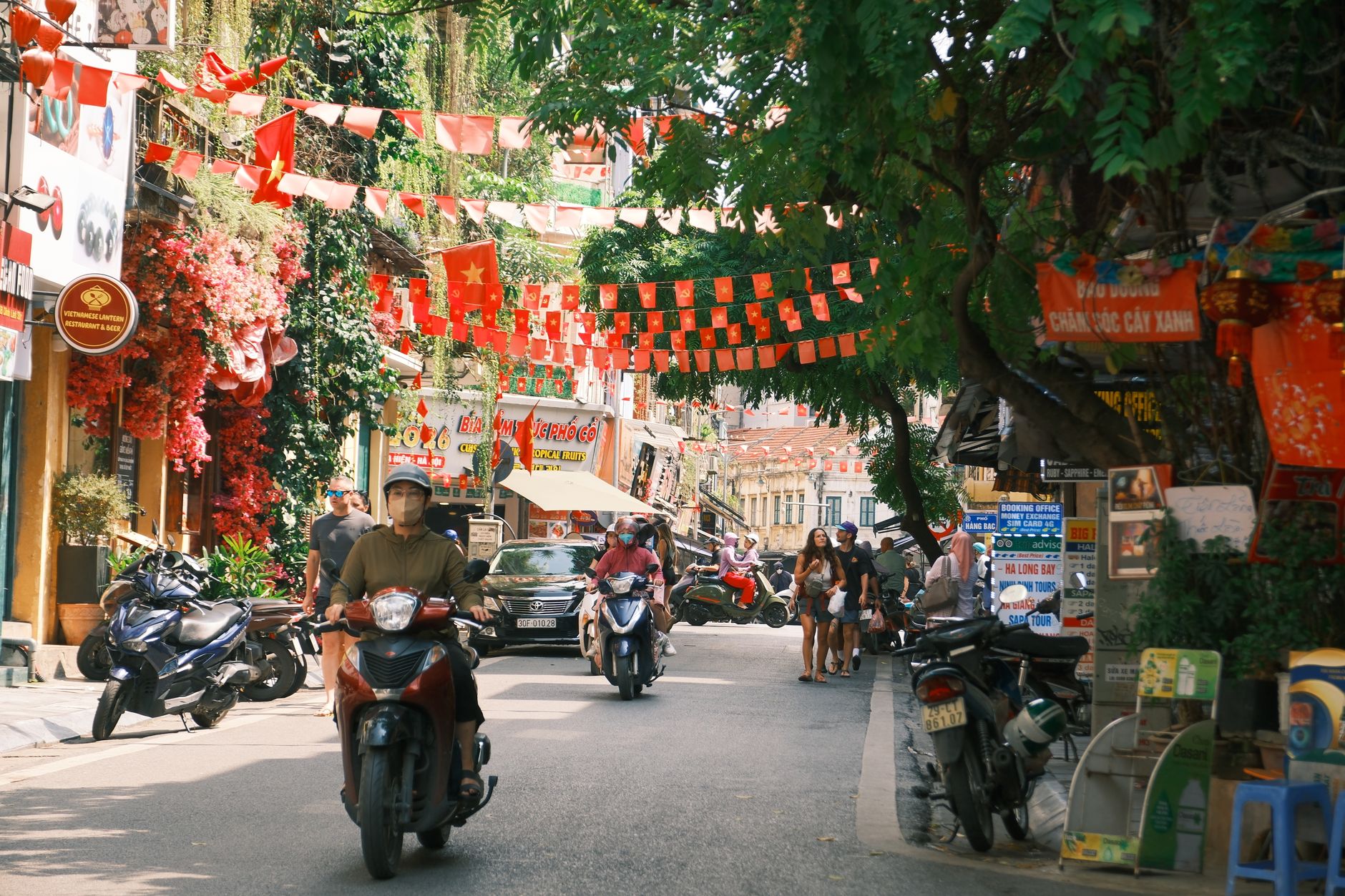
July is Hanoi at its most punishing. Days average 33-34°C, nights stay near 26°C, and hotter spells push past 37°C. Humidity sits around 80%, so the heat index climbs well above 40°C. Around 300 mm of rain falls across 15 or more days, usually as short heavy storms in the afternoon or evening. Typhoon remnants are possible from July, though the peak comes later in August and September.
Wear loose short-sleeved tops in viscose, Tencel or lightweight linen blends. Thin knee-length or midi skirts and dresses work well, as do lightweight trousers for the Old Quarter and temples. Shorts are fine for walking between sights. Choose quick-dry or blended fabrics, since plain cotton gets soaked and stays wet.
Pack one thin long-sleeve shirt or UPF shirt for sun and temple visits, plus a packable rain poncho or compact umbrella. A heavy waterproof jacket is too hot to wear here. For footwear, open or quick-dry sandals with a grip sole handle wet pavements and slippery Old Quarter kerbs. Closed shoes are only needed for the mausoleum area and evening riding.
Motorbike taxis mean covered knees and closed shoes reduce exhaust burns and scrapes. Cafés, malls and museums run strong AC, so a light layer helps indoors.
Ninh Binh (Trang An, Tam Coc, Hang Mua)
Expect about 33°C by day and 25°C at night, humid, with little shade on the boat rides. The rice fields are bright green in July. Wear a UPF shirt or light long sleeves for the rowing boats, since the oarsperson often rows with their feet while guests sit exposed to the sun. A wide-brim or ventilated hat and sunscreen are essential.
Sports sandals or trail shoes suit the 500-plus steps up Hang Mua, which get hot and slick after rain. Start before 8 am to beat the heat. The Hang Mua steps sit in full sun, so carry water and avoid midday.
Northern mountains (Sapa, Ha Giang, Mu Cang Chai, Mai Chau and Pu Luong)
This is where hot-country assumptions fail. July is the wet season in the northern mountains, and temperatures drop sharply with altitude.
Sapa and Fansipan
Sapa runs about 23-24°C by day and 16-17°C at night. It is very wet, with roughly 400 mm or more in July, plus fog and cloud. The Fansipan summit sits around 10-15°C and windy, and feels cold in wet clothing.
Layer a moisture-wicking base, a light fleece or insulating mid-layer for evenings, and a real waterproof shell with a breathable hood. A poncho alone is inadequate for a full day of trekking in heavy rain. Trail shoes or light hiking boots with a deep lug sole handle the village paths that turn to mud. Locals often sell or rent cheap rubber boots. Quick-dry trekking trousers or light synthetic leggings plus tall socks protect against leeches. Avoid cotton socks, which stay wet.
Clothes rarely dry in Sapa in July. Bring a dry bag or heavy-duty liner and spare socks for each trekking day.
Ha Giang and the Dong Van plateau (including the motorbike loop)
Ha Giang city runs about 30-31°C by day and 23-24°C at night. The plateau around Dong Van and Meo Vac, at 1,000-1,600 m, sits at 24-26°C by day and 17-18°C at night. It is wet, with landslides and road damage possible.
Riders need closed shoes, long trousers, a proper rain jacket and trousers, and gloves. Cheap ponchos tear and billow. The loop is dangerous in the wet: roads are slick, visibility is poor, and inexperienced riders have serious accidents. Rider kit does not replace skill, and many travellers choose a driver or a passenger seat instead. Pillion passengers need the same layers, with a fleece for the high passes.
Mu Cang Chai
Mu Cang Chai runs roughly 26-28°C by day and 18-20°C at night, and it is wet. The terraces are green and flooded in the growing season, with gold harvest colours arriving in September, so July is green season. Wear trail shoes, a light rain shell, quick-dry trousers and a mid-layer for evenings. The Khau Pha pass can suffer landslides, so build slack into the itinerary.
Mai Chau and Pu Luong
Mai Chau runs about 31-32°C by day and 23-24°C at night. Pu Luong, higher, sits around 29-30°C by day and 22°C at night. Both are humid with frequent showers. Wear lightweight trekking trousers, a short-sleeved quick-dry top, sandals for homestay floors and streams, and closed trail shoes for treks. Leeches and mosquitoes are present, so use light long sleeves and repellent. Homestays often mean a floor mattress with a mosquito net, and a light sarong or thin sleep layer is enough.
Ha Long Bay and Lan Ha Bay cruises
Expect about 32-33°C by day and 26°C at night, humid, with high rain totals around 300-400 mm. Sea temperature is about 29°C. The main risk is storm and typhoon warnings, when authorities can suspend cruises. Keep flexible dates and pack for both sun and a damp cabin.
On deck, wind off the water makes mornings and evenings pleasant, so a thin windproof or light long-sleeved shirt is enough. A cardigan is rarely needed in July, but cabin AC can be cold. For daytime, bring a UPF shirt, a hat with a chin strap for the wind, sunglasses with a strap, and reef-safe sunscreen.
For kayaking and swimming, pack a swimsuit or quick-dry shorts, a rash vest, and water shoes or sandals with a heel strap. Only essentials go in a dry bag. Cave visits involve slippery steps, so wear shoes with grip rather than flip-flops. For evenings, dress for a dining room with AC: light trousers or a midi dress and a thin layer. Use a small soft bag for the overnight, since big suitcases are usually left on shore.
Central coast (Hue, Da Nang, Hoi An, Phong Nha, Nha Trang and Quy Nhon)
July is the central coast's best-weather month, but it is a dry heat with little shade.
Hue
Hue runs about 34-35°C by day and 25°C at night. Hot, windy Laos-wind days can push temperatures to 37-40°C with low humidity. Rainfall is lower, roughly 100 mm. Wear very light, loose clothing and a wide hat. The Imperial City and tombs have almost no shade, so plan visits early or late. Temple and tomb sites need covered shoulders and knees, so light long-sleeved shirts and cropped or long trousers work. Breathable closed shoes or supportive sandals suit stone courtyards that heat up.
Da Nang and Hoi An
Both run about 34°C by day and 26°C at night, with roughly 85-90 mm of rain, calm warm seas and strong UV (index 11+). On the beach, swimwear, a rash vest, a wide hat and a cover-up for walking to restaurants all help. Domestic summer holidays make the beaches busy, and many locals swim in light clothes. Bikinis are normal at tourist beaches, but cover up when leaving the beach.
In the Hoi An old town, light dresses or shorts and tops work, with shoulders covered for pagodas and assembly halls. Cobbles and heat mean supportive sandals. Hoi An tailors can make light shirts and dresses within 24-48 hours, which is useful if luggage is limited. Fabric choice matters, so read the fabrics section below.
Phong Nha
Phong Nha is among the hottest places in July, about 35-37°C by day and sometimes hotter, 25°C at night, with moderate rain. The caves are much cooler and damp, so a thin long-sleeved layer helps, along with closed shoes or sandals with grip for wet, muddy sections. Dark Cave and river activities mean swimwear and quick-dry clothes. Bring a sun hat, UPF layer and quick-dry shorts.
Nha Trang and Quy Nhon
Nha Trang runs about 32-33°C by day and 25°C at night, while Quy Nhon sits around 34°C by day and 25°C at night. Both are mostly dry with a very low chance of rain, roughly 40-50 mm. Typhoon risk is lower in July than later in autumn. Wear swimwear, light cover-ups, sandals and sun protection. Island-hopping boats are hot and splashy, so use quick-dry clothing and a dry bag. Locals often swim fully clothed, and topless sunbathing is not accepted.
Central Highlands (Da Lat, Buon Ma Thuot)
Treat the Central Highlands as its own zone. It is not part of the south, and July here is cool and wet rather than hot and humid.
Da Lat
Da Lat runs about 24°C by day and 16°C at night, with roughly 230 mm of rain across many days, afternoon showers and mist. Mornings and evenings feel cool, especially on a motorbike. Layer a light fleece or sweater with a proper rain jacket, not a poncho for motorbike rides. Long trousers or jeans are fine here, since humidity is lower than the lowlands. Closed shoes with grip handle waterfalls, canyons and muddy trails, and waterproof or quick-dry shoes work better than canvas. Street food markets and night markets are cool, so bring a layer.
Da Lat is the one place in July where jeans and a light jacket make sense.
Buon Ma Thuot (and Pleiku, Kon Tum)
Buon Ma Thuot runs roughly 29°C by day and 21°C at night, with a wet season of afternoon storms. Wear light layers, a rain jacket, and closed shoes for coffee plantations, waterfalls and elephant-related areas. Red mud stains clothing, so choose dark or easy-wash fabrics. If visiting ethical elephant-tourism points, note that riding is not part of a responsible visit.
Southern cities (Ho Chi Minh City, Mekong Delta)
Ho Chi Minh City
HCMC runs about 32°C by day and 25°C at night, sometimes reaching 35°C. About 300 mm of rain falls on roughly 20 days. Rain typically arrives as a heavy downpour of 30-90 minutes in the afternoon, and streets flood quickly. Wear light, quick-dry tops, shorts or thin trousers, a dress or skirt, and pack a compact umbrella or poncho, which is cheap to buy.
For footwear, choose waterproof or quick-dry sandals. Avoid suede and canvas, and avoid leather that cannot dry. Flooded streets are common, so shoes that survive a soaking are needed, and many travellers carry a second dry pair. At cultural sites such as the Jade Emperor Pagoda and the Notre-Dame area, a light shawl or shirt covers shoulders and knees.
Mekong Delta
The delta runs about 32°C by day and 25°C at night, humid and rainy. Boat trips involve sun, splashes and mud. Wear light long sleeves for sun and mosquitoes, a hat, quick-dry trousers and sandals with straps. Homestays and floating markets start early, around 5-6 am, which is cooler, so bring a thin layer for the river. Mosquito protection matters, since dengue risk is higher in the rainy season: use repellent and cover up at dusk. The ao ba ba, a loose cotton pyjama-style outfit, is sold cheaply and suits the climate if you want a local option.
Southern beaches and islands (Phu Quoc, Con Dao, Mui Ne)
July is low season for the southwest islands. Plan accordingly.
Phu Quoc
Phu Quoc runs about 30-31°C by day and 25°C at night. It is very rainy, roughly 400 mm or more in July, with strong squalls and rough seas. Some boat tours, snorkelling days and island trips are cancelled, and some beach restaurants and resorts close or reduce service. Wear swimwear (the water is warm), quick-dry cover-ups, a rash vest, a light rain jacket or poncho, and sandals that can get wet. Assume that a few days will be spent indoors or between showers. Use mosquito and sandfly protection in the evening.
Con Dao
Con Dao runs about 30°C by day and 25°C at night, rainy and humid, with occasionally rough ferry or flight conditions. Wear quick-dry clothes, light layers for the prison museum and cemeteries, swimwear, reef-safe sunscreen, and sandals with grip. The Hang Duong cemetery has a respectful and modest dress code with covered shoulders and knees. Cemetery visits at night are a significant local custom, so dress modestly and subdued.
Mui Ne
Mui Ne runs about 31-32°C by day and 25°C at night, with much lower rainfall than other southern coasts, roughly 50-80 mm. It is the dry pocket and a better July beach choice than Phu Quoc. Wear swimwear, a wind-resistant light layer for the beach and dunes, closed shoes or sandals with straps for sand dune walking, and a headscarf or buff for wind and sand. Midday sand is very hot, so avoid bare feet and go at sunrise or late afternoon.
Temples, pagodas, the Ho Chi Minh mausoleum, and men's and women's notes
Temples and pagodas
Cover shoulders and knees. Avoid sheer, tight or very short clothes. Carry a lightweight scarf, sarong or shirt to throw on at entrances. Remove shoes at the main halls and avoid pointing feet at altars. Slip-on footwear helps. At the Tay Ninh Cao Dai Temple noon ceremony, a cleaner, covered look is expected, and visitors watch from the balcony.
Ho Chi Minh mausoleum (Hanoi)
Rules are strict: no shorts, no sleeveless tops, no short skirts, no hats worn inside, hands out of pockets, no talking, and no photography inside. Closed shoes are recommended because of the queue and the walk. Opening days and hours are limited to mornings and closed on some days, with an annual maintenance closure usually in autumn. Verify dates before travel. In July the mausoleum is usually open, but a check is advised. Security checks often require leaving bags and cameras.
Men's notes
Light, long trousers in chinos or technical fabric are more useful than jeans. A collared short-sleeve shirt works for temples and evenings. Shorts are fine in cities and on beaches. Take off hats and sunglasses in religious halls.
Women's notes
Yes, a woman can wear shorts in Vietnam. They are common in cities and tourist areas. For temples, rural villages and the mausoleum, choose longer shorts or a skirt with covered shoulders. Local sun-avoidance fashion, with long sleeves, arm sleeves, face masks and wide hats, shows how locals handle July sun, and UPF layers are a sensible copy. Choose breathable bras and underlayers, and avoid clingy synthetics against the skin in heavy humidity. Dresses and jumpsuits are workable only if the fabric breathes.
Footwear strategy and fabrics that work or fail in July
Footwear strategy (three pairs maximum)
- Quick-dry sports or walking sandals with a good sole (primary pair).
- Closed trail or lightweight walking shoes (trekking, caves, mausoleum, riding).
- Light flip-flops or water shoes (beach, showers, shared bathrooms).
Add rubber boots only for serious trekking, and these can be hired or bought locally. Mould is a real problem: shoes and leather can grow mould in damp conditions, so avoid leather and suede, and use silica gel bags and newspaper to dry shoes. Never bring new shoes untested.
Fabrics that work in July
Lightweight technical synthetics manage sweat well, though they hold odour. Merino-blend, Tencel and lyocell tops dry quickly. Linen and linen blends dry fast if you accept creases. Light viscose and rayon suit loose dresses and shirts. Nylon ripstop trousers are a solid choice.
Fabrics that fail
Heavy cotton stays wet for hours. Denim only works in Da Lat or Sapa evenings. Pure silk shows water marks and sweat stains. Thick leggings, cotton hoodies and non-breathable rain jackets in the lowlands all fail. Light colours in muddy areas and white cotton that shows sweat are also poor choices.
| Fabric | July verdict | Best use | Drying time |
|---|---|---|---|
| Technical synthetic | Works | Trekking, city, boats | 1-2 hours |
| Merino blend | Works | Tops, evenings | 2-4 hours |
| Linen blend | Works | Shirts, dresses | 2-3 hours |
| Viscose/rayon | Works | Loose dresses, shirts | 3-4 hours |
| Heavy cotton | Fails | None in the lowlands | 6+ hours |
| Denim | Fails except Highlands | Da Lat, Sapa evenings | 8+ hours |
| Pure silk | Fails | None in July | Slow, marks easily |
Packing lists by itinerary type
Two weeks, north to south
- 5 tops (quick-dry or viscose), 1 long-sleeve UPF shirt
- 2 lightweight trousers, 2 shorts or skirts, 1 dress or jumpsuit
- Swimwear, light fleece (Sapa and Da Lat), packable rain shell
- Poncho or umbrella, sandals and closed shoes
- Hat, sunscreen, repellent, a dry bag
The route logic matters: hot Hanoi, cool and wet Sapa, hot dry central coast, cool Da Lat, wet HCMC.
Beach week
- Two swimsuits, rash vest, cover-ups
- 3-4 light tops, shorts, one dress
- Flip-flops and sandals, wide hat, sunscreen, light rain jacket
Mui Ne, Nha Trang or Da Nang are the sensible July bases, not Phu Quoc.
Trekking trip (Sapa, Ha Giang, Mu Cang Chai, Pu Luong)
- Waterproof shell, fleece, 2-3 quick-dry tops
- Trekking trousers, base layer
- 3 pairs of quick-dry socks plus leech socks
- Trail shoes, dry bags, headlamp, repellent
- A change of dry clothes kept sealed
City and culture
- Light, easy-wash outfits
- Temple scarf, long shorts or skirt
- Walking sandals, closed shoes
- Umbrella, compact day bag, a light layer for AC
One-bag rule: two-thirds of clothes should be quick-dry, and mix-and-match neutrals.
What to buy cheaply in Vietnam instead of packing, and laundry
Buy on arrival
Prices are approximate and rounded, at roughly 25,500 VND per USD.
| Item | Buy or pack | Approximate price | Where |
|---|---|---|---|
| Rain poncho | Buy | 10,000-30,000 VND ($0.40-1.20) | Convenience stores, markets |
| Compact umbrella | Buy | 50,000-120,000 VND ($2-4.70) | Markets, pharmacies |
| UV arm sleeves and neck buffs | Buy | 30,000-80,000 VND ($1.20-3) | Markets, sports shops |
| Rubber sandals, flip-flops, hats | Buy | 50,000-150,000 VND ($2-6) | Markets |
| Cotton or linen tops, ao ba ba pants | Buy | 100,000-250,000 VND ($4-10) | Markets |
| Fisherman pants | Buy | 80,000-200,000 VND ($3-8) | Markets, Old Quarter |
| Fleece or jacket | Buy | 200,000-500,000 VND ($8-20) | Sapa, Da Lat |
| Hoi An tailored shirt or dress | Buy | 500,000-1,500,000 VND ($20-60) | Hoi An tailors |
North Face-style items in Sapa and Da Lat are often copies of variable quality. Sunscreen is available, but many local products contain whitening agents and imported ones cost more.
What not to count on buying
Larger sizes of clothes and shoes are limited in some shops. Trusted technical hiking gear is hard to find. Specific bras or underwear in larger sizes are also scarce.
Laundry
Local laundry shops charge about 20,000-40,000 VND ($0.80-1.60) per kg, usually with 24-hour turnaround. Hotel laundry is priced per item and is much more expensive. Air-drying in July can take more than a day in humid weather, so use machine-dried service in rainy places. Bring about a week of clothes and do laundry in Hanoi, Hoi An or HCMC. Wash technical clothes more frequently to control odour, and carry a travel clothesline and a ziplock bag for wet clothes.
What to wear in other months: January · February · March · April · June · August · September · October · November · December
FAQ
Q: Is June a good time to visit Vietnam? June is similar to July: hot and humid in the north, wet in the south and Highlands, with the central coast at its best for beaches. It suits beach-focused trips, but the north and south need rain planning. Use the July at a glance table for the regional contrasts.
Q: What to pack for Vietnam in January? January is the opposite of July: cold and grey in Hanoi and the northern mountains, cool in Da Lat, and dry and warm in the south. Layers, a warm jacket and long trousers are needed in the north. See the October guide as the nearest sibling in this series.
Q: Can a woman wear shorts in Vietnam? Yes, in cities, beaches and tourist areas. For temples, rural villages and the Ho Chi Minh mausoleum, wear longer shorts or a skirt and cover the shoulders. Carry a light scarf or shirt for entrances.
Q: What clothing is Vietnam known for? The ao dai (long tunic over trousers), the non la conical hat and the ao ba ba (loose cotton outfit) are best known. Visitors can wear them, and rental or tailoring is common in Hue and Hoi An. Casual local clothing is more practical for July heat, and ao ba ba is breathable.
Q: Do I need a rain jacket in July? Yes for Sapa, Ha Giang, Da Lat, Phu Quoc and HCMC. In hot lowland cities a poncho or compact umbrella is more comfortable than a heavy shell. For trekking in the northern mountains, a real breathable waterproof is recommended.
Q: Do I need warm clothes in July? Only in specific places: a light fleece for Sapa and Da Lat evenings, extra warmth at the Fansipan summit, and a thin layer for AC on buses, trains and cruise cabins. Warm coats are not needed.
Q: Is July too hot for Hanoi? It is one of the hottest and stickiest months, with a heat index above 40°C at times. Sightseeing is manageable early and late with breaks in air-conditioned places. Light clothing, a hat, water and sun protection matter, and heat exhaustion is a real risk.
Q: Where is the best beach in Vietnam in July? The central coast (Da Nang, Hoi An, Nha Trang, Quy Nhon) and Mui Ne are drier and better than Phu Quoc and Con Dao, which are in the rainy season. Domestic summer holidays make the central beaches busy, so book ahead.