February in Vietnam at a glance: why one packing list fails
February has three climates, and a trip crossing them needs a system, not one wardrobe. Pack for the northern cold first, then subtract for the south. A fleece and shell you wear in Hanoi get posted home or left in hotel storage before you reach the Mekong.
Three facts shape everything this month. The north is damp rather than rainy: drizzle (mưa phùn), fog, little sun and humidity above 80% most days. The south is dry and hot with strong UV. And Tet, the Lunar New Year, lands on 6 February 2027, which affects clothing logistics: closures, crowds and festive dress codes.
This guide uses long-term climate averages. Cold snaps can push Hanoi to 8-10°C and Sapa below 0°C, so treat the numbers as typical, not guaranteed.
| Zone | Typical day / night | Rain and humidity | What to wear |
|---|---|---|---|
| Hanoi, Ninh Binh | 17-21°C / 12-15°C | Drizzle, fog, 80%+ humidity | Base layer, fleece, showerproof shell, closed shoes |
| Sapa, Ha Giang | 8-14°C / 3-7°C | Fog, drizzle, frost at night | Thermal base, fleece, waterproof shell, down jacket |
| Ha Long Bay | 14-19°C / 12-14°C | Fog, drizzle, deck wind | Windproof jacket, fleece, gloves, non-slip shoes |
| Hue | 20-24°C / 16-18°C | Drizzly, river mist | Shirt, cardigan, long trousers, light shell |
| Da Nang, Hoi An | 23-26°C / 18-20°C | Some showers, variable cloud | T-shirts, light trousers, evening layer |
| Da Lat | 22-25°C / 11-14°C | Dry, sharp night drop | Hoodie, light jacket, jeans after dark |
| Ho Chi Minh City | 32-34°C / 23-24°C | Dry, high UV | Linen, loose trousers, hat, thin AC layer |
| Phu Quoc, Con Dao | 28-32°C / 24-25°C | Dry, sea 27-28°C | Swimwear, rash guard, cover-up, sandals |
What to wear in northern cities (Hanoi, Ninh Binh)
Hanoi
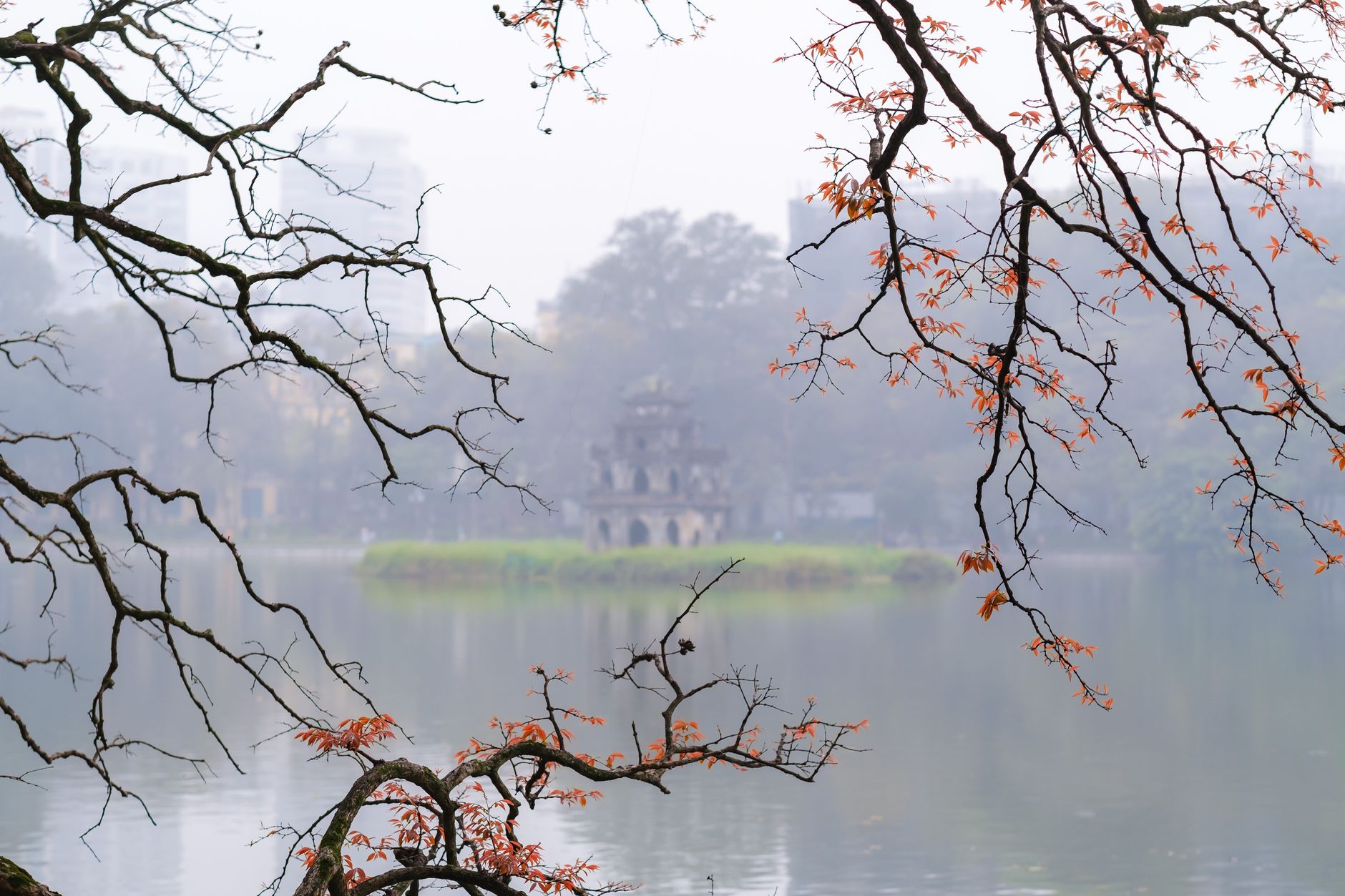
Hanoi runs about 17-21°C by day and 12-15°C at night in February. Humidity sits above 80%, the sun rarely breaks through, and drizzle falls on many days. Build a three-part layer: a long-sleeve cotton-blend or merino tee as a base, a fleece or light wool sweater over it, and a windproof or showerproof shell on top. A thin packable down jacket works for evenings. Mid-weight travel trousers or dark jeans cover the legs, and women can wear leggings under a dress.
Cold snaps and the late-February rét nàng Bân spell can drop the city to 8-10°C. Add a beanie, a light scarf and thin gloves for those days.
The bigger surprise is indoor cold. Many cafes, restaurants, homestays and budget hotels have no heating and open fronts. Thermal sleepwear and warm socks matter as much as the coat.
Footwear should be closed, water-resistant and grippy. Wet tile and marble in the Old Quarter and pagodas are genuinely slippery, and canvas sneakers soak through in an hour.
Hanoi's PM2.5 often reaches unhealthy levels in winter. Pack a KN95 or N95 mask and a buff, especially for motorbike or cyclo rides.
From late February, nồm humidity arrives: condensation on walls and floors, and clothes that stay damp for days. The laundry section below covers what to do.
Ninh Binh (Tam Coc, Trang An, Hang Mua)
Ninh Binh sits slightly cooler on the river at 14-20°C, with wind and mist on boat trips. Wear a windproof layer for rowing boats and a shell for drizzle. The Hang Mua stairs mean trainers, not sandals. Long trousers beat shorts on wet boat seats. Rowers provide life jackets, and you should wear them.
What to wear in the northern mountains (Sapa, Ha Giang, Mu Cang Chai, Mai Chau and Pu Luong)
Sapa and Fansipan
Sapa sees 8-14°C by day and 3-7°C at night, with frost possible and fog and drizzle common. Snow is rare and only appears in strong cold waves. The Fansipan summit sits near or below 0°C with wind, so treat it as a separate outfit: shell, insulation, gloves, hat.
Use a three-layer system: merino or synthetic base layer top and bottom, a fleece, and a waterproof shell, plus a packable down jacket for evenings. For trekking, wear quick-dry or softshell trousers rather than jeans, waterproof trail shoes or boots with aggressive grip, and wool socks with a spare dry pair.
Muddy trails call for gaiters or rolled trousers. Villagers sell or rent rubber boots and ponchos cheaply. Rooms often lack real heating, so bring thermal sleepwear and ask for extra blankets.
Wet slopes, fog and cold exposure catch under-dressed hikers every February. If you are not equipped for rain and mud, book a short valley walk instead of a summit trek.
Ha Giang loop
The Ha Giang plateau runs about 8-17°C by day, with passes at 1,000-1,500 m colder and wind-chill on a motorbike. The motorbike outfit is specific: windproof jacket, thermal layers, full-length gloves, neck gaiter, rain trousers, closed waterproof boots and a proper helmet. Back-riders suffer most from the cold, so dress for a stationary passenger, not a walker. Peach and plum blossom peaks around Tet, though fog can cancel the views.
Mu Cang Chai
Mu Cang Chai sits high, at about 4-8°C at night. The terraces are bare or brown in February, so summer photo clothing is pointless. Pack for cold and fog.
Mai Chau and Pu Luong
These valleys are milder, at about 15-21°C by day and 9-13°C at night, with damp mornings. A fleece, shell and light trousers cover it. Stilt-house floors are cold, so bring socks and sandals for indoor use. Easy trails need trail runners with grip, not smooth-soled sneakers.
What to wear on Ha Long Bay and Lan Ha Bay cruises
Ha Long and Lan Ha run 14-19°C by day and 12-14°C at night, and fog, drizzle and wind make the sundeck feel 8-12°C. Sea temperature is about 17-19°C, so a swim is not a reliable plan. Shorts and a swimsuit on deck mean a very cold few minutes.
Deck wear: windproof jacket, fleece, buff, light gloves and long trousers. For kayaking, wear quick-dry leggings, a long-sleeve technical top and a windproof shell, and carry a dry bag. Operators supply life jackets and wearing one is mandatory. Wet decks and gangways need non-slip rubber-soled shoes, and a spare pair of dry socks earns its place in your bag.
Cabins are heated or air-conditioned, but cold-mist mornings can leave bedding damp, so pack warm sleepwear.
Cruises can be shortened or cancelled in poor visibility or strong wind. A rain shell matters more here than sun cream.
What to wear on the central coast (Hue, Da Nang, Hoi An, Phong Nha, Nha Trang and Quy Nhon)
The central coast is not uniformly "perfect" in February. It is a gradient from north to south, and the northern half still carries winter drizzle.
Hue
Hue sees 20-24°C by day and 16-18°C at night, still drizzly with river mist. It is the wettest and coolest of the coastal stops. A cotton shirt with a light cardigan works, plus long trousers for the Imperial City and royal tombs, which are exposed to sun and wind. Carry a shower-proof shell and wear closed, grippy shoes for wet stone.
Da Nang and Hoi An
Da Nang and Hoi An run 23-26°C by day and 18-20°C at night, with some showery days and variable cloud. T-shirts and light trousers work in daytime, with a sweater or light jacket for evenings and scooter rides. Sea water is about 21-23°C, refreshing at best. Waves and wind vary. If you want Hoi An tailoring, order early in the trip, since tailors close or slow down during Tet.
Phong Nha
Phong Nha sits at about 20-25°C by day and 15-17°C at night. Caves are cool and damp at around 18-20°C. Bring quick-dry layers, a thin fleece for caves, trail shoes and sandals for cave water sections.
Nha Trang and Quy Nhon
This is the dry, sunny, breezy end of the coast: 27-29°C by day and 22-23°C at night. Pack swimwear, a rash guard, a sun hat, sandals and a light wrap for windy island boats. UV is strong even on cloudy days, and boat trips bring wind chill.
What to wear in the Central Highlands (Da Lat and Buon Ma Thuot)
The Central Highlands is its own zone, never part of the southern beach climate.
Da Lat
Da Lat runs 22-25°C by day and 11-14°C at night. It is dry with strong UV and chilly mornings and evenings, so the temperature swing is sharp. Wear a hoodie or fleece with a light jacket and jeans or trousers in the evening. T-shirts and sunglasses are fine by day. Trainers or light hiking shoes handle waterfalls and pine-forest trails, and canyoning needs quick-dry layers.
Buon Ma Thuot
Buon Ma Thuot sees 29-31°C by day and 16-18°C at night, dry and dusty, with red basalt dust on everything. Wear dark or earth-toned light cotton, a hat and sunscreen, plus a light layer for evenings. Closed shoes are best, since dust stains pale fabrics and white shoes. Coffee blossom timing varies, usually late February to March.
What to wear in southern cities (Ho Chi Minh City and the Mekong Delta)
Ho Chi Minh City
Ho Chi Minh City runs 32-34°C by day and 23-24°C at night, dry with minimal rain and high UV. Linen, cotton or lightweight technical shirts, loose trousers or skirts, breathable dresses and a wide-brim hat work best. Carry a thin layer for aggressive air conditioning in malls, cafes, buses and trains. Walking shoes with breathable uppers plus sandals cover the ground.
Pre-Tet crowds around Nguyen Hue flower street are heavy. Wear comfortable shoes and carry a secure cross-body bag.
Mekong Delta
The delta runs 31-33°C by day and 23-25°C at night, with breezy river mornings. A long-sleeve UPF shirt for boats, a hat and non-slip sandals or shoes for boarding cover most needs. Insect repellent matters for canals, and quick-dry fabric handles splashes. Wear the life jacket whenever the boat provides one.
What to wear on southern beaches and islands (Phu Quoc, Con Dao and Mui Ne)
Phu Quoc runs 30-32°C by day and 24-25°C at night, with sea about 27-28°C. Pack swimwear, a rash guard, a cover-up, sandals and reef-safe sun protection. Con Dao runs 28-30°C by day and 24-25°C at night, with trail shoes for jungle walks and modest clothing for the historic prison sites and cemetery, where shoulders and knees should be covered. Mui Ne runs 29-31°C by day and 22-24°C at night, with strong wind in kitesurfing season bringing sand and spray. Bring a windproof layer, a hat with a chin strap and closed shoes for the dunes.
Beach cover-ups belong at the beach. Put on a shirt for towns and restaurants.
What to wear at temples, pagodas, the Ho Chi Minh mausoleum and during Tet
The basic temple dress code in February
Shoulders and knees covered, hat off, shoes off where indicated. A light overshirt or scarf is practical in the cold north, and marble floors are cold, so wear socks. Shorts and mini skirts are a no-go.
Ho Chi Minh mausoleum
Dress modestly: no shorts, no hat, no sleeveless tops, and hands out of pockets. Bags and cameras go to storage and security is strict. It is usually open Tuesday to Thursday and weekend mornings, and closed on Mondays and Fridays. Annual maintenance closures vary, so check before you travel. Early-morning queues are cold, so layer up.
Tet 2027: dates and what to wear
Tet falls on 6 February 2027, with Tet Eve on 5 February. The official public-holiday length is announced by the government late in the preceding year, so check closer to the date. The first-full-moon festival (Rằm tháng Giêng) is around 20 February 2027. Later years: 26 January 2028 and 13 February 2029.
For festive temple visits, wear neat, modest clothing in bright or warm colours, since red and gold are lucky. Avoid all-black outfits and, in family contexts, all-white, which reads as mourning. Skip heavy perfume.
If a Vietnamese family invites you, smart-casual works: covered shoulders and knees, clean closed shoes or sandals that slip off easily at the door. Bring a small gift and red envelopes if appropriate. An ao dai is a good option to buy or rent, but order before Tet, since tailors close.
Many shops, laundries and tailors close for days one to three of Tet or longer, and transport is heavily booked. Buy any missing clothes before 4 February.
Men's and women's notes, footwear strategy, and fabrics that work or fail in February
Men's notes
One merino or thermal top, a fleece, a shell and travel trousers cover the north. Shorts are for the south only. Add one collared or long-sleeve shirt for temples and invitations. Shirtless or swim shorts are for the beach only.
Women's notes
Can a woman wear shorts in Vietnam? Yes in cities, resorts and beaches, but not at temples, pagodas or the mausoleum. In the north in February, shorts are rarely practical anyway. Practical looks include leggings under midi dresses, long-sleeve tops, a large scarf that doubles as a wrap and shoulder cover, and a cross-body bag worn in front because of motorbike bag-snatching.
Footwear strategy
Three pairs maximum: waterproof walking shoes or trail shoes, breathable sneakers or sandals for the south, and flip-flops or slip-ons for temples and beaches. Avoid canvas and suede in the north. Break shoes in before the trip.
Fabrics that work and fail
| Fabric | North (damp-cold) | South (hot-dry) | Verdict |
|---|---|---|---|
| Merino wool | Warm when damp, dries fast | Too warm by day | Bring for the north |
| Synthetic wicking base layer | Works well | Works well | Bring |
| Fleece | Essential mid layer | Not needed | North only |
| Cotton-linen blend | Slow to dry | Excellent | South only |
| Heavy denim | Never dries in Hanoi | Too hot | Leave home |
| Pure cotton hoodie | Holds moisture | Too heavy | Leave home |
| Thin cotton | Too cold for Sapa | Fine for cities | South only |
| Down jacket without shell | Wet down loses insulation | Not needed | Pair with a shell |
Packing lists by itinerary type
2-week north-to-south: fleece, thin down jacket, a shell, 2 long-sleeve base layers, 2-3 tops for the south, 1 pair of trousers plus 1 pair of shorts, and a light overshirt for temples. A laundry stop in Hoi An or Da Nang is the reset point. Shed warm layers by post or hotel storage in Hanoi, where hotels often hold bags.
Beach week (Phu Quoc, Con Dao, Nha Trang, Mui Ne): 2-3 swimsuits, rash guard, cover-up, sun hat, sandals, one light long-sleeve for evenings and boats, and one modest outfit.
Trekking trip (Sapa, Ha Giang, Pu Luong): base layers, fleece, waterproof shell, down jacket, softshell trousers, waterproof trail shoes, wool socks, gloves, beanie, gaiters and a dry bag.
City and culture (Hanoi, Hue, Hoi An, Ho Chi Minh City): shell, sweater, 2 pairs of trousers, 1 dress or skirt, a scarf, an overshirt, comfortable shoes, and a small umbrella or poncho.
What to buy in Vietnam instead of packing, and laundry in February
All prices are approximate (about 26,000 VND = 1 USD) and worth re-checking before you travel.
| Item | Local price | Buy or bring | Note |
|---|---|---|---|
| Poncho | 20,000-30,000 VND ($1) | Buy | Sold everywhere in the north |
| Fleece or fake-brand jacket | 400,000-900,000 VND ($15-35) | Buy | Old Quarter; check zips and seams |
| Thermal base layer | 100,000-250,000 VND ($4-10) | Buy | Fine for cities, not serious trekking |
| Cotton or linen trousers and shirts | 150,000-300,000 VND ($6-12) | Buy | Markets |
| Flip-flops | 50,000-100,000 VND ($2-4) | Buy | |
| Ao dai or tailored shirt | 800,000-2,000,000 VND ($30-75) | Buy | Allow 2-3 days, avoid Tet |
| Waterproof hiking boots | Bring | Local quality is unreliable | |
| Technical shell | Bring | Same | |
| Quality merino | Bring | Hard to find |
Laundry
Typical rates are 25,000-50,000 VND per kg ($1-2), with 24-48 hour turnaround. In nồm and drizzle, clothes may come back damp. Ask for a dryer (máy sấy) or tumble-dry service, and check bags for a damp smell. Wash in sinks at night, wring with a towel, and hang near fans or air conditioning. Pack plastic bags for wet items plus silica gel. Pre-Tet laundries close, so wash early.
What to wear in other months: January · March · April · June · July · August · September · October · November · December
FAQ
Q: What is the weather like in Vietnam in February? A: It depends on the zone. The north is cool and damp (Hanoi about 12-21°C, Sapa about 3-14°C), the central coast is mild (about 18-26°C) and drying, the Central Highlands are cool at night, and the south is dry and hot at 23-34°C.
Q: Do I need a winter coat for Hanoi in February? A: Not a heavy one. A layer system of base layer, fleece and shell, or a thin packable down jacket, covers most days. Add a beanie and gloves for cold snaps, plus warm sleepwear since many rooms lack heating.
Q: Can a woman wear shorts in Vietnam? A: Yes in cities and at beaches, but knee-length or longer at temples, pagodas and the mausoleum. In the north in February, long trousers are more practical anyway.
Q: What to wear in Vietnam in October compared with February? A: October is warmer in the north but wetter, with typhoon and flood risk in central Vietnam. February is colder in the north and drier on the central coast and in the south.
Q: How do I keep clothes dry in Hanoi in February? A: Choose quick-dry and merino fabrics, avoid denim, use dryer-equipped laundries, wring with a towel, and use fans or air conditioning in dry mode. Humidity and nồm condensation mean air-drying often fails.
Q: What should I wear to visit a Vietnamese family at Tet? A: Neat, modest, smart-casual clothes in bright or warm colours, with shoulders and knees covered and shoes easy to remove. Avoid all-black or all-white. Bring a small gift, and do not assume shops or tailors are open.
Q: Is it warm enough to swim in Ha Long Bay or Da Nang in February? A: Rarely in Ha Long, where the water is about 17-19°C and the air is cold. Da Nang's sea is about 21-23°C, so it is cool but possible on a sunny day. For reliable swimming, choose Nha Trang, Phu Quoc or Con Dao.