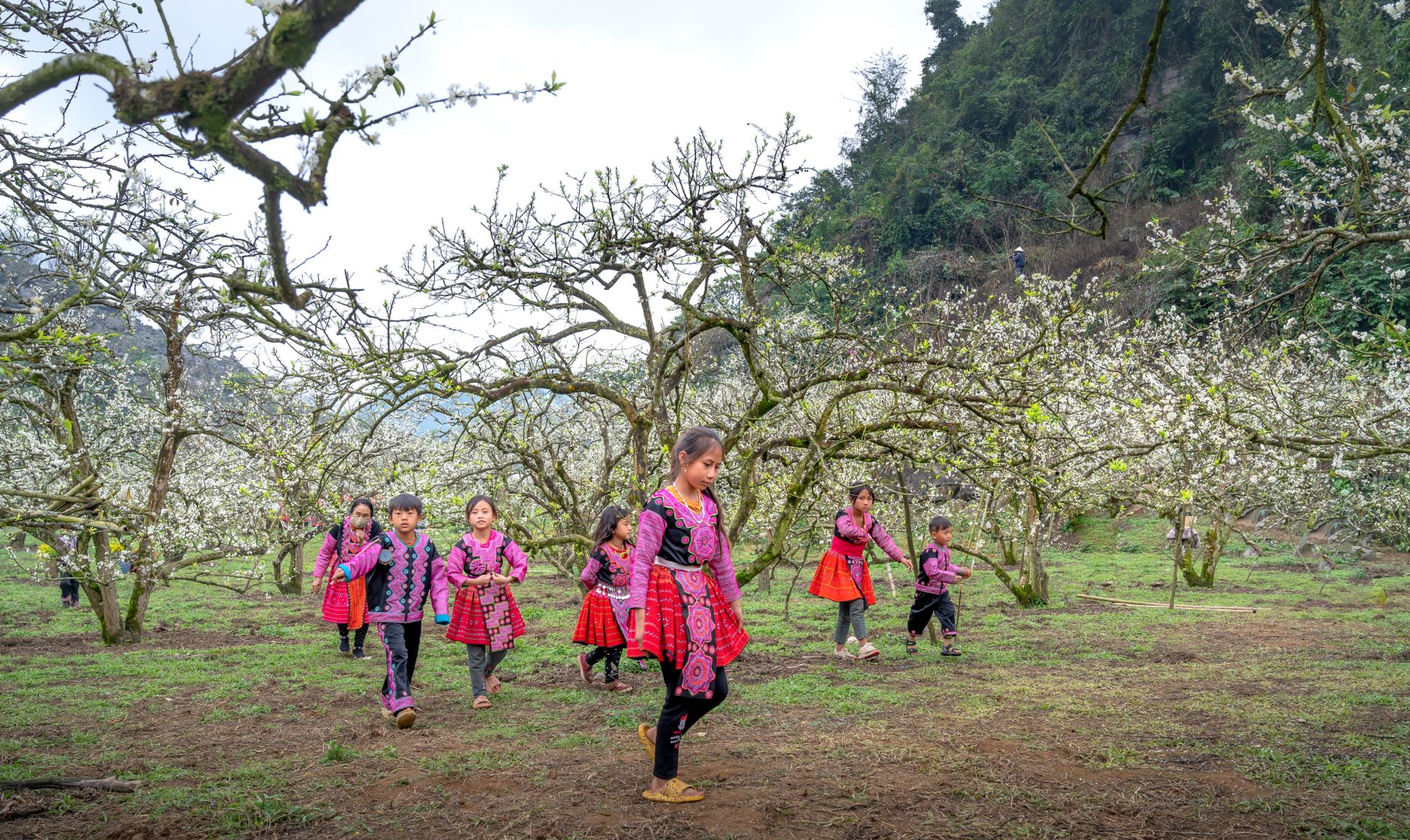
This guide breaks the country into seven zones and dresses each one separately, with real day and night temperatures, rain patterns, humidity, fabrics and footwear. The suitcase should match the route, not the map.
April in Vietnam at a glance: where it is cool, wet or hot
April is a transition month, and the transitions run in opposite directions depending on latitude. The north is warming fast out of a damp spring. The south is peaking before the monsoon. The centre sits in its dry, sunny window.
- Cool: only Sapa and Dong Van nights (about 11-14°C) and the Fansipan summit (single digits to low teens with wind). Nowhere else needs real warmth beyond a thin layer.
- Wet: Hanoi and the north (drizzle and showers, roughly 10-13 rainy days), Sapa fog and afternoon showers, Da Lat and Buon Ma Thuot (afternoon storms begin late April), Phu Quoc (first thunderstorms possible). The central coast is the driest zone.
- Hot: Ho Chi Minh City and the Mekong Delta (day 34-36°C, night 26-27°C, heat index near 40°C), inland Hue and Phong Nha (33-36°C in hot spells), Buon Ma Thuot (32-34°C). UV is extreme (11+) in the centre and south.
Figures are climatological averages. Recent Aprils have produced heat waves with readings of 37-40°C in parts of the south and north-central region. Check forecasts 7-10 days out and keep one flexible layer in the bag.
Two dates matter for planning. Hung Kings Commemoration Day is expected around 16 April 2027 (the 10th day of the third lunar month; confirm the official announcement). Reunification Day (30 April) and Labour Day (1 May) fall on Friday and Saturday in 2027. Crowded temples, beaches and flights mean more time queuing in the sun, so sun gear earns its place.
Quick reference table by zone
| Zone | Day / night temperature | Rain and humidity | What to wear | Footwear |
|---|---|---|---|---|
| Hanoi and Ninh Binh | 25-28°C / 19-22°C | Drizzle, 10-13 rainy days, 80-85% | Short sleeves, light overshirt, light trousers | Breathable sneakers or closed sandals |
| Sapa and Ha Giang | 17-27°C / 11-14°C | Fog, showers, 150-200 mm | Base layer, fleece, waterproof shell, long trousers | Trail runners with grip |
| Ha Long Bay | 24-27°C / 18-21°C | Sea fog, drizzle, 85%+ | Linen shirt, light fleece, windproof jacket | Soft-soled shoes on deck |
| Hue, Da Nang, Hoi An | 29-34°C / 22-24°C | Very little rain, extreme UV | Loose light clothing, UPF long sleeves, hat | Sandals plus closed shoes for steps |
| Da Lat and Buon Ma Thuot | 25-34°C / 14-22°C | Afternoon showers late April | T-shirt, hoodie or fleece, rain jacket | Grippy sneakers |
| Ho Chi Minh City and Mekong | 34-36°C / 26-27°C | First storms late April, 65-75% | Light quick-dry tops, thin trousers, knee shorts | Ventilated sneakers or sports sandals |
| Phu Quoc, Con Dao, Mui Ne | 31-33°C / 24-27°C | Mostly dry, storms possible late April | Swimwear, rash guard, cover-up, light long sleeves | Flip-flops plus water shoes |
What to wear in northern cities: Hanoi and Ninh Binh
Hanoi
Typical days run 25-28°C, with heat spells reaching 33-35°C by late April. Nights sit at 19-22°C and humidity holds at 80-85%. Drizzle or short showers fall on many days. Early April can still feel grey and clammy, with drizzly days at 18-22°C.
Pack short-sleeve tops, one thin long-sleeve shirt for air conditioning and mosquito hours, light trousers or midi skirts, and one dress. Linen blends, lyocell, thin merino and quick-dry synthetics all work. A light cardigan or overshirt covers cold cafés, buses and trains.
April is not dry in Hanoi. Guides that call the capital dry this month are wrong. A compact umbrella beats a hot rain shell in drizzle.
Footwear means breathable sneakers or closed sandals for wet pavements. Leather soles and canvas that stays damp are poor choices.
Ninh Binh (Trang An, Tam Coc, Mua Cave, Cuc Phuong)
Days reach 27-30°C and nights 20-22°C, with little shade on rowing boats or the 500 steps of Mua Cave. Wear a sun hat with a chin strap, a UPF long-sleeve shirt or light overshirt, and quick-dry shorts or trousers. Long skirts do not work on bicycles. Choose sandals with a heel strap or trail shoes for steps and wet cave floors.
What to wear in the northern mountains: Sapa, Ha Giang, Mu Cang Chai, Mai Chau and Pu Luong
Elevation drives the night temperature here, not the calendar. One honest note before the details: northwest burning season can cause haze that reduces views in March and April, and April is not the peak month for terrace photography.
Sapa town, treks and Fansipan
Sapa town sits at about 1,500 m, with days of 18-22°C, nights of 11-14°C, fog and afternoon showers (roughly 150-200 mm). Valleys between 600 and 1,000 m reach 22-26°C by day and feel muggy.
Build a layer system: a synthetic or merino T-shirt, a thin fleece or light insulated jacket for evenings, a packable waterproof shell, and long trousers. Shorts are fine for valley treks.
The Fansipan summit at 3,143 m runs about 5-12°C with wind. Add a windproof shell, fleece, and optional light gloves and a buff.
Footwear means trail runners or light hiking shoes with real grip. Red mud and wet stone steps are the main hazard, and villages often lend or rent rubber boots. Homestay rooms are frequently unheated and damp, so pack a thin thermal top and dry socks for sleeping.
Ha Giang loop (Quan Ba, Yen Minh, Dong Van, Meo Vac)
Days range 17-27°C by altitude, and Dong Van plateau nights sit around 11-14°C. Wind chill on a motorbike is significant, and showers increase as the month progresses, making roads slick.
Riding kit: windproof jacket, long trousers rather than shorts, closed shoes or boots, riding gloves, a buff, and a full-face or certified helmet. Carry a rain poncho or proper rain suit and a dry bag for electronics.
Riding a motorbike in Vietnam requires a licence valid in the country and insurance. Check both before renting.
Mu Cang Chai
Days run 17-25°C and nights 12-15°C. Terraces in April are mostly bare or being ploughed. The flooded green terraces come from about late May to June. Dress for mud, dust and cool morning fog, not for a photograph of green terraces.
Mai Chau and Pu Luong
Days reach 26-30°C and nights 19-22°C, with humid valley air and short showers. Wear lightweight long sleeves for mosquitoes at dusk, quick-dry trousers, and trail sandals or shoes for wet bamboo and stone paths. Stilt houses usually require shoes off, so slip-ons make evenings easier.
What to wear on Ha Long Bay and Lan Ha Bay cruises
Conditions on the water run 24-27°C by day and 18-21°C at night, with humidity above 85%, possible sea fog or drizzle, and evening wind on the sun deck. The sea sits at about 21-24°C, swimmable but fresh. Cabin air conditioning is often cold.
For time on deck, pack a cotton-linen or quick-dry shirt, shorts or light trousers, a hat and sunglasses. Add a light fleece or windproof jacket for evenings and the sunrise tai chi session, plus a thin scarf.
Kayaking and swimming call for swimwear, a rash guard or UPF top, quick-dry shorts, water shoes or secure sandals, and a dry bag for the phone. Lan Ha is more sheltered than central Ha Long.
Many boats ask for soft-soled shoes on deck and shoes off in cabins. Check the operator's rules and leave hard heels at home.
Fog can limit views and cause schedule changes. Pack for grey, mild conditions and bring a sunny-day backup.
What to wear on the central coast: Hue, Da Nang, Hoi An, Phong Nha, Nha Trang and Quy Nhon
This is the driest, sunniest and best-beach zone in April. The main risk is heat and UV, not rain.
Hue
Days run 30-34°C, with hot spells above 35°C, and nights 22-24°C. There is little shade in the Imperial City or at the royal tombs. Wear loose light trousers or a long skirt, short sleeves, a wide-brimmed hat, UPF long sleeves, and sturdy sandals or breathable sneakers. Tombs are active heritage sites, so shoulders and knees stay covered.
Da Nang and Hoi An
Days reach 29-32°C and nights 22-24°C, with the sea at 25-26°C and rain of only about 30-50 mm. Hoi An at midday is hot and humid, with stronger sun on narrow, lantern-lit streets.
Pack breathable tops, shorts or skirts for the beach, and a cover-up that doubles as temple dress for the assembly halls. Ba Na Hills at about 1,400 m is 8-10°C cooler and often foggy, so carry a light layer.
Sandals handle most walking, but bring closed shoes for the Marble Mountains steps or Son Tra. Riding the Hai Van Pass by scooter requires closed shoes and a light windproof layer.
Phong Nha
Inland days run 31-35°C and nights 23-25°C. Caves are much cooler, so a thin layer helps. Wet caves and boat visits suit quick-dry shorts, swimwear and water shoes. Dark Cave style activities mean mud, so wear clothes that can be thrown out afterwards.
Nha Trang and Quy Nhon
Days sit at 30-32°C and nights 23-25°C, with the sea at 26-27°C and dry conditions. Island boat days need a rash guard, a hat with a strap, reef-safe sunscreen, and sandals that stay on in surf. Evenings need no layer except for air conditioning.
What to wear in the Central Highlands: Da Lat and Buon Ma Thuot
The highlands are their own zone, not part of the south. Altitude shifts the whole kit.
Da Lat
At about 1,500 m, days run 25-27°C and nights 14-16°C, with humidity of 75-80% and afternoon showers increasing in late April. Wear jeans or chinos, a T-shirt plus a light fleece or hoodie, and a packable rain jacket. Grippy sneakers handle the terrain.
Canyoning and waterfall trips at Datanla or Pongour need strap-on sandals, and the slopes are slippery. Evenings at the night market need that light layer.
Buon Ma Thuot and Dak Lak
At about 500 m, days reach 32-34°C and nights 20-22°C, with dry heat and the first afternoon storms. Wear light long sleeves, breathable trousers and closed shoes. Red basalt dust stains clothes, so avoid white and pale colours. If visiting elephant areas, choose observation-only experiences and wear closed shoes and neutral colours.
What to wear in southern cities: Ho Chi Minh City and the Mekong Delta
Ho Chi Minh City
Days run 34-36°C and nights 26-27°C, with humidity of 65-75% and a heat index up to about 40°C. The first late-afternoon storms can arrive near the end of the month.
Wear loose, light-coloured, quick-dry or linen-blend tops, thin trousers, skirts or knee-length shorts, and one dress. Avoid jeans, close-fit synthetics and anything cotton-heavy.
Heat management matters more than style here. Sightsee between 7 and 11 am and after 4 pm. Carry a cooling towel, electrolyte or ORS sachets, a wide-brim hat, and a thin scarf for air-conditioned malls and museums. The Cu Chi tunnels need long light trousers and closed shoes for crawling and dust. At the War Remnants Museum and Reunification Palace, covered shoulders are courteous. The Tay Ninh Cao Dai ceremony calls for modest dress with long trousers or a skirt.
Footwear means ventilated sneakers or sports sandals. Heat swelling means half a size of extra room helps.
Mekong Delta
Days run 33-35°C and nights 25-26°C, with humid air and mosquitoes at dusk. Wear a UPF long-sleeve shirt, quick-dry trousers rather than long skirts on boats or bicycles, a hat with a strap, repellent, and sandals with a heel strap. A floating market at 5-6 am is the coolest time of day, so dress for 26°C and sun by 8 am. Showers are brief, so a poncho or umbrella is enough.
What to wear on southern beaches and islands: Phu Quoc, Con Dao and Mui Ne
Phu Quoc
Days run 32-33°C and nights 26-27°C, with the sea at 29-30°C and humidity of 80%. These are the last mostly dry weeks, though thunderstorms can start in late April.
Pack two swimsuits so one is always dry, a rash guard, a cover-up, quick-dry shorts, a hat, polarised sunglasses and reef-safe sunscreen. Evenings need a light long-sleeve layer against mosquitoes. Flip-flops cover the resort, while water shoes help at rocky snorkelling spots. Away from the resort, cover up: swimwear belongs on the beach.
Con Dao
Days run 31-32°C and nights 25-26°C, with calm seas. Beachwear works on the sand, but the prison sites and Hang Duong cemetery call for modest, covered clothes. Vietnamese visitors come to pay respects there, including at night. Closed shoes suit the jungle walks.
Mui Ne
Days run 31-33°C and nights 24-25°C, with steady wind. On the sand dunes, the sand is hot and the dust constant, so wear a buff or scarf, wrap-around sunglasses, and closed shoes or strapped sandals. Bare feet scorch at midday. Kitesurfing needs a harness and rash guard, and a wetsuit is generally unnecessary in April water.
What to wear at temples, pagodas and the Ho Chi Minh Mausoleum
General temple and pagoda rules
Shoulders and knees stay covered. No see-through fabric, no low-cut tops. A 140-cm light scarf or sarong solves most situations. Slip-on shoes make removal at main halls easier. Hats come off inside, and feet should not point at altars.
For hot weather, the practical answer is a loose linen shirt with knee-length trousers or a midi skirt, worn over swimwear and tank tops or carried in the day bag.
Ho Chi Minh Mausoleum in Hanoi
Rules here are stricter than at temples. No shorts or skirts above the knee, no sleeveless tops, no hats inside. Hands stay out of pockets, bags and cameras go to the cloakroom, and the visit is silent with no photography. The queue is outdoors in the sun, so bring a hat and water for the wait. Opening is limited to certain mornings, typically closed Monday and Friday, and annual maintenance usually falls in autumn.
Verify mausoleum opening hours and maintenance dates before publishing or travelling. They change.
Imperial sites and other sacred places
Hue tombs and the Citadel, Hoi An assembly halls, Con Dao cemetery and the Tay Ninh Cao Dai Holy See all expect covered shoulders and knees. On colour: white is traditionally associated with mourning, while red is safe and often seen as lucky.
Men's and women's notes, footwear strategy and fabrics that work or fail in April
Women's notes
Locals often cover shoulders and arms for sun protection. Tanks and shorts are tolerated in tourist areas and on beaches, but modest outfits draw fewer stares and work better in rural zones and sacred places. Light dresses over anti-chafe shorts, wicking sports bras and a scarf cover most situations. Light colours show less sweat, though grey can show it as patches. Tampons are less available outside big cities, so pack enough. Large sizes in bras, trousers and shoes are hard to find locally.
Men's notes
No shirtless walking off the beach. Board shorts read as beachwear in cities, so switch to knee-length shorts or light trousers for sights. A quick-dry polo or button-down is the best all-rounder. Shoes above size 43-44 are hard to buy locally.
Footwear strategy: three pairs plus one optional
A breathable sneaker or trail runner, a sports sandal with a heel strap, and a flip-flop or slip-on for pagodas and beaches cover nearly everything. Water shoes are the optional fourth pair for kayaking and caves. Boots are not needed in April. Choose merino or synthetic socks, not cotton. Domestic budget carriers often limit carry-on to about 7 kg, so wear the heaviest shoes on the plane.
Fabrics that work and fail in April
| Fabric | Humidity performance | Drying time | Best use | Verdict |
|---|---|---|---|---|
| Merino 150 g/m² | Regulates well, resists odour | Moderate | Cool mountain nights, travel days | Works |
| Tencel / lyocell | Soft, breathes, drapes | Fast | City days, dinners | Works |
| Linen and cotton-linen | Breathes in heat, looks good creased | Fast | Temples, central coast, evenings | Works |
| Nylon quick-dry | Wicks, packs small | Very fast | Trekking, boats, beaches | Works |
| UPF-rated synthetics | Blocks UV, light | Fast | Boats, dunes, Mekong | Works |
| 100% cotton T-shirt | Comfortable but holds sweat | Slow at 80%+ humidity | Short city outings only | Marginal |
| Rayon | Sticks when wet | Slow | Not for active days | Marginal |
| Cheap polyester | Traps odour quickly | Fast | Emergencies only | Marginal |
| Denim | Heavy, slow, chafes | Very slow | Nowhere in April | Fails |
| Silk and satin | Shows sweat instantly | Slow | Not for daytime | Fails |
| Non-breathable hard shell | Traps heat at 35°C | n/a | Not for the south | Fails |
Packing lists by itinerary type
| Item category | 2-week north-to-south (7-8 kg) | Beach week | Trekking trip | City and culture |
|---|---|---|---|---|
| Tops | 4 quick-dry, 1 long-sleeve UPF | 3 tanks, 1 rash guard, 1 cover-up | 3 merino or synthetic, 1 fleece | 4 light shirts or blouses |
| Bottoms | 2 trousers, 2 shorts, 1 skirt | 2 swimsuits, 2 shorts | 2 trekking trousers, 1 shorts | 2 trousers, 1 midi skirt |
| Layers | Fleece, windproof shell | Light long-sleeve for evenings | Insulated jacket, rain shell | Cardigan, packable shell |
| Footwear | Sneakers, sandals, flip-flops | Flip-flops, water shoes | Trail runners, camp sandals | Sneakers, slip-ons |
| Extras | Umbrella, scarf, dry bag | Reef-safe sunscreen, hat | Gloves, buff, dry bag | Sarong, umbrella, scarf |
Always pack UPF 50 sunscreen, a hat, sunglasses, repellent with DEET or picaridin (dengue is present in the south and rises with the rains), electrolyte sachets, a scarf or sarong, a dry bag and a reusable bottle.
What to buy in Vietnam instead of packing, and how laundry works
Buy locally
| Item | Local price | Quality note | Buy or bring |
|---|---|---|---|
| Rain poncho | 20,000-50,000 VND ($1-2) | Thin but adequate for scooters | Buy |
| Flip-flops | 50,000-150,000 VND ($2-6) | Fine for beaches | Buy |
| Conical hat | 50,000-100,000 VND ($2-4) | Good sun cover, packs flat | Buy |
| UV jacket (áo chống nắng) | 100,000-250,000 VND ($4-10) | Light, effective, local staple | Buy |
| Sapa fleece or windproof | 150,000-400,000 VND ($6-15) | Check quality and counterfeit branding | Buy with care |
| Hoi An tailored shirt | 350,000-700,000 VND ($14-27) | 24-48 hour turnaround | Buy |
| Hoi An linen dress | 600,000-1,500,000 VND ($23-58) | Fittings usually included | Buy |
| Reef-safe sunscreen | Imported, expensive | Bring from home | Bring |
| Large sizes, sports bras | Limited outside big cities | Fit is unreliable | Bring |
| Quality walking shoes | Limited range | Break them in first | Bring |
Prices are approximate, at roughly 26,000 VND per USD.
Laundry
Laundromat service costs about 20,000-40,000 VND per kg ($0.8-1.5), while hotel laundry runs 20,000-60,000 VND per item ($0.8-2.3). Turnaround is usually 24 hours. Drying is slow in the humid north, which is why quick-dry fabrics matter. Sink-wash plus a travel towel roll works well between services. Ask for no dryer if the fabrics are delicate.
What to wear in other months: January · February · March · June · July · August · September · October · November · December
FAQ
Q: What is one of the biggest mistakes when packing for Vietnam in April? Packing for one national climate. Heavy cotton and jeans in the south, no light layer for Sapa nights, and skipping sun protection are the most common errors. Cultural mistakes include entering temples or the mausoleum in sleeveless tops or shorts.
Q: What should female tourists wear in Vietnam? Lightweight tops with sleeves, midi dresses or skirts, or loose trousers, plus a scarf for religious sites. Swimwear stays on beaches. Anti-chafe shorts and quick-dry fabrics help in the south.
Q: Is it okay to wear red in Vietnam? Yes. Red is associated with luck and celebration and appears on the national flag, so it is safe. White is traditionally linked to mourning, but wearing white is not a problem for visitors outside funerals.
Q: What is famous to buy in Vietnam? Tailored clothing in Hoi An, silk and linen, conical hats, coffee, lacquerware, and local UV jackets. Check counterfeit outdoor brands in Sapa and Hanoi before paying premium prices.
Q: Do I need a jacket in Vietnam in April? Only for Sapa, Ha Giang, Fansipan, Da Lat evenings, Ha Long nights and cold air conditioning. A fleece or light windproof layer is enough. In Ho Chi Minh City, Hue, Da Nang or Phu Quoc, a thin scarf covers air conditioning.
Q: Umbrella or rain jacket in April? An umbrella for Hanoi, Hue and city drizzle. A packable shell for Sapa, Ha Giang and Da Lat. A cheap poncho at 20,000-50,000 VND ($1-2) is fine for scooter rides.
Q: Are shorts acceptable in Vietnam? Yes in cities, on beaches and on treks, with knee-length preferred. Not for temples, the mausoleum or rural villages, so pack a light trouser or sarong.
Q: How hot does April get and how should it change plans? Ho Chi Minh City is the hottest at 34-36°C with a heat index near 40°C. Do sights early, rest midday, and drink electrolytes. Recognise heat exhaustion signs such as dizziness, headache, nausea and confusion, and seek shade and fluids immediately.