Pads: sold everywhere, for a few cents
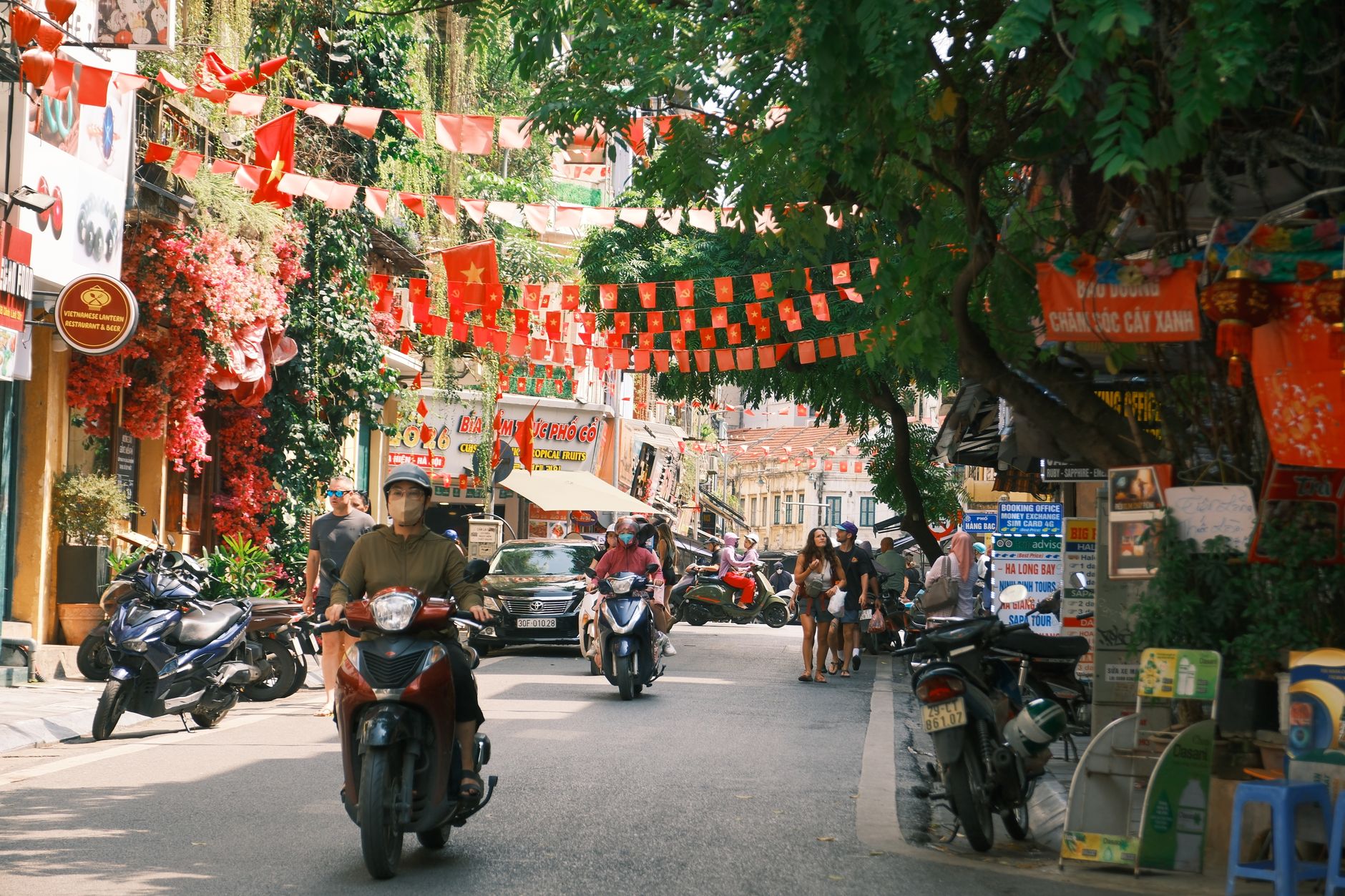
Sanitary pads (băng vệ sinh) are on the shelves of every convenience store, from Circle K and FamilyMart to GS25 and WinMart+, in supermarkets such as Co.opmart, WinMart, AEON, Lotte Mart or GO!, in the Long Châu and Pharmacity pharmacy chains, and in the smallest neighborhood grocery store (tạp hóa) or market stall. The most common brands are Diana, Kotex and Laurier.
Prices are low: a pack of day pads starts at about 12,000 dong, and a pack of 35 cm night pads costs 22,000 to 45,000 dong depending on the brand and the number of pads inside. That works out at roughly 2,000 to 9,000 dong (8 to 35 US cents) a pad. No need to fill your suitcase with them.
Choosing the right pad
Take winged pads (có cánh): they stay in place better in the heat and on long journeys. Vietnamese pads also tend to be shorter, and often thicker, than those sold in Europe or North America. Day pads usually measure 23 to 28 cm; for a heavy flow, buy night pads (ban đêm), which come in 29, 35 and even 42 cm, and wear them during the day too if needed. Prefer thin pads? Look for "siêu mỏng" (ultra-thin) on the pack. Panty liners are called "băng vệ sinh hàng ngày".
In the heat, change pads more often than at home, every three to four hours, even if they are not full: moisture and friction quickly lead to irritation and fungal infections at 35°C. Light cotton underwear helps.
Tampons: bring your own
Tampons are rare in Vietnam, where few women use them. In the big cities, a few large supermarkets, pharmacies and health-and-beauty stores sometimes stock them, often only models without an applicator, and the choice is limited. Outside Hanoi, Ho Chi Minh City and Da Nang, expect to find none. If you use tampons, bring your full supply for the trip, in several absorbencies.
Whatever the brand, the usual rule applies: change your tampon every four to eight hours, never more than eight, to limit the risk of toxic shock syndrome.
Menstrual cups: yes, with clean water
A menstrual cup (cốc nguyệt san) is practical on a long trip, but Vietnam complicates two steps. First, tap water is not drinkable and carries bacteria: rinse the cup with bottled water or water that has been boiled, never with ordinary tap water. Between two cycles, sterilize it for a few minutes in freshly boiled water: the electric kettle found in most hotel rooms does the job, with a heat-proof mug.
Second, emptying a cup requires a clean place. Many toilets on the road, in bus stations, rest stops, markets or villages, are squat toilets with no sink in the cubicle, and sometimes no door that closes properly. Carry a small bottle of water and some tissues to rinse and wipe, and empty the cup at your hotel whenever you can: most cups can be worn for up to 12 hours, depending on the brand.
Cups are rarely sold in Vietnamese shops, as few Vietnamese women use them: bring yours from home.
Period underwear: the problem of heat and humidity
Period underwear works, with two limits in Vietnam. Worn for long hours in humid heat, it stays damp against the skin, which favors irritation and fungal infections: change it more often than the label suggests. And it has to dry. In the North, especially from February to April, when the damp "nồm" season makes walls and floors sweat, laundry hung indoors can take days to dry, and outdoors it never dries in the drizzle.
A few tips: bring more pairs than you would at home, dry them in your air-conditioned room, as air conditioning dries the air, and avoid the tumble dryers of hotel laundries, which most brands advise against. For a short trip, pads remain the simplest option.
Toilets on the road
Public toilets rarely have toilet paper: always carry tissues or a small roll, plus a few wet wipes. Many have a hand spray next to the bowl, and in older buildings and in the countryside, paper goes in the bin rather than the toilet, so as not to block the pipes. Used pads and tampons always go in the bin: wrap them in paper or in the wrapper of the new pad, and keep a few small bags for when there is no bin.
On a sleeper bus, toilet stops can be hours apart, and only some buses have a toilet on board: put on a long night pad before boarding. On a trek with a night in a mountain homestay, around Sapa or on the Ha Giang loop, take everything you need for the whole trek, as village shops rarely stock long night pads. At the beach, only a tampon, a cup or period swimwear let you swim.
Cramps, pharmacies and when to see a doctor
Pharmacies (nhà thuốc) sell pads and painkillers everywhere: paracetamol and ibuprofen are available over the counter, and the guide to Vietnamese pharmacies explains how to ask for them. One exception: if you have a fever, take only paracetamol until dengue has been ruled out, as ibuprofen and aspirin are dangerous with it.
Unusual pain, very heavy bleeding or signs of infection call for a doctor: the international hospitals and clinics of Hanoi, Ho Chi Minh City and Da Nang are used to foreign patients.
Temples and customs
Vietnamese Buddhism does not bar women from pagodas during their period, and the vast majority of temples welcome everyone at all times. A few conservative village temples keep old customs: if a sign or a caretaker asks, simply respect it. The usual temple etiquette applies the rest of the time.
Useful words
| Vietnamese | Meaning |
|---|---|
| Băng vệ sinh | Sanitary pad |
| Có cánh | With wings |
| Ban đêm | Night (longer pads) |
| Siêu mỏng | Ultra-thin |
| Băng vệ sinh hàng ngày | Panty liner |
| Tampon | Tampon |
| Cốc nguyệt san | Menstrual cup |
| Quần lót kinh nguyệt | Period underwear |
| Thuốc giảm đau | Painkiller |
| Tôi đang có kinh | I have my period |
| Ở đâu bán băng vệ sinh? | Where can I buy pads? |
| Nhà vệ sinh ở đâu? | Where is the toilet? |
What to pack
- Your usual products for the first days, and your whole supply of tampons if you use them.
- Your menstrual cup, if you use one, with a small bottle of water for rinsing.
- Tissues or a small roll of toilet paper, wet wipes and a few small bags.
- Extra pairs of period underwear if that is your choice, and light cotton underwear.
- A painkiller you know well, even though pharmacies sell them everywhere.
For everything else, from safety to clothing, see the guide for women traveling solo in Vietnam.