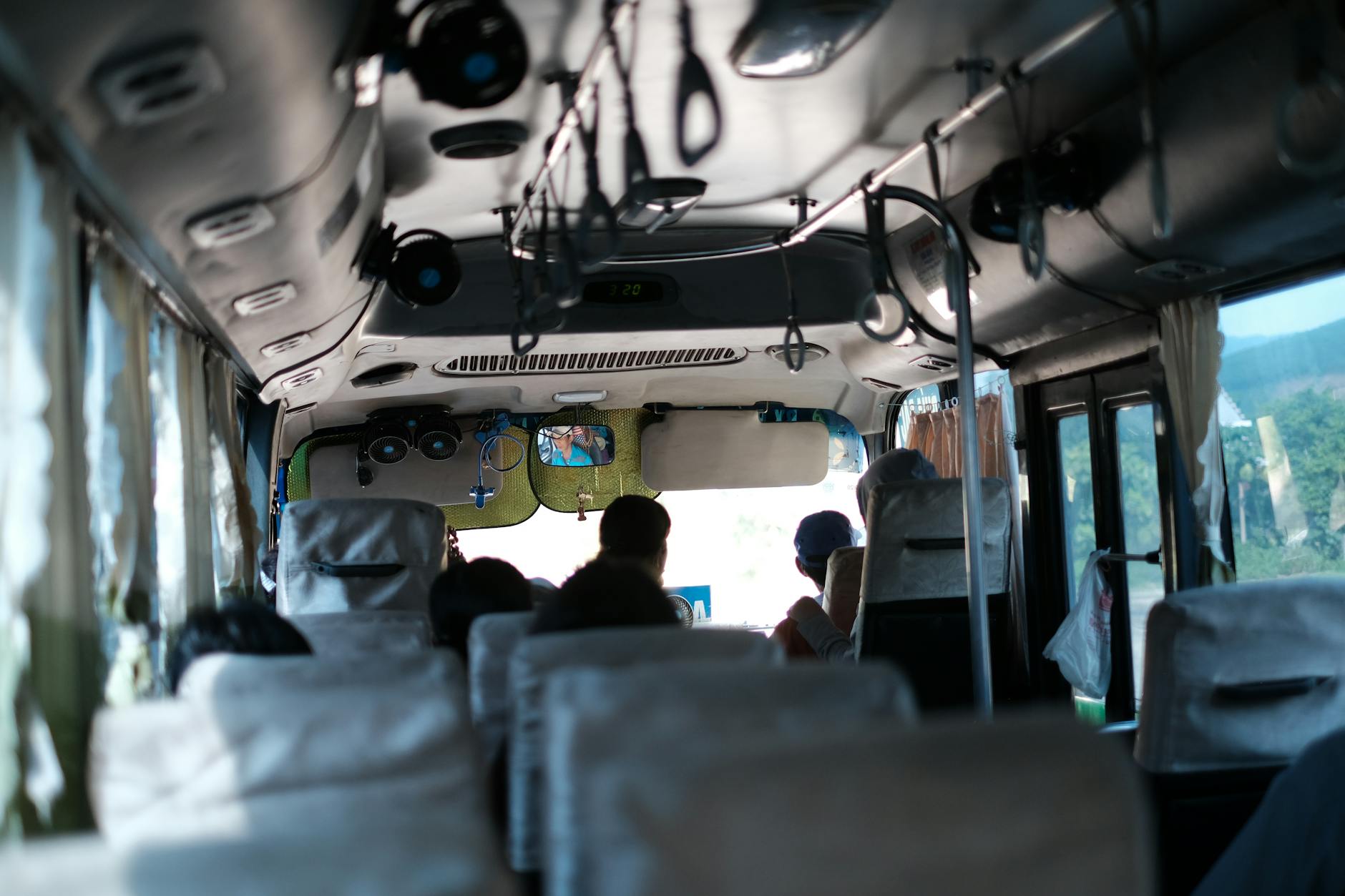
What is a Vietnamese sleeper bus and how does it work?
A Vietnamese sleeper bus has reclining bunks instead of standard seats. Passengers remove their shoes before boarding and store them in a plastic bag at the entrance. The bus operates both overnight and during the day. This is the default long-distance transport for locals and travelers alike.
Buses depart from dedicated stations or pickup points in city centers. The driver or a helper collects tickets and assigns bunks. Most buses leave on time but can arrive late due to road conditions, rest stops, and package deliveries along the route.
Types of sleeper buses: Standard vs VIP vs luxury cabins
Three main categories exist. Each suits different budgets and comfort needs.
Standard buses have three rows of bunks, typically 32 to 44 per bus. Bunks are narrow, about 50-60cm wide. No curtains provide privacy. The AC runs cold. These buses are cheap but cramped. Taller travelers over 180cm will struggle.
VIP buses have two rows with 20 to 24 wider bunks. Each bunk has a privacy curtain, reading light, and USB port. Bunks are 60-70cm wide. These are the best value for most travelers.
Luxury cabin buses have enclosed compartments with lie-flat beds, massage functions, and onboard toilets. Some have single cabins, others have double cabins for couples. These cost more but offer genuine sleep quality.
| Type | Bunks | Privacy | Price range (USD) | Best for |
|---|---|---|---|---|
| Standard | 32-44 | None | $7-$12 | Budget travelers, short routes |
| VIP | 20-24 | Curtains | $12-$20 | Most travelers, medium routes |
| Luxury cabin | 16-20 | Enclosed | $30-$50 | Couples, long routes, light sleepers |
How much does a sleeper bus cost in Vietnam? (2026 prices)
Prices depend on route length and bus type. Here are realistic ranges with specific examples.
Short routes (3-5 hours): $7-$12 USD (160,000-280,000 VND). Example: Ho Chi Minh City to Mui Ne.
Medium routes (6-9 hours): $12-$20 USD (280,000-470,000 VND). Example: Hanoi to Sapa or Ho Chi Minh City to Da Lat.
Long routes (10-15 hours): $20-$35 USD (470,000-820,000 VND). Example: Hanoi to Hue or Ho Chi Minh City to Nha Trang.
Premium cabin buses: $30-$50 USD (700,000-1,170,000 VND). Available on popular routes like Hanoi to Sapa and Ho Chi Minh City to Da Lat.
Pro tip: Paying $5 extra for VIP over standard is usually worth it. The wider bunks and privacy curtains make a real difference for sleep quality.
Popular sleeper bus routes: Distances, times and bus companies
Road conditions vary significantly by route. This matters for motion sickness and comfort.
Hanoi to Sapa: 5-6 hours. Winding mountain roads. Recommended companies: Sapa Express, Inter Bus Lines. Book VIP or luxury for comfort on the curves.
Hanoi to Ha Giang: 6-7 hours. Mountainous terrain with sharp bends. Recommended: Inter Bus Lines, Hung Thanh. Bring motion sickness medication.
Hanoi to Phong Nha: 10-11 hours. Mostly flat highway with some winding sections near the park. Recommended: Camel Travel, Queen Cafe Bus. See our guide on how long do you need in Phong Nha national park? for planning.
Hanoi to Hue: 12-14 hours. Long journey on National Highway 1. Road quality varies. Recommended: The Sinh Tourist, Hoang Long. Consider the train as an alternative. See our guide on night bus or train to Sa Pa for a comparison that applies to Hue as well.
Ho Chi Minh City to Da Lat: 6-7 hours. Winding mountain roads in the final stretch. Recommended: Futa Bus Lines, Phuong Trang. The Da Lat: Vietnam's Cool-Weather Highland Escape guide has more details.
Ho Chi Minh City to Mui Ne: 4-5 hours. Flat highway, easy journey. Recommended: Futa Bus Lines, Hanh Cafe. Check the Visiter Mui Ne guide for beach planning.
Ho Chi Minh City to Nha Trang: 9-10 hours. Flat highway most of the way. Recommended: Futa Bus Lines, Phuong Trang. See Nha Trang in 2026 for honest advice on the destination.
Ho Chi Minh City to Phu Quoc: Bus plus ferry combo, 8-10 hours total. Bus to Rach Gia or Ha Tien, then ferry to the island. Recommended: Phu Quoc Express. The Phu Quoc Beyond the Resorts guide helps with island planning.
| Route | Distance | Time | Price range | Road quality | Recommended companies |
|---|---|---|---|---|---|
| Hanoi to Sapa | 320 km | 5-6 hrs | $12-$25 | Winding mountain | Sapa Express, Inter Bus |
| Hanoi to Ha Giang | 300 km | 6-7 hrs | $12-$20 | Winding mountain | Inter Bus, Hung Thanh |
| Hanoi to Phong Nha | 500 km | 10-11 hrs | $15-$25 | Mixed | Camel Travel, Queen Cafe |
| Hanoi to Hue | 660 km | 12-14 hrs | $18-$30 | Mixed | The Sinh Tourist, Hoang Long |
| HCMC to Da Lat | 300 km | 6-7 hrs | $10-$18 | Winding mountain | Futa, Phuong Trang |
| HCMC to Mui Ne | 200 km | 4-5 hrs | $7-$12 | Flat highway | Futa, Hanh Cafe |
| HCMC to Nha Trang | 440 km | 9-10 hrs | $12-$20 | Flat highway | Futa, Phuong Trang |
How to book a sleeper bus: Online platforms vs in-person
Three main booking methods exist. Each has pros and cons.
Online platforms like 12Go, Vexere, and Baolau offer English-language interfaces and secure payment. They add service fees of 5-15%. Booking 1-2 days ahead works for normal periods. Book 1 week ahead for Tet holiday. See Tet in Vietnam: The Closure Trap for timing advice.
Booking through hostels or hotels is easy. Reception staff arrange pickup from the accommodation. The downside is limited choice. They often recommend one or two companies they have relationships with.
Buying at bus stations is cheapest. No service fees. The catch is that Vietnamese language skills help. Ticket sellers rarely speak English. This method works best for travelers who know exactly which bus they want.
Warning: Third-party bookings sometimes result in bus company switches. The bus that arrives may differ from what you booked. Check the bus company name and license plate against your booking confirmation.
Are sleeper buses in Vietnam safe? An honest assessment
Safety has three real risk categories. Here is the honest picture.
Reckless driving: Some drivers speed on mountain roads, especially overnight. Choose companies with 100+ recent Google reviews and good safety ratings. Daytime journeys are statistically safer than overnight ones.
Petty theft: Valuables get stolen from sleeping passengers. Keep your phone, wallet, and passport in a small bag on your body while sleeping. Avoid back-row bunks, which are common targets for thieves.
Bus accidents: Rare but do happen on overnight routes. The risk is low with reputable companies. Check bus condition before boarding. Look for worn tires, cracked windows, or missing safety equipment.
For a broader safety picture, read Is Vietnam Safe in 2026? and Vietnam Solo Travel 2026: A Safety Guide for First-Time Women.
Do sleeper buses have toilets? Rest stop reality
Most standard and VIP sleeper buses do not have onboard toilets. Some luxury cabin buses do, but they are small and often poorly maintained.
The rest stop system works like this: buses stop every 2-3 hours for 15-20 minutes at roadside stations. These stations have squat toilets, basic food stalls, and small shops. Toilet paper is rarely provided. Bring your own.
Pro tip: Use restrooms whenever the bus stops, even if you do not think you need to. The next stop might be 3 hours away. Carry toilet paper, hand sanitizer, and wet wipes.
What to pack for a sleeper bus journey
Pack these items for a comfortable journey.
- Slip-on shoes: The shoes-off policy means you remove footwear at the door. Slip-ons make this easy.
- Warm layer: The AC runs at full blast. A hoodie or light jacket helps.
- Eye mask and earplugs: Bright lights stay on. Drivers honk horns constantly. These items are essential for sleep.
- Power bank: USB ports on buses are unreliable. Charge devices before boarding.
- Snacks: Rest stop food is basic. Pack nuts, dried fruit, or crackers.
- Toilet paper and hand sanitizer: Rest stops rarely provide these.
- Motion sickness medication: Mountain routes are winding. Take medication before boarding if you are prone to nausea.
- Small bag for valuables: Keep your phone, wallet, and passport on your body while sleeping.
For a full packing list, see Backpacking Vietnam in 2026: Realistic 1-Month Itinerary & Costs.
Best seats on a sleeper bus: Where to sit for comfort
Strategic seat selection makes a big difference.
Middle bunks are smoothest. The front bunks feel every bump. The back bunks amplify road movement. Middle position offers the most stable ride.
Lower bunks are cooler because cool air settles downward. They are easier to access and feel less cramped. Upper bunks offer more privacy but are hotter and harder to climb into.
Window-side bunks are preferable to aisle. Less foot traffic, more wall to lean against.
Avoid the back row. The ride is roughest. Thieves target these bunks because other passengers notice less activity behind them.
Avoid seats near the toilet. Smell and constant foot traffic make sleep difficult.
What to wear on a sleeper bus
Practical clothing makes the journey comfortable.
Wear comfortable pants. Skirts and dresses are impractical for climbing into bunks. Wear layers for temperature changes. The bus starts cold and may warm up during the day. Wear socks because you remove shoes. Slip-on footwear makes bathroom trips easier.
Synthetic fabrics dry faster than cotton if you sweat. Avoid anything with complicated fasteners or belts that dig in while lying down.
For seasonal advice, see What to wear in Vietnam in May female and Vietnam Rainy Season Travel.
Sleeper bus alternatives: Trains, flights and motorbikes
Each transport mode suits different situations.
Trains are more comfortable and safer than buses. The Hanoi to Sapa overnight train offers proper beds and dining cars. The Reunification Express from Hanoi to Hue takes 12-14 hours but provides more space. Trains are slower and more expensive. See The North-South Reunification Express guide for details.
Flights make sense for long distances. Hanoi to Ho Chi Minh City takes 2 hours by plane versus 35 hours by bus. Domestic flights cost $30-$80 with budget airlines. See Domestic Flights in Vietnam: Vietjet vs Bamboo vs Vietnam Airlines for comparison.
Motorbikes work for adventure travelers who want control. The Ha Giang Loop, Hai Van Pass, and Cao Bang Loop are best done on two wheels. See Renting a Motorbike in Vietnam for legal requirements.
| Mode | Accident risk | Theft risk | Comfort | Cost | Best for |
|---|---|---|---|---|---|
| Sleeper bus | Moderate | Moderate | Low-medium | $7-$50 | Budget travel, short-medium routes |
| Train | Low | Low | Medium-high | $15-$60 | Overnight journeys, comfort seekers |
| Flight | Very low | Very low | High | $30-$80 | Long distances, time-sensitive |
| Motorbike | High | Low | Variable | $5-$15/day | Adventure, remote areas |
Common sleeper bus problems and how to handle them
Real problems happen. Here is how to handle them.
Bus arrives late or early. Buses sometimes leave 15-30 minutes early. Arrive 30 minutes before departure. If the bus is late, wait at the pickup point. Call your booking platform for updates.
Driver stops to pick up packages or locals. This is normal Vietnamese practice. Buses act as delivery services. Accept that the journey takes longer than stated.
Bus company switches you to a different operator. This happens with third-party bookings. Check the bus before boarding. If it looks worse than what you booked, contact the platform for a refund or upgrade.
No-show driver. Rare but happens. Call the booking platform immediately. They should arrange alternative transport or a refund.
Overbooked bus. The driver may ask passengers to share bunks. Refuse if you paid for a single bunk. Demand a refund or alternative seat.
Broken AC or USB ports. Report to the driver or helper. If the AC fails on a long route, ask for a partial refund through your booking platform.
Sleeper bus tips from experienced travelers
These tips come from real experience on Vietnamese roads.
Charge all devices before boarding. USB ports on buses are unreliable or broken.
Eat before you get on. Bus food is poor quality and overpriced.
Go to the bathroom before departure. The first rest stop might be 2-3 hours away.
Download entertainment. WiFi on buses is slow and unreliable. Download movies, podcasts, or books before boarding.
Do not expect to sleep deeply. The horn honking is constant. Drivers honk at every intersection, pedestrian, and animal on the road.
Accept that delays are normal. Add 1-2 hours to any estimated travel time for package pickups, rest stops, and traffic.
Arrive 30 minutes early. Buses sometimes leave before the scheduled time.
FAQ
Q: How much is a sleeper bus in Vietnam? A: Prices range from $7 to $50 USD depending on route length and bus type. Short routes (3-5 hours) cost $7-$12, medium routes (6-9 hours) cost $12-$20, and long routes (10-15 hours) cost $20-$35. Premium cabin buses with lie-flat beds cost $30-$50.
Q: Can foreigners ride sleeper buses in Vietnam? A: Yes, foreigners can and regularly do ride sleeper buses. No special permits or identification beyond your passport is required. Most bus companies and booking platforms cater to international travelers with English-language interfaces.
Q: Which sleeper bus is the best in Vietnam? A: There is no single best company. Consistently recommended operators include Futa Bus Lines (southern routes), Sapa Express (Hanoi to Sapa), The Sinh Tourist (tourist-focused routes), and Inter Bus Lines (northern routes). Read recent Google reviews before booking, as quality varies by route and vehicle.
Q: Do Vietnamese sleeper buses have toilets? A: Most standard and VIP sleeper buses do not have onboard toilets. Some luxury cabin buses do, but they are small and often poorly maintained. All buses make rest stops every 2-3 hours where passengers can use bathroom facilities. Bring your own toilet paper and hand sanitizer.
Q: Are sleeper buses in Vietnam safe? A: Sleeper buses are generally safe when booked with reputable companies. The main risks are petty theft from sleeping passengers (keep valuables on your person) and reckless driving on some routes (choose companies with good safety reviews). Accidents are rare but do happen. Daytime journeys are statistically safer than overnight ones.
Q: What is the best seat on a Vietnamese sleeper bus? A: Middle bunks on the lower deck offer the smoothest ride and easiest access. Window-side bunks provide more privacy than aisle seats. Avoid back-row bunks (roughest ride, theft target) and seats near the toilet (smell and foot traffic).
Q: How do I book a sleeper bus in Vietnam? A: Use online platforms like 12Go, Vexere, or Baolau for advance booking with English support. Book through your hostel or hotel for convenience (they arrange pickup). Buy at bus stations for the lowest price (requires Vietnamese language skills). Book 1-2 days ahead for normal periods, 1 week ahead for Tet holiday.
Q: How long do sleeper bus journeys take in Vietnam? A: Journey times vary by route: Hanoi to Sapa (5-6 hours), Hanoi to Ha Giang (6-7 hours), Hanoi to Phong Nha (10-11 hours), Hanoi to Hue (12-14 hours), Ho Chi Minh City to Da Lat (6-7 hours), Ho Chi Minh City to Mui Ne (4-5 hours). Add 1-2 hours for delays, package pickups, and rest stops.