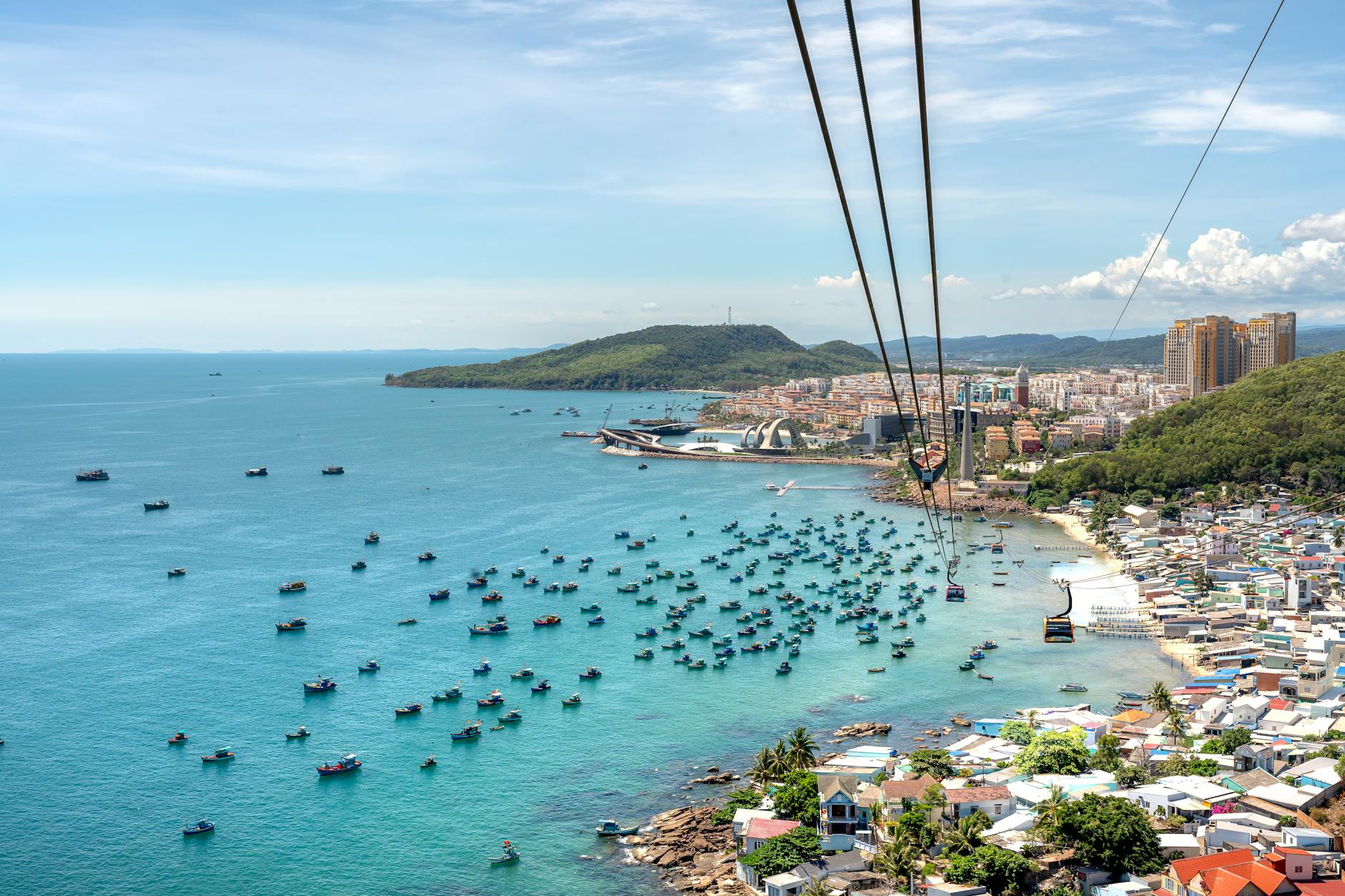
This guide focuses on the working, lived-in Phu Quoc: where to swim without paying for a sunbed, where to eat where locals actually eat, and how to navigate the very real divide between the developed north and the still-quiet south.
North vs South Phu Quoc: Two Different Islands
Phu Quoc is roughly 50 km long, and the experience changes dramatically depending on which end you base yourself.
The north (around Bai Dai, Ganh Dau, and Vinpearl) is the heavily developed corner — large integrated resorts, the safari park, the casino, and the cable car terminal at Hon Thom. It's polished, often crowded, and feels engineered. Beaches here are wide and white, but access to many stretches is gated by resort property.
The south (Bai Sao, Bai Khem, An Thoi town, and the fishing villages along the southeast coast) feels closer to the Phu Quoc of fifteen years ago. Bai Khem has been partially developed by JW Marriott, but An Thoi town remains a functioning fishing port, and the dirt roads inland still lead to pepper farms and family-run sim wine distilleries.
The center, around Duong Dong town, is where most independent travelers stay. It's chaotic, cheap, and has the best night market on the island.
| Area | Best For | Drawback | Stay Cost (mid-range, 2026) |
|---|---|---|---|
| Duong Dong / Long Beach | First-timers, food, nightlife | Busy, traffic-heavy | 700,000–1,400,000 VND (~$28–55) |
| North (Bai Dai, Ganh Dau) | Resort holidays, families with kids | Isolated, expensive food | 2,500,000+ VND (~$100+) |
| South (An Thoi, Bai Sao) | Quiet beaches, snorkeling trips | Fewer restaurants | 600,000–1,200,000 VND (~$24–48) |
| East coast (Ham Ninh) | Authentic fishing village vibe | Beaches not for swimming | 500,000–900,000 VND (~$20–36) |
Local Beaches Worth the Detour
Forget the resort beaches for a day. These are the stretches where you'll find Vietnamese families with rented mats, vendors selling boiled peanuts, and zero entrance fees.
Bai Ong Lang sits about 7 km north of Duong Dong. It's a series of small coves separated by rocky outcrops, fringed by casuarina trees. The water is calmer than Long Beach, and a handful of low-key bungalow operations serve cheap seafood right on the sand. Sunsets here are arguably the best on the island because the headlands frame the horizon.
Bai Vung Bau and Bai Dai, further north, are long open stretches. The southern end of Bai Dai is still public despite the Vinpearl development — walk south from the main resort cluster and you'll find quieter sand.
Bai Khem (Khem Beach) in the south is postcard-perfect: powder-white sand, turquoise shallows. The catch is that JW Marriott controls a large section. There's still a public access point on the eastern side, though parking can be a hassle on weekends.
Bai Sao remains the best-known southern beach. It gets crowded with Vietnamese day-trippers between 10 a.m. and 3 p.m., but arrive before 9 or after 4 and it's serene. Bring 50,000–100,000 VND for a sun lounger at one of the small beachfront restaurants, or just lay a sarong.
Tip: Many small beach restaurants will let you use loungers free if you order food and drinks. A grilled fish lunch for two plus beers usually costs 300,000–450,000 VND (~$12–18) and saves you the rental fee.
Bai Thom in the far northeast is the secret. Almost no foreign tourists make it out here. The beach itself is modest, but the drive — through rubber plantations and past tiny hamlets — is the point.
The Fishing Villages: Ham Ninh and An Thoi
Ham Ninh on the east coast is the most visited fishing village, and yes, it's now firmly on the tour-bus circuit. Go anyway, but go early. By 7 a.m. the wooden pier is busy with boats unloading the morning catch, and the seafood market at the base of the pier is at its liveliest. Flower crabs (ghẹ Hàm Ninh) are the specialty — small, sweet, and steamed simply with lime and pepper. Expect to pay 350,000–500,000 VND per kilo (~$14–20) at one of the stilt restaurants.
An Thoi in the south is a proper working harbor — hundreds of blue-hulled trawlers, ice factories, fish-sauce warehouses. There's no manicured tourist infrastructure. Walk along the harbor road in late afternoon when boats return, eat at a roadside com tam stall, and you'll see a side of Phu Quoc that has nothing to do with tourism. An Thoi is also the launching point for snorkeling boats to the southern An Thoi archipelago.
Rach Vem, on the northwest coast, is the famous "starfish beach." The shallows are dotted with red starfish, and a row of floating restaurants on bamboo rafts serves seafood directly over the water. It's touristy now, but the setting still delivers — go on a weekday morning.
Pepper Farms, Sim Wine & Fish Sauce: The Inland Trail
Phu Quoc's three signature products predate the tourism boom by generations and remain a working part of the island economy.
Pepper farms cluster around Khu Tuong and Cua Can. The vines climb 4-meter wooden posts in tidy rows, and harvest runs roughly January through April. Several family farms welcome visitors free of charge, hoping you'll buy a bag on the way out — which you should, because Phu Quoc pepper genuinely is among the best in Southeast Asia. A 200g bag of red pepper costs around 80,000–120,000 VND (~$3–5).
Sim wine is made from rose myrtle berries that grow wild across the island's interior. The taste falls somewhere between port and a rough cordial. Distilleries near Duong Dong offer free tastings; bottles run 150,000–300,000 VND (~$6–12).
Fish sauce is Phu Quoc's most protected product — it has EU geographical indication status. The Khai Hoan and Hung Thanh factories in Duong Dong offer short tours. The smell is intense (rows of wooden vats taller than a person, fermenting anchovies for a year or more), but the production is genuinely fascinating. Tours are typically free; a liter of premium 40°N sauce costs 80,000–150,000 VND (~$3–6).
Warning: You cannot bring liquid fish sauce in carry-on luggage, and even in checked bags it must be triple-sealed or it will leak. Most reputable shops will vacuum-pack it for you on request.
Snorkeling: The South vs the North
Phu Quoc's reefs are not world-class — visibility is moderate and coral health is uneven — but the southern An Thoi archipelago still delivers good half-day snorkeling for casual swimmers.
| Trip Type | Departs From | Typical Cost 2026 | What You Get |
|---|---|---|---|
| 3-island An Thoi tour (group) | An Thoi port | 350,000–500,000 VND (~$14–20) | Lunch, gear, 2–3 snorkel stops |
| Private speedboat charter | An Thoi | 4,500,000–7,000,000 VND (~$180–280) | Full day, choose islands |
| North island snorkel | Ganh Dau | 600,000–800,000 VND (~$24–32) | Generally weaker reefs |
| Fishing + snorkel combo | Various | 450,000–600,000 VND (~$18–24) | Includes squid fishing at dusk |
The best snorkeling islands are Hon May Rut and Hon Gam Ghi in the An Thoi group. Avoid trips that include the Hon Thom cable car island for the snorkeling itself — the water there is busy with boat traffic.
Tip: Skip the cheapest tours advertised on Duong Dong storefronts. The lunch is often inedible and groups can hit 40+ people. Mid-tier operators (350,000+ VND) cap at 20–25 guests and use better boats.
The Night Markets
Dinh Cau Night Market in Duong Dong is the headline act. It runs roughly 5 p.m. to 11 p.m. nightly, and yes, it's touristy — but the seafood is fresh and prices, while higher than local restaurants, are not outrageous if you know what to expect.
Sample prices (2026):
- Grilled squid, medium: 120,000–180,000 VND (~$5–7)
- Lobster, per 100g: 180,000–250,000 VND (~$7–10)
- Tiger prawns, six pieces: 200,000–300,000 VND (~$8–12)
- Tropical fruit plate: 80,000–120,000 VND (~$3–5)
- Fresh coconut: 30,000 VND (~$1.20)
Tip: Always confirm the price before the seafood goes on the grill, and confirm whether the weight is for the live or cooked product. Most disputes at Dinh Cau come from this single ambiguity.
For a less polished experience, the Phu Quoc Bazaar area and the morning market off Tran Phu street in Duong Dong are where local home cooks shop. Banh canh cha ca (thick noodle soup with fish cake) for 35,000–50,000 VND (~$1.50–2) is a proper Phu Quoc breakfast.
When to Visit
Phu Quoc has two clear seasons, and the difference is significant.
| Period | Conditions | Crowds | Notes |
|---|---|---|---|
| Nov–Mar 2026 | Dry, sunny, calm sea | Highest | Peak. Book 6+ weeks ahead for Tet (Feb 17, 2026) |
| Apr | Hot, still mostly dry | Moderate | Good shoulder window |
| May–Jun | Early rains, warm sea | Low | Cheaper, short afternoon storms |
| Jul–Sep | Wet season peak | Lowest | Rough seas, some boat tours cancel |
| Oct | Transition, variable | Low | Risk of typhoons offshore |
The sweet spot for most visitors is mid-November to mid-December 2026 and March 2026 — reliably good weather without Tet or Christmas pricing surges. Hotel rates in May–June run 30–45% below January peak.
Getting Around the Island
The island is too big to explore on foot. Options:
- Motorbike rental: 120,000–180,000 VND/day (~$5–7). Required: an international driving permit covering motorcycles. Police checks have increased in 2025–2026, particularly around Duong Dong and the south.
- Car with driver, half day: 700,000–900,000 VND (~$28–36)
- Car with driver, full day: 1,200,000–1,600,000 VND (~$48–64)
- Grab (app): Available in Duong Dong and main routes, patchy elsewhere
- Taxi metered (Mai Linh, Vinasun): Reliable, around 15,000–18,000 VND/km
Warning: Phu Quoc's roads have improved enormously, but inexperienced riders crash regularly on the gravel shortcuts inland and on wet coastal curves. Travel insurance often excludes motorbike accidents if you don't hold a valid motorcycle license at home.
Frequently Asked Questions
Is the 30-day visa exemption for Phu Quoc still valid in 2026? Yes. Foreign nationals can enter Phu Quoc visa-free for up to 30 days, provided they arrive directly from abroad and stay only on the island. If you plan to travel onward to the mainland, you'll need a standard Vietnam e-visa.
How long should I stay on Phu Quoc? Four to five nights is the practical minimum to see both the north and south. A week lets you slow down, add a snorkeling day, and explore inland.
Is Phu Quoc safe for solo female travelers? Generally yes — petty crime is rare, and the island feels relaxed. Standard precautions apply on isolated beaches after dark and when renting motorbikes.
Can I drink tap water? No. Stick to bottled or filtered water. Most decent guesthouses provide a refill station to reduce plastic.
Is the Hon Thom cable car worth it? For the engineering and views, yes — at 8,166 meters, it's one of the world's longest sea-crossing cable cars. The attractions on Hon Thom itself feel manufactured. Budget around 600,000 VND (~$24) for an adult day ticket in 2026.
Are credit cards accepted? At resorts, larger restaurants, and supermarkets, yes. At markets, fishing villages, and small guesthouses, expect cash only. ATMs are plentiful in Duong Dong and An Thoi, scarce elsewhere.
What's the dress code for beaches and villages? Beachwear is fine on the sand but cover up when walking through villages or visiting markets. At Cao Dai and Buddhist temples (including the cliff-top Ho Quoc Pagoda), shoulders and knees must be covered.
A Realistic Take
Phu Quoc has changed faster in the last decade than almost any beach destination in Southeast Asia. The traffic, the construction cranes, the resort sprawl in the north — these are real and not going away. But the island is also bigger and more varied than the brochures suggest. The pepper farmers still harvest in April. The fishing fleet still leaves An Thoi at dawn. The grandmother still grills squid at Dinh Cau market because her daughter took over the front stall and someone has to mind the coals.
Skip a day at the resort pool. Rent a bike, point it south or east, and go find the other island.