Introduction
What makes Mui Ne different from many Vietnamese beach destinations is the mix of landscapes and activities within a short radius. You can watch the sunrise over sand dunes, eat grilled seafood at a roadside stall, kiteboard in the afternoon, and end the day in a simple beach resort or family-run guesthouse. It is not a city for museums and dense urban sightseeing; it is a place for outdoor time, easy food, and flexible days shaped by weather and tides.
Geography & Orientation
Mui Ne is part of Phan Thiet, in Binh Thuan Province on Vietnam’s south-central coast. The area commonly called Mui Ne actually stretches along the shoreline east of Phan Thiet city, with the main traveler zone running for several kilometers beside the sea.
For first-time visitors, orientation is straightforward:
- The beachfront road is the backbone of the stay, with resorts, cafes, restaurants, and tour pick-up points.
- The fishing harbor and nearby local area are at the eastern end, where life feels more everyday and less resort-oriented.
- The dunes sit inland and to the northeast, usually visited on organized tours or by motorbike.
- Ham Tien is the most developed strip for tourists, often treated as the practical center of Mui Ne.
Distances are manageable, but the town is stretched out rather than dense. A taxi or motorbike is useful if your accommodation is far from restaurants or if you want to move between the beach, the dunes, and the harbor without relying on hotel transfers.
History & Cultural Context
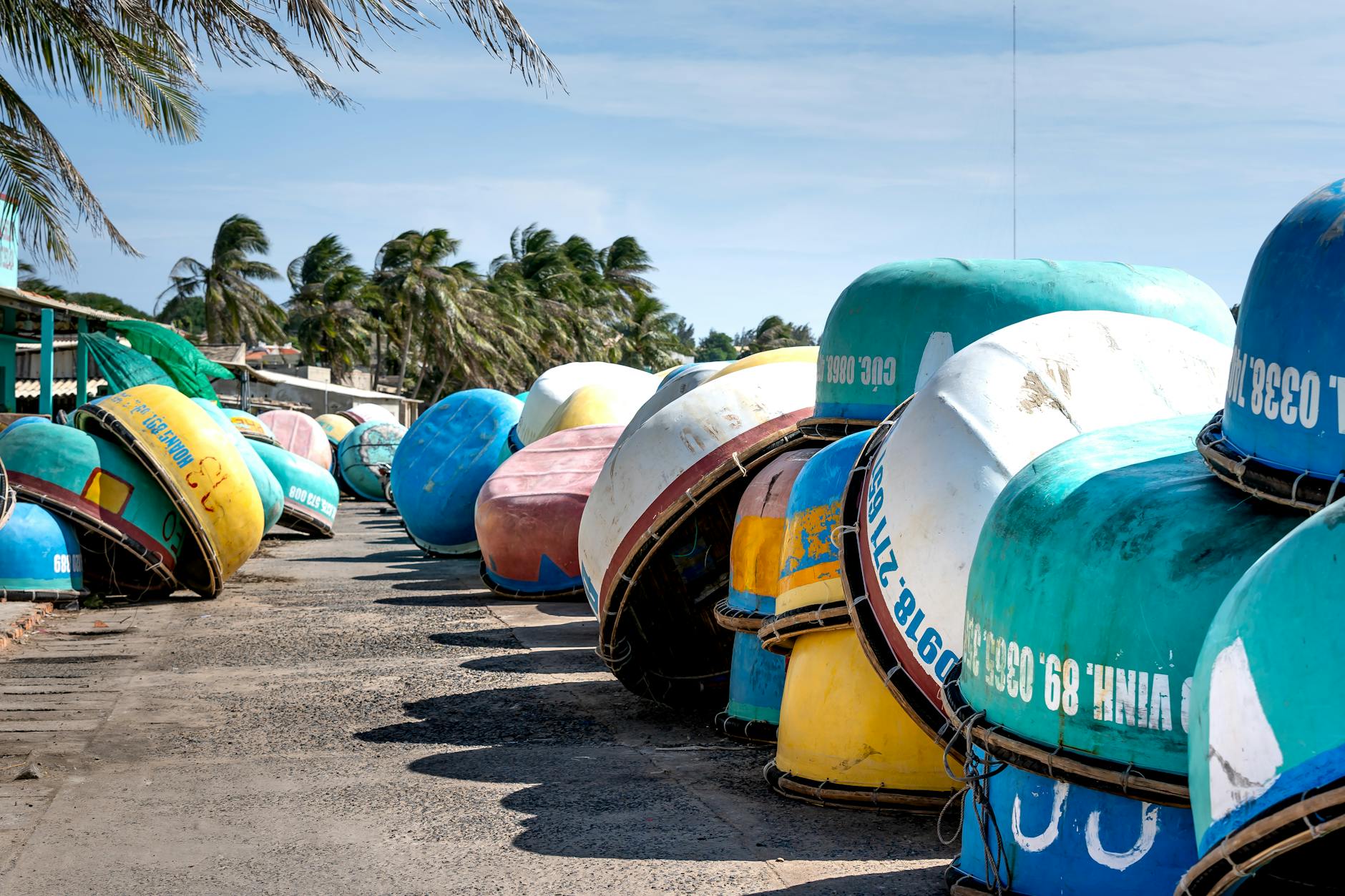
Mui Ne’s identity comes from fishing first, tourism second. The coast has long supported local communities through the sea, and that is still visible in the early-morning activity around the harbor, where basket boats, fishing boats, and seafood markets remain part of daily life.
The tourist development of Mui Ne grew strongly because of its windy climate and long beaches. That wind made the area especially attractive for kiteboarding and windsurfing, which helped turn it into one of Vietnam’s best-known coastal sports destinations. Today, the atmosphere is a mix of resort leisure, backpacker road-trip culture, and local coastal life that has not completely disappeared behind tourism.
Culturally, the area also reflects the broader Binh Thuan region, where Cham heritage is present in the wider province. Travelers usually come for the coast rather than for monumental history, but Mui Ne works well as a place to observe how a fishing zone adapted to tourism without losing all of its original rhythm.
Main Sights
Mui Ne is less about monumental landmarks and more about a compact set of landscapes and experiences. The most important question is not simply what to see in Mui Ne, but how to combine the classic stops without turning the day into a rushed tour.
White Sand Dunes
The White Sand Dunes are the most dramatic landscape near Mui Ne. They are often visited at sunrise, when the light is softer and the heat is still manageable. You can take photos, walk on the sand, and optionally rent an ATV for a faster circuit.
- Best time: early morning or late afternoon.
- Typical visit time: 45 minutes to 2 hours.
- Common cost: entrance and activities vary by operator, often around $2 to $15 / 50,000 to 375,000 VND depending on what you do.
Red Sand Dunes
The Red Sand Dunes are smaller and easier to access near the main tourist strip. They are less dramatic than the White Sand Dunes, but convenient for a short sunset stop and a quick sand-boarding session.
- Best time: near sunset.
- Typical visit time: 30 to 60 minutes.
- Good for travelers who want a short, low-effort stop.
Fishing Harbor
The Mui Ne Fishing Harbor gives a direct look at local coastal life. Early in the morning, the water fills with boats and activity, and the scene is far more functional than scenic in the classic resort sense. It is one of the most useful places for understanding the town’s real economy.
Fairy Stream
The Fairy Stream is a shallow stream walk through colored sand formations and eroded banks. It is simple rather than spectacular, but it offers a different type of stop from the beach and dunes. Expect an easy walk with some uneven ground and wet sections.
Po Shanu Cham Towers
The Po Shanu Cham Towers sit on a hill near Phan Thiet and are worth adding if you want a cultural stop beyond the beach. The site is not large, but it adds historical depth to a Mui Ne itinerary and provides a higher viewpoint over the area.
The most efficient way to visit Mui Ne’s signature sights is to pair the dunes with the fishing harbor and one beach stop, rather than trying to separate each site into a full half-day excursion.
Neighborhoods to Explore
The experience of Mui Ne depends heavily on where you stay. The area is not organized like a city with distinct urban districts; instead, it is a long coastal corridor with different moods from west to east.
Ham Tien
Ham Tien is the easiest base for most travelers. It has the widest choice of hotels, beachfront cafes, tour desks, and everyday services. If you want convenience, this is usually the best place to sleep and eat.
Central Mui Ne
The central stretch is quieter and more spread out. It suits travelers who want a more relaxed pace, especially if they already plan to rent a scooter or use taxis. Some resorts here have direct beach access and a calmer atmosphere.
Fishing Village Area
The eastern end near the fishing village feels more local and less polished. It is useful for travelers interested in morning market scenes, seafood, and a less resort-like environment. Accommodation here is more limited, so it fits best for short stays or repeat visitors.
Food in Mui Ne
Mui Ne is a good place to eat simply and well, especially if you like seafood. The local cooking reflects the coast: grilled fish, squid, shrimp, clams, hotpots, and rice dishes built around fresh ingredients rather than heavy seasoning.
What to try:
- Grilled squid and seafood skewers.
- Steamed or grilled clams with garlic or scallions.
- Seafood hotpot, especially for a shared dinner.
- Banh canh and noodle soups for an easy breakfast or lunch.
- Fresh fruit and coconut-based drinks during the hot part of the day.
For practical planning, expect a casual meal to cost about $3 to $8 / 75,000 to 200,000 VND, while a seafood dinner in a simple local restaurant can move into the $10 to $20 / 250,000 to 500,000 VND range depending on portion size and drink choices. Beachfront venues usually charge more than local side-street spots.
A useful rule is to eat where the tables are busy with Vietnamese customers, especially for seafood. That often gives a better balance of freshness, price, and portion size than the most visible tourist-facing restaurants.
Nightlife & Going Out
Mui Ne is not a nightlife city in the clubbing sense, but it does have a lively evening scene around beach bars, casual restaurants, and late-opening cafes. Travelers come here more for a sunset drink than for a big night out.
Typical evening options include:
- Beach bars with cocktails, beer, and ocean views.
- Casual live-music venues on the main strip.
- Small bars attached to resorts or backpacker hotels.
- Seafood dinners that stretch late into the night.
For most visitors, the most appealing version of Mui Ne nightlife is relaxed rather than intense. If you want a quiet beer after a day in the wind and sun, the town works well. If you want a dense concentration of clubs and late-night energy, it is better to think of Mui Ne as an early-evening destination.
Shopping & Crafts
Shopping in Mui Ne is limited, but that is part of the point. You come here less for retail and more for practical souvenirs and local products.
Useful purchases include:
- Simple beachwear and travel basics.
- Local snacks and dried seafood.
- Shell-based souvenirs, though quality varies.
- Small handmade items sold in roadside shops or market stalls.
There is no major craft district, so shopping is best treated as an incidental activity rather than a main goal. If you want a more serious market experience, combine Mui Ne with a stop in Phan Thiet for broader local trade.
Unusual Activities
If you already know the standard beach-and-dunes circuit, Mui Ne still has a few activities that make the trip more memorable.
Kiteboarding and windsurfing
Mui Ne is one of Vietnam’s best-known spots for wind sports because of its reliable breeze. Even if you do not take a lesson, watching riders on the water gives a clear sense of why this coast became famous among active travelers.
Sunrise photo tour
A dawn outing to the dunes and fishing harbor combines landscape, color, and local movement before the day gets hot. This is one of the most efficient ways to see Mui Ne at its best.
Scooter loop
For experienced riders, a scooter loop can connect the beach strip, harbor, dunes, and a few roadside food stops in a single day. Roads are straightforward in many sections, but conditions vary, so ride conservatively and avoid night travel if you are not familiar with the area.
Day Trips
Mui Ne works well as a base for short excursions, especially if you want to mix coast and inland scenery.
Phan Thiet city
Phan Thiet is the nearest urban center and is useful for markets, practical errands, and a more local daily rhythm. It is not a major sightseeing destination, but it helps travelers understand the region beyond the resort strip.
Ta Cu Mountain
Ta Cu Mountain is a more ambitious half-day or full-day outing if you want a change from the coast. It is best for travelers who enjoy temple settings, viewpoints, and a break from sand and sea.
Ke Ga Lighthouse
Ke Ga Lighthouse can be combined with a coastal drive if you enjoy scenic movement more than concentrated sightseeing. It is a good add-on for travelers with private transport or a driver.
Bau Trang and coastal dunes
If you want another desert-like landscape, the broader dune area around Bau Trang can be a strong alternative or supplement to the classic White Sand Dunes stop. It works especially well for travelers who enjoy open scenery and off-road experiences.
Practical Info
Mui Ne is easy to visit, but a few practical points make a noticeable difference to the trip.
Where to stay
- Ham Tien for first-time visitors and easy access to food and tours.
- Beachfront resorts for a quieter, more self-contained stay.
- Budget guesthouses inland from the main road for lower prices.
How long to stay
- 1 day: enough for the dunes, fishing harbor, and a beach stop.
- 2 to 3 days: ideal for a balanced first visit with downtime.
- 4 days or more: good if you want kitesurfing, slow beach time, and one or two day trips.
Transport table
| Option | Best for | Approx. cost |
|---|---|---|
| Taxi | Short hops along the strip, airport transfers | $3 to $12 / 75,000 to 300,000 VND |
| Scooter rental | Flexible sightseeing, confident riders | $5 to $10 / 125,000 to 250,000 VND per day |
| Hotel tour | Dunes, harbor, fairy stream in one circuit | $10 to $25 / 250,000 to 625,000 VND |
| Private car | Families, comfort, longer day trips | $35 to $80 / 875,000 to 2,000,000 VND per day |
Budget table
| Travel style | Daily budget |
|---|---|
| Backpacker | $25 to $45 / 625,000 to 1,125,000 VND |
| Mid-range traveler | $60 to $120 / 1,500,000 to 3,000,000 VND |
| Comfort-focused | $130+ / 3,250,000 VND+ |
Weather table
| Season | Conditions | Traveler impact |
|---|---|---|
| Dry season | Sun, strong wind, lower rain | Best for beaches and kitesurfing |
| Rainier months | Short showers, variable skies | Still possible, but less reliable for outdoor planning |
Mui Ne is generally best when you are prepared for heat, wind, and sun. Bring sunscreen, a hat, water, and comfortable shoes for sand walking. If you plan to visit the dunes at sunrise, leave early enough to avoid both traffic and the stronger midday temperature.
Suggested Itineraries
A good Mui Ne itinerary depends on how much time you have and whether you want rest, activity, or both.
One-day plan
- Sunrise at the White Sand Dunes.
- Short stop at the Fishing Harbor.
- Lunch on the beach strip.
- Afternoon at Fairy Stream or a beach walk.
- Sunset at the Red Sand Dunes.
This is a compact option for travelers crossing the region in a short time.
Two-day plan
Day 1: dunes, harbor, lunch, beach time, seafood dinner.
Day 2: scooter or taxi exploration of Ham Tien, a resort break, and a cultural stop such as Po Shanu Cham Towers or a nearby day trip.
This pace gives enough time to slow down without turning the stay into a long beach holiday.
Three-day plan
Day 1: arrival, beach walk, seafood dinner.
Day 2: full dunes-and-harbor circuit, sunset outing.
Day 3: kiteboarding lesson or day trip to Ta Cu Mountain or Ke Ga Lighthouse.
For travelers who want both activity and rest, three days is often the most comfortable balance.
Conclusion
Mui Ne is worth visiting because it combines coastal scenery, wind-driven sports, local fishing life, and easy beach travel in one compact area. For a travel to Mui Ne, the strongest approach is simple: stay in the right neighborhood, visit the dunes early, eat seafood casually, and leave space in the schedule for the weather to shape the day.