Practical tip: don't forget travel insurance before heading to Vietnam — Heymondo applies an automatic 15% discount through our partner link, no code needed.
What a Month in Vietnam Actually Costs in 2026
Vietnam is still cheap by Southeast Asia standards, but it's no longer dirt cheap. Dorms in Hanoi's Old Quarter now run $8–12, a bowl of pho in a tourist area is $2.50–4 (60,000–95,000 VND), and the Reunification Express sleeper train has roughly doubled in price since 2019. Domestic flights, oddly, are sometimes cheaper than trains.
Here's a realistic daily breakdown for a budget-conscious traveler who isn't sleeping on benches:
| Expense | Shoestring | Comfortable Backpacker | Flashpacker |
|---|---|---|---|
| Accommodation (dorm/private) | $7–10 | $12–20 | $25–45 |
| Food (3 meals + coffee) | $8–12 | $15–22 | $25–40 |
| Transport (local) | $2–4 | $4–8 | $10–15 |
| Activities/entries | $3–6 | $8–15 | $20–35 |
| Beer/coffee/snacks | $3–5 | $5–10 | $10–20 |
| Daily total | $23–37 | $44–75 | $90–155 |
| 30-day total | $700–1,100 | $1,300–2,250 | $2,700–4,650 |
Add roughly $150–250 for inter-city transport (trains, sleeper buses, 1–2 domestic flights) and $80–120 for a Halong Bay cruise or Ha Giang Loop tour if you do either.
Pro tip: Withdraw cash from VPBank, TPBank, or Wooribank ATMs — they charge no local fee, vs. 55,000–66,000 VND ($2.20–2.60) at Vietcombank, BIDV, or Agribank. Bring a card with no foreign transaction fees (Wise, Revolut, Charles Schwab).
The 30-Day Route: Hanoi to Ho Chi Minh City
I'm structuring this north-to-south because flights into Hanoi are usually $50–100 cheaper than into HCMC from Europe, and you'll appreciate the warm south after the northern mountains. Reverse it if you're arriving in HCMC.
Days 1–4: Hanoi (3 nights)
Land, recover from jet lag, and don't try to do everything. Old Quarter is loud, scammy at times, and unmissable. Stay near Hang Bac or Ma May streets — central but slightly quieter than the bia hoi corner of Ta Hien.
- Must do: Train Street (sit at a café, don't walk the tracks — police fine tourists), Hoa Lo Prison ($1.20), egg coffee at Cafe Giang or Dinh Cafe, a long walk around Hoan Kiem Lake at 6am to see the city before it wakes.
- Skip: The Water Puppet Show is fine but overpriced for what it is ($4–8). The Ho Chi Minh Mausoleum is closed October–November for body maintenance — check before going.
- Eat: Bun cha at Bun Cha Huong Lien (the Obama one — still good, surprisingly), pho at Pho Gia Truyen (49 Bat Dan).
Cost for 4 days: $180–260
Days 5–8: Ha Giang Loop (4 days/3 nights)
This is now the highlight of northern Vietnam for most backpackers, having overtaken Sapa. Take the night bus from Hanoi (Mr. Hiep's Limousine, ~$18, 6 hours). In Ha Giang town, rent a semi-automatic motorbike ($12–15/day) or — if you can't ride — hire an easy rider (~$70–90/day all-in including food, fuel, guesthouse).
The loop covers Quan Ba, Yen Minh, Dong Van, Meo Vac, and the Ma Pi Leng Pass — limestone karsts, terraced rice fields, H'mong markets, and roads carved into cliff faces. Weather matters: September–November is best.
Warning: Do not ride the loop if you have zero motorbike experience. Several tourists die or get seriously injured here every year. The roads have no guardrails. If in doubt, take an easy rider — you'll see more and survive.
Cost: $180–280 including bus, bike/guide, fuel, food, three nights
Days 9–11: Ninh Binh (2 nights)
Skip Halong Bay if you're short on money — Ninh Binh offers similar karst landscapes inland, costs a fraction, and feels less like a floating buffet. Base yourself in Tam Coc (more atmospheric) rather than Ninh Binh city.
- Rent a bicycle ($1.50) and ride to Hang Mua viewpoint (early morning to beat crowds and heat).
- Trang An boat tour ($10) — better than Tam Coc's, less hassle, three routes.
- Bich Dong Pagoda and the back roads through rice paddies.
Train Hanoi → Ninh Binh: 2.5 hours, $6–10 in soft seat.
Days 12–14: Halong Bay or Cat Ba Island (2 nights)
The honest take: Halong Bay cruises ($90–180 for 2D/1N) are increasingly crowded and many of the cheap ones are floating dorms with bad food. If you'll do it, spend $130+ on a reputable operator (Pelican, Indochina Sails, Bhaya) or shift to Lan Ha Bay from Cat Ba Island — same scenery, half the tourists, cheaper.
Alternative: skip the cruise entirely, take a day trip from Cat Ba (~$25), and put the savings toward central Vietnam.
Days 15–17: Phong Nha (2 nights)
From Hanoi (or Ninh Binh), take the night train SE19 to Dong Hoi (~$22–35 soft sleeper), then a $5 shuttle to Phong Nha town. This is Vietnam's caving capital — including Son Doong, the world's largest cave (but that's $3,000+ and books a year ahead).
Affordable alternatives:
- Paradise Cave ($10 entry) — drier, more accessible.
- Phong Nha Cave by boat ($6).
- Tu Lan cave system day tour with Oxalis (~$70) — the only licensed operator, worth it.
- Dark Cave zipline + mud bath ($19) — touristy but fun.
Days 18–20: Hue (2 nights)
Take the morning train from Dong Hoi to Hue (~4 hours, $8–14). Hue is often skipped or rushed — a mistake. The Imperial Citadel ($8) deserves a half-day, and the royal tombs (Tu Duc, Minh Mang, Khai Dinh) are best done by motorbike or hired driver ($15–20 for a half-day).
Food here is the best in Vietnam, fight me on this. Try bun bo Hue at Ba Tuyet and banh khoai at Lac Thien.
Days 21–23: Hoi An via Hai Van Pass (2 nights)
Do not take the bus. Hire a motorbike transfer with luggage (~$60–70 via Hue Easy Rider or Le Family Riders) and ride the Hai Van Pass yourself or as a passenger. It's the most scenic 4 hours in Vietnam.
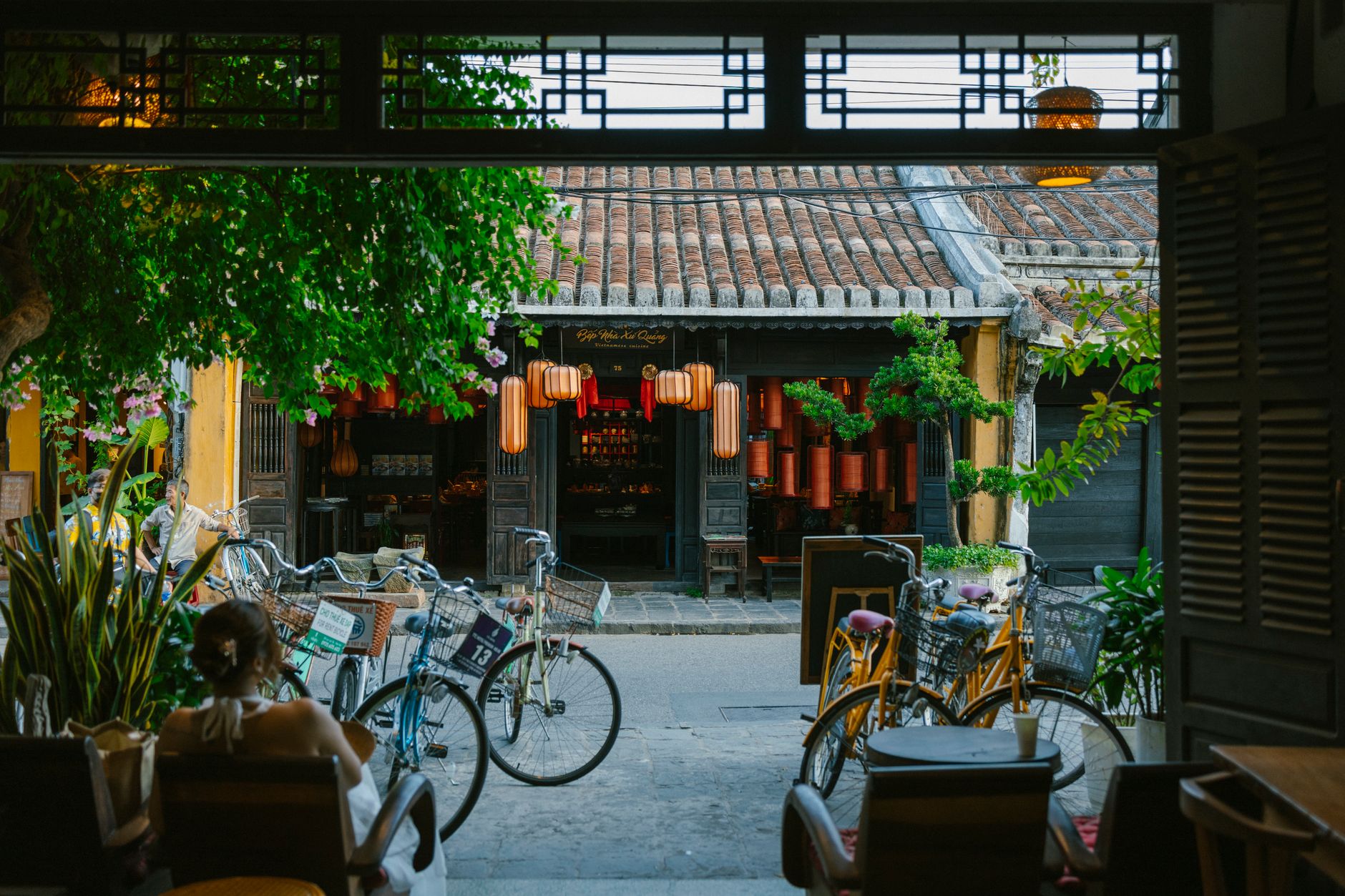
Hoi An is touristy — accept it. Stay in An Bang or Cam Thanh for quiet, ride into the Old Town in the evening. Get clothes tailored (Yaly or Bebe are reliable; budget tailors deliver budget results). Don't miss the central market food court at lunchtime.
Pro tip: Hoi An lantern festival happens on the 14th of each lunar month. Time your visit if you can — the Old Town goes electricity-free for the night.
Days 24–25: Da Nang or Skip South (1 night optional)
Da Nang is a livable city, not a backpacker destination. Stay one night if you want a beach day and Marble Mountains, otherwise fly direct from Da Nang to your next stop. Vietjet and Bamboo Airways fly Da Nang → Ho Chi Minh City for $25–45 if booked 2+ weeks ahead.
Days 26–28: Da Lat or Mui Ne (2 nights)
Choose one based on vibe:
| Da Lat | Mui Ne | |
|---|---|---|
| Climate | Cool (15–22°C) | Hot, windy |
| Vibe | Mountain town, coffee farms, canyoning | Beach, sand dunes, kitesurfing |
| Best for | Hikers, coffee lovers, cooler air | Beach days, wind sports |
| From Da Nang | Fly to Da Lat (~$35) | Fly HCMC + bus (4h) |
My bias: Da Lat is more interesting. Canyoning with Highland Sport Travel ($55) is a genuine adventure — abseiling down waterfalls.
Days 29–30: Ho Chi Minh City (2 nights)
HCMC is hectic, hot, and grew on me only after the third visit. For 48 hours:
- War Remnants Museum ($1.60) — confronting but essential.
- Cu Chi Tunnels half-day ($15–25 with transport).
- Eat banh mi at Banh Mi Huynh Hoa (warning: $3 each but enormous), coffee at The Workshop, dinner in District 4's seafood alleys.
- Skip the Bitexco observation deck — go to Saigon Skydeck or a rooftop bar instead.
Transport: How to Actually Move Between Cities
| Route | Best option | Price | Duration |
|---|---|---|---|
| Hanoi → Ha Giang | Limousine van (Mr. Hiep) | $18 | 6h overnight |
| Hanoi → Ninh Binh | SE train (soft seat) | $6–10 | 2.5h |
| Hanoi → Dong Hoi | SE19 night train (soft sleeper) | $22–35 | 10h |
| Dong Hoi → Hue | Train (soft seat) | $8–14 | 4h |
| Hue → Hoi An | Easy rider w/ luggage | $60–70 | 5h scenic |
| Da Nang → HCMC | Vietjet/Bamboo flight | $25–45 | 1h 20m |
| HCMC → Da Lat | Sleeper bus (Phuong Trang) | $12–16 | 7h |
Avoid: Open-bus tickets sold by Old Quarter agencies covering the whole country. They lock you into a slow, inflexible route and you'll save almost nothing. Book legs as you go via 12Go.asia or Baolau.
Common Mistakes That Wreck Budgets and Days
- Booking everything in advance. Vietnam rewards flexibility. Lock in only your first 3 nights, Ha Giang loop dates, and Phong Nha cave tours.
- Doing Sapa instead of Ha Giang. Sapa town is overdeveloped and the trekking is overrun. Ha Giang is what Sapa was 15 years ago.
- Trying to see Mekong Delta as a day trip from HCMC. It's exhausting and you see almost nothing real. Skip it or do 2 nights in Ben Tre or Can Tho.
- Underestimating weather. Central Vietnam (Hue, Hoi An, Da Nang) floods October–November. Northern mountains are foggy December–February. Plan accordingly.
- Ignoring the e-visa. As of 2025, US/UK/AU/EU citizens need an e-visa ($25 single entry, $50 multiple, valid 90 days). Apply at evisa.xuatnhapcanh.gov.vn — not third-party scam sites charging $80.
- Grab vs. street taxi. Always use Grab or Be apps. Street taxis in Hanoi and HCMC routinely overcharge tourists 3–5x.
Insider Tips Most Guides Miss
Trains beat buses for distances over 6 hours. You can walk, eat noodles, and sleep horizontally. Book soft sleeper, lower berth, on dsvn.vn or Baolau 3–5 days ahead.
Cash is still king outside major cities. Phong Nha, Ha Giang villages, and small Hoi An shops won't take cards. Carry 2–3 million VND in mixed notes.
The "closed" temple scam. A friendly stranger tells you a pagoda is closed and offers to take you elsewhere (= commission shop). It's not closed. Walk past them.
Vietnamese SIM cards are absurdly cheap. A Viettel tourist SIM with 4GB/day for 30 days costs $10–13 at the airport. Don't bother with eSIMs unless your phone is locked.
FAQ
Is one month enough to see Vietnam? One month covers the highlights from north to south at a sane pace. You'll skip parts (Mekong Delta, remote north, central highlands). For a thorough trip including those, plan 6–7 weeks.
How much money do I need for a month backpacking Vietnam in 2026? Budget $900–1,400 for a comfortable backpacker month including domestic transport, accommodation, food, and 2–3 paid activities. Shoestring is possible at $700–800 but joyless.
Is Vietnam safe for solo backpackers? Yes, including for solo female travelers. Petty theft (phone snatching from moto in HCMC) and overcharging are the main risks. Violent crime against tourists is rare.
Should I do Vietnam north to south or south to north? North to south is slightly cheaper to fly into (Hanoi) and the climate flows better — finish in tropical HCMC rather than chilly Hanoi.
Do I need a visa for Vietnam in 2026? Most Western travelers need the e-visa ($25, 90 days, single entry). UK, French, German, Italian, Spanish, and some other passports get 45 days visa-free as of 2024 — verify your nationality before applying.
Is the Ha Giang Loop worth it if I can't ride a motorbike? Absolutely — hire an easy rider ($70–90/day all-in). You'll see more than self-riders because you're not concentrating on the road.
What's the best month to backpack Vietnam? March–April and October–November offer the best country-wide weather. December–February is great in the south but cold and foggy in the north. May–September brings heat and southern monsoon rains.
Can I use US dollars in Vietnam? Technically no, practically sometimes — some tour operators and hotels quote in USD. But you'll lose 3–5% on the exchange rate. Use VND for everything except large pre-booked tours.