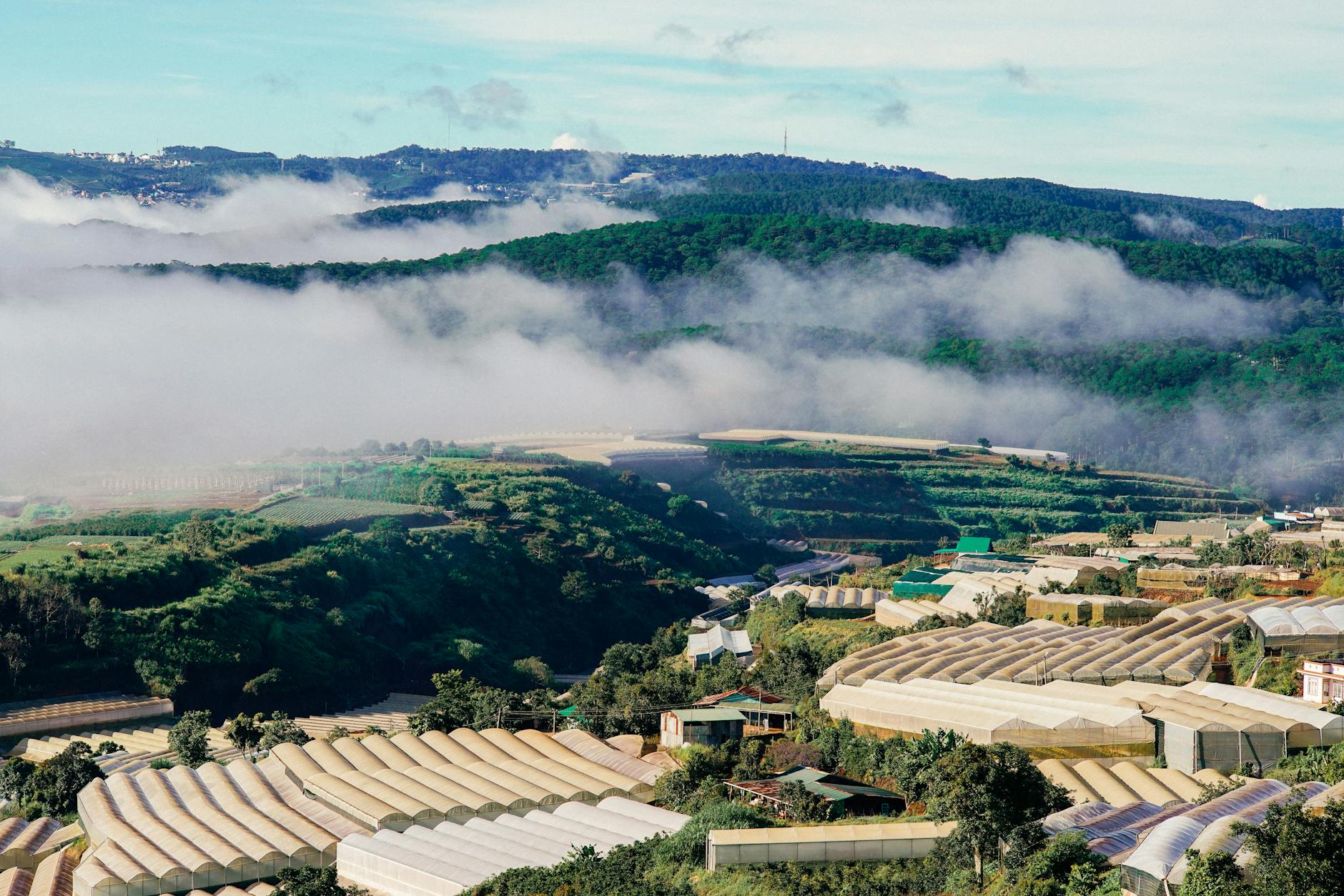
This guide cuts through the kitsch (and there is a lot of kitsch) to focus on what actually deserves your time in 2026.
When to Go: Climate, Crowds and Cost
Da Lat has two seasons: dry (December–March) and wet (April–November). That standard split misses some nuances worth knowing before you book.
| Period | Weather | Crowds | Hotel prices |
|---|---|---|---|
| Dec–Feb 2026 | 8–22°C, dry, occasional fog | High (peak) | +30–50% |
| Mar–Apr 2026 | 12–25°C, dry, sunny | Moderate | Standard |
| May–Aug 2026 | 15–24°C, daily afternoon rain | Low to moderate | -10–20% |
| Sep–Oct 2026 | 14–23°C, heavier rain | Lowest | Cheapest |
| Nov 2026 | 12–23°C, drying out | Moderate | Standard |
Tip: The sweet spot for canyoning, hiking and clear waterfall views is late February through early April. Wet-season afternoons are predictable — mornings are usually clear, so start activities early.
Avoid the Lunar New Year period (Tết falls on 17 February 2026) and the 30 April–1 May holiday window unless you genuinely enjoy bumper-to-bumper traffic on Highway 20.
Getting There and Getting Around
Lien Khuong Airport (DLI) sits 30 km south of the city. In 2026, Vietnam Airlines, Vietjet and Bamboo Airways fly direct from Hanoi, Ho Chi Minh City, Da Nang and Hai Phong. Expect 1,200,000–2,500,000 VND ($48–100) one-way from Hanoi, less from HCMC.
- Airport shuttle bus: 50,000 VND ($2) to central Da Lat, roughly 45 minutes
- Taxi/Grab: 350,000–420,000 VND ($14–17)
- Sleeper bus from HCMC: 280,000–400,000 VND ($11–16), 7–8 hours, overnight services on Phuong Trang and The Sinh Tourist
- Limousine van from HCMC: 450,000–550,000 VND ($18–22), 7 hours
In town, Grab works reliably for cars and motorbikes. Renting a scooter costs 120,000–180,000 VND ($5–7) per day. The roads around Da Lat are scenic but steep, foggy in the early morning, and the local police do enforce helmet and licence rules.
Warning: Riding a motorbike without an International Driving Permit endorsed for motorcycles invalidates travel insurance. Fines run 800,000–2,000,000 VND ($32–80) if stopped.
Coffee Country: The Real Reason Da Lat Matters
Vietnam is the world's second-largest coffee producer, and Lam Dong province is the country's only significant Arabica region. While the rest of Vietnam grows robusta for instant blends, the hills around Da Lat produce bourbon, catimor and typica varieties that supply the country's specialty cafes.
Three farms worth visiting:
La Viet Coffee (Trạm Hành area) — A working farm and roastery 20 km from the centre. Farm tours run twice daily and cost 350,000 VND ($14) including cupping. The roastery in town offers free walk-ins for tastings.
K'Ho Coffee (Bonneur'C village) — Run by a K'Ho ethnic minority family who farm at 1,650 metres. Farm visits by appointment, 400,000 VND ($16) including lunch. The most authentic look at smallholder Arabica in the region.
Cau Dat Tea & Coffee Farm — Touristy and Instagram-heavy, but the colonial-era processing buildings and viewpoint are genuinely impressive. Entry 100,000 VND ($4).
In town, skip the chain cafes and try Là Việt's flagship, Méo Vạc Coffee, or The Married Beans for properly sourced single-origin pours (45,000–75,000 VND / $2–3).
Adventure: Canyoning, Trails and the Lakes
Da Lat has become Vietnam's adventure capital, and canyoning is the headline activity — rappelling down waterfalls in Datanla canyon, jumping into pools, sliding down natural rock chutes. This is where the honesty matters: there have been fatal accidents, including unlicensed operators running tours that killed tourists in 2016 and again in 2022.
Use only licensed operators. As of 2026, the legitimately licensed canyoning companies are Highland Sport Travel, Viet Challenge Tours, and Phat Tire Ventures. Day tours run 1,400,000–1,800,000 VND ($56–72) and include equipment, lunch, insurance and certified guides.
| Activity | Operator type | 2026 price (VND) | USD | Duration |
|---|---|---|---|---|
| Canyoning (full day) | Licensed | 1,500,000–1,800,000 | $60–72 | 7 hrs |
| Mountain biking | Phat Tire/Groovy Gecko | 950,000–1,400,000 | $38–56 | Half/full day |
| Lang Biang summit trek | Independent or guided | 50,000–600,000 | $2–24 | 4–6 hrs |
| Ta Nung jungle hike | Guided only | 700,000 | $28 | Full day |
| Tuyen Lam Lake kayak | Self-rent | 150,000/hr | $6 | Flexible |
Warning: If a hostel offers canyoning for under 1,000,000 VND, walk away. The operator is almost certainly unlicensed, uninsured, and using worn equipment. No exception.
Lang Biang Mountain (2,167 m) is the easiest serious hike, with the back trail to the summit taking 3–4 hours up through pine and bamboo. Skip the jeep ride and the radar-station viewpoint — both are crowded and you'll have seen the same view from a hundred Instagram posts. The summit trail is far quieter.
The Waterfalls — Ranked Honestly
Da Lat markets itself on waterfalls, but they vary wildly in quality and integrity.
Worth your time:
- Pongour Falls (50 km south) — Seven tiers, 40 metres high, almost untouched. Best in October–December when flow peaks. Entry 30,000 VND ($1.20).
- Elephant Falls (25 km west) — Loud, powerful, with a slippery path down to the base that rewards careful walkers. Entry 30,000 VND ($1.20).
- Datanla (upper section, away from the alpine coaster) — If you canyon here, you'll see parts no day-tripper reaches.
Skip or downgrade expectations:
- Prenn Falls — Heavily renovated in 2019 into a "theme park" with fake structures, an ostrich, and pay-per-photo costume rentals. The waterfall itself is now an afterthought.
- Datanla (main entrance) — Dominated by an alpine coaster and built-up viewing platforms. Fine for kids, hollow for everyone else.
- Cam Ly Falls — In the city centre, polluted, and surrounded by garbage.
The Night Market and the Tourist-Trap Belt
Da Lat Night Market sprawls down the steps below Hoa Binh Square every evening from around 17:00. It's lively, photogenic, and has a few things worth eating — but most of the "famous" experiences here are tourist constructs.
What's actually good:
- Bánh tráng nướng (Vietnamese pizza) from any stall with a queue of locals, 25,000–40,000 VND ($1–1.60)
- Soy milk (sữa đậu nành) served hot in glass cups, 15,000 VND ($0.60)
- Grilled rice paper rolls and skewers
- Artichoke tea, fresh strawberries and avocados from the produce section
What to skip:
- "Hot pot on the street" tourist setups charging 350,000+ VND ($14) for what costs 120,000 VND ($5) in a real restaurant two blocks away
- Bagged souvenirs marketed as "Da Lat specialty" but identical to what's sold in every Vietnamese tourist town
- The portrait photographers in fake French period costume — harmless but absurd
The broader tourist-trap belt includes the Crazy House (architecturally interesting but overcrowded — go at opening at 08:30 if at all, 60,000 VND / $2.40), the Valley of Love (a manicured park full of swan boats and giant heart sculptures, easy skip), and Datanla Alpine Coaster (fun for ten minutes, 100,000 VND / $4, expect 45-minute queues on weekends).
Where to Stay
Da Lat's accommodation runs from converted French villas to bare-bones backpacker dorms. Districts matter less than in larger cities — almost everything central is within a 15-minute walk of Xuan Huong Lake.
| Tier | Example type | 2026 nightly rate (VND) | USD |
|---|---|---|---|
| Hostel dorm | Central, basic | 180,000–280,000 | $7–11 |
| Budget guesthouse | Family-run | 450,000–700,000 | $18–28 |
| Mid-range hotel | 3-star, lake-area | 950,000–1,600,000 | $38–64 |
| Boutique villa | Restored French colonial | 2,200,000–4,500,000 | $88–180 |
| Luxury resort | Ana Mandara, Dalat Palace | 5,500,000–14,000,000 | $220–560 |
The restored Dalat Palace Heritage Hotel, opened in 1922, is the genuine article if you want colonial atmosphere. The Ana Mandara Villas, a hillside cluster of 17 restored 1920s residences, is the better all-round luxury choice.
Food Beyond the Night Market
Da Lat's cool climate produces vegetables and fruit you don't find elsewhere in Vietnam: artichokes, strawberries, avocados, persimmons, cool-climate herbs. The local food scene reflects this.
- Bánh căn — Tiny coconut-rice pancakes served with quail eggs and dipping sauce. Try Nhà Chung street, 60,000–90,000 VND ($2.40–3.60) for a full meal.
- Nem nướng — Grilled pork sausage rolls. Bà Hùng on Phan Đình Phùng is the long-running benchmark, 80,000 VND ($3.20).
- Lẩu gà lá é — Chicken hotpot with a local basil unique to the highlands. Tao Ngộ and Mai Quỳnh both do solid versions, 280,000–400,000 VND ($11–16) for two.
- Artichoke tea and atisô soup — Sold across the city; the An Phước hot soup served with pork is a local institution.
For coffee with food, An Cafe (multiple locations) does excellent breakfasts in a leafy courtyard. Tiệm Cà Phê Tùng, open since 1957, is where Trịnh Công Sơn used to drink — old, dim, unchanged, and unmissable if you care about Vietnamese cultural history.
Day Trips Worth Taking
- Lak Lake (130 km north) — A full day, ideally overnight. M'nong stilt-house homestays, dugout canoes on the lake. Skip operators offering "elephant rides" — the ethical option is the wild-elephant observation programme run by Yok Don.
- Bidoup–Nui Ba National Park (50 km north) — Old-growth pine and broadleaf forest, serious birdwatching, multi-day treks with park rangers. Entry 60,000 VND ($2.40), guides 800,000 VND ($32) per day.
- Linh Phuoc Pagoda (8 km from centre) — A genuinely extraordinary mosaic-covered Buddhist temple. Free, takes about an hour.
Frequently Asked Questions
Is Da Lat worth visiting if I've already seen Sapa? Yes — they're different propositions. Sapa is about ethnic-minority villages and dramatic rice terraces; Da Lat is about coffee, adventure sports, French colonial remnants, and a much milder climate. Sapa is colder and wetter; Da Lat is mild year-round.
How many days do I need? Three full days covers the essentials: one for the city and night market, one for canyoning or a major waterfall trip, one for a coffee farm and Lang Biang. Add two more if you want to do Bidoup or Lak Lake.
Is Da Lat safe for solo travellers and women? Yes, with the usual urban caution. Petty theft is uncommon, and the central area is well-lit and busy until late. The main risk is traffic and adventure-tour safety standards — be selective with operators.
Can I drink the tap water? No. Stick to bottled or filtered water. Most mid-range and above hotels provide free bottled water daily.
What should I pack that I wouldn't need elsewhere in Vietnam? A warm layer. December–February mornings can drop to 8°C, and even in summer evenings sit around 15°C. A light rain jacket is essential from May to October.
Are credit cards widely accepted? In hotels and tour offices, yes. At restaurants, cafes, markets and most farms, cash is still king. ATMs are plentiful in the centre; Vietcombank and BIDV machines tend to have the lowest foreign-card fees.
Is the Crazy House actually worth seeing? If architectural eccentricity interests you, yes — Đặng Việt Nga's Gaudí-meets-treehouse project is unlike anything else in Vietnam. But arrive at opening or skip it entirely. By 10:30 it's a slow shuffle through narrow staircases.
The Bottom Line
Da Lat rewards travellers who are willing to step past its marketing. The swan boats and giant teddy bears at Valley of Love are not the point. The point is sitting in a 60-year-old cafe with a phin filter dripping coffee grown 20 km uphill, or rappelling into a canyon at 09:00 with mist still hugging the pines, or eating bánh căn on a plastic stool while the temperature drops into single digits. Give it three or four days, choose your operators carefully, and ignore the postcards. The real Da Lat is better than the brochure version — but only if you go looking.