November in Vietnam at a glance: three climates, one month
November is the transition month. The northeast monsoon pushes cool, dry air into the north. The central coast sits at its wettest and most flood-prone. The south is entering the dry season, but it is not dry yet.
Compared with October, nights up north turn noticeably cooler, rain intensifies on the central coast, and the south slowly dries out. The figures below are climate-normal ranges. A cold front or a late typhoon can shift them for a few days.
If you only read one thing: pack a real insulating layer for the mountains, rain gear and quick-dry clothes for the centre, and light sun-ready clothes for the south.
| Zone | Typical day / night | Rain | What to wear |
|---|---|---|---|
| Hanoi, Ninh Binh | 23-27°C / 16-20°C | 6-8 rainy days, drizzle | Tee or long-sleeve, chinos, light jacket for evenings |
| Sapa, Fansipan | 14-19°C / 6-11°C | Fog and drizzle | Thermal, fleece, insulated jacket, rain shell, beanie |
| Ha Giang, Dong Van | 16-24°C / 8-15°C | Mostly dry, misty mornings | Base layer, fleece, windproof shell, gloves |
| Mu Cang Chai | 18-22°C / 10-13°C | Mist on passes | Fleece plus shell, shoes with traction |
| Mai Chau, Pu Luong | 23-26°C / 14-17°C | Foggy mornings | Quick-dry trousers, tee, fleece for evenings |
| Ha Long, Lan Ha | 21-25°C / 16-19°C | Sea mist, some rain | Windbreaker, scarf, quick-dry kayak clothes |
| Hue | 24-26°C / 20-22°C | 550-700 mm, 20+ days | Quick-dry trousers, poncho, draining shoes |
| Da Nang, Hoi An | 25-27°C / 21-22°C | 400-550 mm | Shorts or capris, waterproof sandals, dry bag |
| Phong Nha | 24-27°C / 20-22°C | Heavy rain | Quick-dry layers, swimwear, grippy water shoes |
| Nha Trang, Quy Nhon | 27-29°C / 23-24°C | 300-350 mm | Swimwear, poncho, quick-dry cover-up |
| Da Lat | 22-24°C / 12-15°C | 100-150 mm, drying | Jeans, long-sleeve tee, fleece, rain shell |
| Buon Ma Thuot | 28-30°C / 18-20°C | Afternoon showers | Breathable tee, light trousers, sweater |
| HCMC, Mekong Delta | 31-33°C / 24-25°C | 10-14 rainy days | Loose tee, shorts, hat, compact umbrella |
| Phu Quoc | 30-32°C / 25-26°C | 130-200 mm, easing | Swimwear, rash guard, light windbreaker |
| Con Dao | 29-31°C / 25°C | 250-300 mm | Quick-dry layers, poncho, modest site wear |
| Mui Ne | 30-32°C / 23-25°C | 40-70 mm | UV top, buff for sand, closed shoes for dunes |
What to wear in northern cities: Hanoi and Ninh Binh
Hanoi
Daytime highs run about 23-27°C (73-81°F), with lows of 16-20°C (61-68°F). A late-November cold surge can push lows to 12-14°C. Rain is modest, with drizzly spells on about 6-8 days. This is the most comfortable month of the year for walking.
Outfit formula. By day, a tee or light long-sleeve with chinos, jeans or a midi skirt. In the evening, add a light fleece, denim jacket or merino cardigan. Motorbike taxis and open-air cafés feel cooler than the thermometer suggests.
Cotton works here because humidity is lower than in summer. Merino or a light knit gives the best warmth for weight. Closed sneakers or flats suit uneven, drizzle-damp pavements.
Old hotel rooms and sleeper trains run cold. Air-conditioning on a bus or train can feel colder than the outdoors.
Ninh Binh (Tam Coc, Trang An, Hang Mua)
Conditions mirror Hanoi but run about 1-2°C cooler at night. The golden-rice colours are mostly over, so no special photo outfit is needed.
A windproof or light shell helps on 1.5 to 3-hour boat rides. Quick-dry trousers and a hat for low sun round out the kit. Grippy sneakers handle the 500 steps at Hang Mua, while rubber-soled sandals work for boat and cave walks. Boat docks and limestone steps turn slippery after dew.
What to wear in the northern mountains: Sapa, Ha Giang, Mu Cang Chai, Mai Chau and Pu Luong
The mountains are 8-15°C colder than Hanoi at night. "Light jacket" advice is not enough here.
Sapa and Fansipan
Highs sit around 14-19°C (57-66°F), lows around 6-11°C (43-52°F). Late-month lows can reach 3-6°C. The summit of Fansipan (3,143 m) can sit near 0-6°C with wind. Fog and drizzle are common, and humidity feels damp even without rain.
Outfit formula. Start with a thermal or merino base layer, add a fleece, then an insulated jacket plus a rain shell. A beanie, a buff and light gloves finish it.
Synthetic insulation beats down in fog and drizzle, because damp down loses loft. Avoid thick cotton hoodies, which hold moisture. Waterproof trail shoes or light boots with merino or synthetic socks are the right call.
Homestays often have no heating. Pack sleepwear that works as an extra layer.
Ha Giang loop and Dong Van
Ha Giang town sees highs of 20-24°C and lows of 12-15°C. Dong Van and Meo Vac, at 1,000 m and above, drop to highs of 16-20°C and lows of 8-11°C. At riding speed in the morning, perceived temperatures can feel close to 5°C.
For motorbike days, wear a base layer, fleece and a windproof or waterproof shell, plus full-length trousers. Gloves, a neck gaiter and closed over-the-ankle shoes are not optional. Shorts and sandals are an injury risk on motorbikes. Wear a proper helmet.
Buckwheat flower season runs through November and draws photographers. Do not dress for stills at the expense of warmth.
Mu Cang Chai
Highs run 18-22°C, lows 10-13°C. Terraces are post-harvest and brown, and mist is common on the Khau Pha pass. A fleece plus a shell works, with layers peeled off on the climb. Footwear with traction is essential on wet clay.
Mai Chau and Pu Luong
Highs reach 23-26°C, lows 14-17°C. Mornings are foggy and cool. Quick-dry trousers and a tee suit walking, with a fleece for evenings and stilt-house nights. Trail shoes handle rice-field paths and bamboo bridges, which turn slippery.
Trekking in November: a layering matrix
| Night temp | Base layer | Mid layer | Outer layer | Accessories |
|---|---|---|---|---|
| 20°C | Synthetic tee | None | Light shell | Cap |
| 15°C | Merino long-sleeve | Light fleece | Windproof shell | Buff |
| 10°C | Thermal base | Fleece | Insulated jacket | Beanie, gloves |
| 5°C | Thermal base | Fleece | Insulated jacket plus rain shell | Beanie, gloves, buff |
Leeches are far less of a concern in the dry north in November than in summer, but muddy trails remain.
What to wear on Ha Long Bay and Lan Ha Bay cruises
Deck, wind and fog
Highs run 21-25°C, lows 16-19°C. Wind and sea mist make decks feel 3-5°C cooler at dawn and dusk. A windbreaker or fleece suits sundeck and tai chi sessions, and a scarf helps with the wind.
Fog and weather advisories can change or shorten itineraries.
Kayaking, caves and swimming
Water temperature is about 22-24°C, so swimming is optional and cold. Quick-dry shorts or leggings, a long-sleeve rash guard or synthetic tee, and water shoes cover kayaking. Cave steps, such as those at Sung Sot, are damp, so grip matters. Pack a waterproof pouch or dry bag for the phone.
Evening and cabins
Smart-casual dinners need one clean outfit. Cabins are air-conditioned, so a long-sleeve sleepwear set is useful.
What to wear on the central coast: Hue, Da Nang, Hoi An, Phong Nha, Nha Trang and Quy Nhon
This is the wettest, riskiest zone of the month. Typical November conditions include flood events, typhoon remnants and landslide-affected roads. Build a flexible itinerary and choose travel insurance that covers weather disruption.
Hue
Highs run 24-26°C (75-79°F), lows 20-22°C. Rainfall reaches roughly 550-700 mm for the month, spread over about 20 or more rainy days. This is among the wettest places in the country in November.
Wear quick-dry trousers rather than jeans, a breathable tee, a light poncho or shell, and a long-sleeve top for covered shoulders at royal sites. Closed-toe shoes that drain and dry work best. Citadel and tomb paths are open-air and waterlogged.
Da Nang and Hoi An
Highs sit around 25-27°C, lows 21-22°C, with rainfall of roughly 400-550 mm. Hoi An Old Town floods when the Thu Bon River rises, often knee-high.
On a flood day, wear shorts or quick-dry capris, a lightweight top and waterproof sandals. Carry a dry bag with a spare outfit and keep passports in zip bags.
Floodwater can carry bacteria such as leptospira. Avoid wading with open cuts, wash feet with soap afterwards, and do not ride through floodwater.
Ba Na Hills, at about 1,400 m, is 8-10°C cooler and often misty. Take a light jacket. Riding the Hai Van Pass by motorbike in heavy rain is a safety risk. Hoi An tailors can make clothes in 24-48 hours, so packing light and buying here is practical, though humid weather can slow fitting schedules.
Phong Nha
Highs run 24-27°C, lows 20-22°C, with heavy rain. Cave interiors sit at about 20-22°C and are wet. Quick-dry layers and swimwear suit Dark Cave, with water-ready shoes that grip. Cave boat trips and tours may close when rivers rise.
Nha Trang and Quy Nhon
Highs reach 27-29°C, lows 23-24°C. Nha Trang's wettest period is usually October to November, with roughly 300-350 mm. The sea is often rough, and island boat tours can be cancelled.
Pack swimwear but do not assume beach weather. A poncho, a quick-dry cover-up and a light fleece or shirt for rainy evenings cover the reality.
What to wear in the Central Highlands: Da Lat and Buon Ma Thuot
The Highlands are their own zone, not part of the south.
Da Lat
Highs run 22-24°C (72-75°F), lows 12-15°C (54-59°F). Rainfall of about 100-150 mm dries out toward December, with afternoon showers and cool, clear mornings. Jeans or chinos, a long-sleeve tee, a fleece or light down-alternative jacket for the evening, and a rain shell cover it. Sneakers or light boots suit the hills. Wild sunflower season typically runs November to December, while cherry blossom usually arrives later, around late December to January.
Buon Ma Thuot
Highs reach 28-30°C, lows 18-20°C. The coffee harvest begins. Red basalt dust and mud stain light clothing, so choose darker or earth tones. A breathable cotton-blend or synthetic tee, light trousers and a sweater for evenings work well. Parts of Dak Lak can flood in heavy November rain.
What to wear in southern cities: Ho Chi Minh City and the Mekong Delta
Ho Chi Minh City
Highs run 31-33°C (88-91°F), lows 24-25°C (75-77°F). Expect roughly 100-130 mm of rain on about 10-14 days, usually afternoon showers, easing toward the end of the month. Humidity is lower than in summer but still sticky.
A loose linen-blend or synthetic tee, shorts or light trousers, and a wide-brim hat or cap with sunglasses fit the days. Always carry a compact umbrella, and add a thin cardigan for air-conditioned malls, cinemas and sleeper buses. Breathable sneakers or closed sandals work, since tide-driven street flooding peaks in the October-November period.
Mekong Delta
Highs sit around 30-32°C, lows 24-25°C. Early-morning floating markets are breezy at around 25°C. A long-sleeve breathable shirt, a hat and mosquito protection cover the day, with closed shoes for muddy docks and a dry bag for boat rides.
What to wear on southern beaches and islands: Phu Quoc, Con Dao and Mui Ne
Phu Quoc
Highs run 30-32°C, lows 25-26°C. Rain of roughly 130-200 mm eases through the month, with calmer seas later in November. Sea temperature is about 28-29°C, and early November can still bring storms. Pack swimwear, a rash guard, a cover-up for Duong Dong town and a light windbreaker for speedboat trips. Reef shoes help on rocky snorkel entries. Beachwear belongs at the beach and pool, not in markets or town.
Con Dao
Highs reach 29-31°C, lows around 25°C. Rain is still significant, at roughly 250-300 mm. Seas may be rough, and ferries and flights can be disrupted, so light quick-dry layers and a poncho are sensible. The Hang Duong cemetery and former prison sites call for modest, sombre dress.
Mui Ne
Highs run 30-32°C, lows 23-25°C. It is the driest of the three, with roughly 40-70 mm. Wind picks up as the kitesurf season starts. A long-sleeve UV top, a buff or scarf for blowing sand, and closed breathable shoes for the dunes work well, since sand can be hot in the afternoon. Windy beaches feel cooler than the thermometer.
What to wear for temples, pagodas and the Ho Chi Minh mausoleum
Temples and pagodas
Cover shoulders and knees, for both men and women. Avoid tight, sheer or low-cut items, and remove shoes before entering main halls. In November, thin socks help in the north because floors are cold. In the centre, wet marble makes slip-on sandals easier than laces. Carry a lightweight scarf or sarong that can cover shoulders and knees, double as a sun shield, or wrap against the wind.
Hue's Imperial City and tombs
Smart-casual dress with covered shoulders and knees is expected. Rain gear is needed because there is little shelter.
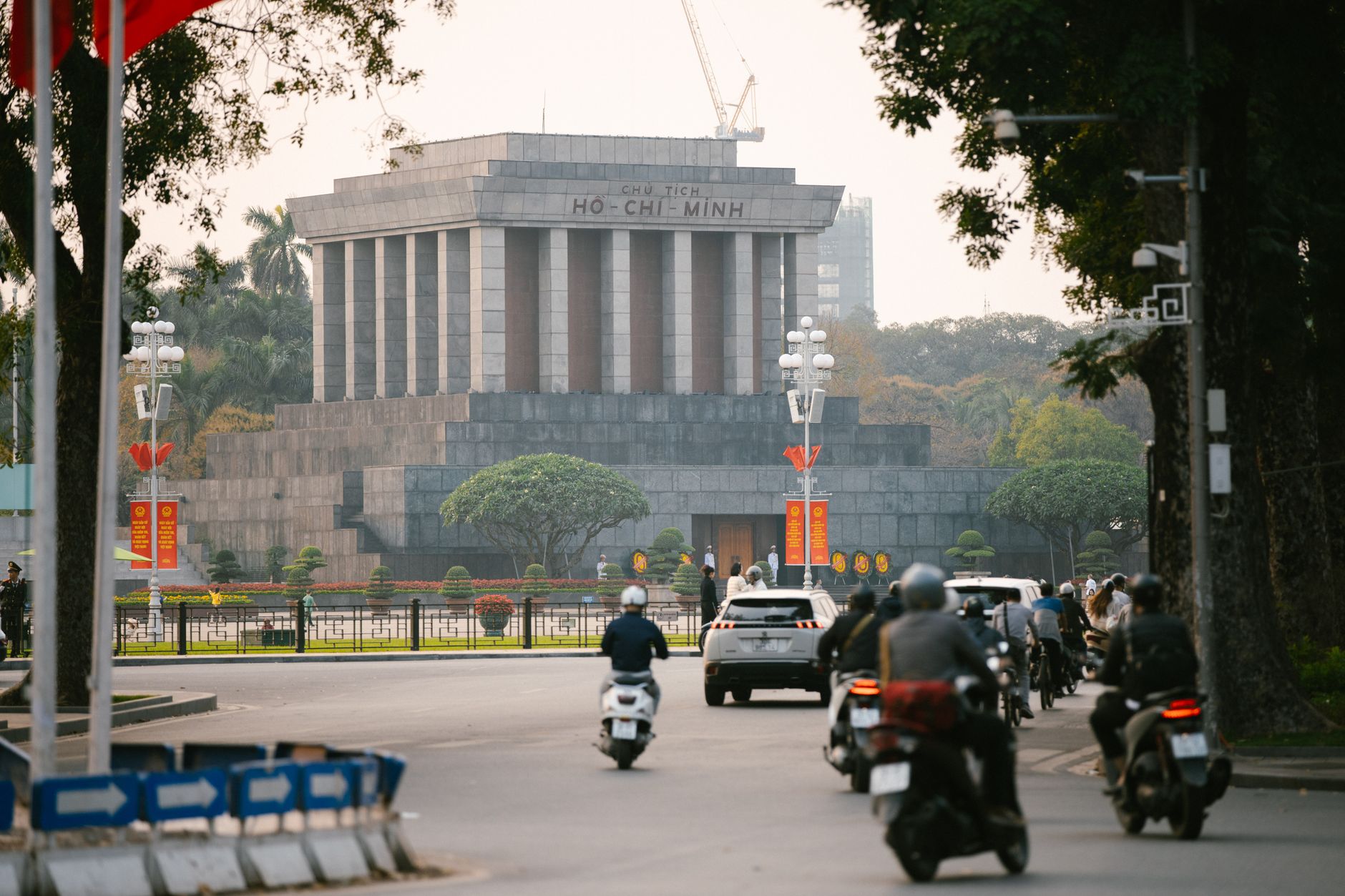
Ho Chi Minh mausoleum, Hanoi
The dress code calls for long trousers or a skirt below the knee, covered shoulders, no hats inside, and quiet behaviour. Cameras and bags are checked at the entrance.
The mausoleum usually closes for annual maintenance in autumn, typically from about September to early December, so it is likely closed in November. Check the official schedule before travelling. Ba Dinh Square, the stilt house and the One Pillar Pagoda area usually remain visitable, with the same dress expectations.
| Site | Required coverage | November tip |
|---|---|---|
| Temples and pagodas | Shoulders and knees | Thin socks in the north, slip-on sandals in the centre |
| Hue Imperial City and tombs | Shoulders and knees, smart-casual | Bring rain gear, little shelter on site |
| Ho Chi Minh mausoleum | Long trousers or below-knee skirt, covered shoulders | Likely closed for maintenance, verify dates |
| Con Dao cemetery and prison sites | Modest, sombre dress | Light layers for heat and rain |
Men's and women's notes for November
Women
Wide-leg trousers or a midi dress with a cardigan work across Hanoi evenings and Hue temples. Skirts are awkward on motorbike taxis, so choose a longer skirt or trousers. Leggings need a longer top for temples. A one-piece or modest swimsuit works at public beaches. Larger bra cups and plus sizes are hard to find locally, so bring them.
Men
Knee-length shorts are fine in cities but not for temples. Avoid singlets. Carry one collared shirt for cruise dinners. Shoes above about EU 43-44 and sizes above XL are hard to buy locally.
Both
Skip a heavy winter coat. Layers beat bulk in November.
Footwear strategy for November
Three pairs cover almost every route, worn heaviest on the flight.
- Closed trail shoes or light boots for Sapa, Ha Giang and Pu Luong.
- Water-friendly sandals for central floods and beach days.
- Light sneakers or slip-ons for cities and temples.
Flip-flops are cheap to buy locally. One honest caveat: waterproof membrane shoes fail when floodwater goes over the top. In the centre, shoes that drain and dry quickly beat waterproof ones. Pack 2-3 pairs of merino or synthetic socks, and avoid cotton socks in wet zones. On motorbikes, especially in Ha Giang, closed shoes only.
Fabrics that work and fail in November
| Fabric | Where it works | Where it fails | Why |
|---|---|---|---|
| Merino and quick-dry synthetics | Everywhere | Nowhere | Warm when damp, dry fast |
| Lightweight fleece | North, Highlands, evenings | Hot south days | Warmth for weight |
| Synthetic insulation | Sapa, Ha Giang | Humid coast | Keeps loft when damp |
| Cotton-blend and linen-blend | Dry south, Hanoi | Central rains | Comfortable but slow to dry |
| Packable rain shell or poncho | Centre, south showers | Foggy cold mountains alone | Vents better than sealed shells |
| Denim | Hanoi, Da Lat | Central rains | Stays wet for hours |
| Thick cotton hoodies | Nowhere in November | Mountains, centre | Holds moisture |
| Down | Dry cold only | Damp fog | Loses loft when wet |
| 100% linen | Hot dry days | Rain | Wrinkles badly, dries slowly |
| Waterproof shells | Short downpours | 90% humidity | Heavy sweating without ventilation |
Packing lists by itinerary type
Domestic budget fares often include only carry-on, so verify current baggage rules before flying.
Two-week north-to-south
Three quick-dry tops, one merino long-sleeve, one fleece, one packable insulated jacket, one rain shell or poncho, two trousers (one quick-dry, one chino), one pair of shorts, one midi dress or smart shirt, swimwear, three socks, three underwear, sandals plus sneakers. Do laundry in Hanoi before Hue and Hoi An, not after.
Beach week (Phu Quoc, Mui Ne or Con Dao)
Two swimsuits, rash guard, cover-up, reef shoes, three light tops, one light windbreaker, wide-brim hat, sandals. Add a rain layer for early November.
Trekking trip (Sapa, Ha Giang, Pu Luong)
Base, mid and outer layers, trail shoes or boots, merino socks, a beanie and gloves, a rain shell, quick-dry trekking trousers and a buff. A dry bag is optional but useful.
City and culture (Hanoi, Hue, Ho Chi Minh City)
Mix-and-match neutrals, one smart outfit, a scarf for temples, a compact umbrella, closed sandals and a cardigan for air-conditioning.
What to buy cheaply in Vietnam instead of packing
| Item | Typical price | Where to buy | Quality note |
|---|---|---|---|
| Poncho | 20,000-50,000 VND (0.80-2 USD) | Everywhere | Thin but effective for a week |
| Umbrella | 50,000-150,000 VND (2-6 USD) | Markets, convenience stores | Check the ribs before buying |
| Rubber sandals | 60,000-150,000 VND (2.30-6 USD) | Markets | Fine for floods and beaches |
| Wellies | 100,000-250,000 VND (4-10 USD) | Central coast markets | Useful in flooded streets |
| Beanie and gloves | 50,000-150,000 VND (2-6 USD) | Hanoi, Sapa | Adequate for a short trip |
| Basic fleece | 200,000-500,000 VND (8-19 USD) | Hanoi, Sapa | Check zips and seams |
| Tailored clothing | From about 500,000 VND (19 USD) | Hoi An | 24-48 hour turnaround |
Cheap "outdoor brand" jackets in Hanoi and Sapa may have poor zips and limited water resistance. They are fine for a week. Bring from home: merino base layers, sizes at the extremes, quality socks and specific medications. Sunscreen is available, but imported brands cost more.
Laundry and drying in November
Typical prices are about 20,000-40,000 VND per kg (0.80-1.60 USD), often same-day or next-day. In the wet centre, line-drying is slow, so ask for machine drying or choose quick-dry synthetics that dry overnight. Do not pack damp clothes. Use a separate bag to avoid mildew. Hang-drying in the dry north and south is easy.
What to wear in other months: January · February · March · April · June · July · August · September · October · December
FAQ
Q: What should I pack for Vietnam in November? Pack by zone. Insulating layers for Sapa, Ha Giang and Da Lat, rain gear and quick-dry clothes for the central coast, and light sun-ready clothes for the south. The one-bag logic is a shell, a fleece or light jacket, quick-dry tops and two to three pairs of footwear.
Q: Is Vietnam cold in November? Only in the northern mountains and the Highlands at night. Sapa can fall to 3-11°C, Ha Giang's high districts to 8-11°C, Da Lat to 12-15°C, and Hanoi reaches 16-20°C with occasional cold snaps. The central coast and south stay warm, at 20°C or above even at night.
Q: What is one of the biggest mistakes you can make in Vietnam? For clothing, it is packing for one climate. The common errors are bringing only tropical clothes to the mountains, bringing jeans and non-draining shoes to the flooded centre, and ignoring the October-to-December rainy season on the central coast. Outside clothing, ignoring weather disruption in travel plans is the other frequent mistake.
Q: What should female tourists wear in Vietnam? Light, modest, breathable clothes: wide-leg trousers, midi skirts and dresses, with shoulders and knees covered at temples. Add a scarf and a cardigan, as November evenings and air-conditioning are cool. Beachwear stays at the beach.
Q: Do I need a raincoat or umbrella in November? Essential on the central coast and useful in Ho Chi Minh City. Optional in Hanoi and light in the north, though drizzle occurs. A poncho costs about 20,000-50,000 VND (0.80-2 USD) and is practical and cheap locally.
Q: Can I wear shorts in Vietnam in November? Yes in cities, on beaches and in the south, but not for temples, the mausoleum or royal sites. In the northern mountains, long trousers are warmer and safer on motorbikes.
Q: Is the Ho Chi Minh mausoleum open in November? It normally closes for annual maintenance in autumn, and the usual period runs from around September to early December, so it is likely closed. Verify the official schedule before travelling. Outdoor areas at Ba Dinh usually remain open.
Q: What shoes should I bring for a trip across Vietnam in November? Three pairs: trail shoes or boots for the mountains, water-friendly sandals for central floods and beaches, and light sneakers for cities. Avoid relying on membrane-waterproof shoes in flood conditions.