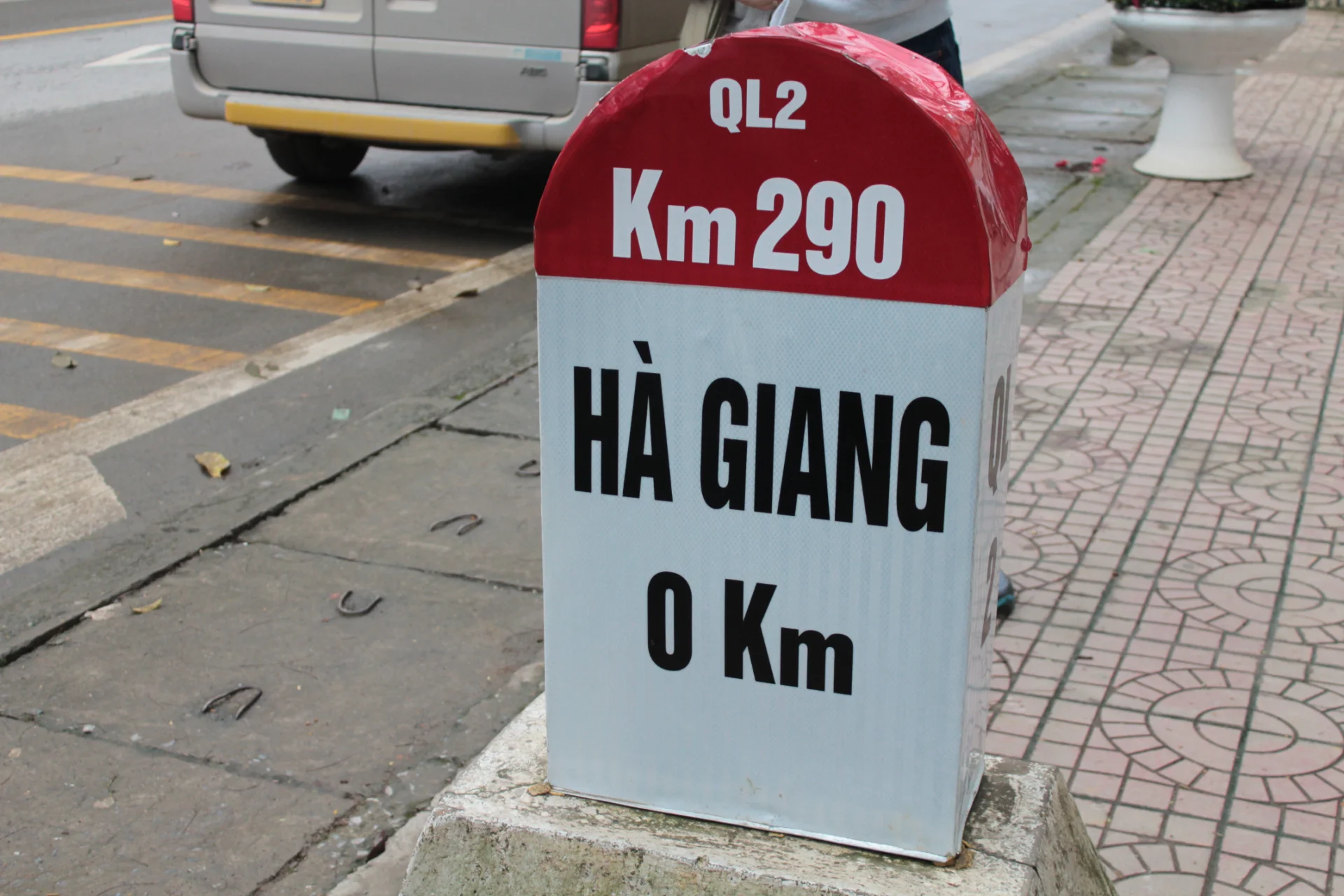
What Is the Ha Giang Loop?
The route's reputation rests on three pillars: the geology (karst formations unlike anywhere else in Vietnam), the people (Hmong, Tay, Dao, Lo Lo, Pu Peo and Giay communities, many still living in traditional rammed-earth or stilt houses), and the riding itself — particularly the Ma Pi Leng Pass above the Nho Que River, widely considered Vietnam's most dramatic mountain road.
Most travellers ride it in 3 or 4 days. The classic route runs counter-clockwise: Ha Giang → Yen Minh → Dong Van → Meo Vac → Du Gia → Ha Giang.
Is It Worth It in 2026?
Honest answer: yes, but not for the reasons travel blogs from 2018 told you.
The "undiscovered" Ha Giang those blogs described is gone. By 2025, Ha Giang province was recording over 3.2 million tourist arrivals annually, with foreign numbers more than doubling since 2022. In peak season (October–November and March–April), an estimated 3,000+ foreign riders enter the loop each week. Lung Cu flag tower, the Ma Pi Leng viewpoint, and the Heaven's Gate sky-walk can have 200+ people waiting for photos at sunset.
Homestay prices have risen 40–60% since 2023. Plastic waste is visible along even remote stretches of the Nho Que valley. New concrete hotels have replaced wooden homes in central Dong Van. Drone restrictions are now enforced near the border.
That said: the landscape is still spectacular, the side roads (DT176, the Du Gia route, Sung La valley) remain quiet, and the cultural texture of market days in Meo Vac and Dong Van is genuinely intact. Manage expectations, get off the main loop where possible, and it remains one of the most rewarding rides in Asia.
How to Do It — 4 Options Compared
Self-Drive Motorbike — for experienced riders only
Rental: 250,000–400,000 VND/day (€9–15) for a semi-automatic Honda XR150 or similar. This option suits riders with genuine off-road or mountain experience. The loop includes gravel, blind switchbacks, livestock on roadways, and fog that reduces visibility to under 10 metres. If your riding experience consists of scooters in Bali, this is not your route.
Easy Rider — passenger with local driver
You sit on the back; an experienced Vietnamese driver rides. All-in cost (driver, fuel, food, homestays): 2,000,000–3,200,000 VND/day per person (€75–125). This is the most popular option for non-riders and the safest motorbike-based choice. Quality of drivers varies enormously — ask to meet your driver before paying, and check that the bike has functioning brakes and tyres with tread.
Private Car — underrated, safe, weather-proof
A 7-seat car with driver for 4 days runs 10,500,000–15,500,000 VND total (€400–600), splittable among up to 6 passengers. This is the option nobody talks about because it isn't romantic, but in November rain or January cold, it's the difference between a memorable trip and hypothermia. Comfortable for older travellers, families with children, or anyone with back issues.
Organized Group Tour
Hostels in Ha Giang City run 3-day group rides for 3,500,000–4,800,000 VND (€135–185) per person, usually as a passenger with a local driver. Social, well-organised on paper, but the "herding" effect means 15–20 bikes moving together, frequent stops at scripted photo spots, and — credibly reported in multiple cases — injured riders being left behind in provincial hospitals while the group continues.
Transport Mode Comparison
| Mode | Cost (4 days) | Skill needed | Risk level | Flexibility | Fitness required |
|---|---|---|---|---|---|
| Self-drive motorbike | €60–110 | High | Very high | Maximum | High |
| Easy Rider | €300–500 | None | Moderate | High | Moderate |
| Private car | €70–150 pp (4 sharing) | None | Low | High | Low |
| Group tour | €135–185 | None | Moderate-high | Low | Moderate |
The License & Insurance Reality
What Vietnam's Law Requires
To legally ride any motorbike over 50cc in Vietnam, you need a 1968 Convention International Driving Permit with a motorcycle (A) endorsement, plus a valid motorcycle licence in your home country. Vietnam joined the 1968 Convention in 2015.
Critical: the 1949 IDP issued to citizens of the United States, United Kingdom, Ireland, Canada, and Australia is not valid in Vietnam. If you're from one of these countries and don't hold a Vietnamese licence, you cannot legally ride here — full stop. Most rental shops in Ha Giang will rent to you anyway. That doesn't make it legal.
Why This Voids Your Insurance
Every major travel insurance policy — World Nomads, SafetyWing, Allianz, AXA, True Traveller — contains a clause requiring you to be licensed in the country where the accident occurs. Without a valid 1968 IDP with motorcycle endorsement, your insurance will deny the claim.
Medevac costs from Ha Giang to a Hanoi private hospital run €4,000–8,000 by ground ambulance. Repatriation to Europe in a medical-equipped aircraft: €30,000–80,000. These are routinely paid out of pocket by uninsured tourists or their families via GoFundMe.
Police Checkpoints & Fines
Police checkpoints are common around Yen Minh, Dong Van, and the Quan Ba pass. Standard fine for riding without a valid licence in 2026 is 4,000,000–5,000,000 VND (€150–190), plus bike confiscation. Helmet checks are constant. Random breath tests have increased markedly since 2024, with a zero-alcohol limit strictly enforced.
How Dangerous Is It, Really?
This is the section most guides skip. Here are the facts.
Documented Fatalities
- 2017: A 26-year-old Spanish tourist died after losing control on a switchback near Dong Van.
- 2018: Two British backpackers killed in a head-on collision with a truck near Yen Minh.
- 2023: A British tourist fell from the Ma Pi Leng viewpoint while taking a photograph.
- April 2026: Orla Wates, a 24-year-old British traveller, died after a crash on the Du Gia road. The case received extensive Guardian coverage in May 2026 and prompted renewed UK Foreign Office travel advisory updates.
These are deaths. They are a fraction of the serious injuries.
Injury Numbers
Ha Giang General Hospital and Meo Vac District Hospital staff have told Vietnamese press they treat 5 to 15 foreign tourists per week in high season for motorbike-related injuries. Most involve fractures, road rash, concussion, and ligament damage. Hospital records reviewed in regional press in 2024 indicated foreign riders accounted for the majority of trauma admissions during October–November peak weeks.
The 5 Real Hazards
- Loose gravel on switchbacks — particularly after rain, on the outside of blind corners.
- Fog — Ma Pi Leng and Quan Ba can drop to under 10 metres of visibility in minutes, year-round, but especially November–February.
- Rockslides — common in May–September. Small rocks on the road surface are the more frequent danger, not dramatic landslides.
- Livestock and children — buffalo, dogs, and unsupervised children near villages. The road belongs to them.
- Other tourists — inexperienced riders overtaking on blind corners is now the single most reported cause of foreign-on-foreign collisions.
What Happens If You Crash
There is no helicopter rescue service in Ha Giang province. If you crash on a remote stretch, villagers will usually help — most carry mobile phones with reception in 80% of the loop. The pathway is:
Village stabilisation → motorbike or pickup transfer to Ha Giang Hospital (basic trauma care, no neurosurgery, no advanced imaging) → ambulance transfer to Hanoi (5–6 hours by road). Vinmec Times City and Bach Mai Hospital in Hanoi are the realistic destinations for serious injuries.
The Classic 4-Day Itinerary
Day 1 — Ha Giang to Yen Minh (~100 km, 4–5 hours)
Climb the Bac Sum pass, photograph Quan Ba's Twin Mountains (avoid the new paid viewpoint — the free roadside view is identical), lunch in Tam Son, then the green valley road into Yen Minh. Pine forests, manageable curves, a gentle introduction.
Day 2 — Yen Minh to Dong Van (~50 km, 3–4 hours)
Short distance, packed with stops: the Sung La valley, the H'Mong King's Palace at Sa Phin (40,000 VND entry), Lung Cu flag tower if you're a completist (it's a long detour for a flagpole), and arrival in Dong Van old quarter by mid-afternoon. The Sunday morning Dong Van market is a genuine highlight — plan around it.
Day 3 — Dong Van to Du Gia via Ma Pi Leng (~90 km, 5–6 hours)
The main event. The Ma Pi Leng pass between Dong Van and Meo Vac is the route's defining stretch. Optional 250,000 VND boat trip on the Nho Que river through the Tu San canyon (worth it if it's not crowded; check at the dock before committing). After Meo Vac, the road south to Du Gia becomes quiet and beautiful — fewer tourists, more livestock.
Day 4 — Du Gia to Ha Giang (~70 km, 3–4 hours)
Du Gia waterfall in the morning, then the winding return via the DT176 or main road back to Ha Giang City. Aim to arrive by 4 pm to catch the night bus to Hanoi.
Stops Worth It vs. Skippable
| Stop | Verdict |
|---|---|
| Quan Ba Twin Mountains | Worth it (use free viewpoint) |
| H'Mong King's Palace | Worth it |
| Lung Cu Flag Tower | Skippable unless completionist |
| Dong Van Old Quarter | Worth it |
| Sunday Dong Van Market | Highlight — plan around it |
| Ma Pi Leng Pass | Essential |
| Sky-walk glass platform | Skippable — overpriced, overcrowded |
| Nho Que River boat | Worth it if uncrowded |
| Meo Vac Sunday Market | Highlight |
| Du Gia waterfall | Worth it |
| "Happiness Road" monument | Brief stop |
Alternative Routes
Clockwise on Small Roads
Riding the loop clockwise (Ha Giang → Du Gia → Meo Vac → Dong Van → Yen Minh) inverts the crowd flow. Combine with the DT176 — a narrower, less-trafficked road — and add a day to detour through Khau Vai. Five days minimum. This is the route experienced riders take to escape the queue.
Cao Bang Loop
If Ha Giang sounds too crowded, the Cao Bang province loop further east offers similar karst landscapes, Ban Gioc Waterfall (the largest in Southeast Asia), Nguom Ngao cave, and a fraction of the foreign visitor numbers. Two to three days. Less infrastructure, fewer English-speaking homestays — better for travellers who want what Ha Giang used to be.
Best Time to Ride
| Month | Temp (°C) | Rain | Roads | Crowds | Verdict |
|---|---|---|---|---|---|
| Jan | 8–15 | Low | Dry, cold fog | Low | Cold but quiet |
| Feb | 10–17 | Low | Dry | Low-Med | Plum blossoms, good |
| Mar | 14–22 | Low | Dry | High | Excellent |
| Apr | 18–27 | Rising | Mostly dry | High | Excellent until late month |
| May | 22–30 | High | Wet, rockslides | Med | Risky |
| Jun | 24–32 | Very high | Landslide season | Low | Avoid |
| Jul | 24–32 | Very high | Worst | Low | Avoid |
| Aug | 23–31 | High | Wet | Low | Avoid |
| Sep | 22–29 | Falling | Improving | Med | Green rice terraces |
| Oct | 18–26 | Low | Dry | Very high | Peak — rice harvest |
| Nov | 14–22 | Low | Dry, fog | Very high | Peak — buckwheat flowers |
| Dec | 10–17 | Low | Dry, cold | Med | Cold but clear |
What to Pack
Temperature swings of 15–25°C in a single day are normal. Pack for layering:
- Waterproof shell jacket (non-negotiable October–April)
- Fleece or merino mid-layer
- Long trousers — jeans are acceptable, shorts are foolish
- Gloves (riding gloves if self-driving; basic gloves otherwise — your hands will freeze in November)
- Closed-toe shoes with grip. Sandals on a motorbike cause some of the most common foot injuries.
- Helmet — if renting, refuse anything that wobbles or is over a year old. Bring your own if possible.
- Basic first aid: antiseptic, gauze, painkillers, blister plasters, Imodium
- Cash — ATMs exist in Ha Giang, Yen Minh, Dong Van, and Meo Vac, but card payment outside towns is rare
- Power bank — homestay electricity can be patchy
- Buff or neck gaiter — dust, sun, cold
Fitness Requirements
Six to eight hours per day on a motorbike — even as a passenger — is physically demanding in ways travellers consistently underestimate. By day three, expect lower back pain, tailbone soreness, wrist fatigue (riders), and neck strain from helmet weight.
If you have a history of disc problems, knee injuries, or chronic back pain, the private car option is not soft — it's sensible. Many Easy Rider passengers cut their trips short by a day due to physical discomfort, not lack of interest.
Where to Sleep
Homestays (300,000–500,000 VND/night, €11–19, often including dinner): basic mattresses on raised wooden platforms, shared bathrooms, shared meals with the host family. The honest version is excellent. The Instagram version — bamboo bungalows with infinity pools — exists but starts at 1,500,000 VND.
Hotels in Ha Giang City, Dong Van, and Yen Minh: 600,000–1,200,000 VND (€23–46) for clean mid-range rooms with private bathroom and reliable hot water.
Since 2024, booking ahead is essential October–April. Walk-up availability in Dong Van during peak weekends is near zero. Use Booking.com or Agoda; many homestays have switched off WhatsApp-only booking.
Food on the Loop
Standard fare: pho, com rang (fried rice), banh cuon (steamed rice rolls), grilled pork with rice. Regional specialities to try:
- Thang co — H'Mong horse-meat stew, slow-cooked with offal and herbs. An acquired taste; the version served at markets is more authentic than the tourist version.
- Com lam — sticky rice cooked in bamboo tubes
- Au tau porridge — bitter tuber porridge, a Ha Giang specialty
- Corn wine (ruou ngo) — H'Mong distilled spirit, 30–40% ABV. Drink politely, in small amounts. Combined with mountain roads the next morning, it is dangerous.
Vegetarian and vegan options are very limited outside Ha Giang City and central Dong Van. "Khong thit, khong ca" (no meat, no fish) is a phrase worth learning, but expect fried rice with vegetables and tofu on repeat.
Real Budget Breakdown
| Item | DIY motorbike | Easy Rider | Private car (4 pax) | Group tour |
|---|---|---|---|---|
| Transport (4 days) | €45 (rental + fuel) | €380 | €130 pp | €160 |
| Accommodation | €60 | included | €70 | included |
| Food & water | €40 | included | €60 | mostly included |
| Entries & boat | €25 | €25 | €25 | included |
| Buffer / fines / repairs | €30 | €15 | €15 | €15 |
| Total per person | €200 | €420 | €300 | €175 |
| Hanoi sleeper bus return | €25 | €25 | €25 | €25 |
Group tour looks cheapest. It is not the safest.
Responsible Travel in 2026
The loop's environmental load is now visible to the naked eye. Plastic bottles in the Nho Que river, food wrappers along Ma Pi Leng pullouts, untreated wastewater entering streams below new hotels.
Practical actions:
- Carry a reusable water bottle. Many homestays now offer refills.
- Pack out non-organic trash from picnic stops — there is no waste collection on side roads.
- Tip homestay families directly in cash, not via tour operators.
- Don't buy from children at viewpoints. It funds school absenteeism. Buy from adult vendors instead.
- Ask before photographing people, especially elderly women in traditional dress. A small purchase from their stall earns the photo.
- Respect drone restrictions near the Chinese border. The border zone extends further than maps suggest.
Ha Giang vs Sapa
| Sapa | Ha Giang | |
|---|---|---|
| Access | Easy (train, road, cable car) | 6–7h bus, then motorbike/car |
| Infrastructure | Heavily developed | Limited |
| Trekking | Excellent, organised | Minimal |
| Cultural depth | Diluted in town, intact in villages | More intact overall |
| Physical demand | Moderate | High |
| Risk | Low | Significant |
| Crowds | Year-round mass tourism | Seasonal peaks |
Sapa is for travellers who want mountains without committing physically or accepting risk. Ha Giang is for travellers willing to trade comfort for landscape and to accept that the bargain comes with real hazards.
Final Verdict
Do the Ha Giang Loop if: you accept the risks honestly, ride within your skill level (or sit on the back of someone who can), carry valid insurance backed by a 1968 IDP if self-driving, dress for the weather, respect the people who live there, and go in expecting a beautiful, busy, real place — not an untouched dreamscape.
Don't do it if: you can't ride, hate being a passenger, refuse to pay for a car, have no insurance, are chasing a 2018-era "undiscovered" fantasy, or believe that "it'll probably be fine" qualifies as a safety strategy. People die on this loop every year, and they all thought it would probably be fine.
FAQ
Is the Ha Giang Loop safe? No, not in the way most travel articles use the word. It is one of the more dangerous tourist activities in Southeast Asia, with documented annual fatalities and 5–15 serious foreign injuries per week in peak season. It can be done with acceptable risk if you (a) ride only if genuinely experienced, (b) wear a real helmet and proper shoes, (c) carry valid insurance with a valid licence, (d) avoid alcohol while riding, and (e) reduce speed in fog and on gravel. Most accidents involve inexperienced foreign riders on day one or two, often on simple stretches, not the dramatic passes.
How many days do I need? Four days is the standard and works well. Three days is rushed and forces 7+ hour riding days. Five days lets you add Du Gia waterfall, the DT176, or a market day. Two-day "express" tours exist and should be avoided — they compress the most dangerous riding into the smallest time window.
Can I ride without a license? Legally, no — for any motorbike over 50cc you need a 1968 IDP with motorcycle endorsement plus a home-country motorcycle licence. US, UK, Irish, Canadian, and Australian citizens cannot get a 1968 IDP because their countries issue 1949 IDPs only, which are invalid in Vietnam. Many rental shops will rent to you anyway. If you crash without a valid licence: police fine of 4–5 million VND, bike confiscation, insurance claim denied, all medical costs paid out of pocket. The "everyone does it" argument is true. It also doesn't pay your medevac bill.
What's the best month to ride? October and November for buckwheat flowers, dry roads, and clear views, but with maximum crowds. March and April for plum and pear blossoms, also dry, slightly fewer tourists. September for green rice terraces and improving weather after the rains. Avoid June, July, and August — the rainy season brings landslides, slick roads, and persistent fog. December–February is dry but cold (single digits at altitude); doable in proper clothing, quieter than peak months.
How much does it cost? Honest 4-day budgets per person: €175–200 for a DIY rider or budget group tour, €300 for a private car split among four people, €420 for an Easy Rider. Add €25 for the Hanoi sleeper bus return, €40–80 for travel insurance, and a buffer of €50 for unexpected costs (fines, breakdowns, an extra night). Total realistic budget: €250–500 per person for the whole experience including transport from Hanoi.
Can I do the loop by car? Yes, and it is the most underrated option. A 7-seat car with driver costs €400–600 for 4 days, splittable up to six ways. You miss the wind-in-the-hair sensation, but you gain: warmth in cold months, dryness in wet months, no risk of crashing, ability to ride with elderly parents or young children, and a driver who knows the roads. For travellers over 50, anyone with back or joint issues, or families, this is the obvious choice. It is not "cheating." It is judgement.
How dangerous is it really? The realistic comparison: dying on the Ha Giang Loop in a four-day trip is roughly an order of magnitude less likely than a coin flip, but roughly an order of magnitude more likely than a typical European holiday. Serious injury — fractures, concussion, ligament damage requiring hospital care — is genuinely common, affecting an estimated 1 in every few hundred foreign riders during peak season based on hospital intake reports. The risk is overwhelmingly concentrated among self-drivers with limited motorbike experience. Passengers on Easy Riders and travellers in cars face dramatically lower risk levels.
Ha Giang or Sapa for first-time visitors to northern Vietnam? If you have one week in northern Vietnam and have never ridden a motorbike, choose Sapa. It is easier to reach, easier to enjoy, has excellent trekking, and won't kill you. If you have ten days, can ride or are willing to pay for a car or Easy Rider, and want landscape that exceeds anything Sapa offers, choose Ha Giang. If you have two weeks, do both — they're different experiences, not competing ones. Sapa is a destination; Ha Giang is a journey.