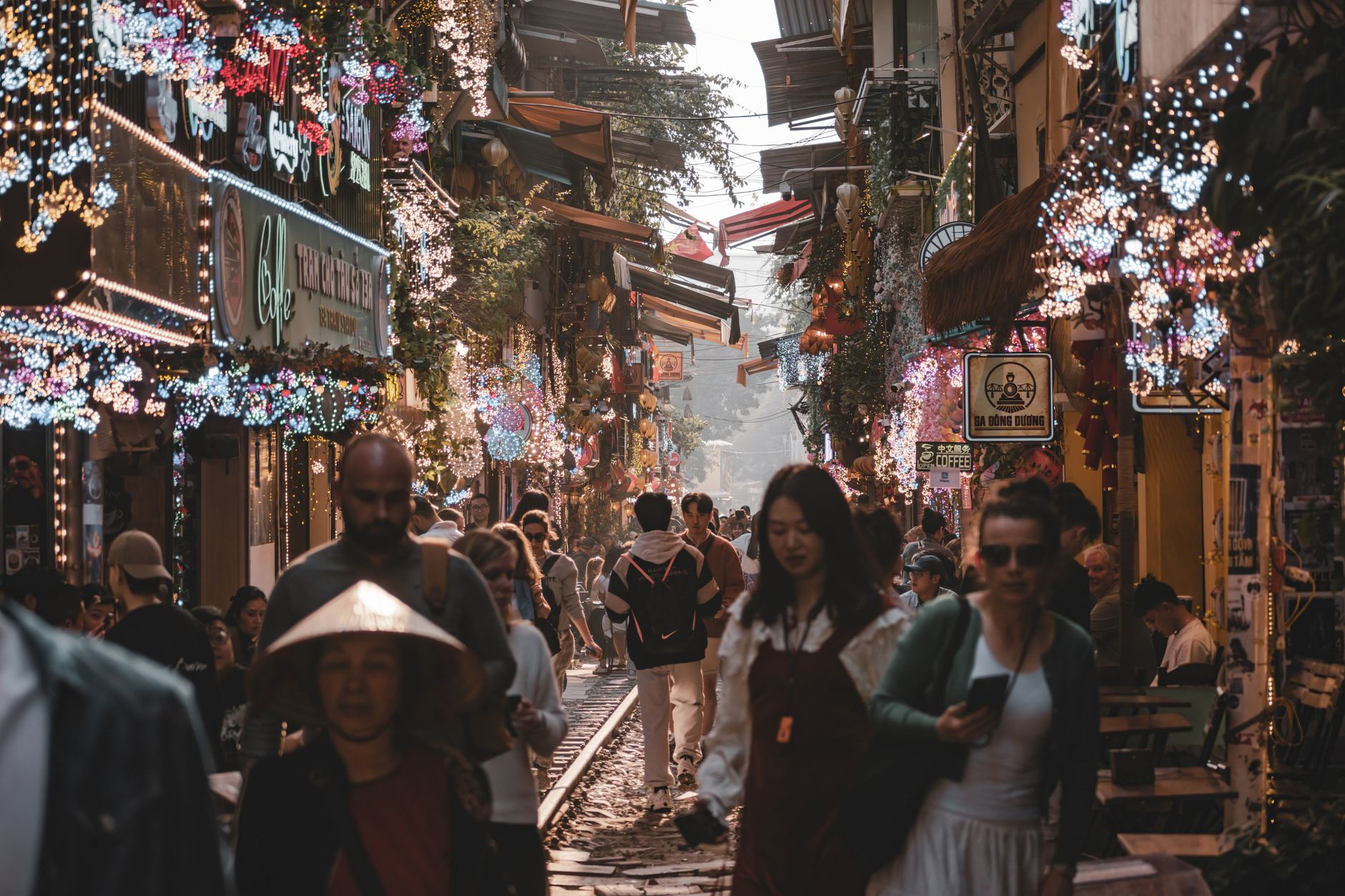
December in Vietnam at a glance: why one packing list does not work
Roughly 30°C separates a Sapa night (about 2-5°C) from a Phu Quoc afternoon (31-32°C). December runs four distinct regimes across the country: cold and grey in the north, wet and cool on the central coast, cool and dry in the Central Highlands, and hot and dry in the south. A down jacket that saves a Hanoi evening is dead weight in the Mekong Delta, and beachwear that works in Mui Ne is useless in Hue.
The Christmas and New Year peak (24-25 December and 31 December 2026) also shapes what you pack. Outdoor crowds gather around cathedrals, pedestrian streets and waterfronts, so plan for standing in the cold or heat rather than sitting indoors.
Pro tip: Read only the zones on your route, then jump to the packing list for your trip type. Carrying every zone's kit at once wastes luggage space.
The four December regimes in plain terms
- Cold and grey: Hanoi, Ninh Binh, Ha Long Bay, Sapa, Ha Giang, Mu Cang Chai.
- Wet and cool: Hue, Da Nang, Hoi An, Phong Nha.
- Cool and dry: Da Lat, Buon Ma Thuot.
- Hot and dry: Ho Chi Minh City, Mekong Delta, Phu Quoc, Con Dao, Mui Ne, Nha Trang.
How to use this guide
Find your route, read those zone sections, then use the quick-reference table and the packing matrix. Temperatures below are approximate normals. Verify against a forecast close to departure, because cold snaps and rain trends shift year to year.
Quick-reference: December by zone
| Zone | Typical day/night °C | Rain and humidity | What to wear |
|---|---|---|---|
| Hanoi | 17-21 / 12-15 | Drizzle, 75-85% humidity, 2-3h sun | Base layer, fleece, windproof shell, long trousers |
| Ninh Binh | 17-21 / 11-14 | Misty mornings | Fleece, windproof layer, gloves for cycling |
| Sapa | 11-15 / 2-6 | Fog, drizzle, frost possible | Thermal set, puffer, shell, beanie, gloves |
| Ha Giang | 14-19 / 6-10 | Fog, cold plateau nights | Windproof jacket and trousers, thermals, buff |
| Mu Cang Chai | 14-18 / 4-8 | Fog on passes | Same layering as Sapa, puffer for evenings |
| Mai Chau / Pu Luong | 17-21 / 8-12 | Damp trails | Fleece, warm socks, light thermals, grip shoes |
| Ha Long / Lan Ha | 16-20 / 11-14 | Mist, wind chill 8-10 | Windproof shell, fleece, beanie, non-slip shoes |
| Hue | 20-23 / 16-19 | Wettest coast, heavy showers | Light shell, quick-dry trousers, waterproof shoes |
| Da Nang / Hoi An | 23-25 / 18-20 | Rain easing, still frequent | Shell, quick-dry sandals, thin fleece |
| Phong Nha | 21-24 / 15-18 | Wet, cool caves | Base layer, fleece, water shoes, old clothes |
| Nha Trang / Quy Nhon | 27-29 / 22-23 | Showers mixed with sun | Swimsuit, light rain jacket, wind layer |
| Da Lat | 22-24 / 10-13 | Dry, strong UV | Long-sleeve tee, fleece or light down, scarf |
| Buon Ma Thuot | 28-30 / 16-19 | Dry, dusty | Dark clothes, buff, closed shoes |
| HCMC / Mekong | 31-33 / 22-24 | Little rain | Light cotton or linen, hat, thin A/C layer |
| Phu Quoc | 31-32 / 24-25 | Dry, calm sea | Swimsuit, cover-up, linen, reef-safe sunscreen |
| Con Dao | 30-31 / 24-25 | Some showers, rough seas | Modest clothes, light windproof layer |
| Mui Ne | 30-31 / 22-24 | Dry, strong wind | Sunglasses, buff, windbreaker, closed shoes |
Northern cities: Hanoi and Ninh Binh
The cold here is damp and grey rather than dramatic. Averages (about 17°C) hide cold snaps, no sun, and unheated buildings.
Hanoi, Old Quarter and sightseeing days
Daytime runs 17-21°C, night 12-15°C. Cold snaps can bring 8-10°C nights, mostly late December into January. Humidity sits around 75-85% with only 2-3 hours of sun a day, so it feels colder than the thermometer suggests. Rain is drizzle (mưa phùn) rather than downpours, which makes a hooded shell more useful than an umbrella.
Wear a long-sleeve merino or cotton-blend base, a fleece or light down mid-layer, a windproof shell, long trousers (jeans are fine in the city), and socks. Add a scarf for evenings. Closed sneakers with a rubber sole handle wet tiles and pavements.
Winter air quality is often unhealthy, so pack a KN95/N95 mask or a buff. Cafés are often open-fronted and many hotels and homes lack heating. Reverse-cycle A/C varies, so a thin fleece for evenings helps.
Hanoi Christmas Eve and New Year's Eve
Dates to plan around: 24-25 December 2026 and 31 December 2026, with 1 January 2027 a public holiday. Standing for hours around St Joseph's Cathedral or the Hoan Kiem pedestrian zone at 12-15°C means thermals, a puffer or down layer, a hat and gloves for a long wait. Rooftop bars are cooler and windier than street level. Smart-casual is fine, but the coat is non-negotiable.
Ninh Binh (Tam Coc, Trang An, Hang Mua, Bai Dinh)
Daytime 17-21°C, night 11-14°C. Expect misty mornings, and note the paddies are post-harvest (brown), not green. Open rowboats for 2-3 hours feel 3-4°C colder on the water, so wear a fleece plus windproof layer, and gloves for morning cycling.
Hang Mua's 500 steps mean warming up, so use a layer that can come off. Wear grip shoes, not flip-flops. Bai Dinh is a very large temple complex: wear shoulder-covering clothing and expect a lot of walking.
Northern mountains: Sapa, Ha Giang, Mu Cang Chai, Mai Chau and Pu Luong
This is where December cold turns genuinely serious.
Sapa town and treks (Muong Hoa valley, Cat Cat, Ta Van, Fansipan)
Town at about 1,500 m: day 11-15°C, night 2-6°C, with frost possible on grass and rice stubble in cold snaps. Snow is rare in December (more a January event) and cannot be promised. Fog and drizzle are typical, so views are not guaranteed. Fansipan summit (3,143 m) can be around or below 0°C with wind chill, so pack a hat and gloves for the cable car top.
Kit: a down or synthetic puffer, thermal base layer top and bottom, a fleece, a waterproof shell, merino socks, a beanie and gloves. Footwear: waterproof trail shoes or boots with grip. Valley paths turn to mud, and basic rubber boots can be rented or bought locally. Homestays are often unheated and open-structured. Blankets are provided, but pack sleep layers (thermal top, dry socks).
Trekking kit and night temperatures: the layering system
Build four layers: a base layer (merino or synthetic), a mid-layer fleece, an insulation layer, and a shell. The real risk is cotton plus wind and drizzle, which causes chills at altitude. Keep a dry "sleep set" in a dry bag.
Ha Giang loop (Quan Ba, Dong Van, Meo Vac, Ma Pi Leng)
Day 14-19°C, night 6-10°C. On the Dong Van plateau at 1,000-1,600 m, 2-6°C is possible. Wind chill on a motorbike is the issue: windproof jacket and trousers, gloves, neck buff, full-face or good helmet, closed boots, and thermals. Never shorts or sandals (injury risk). Fog and slippery roads are common. Buckwheat flowers fade through December, so check status.
Mu Cang Chai
Day 14-18°C, night 4-8°C. Terraces are bare in December. Fog builds on the Khau Pha pass. Same layering as Sapa, with a puffer for evenings.
Mai Chau and Pu Luong
Day 17-21°C, night 8-12°C. Stilt-house stays are open to the air, so bring a fleece, warm socks and light thermals. Trails are damp, so wear grip shoes. Pu Luong's suspension footbridges and wet bamboo call for good tread.
Ha Long Bay and Lan Ha Bay cruises
Deck conditions
Day 16-20°C, night 11-14°C, with wind chill of 8-10°C on the upper deck at sunrise and sunset. Mist can cut views, and cruises can be altered by fog or wind. Wear a windproof shell, a fleece, long trousers, a beanie, and non-slip closed shoes or soft-soled sneakers. Many boats require shoe-free decks, so bring clean socks. Ask the operator whether cabin A/C heats. Do not assume it does.
Kayaking and swimming
Water is about 18-20°C, so most travellers skip swimming. Wear quick-dry long pants, a synthetic top, a spare dry layer, and a dry bag. Wet cotton on a windy boat is miserable. Lan Ha is slightly more sheltered than the main Ha Long channels, which is worth factoring into a comfort decision.
Central coast: Hue, Da Nang, Hoi An, Phong Nha, Nha Trang and Quy Nhon
This is not a cold zone but a wet and breezy one. The rain eases from north to south and from early to late December.
Hue
Day 20-23°C, night 16-19°C. This is the wettest part of the coast, with frequent drizzle or heavy showers. Wear a lightweight waterproof shell or poncho, quick-dry trousers (not jeans), a thin fleece, and waterproof or quick-dry shoes. The Citadel and royal tombs have wet stone steps, and tomb visits need shoulders and knees covered.
Warning: Some guides claim Hue rarely drops below 20°C in December. That is wrong. Nights regularly fall to 16-19°C, and cold fronts push lower.
Da Nang and Hoi An
Day 23-25°C, night 18-20°C, with rain easing but still frequent. Cold fronts can drop it to the mid-teens. Early-December flooding of the Old Town is possible, so pack quick-dry sandals plus closed washable shoes, and avoid walking barefoot in floodwater (it is dirty). An umbrella is useless in coastal wind, so choose a shell. The sea is swimmable on calmer days but often rough. For tailoring, leave luggage space and allow 24-48 hours, since wet weather can slow fittings.
Phong Nha-Ke Bang
Day 21-24°C, night 15-18°C, still wet. Caves are cool and damp. Wear a base layer, a fleece, quick-dry shorts or trousers for cave swims, and water shoes. Bring old clothes for muddy cave tours.
Nha Trang and Quy Nhon
Day 27-29°C, night 22-23°C. Rain is easing from the Oct-Nov peak, so expect showers mixed with sunny spells. Wear a swimsuit plus a light rain jacket, and a light layer for wind (Eo Gio, Ky Co, boat trips). A calm, hot beach week is not guaranteed in early December.
Fabric logic for the coast
Quick-dry synthetics win. No heavy cotton or denim. Down is risky here because wet down loses warmth.
Central Highlands: Da Lat and Buon Ma Thuot
The highlands are their own zone, never filed under the south. Nights break the "south is hot" assumption.
Da Lat
Day 22-24°C, night 10-13°C (8-10°C in cold snaps). It is dry season, so skies are often clear, but UV at 1,500 m is strong. Wear a long-sleeve tee or light shirt by day, a fleece or light down by evening, a scarf, long trousers, and closed sneakers. Add sunscreen and a hat. Canyoning or waterfall tours involve cold water (about 15-18°C), so bring swimwear and old shoes. Flowers are in season, with wild sunflowers around November and December.
Buon Ma Thuot
Day 28-30°C, night 16-19°C, dry. It is coffee harvest season (roughly Nov-Jan) and red basalt dust is everywhere. Wear dark or red-tolerant clothes, a buff, and closed shoes. White clothes stain. At Dray Nur and Dray Sap waterfalls, wear sandals with grip. Nights are noticeably cooler than the coast, so carry a light layer.
Southern cities: Ho Chi Minh City and the Mekong Delta
Ho Chi Minh City
Day 31-33°C, night 22-24°C, with little rain (a few showers). Humidity is lower than in the wet season but still sweaty. Wear light cotton or linen (these work here), breathable shoes or sandals, a hat and sunscreen. Carry a thin layer for A/C: cinemas, malls, and sleeper buses can be cold.
For Cu Chi Tunnels and the War Remnants Museum, wear long trousers or knee-length shorts, closed shoes, and a hat. At Christmas, the Notre-Dame Basilica area and Nguyen Hue walking street are crowded on 24 December 2026. Dress light but modest for church-area crowds, and wear secure footwear. At the Jade Emperor Pagoda, cover shoulders and knees.
Mekong Delta
Day 30-32°C, night 22-24°C. Mornings on the water (floating markets from about 5-6 am) feel breezy at 23-24°C, so bring a thin long-sleeve layer. Wear a sun hat, a long-sleeve UPF shirt, sandals with grip for muddy orchard paths, and insect repellent at dusk (dengue risk persists year-round).
Southern beaches and islands: Phu Quoc, Con Dao and Mui Ne
Phu Quoc
Day 31-32°C, night 24-25°C, sea about 28-29°C, calm and peak season. Wear a swimsuit with a cover-up for restaurants, linen shirts, a wide-brim hat, and flip-flops plus one pair of closed sandals. Use reef-safe sunscreen. UV is very high.
Con Dao
Day 30-31°C, night 24-25°C, breezy, with some showers possible and rougher seas on some days under the northeast winds. Wear modest clothes for the Hang Duong cemetery and prison museums. Pack a light windproof layer for boats.
Mui Ne
Day 30-31°C, night 22-24°C. Wind is strong (kitesurf season), dry, with sand and glare. Wear sunglasses, a buff, a light windbreaker for evenings, and closed shoes for the dunes (sand is hot at midday). A short wetsuit or rash vest helps for kiting.
Beach etiquette
Swimwear stays at the beach. Cover up in town and restaurants. Rural locals may swim in clothes, so modesty is appreciated away from resorts.
Temples, pagodas, the Ho Chi Minh mausoleum, and men's and women's notes
Dress code by site
| Site | Shoulders/knees | Shoes | Notes |
|---|---|---|---|
| Ho Chi Minh Mausoleum, Hanoi | Covered, no shorts or sleeveless | Removed inside | Morning only, closed Mon and Fri, no hats, no photography inside |
| Temple of Literature | Covered | Removed in halls | Socks useful on cold tile |
| Hue Imperial City and tombs | Covered | Grippy shoes | Wet stone steps in December |
| Bai Dinh | Covered | Comfortable | Large complex, lots of walking |
| Jade Emperor Pagoda, HCMC | Covered | Removed in prayer halls | Light scarf helps |
| Cathedrals at Christmas | Covered, modest | Secure | Crowds on 24 December |
The mausoleum operates mornings only and closes on Mondays and Fridays. Check for the annual maintenance closure, which has fallen in autumn or winter in recent years, so confirm before planning.
December's warm layers make modesty easy. Cold tile floors mean socks, since shoes come off in prayer halls. Carry a light scarf or sarong, and avoid sheer fabrics.
Women's notes
Long cardigans or shawls, leggings under skirts or dresses, and a light scarf cover most requirements. Sizing: women above roughly size M and shoes above about EU 40 are hard to find off the rack, so pack what is needed. Avoid thin white tops in the rain.
Men's notes
Long trousers in the north, shorts fine in the south (knee-length for religious sites). Larger sizes (above about L/XL) and shoes above about EU 43-44 are hard to find. A motorbike jacket is essential for Ha Giang. No sleeveless tops at temples.
Footwear strategy and fabrics that work or fail in December
Footwear strategy
Three pairs maximum for a north-to-south trip: a waterproof or quick-dry trail shoe or sneaker with grip (north, centre, caves), quick-dry sport sandals (centre, south, Mekong), and flip-flops (beach, shower). Add boots only for Ha Giang or serious trekking. Slip-on options help because shoes come off at homestays and temples. Avoid canvas and leather in the central rain (slow drying, mould). Pack merino or synthetic socks (3 pairs) and one warm pair for Sapa.
Fabrics that work
Merino, synthetic base layers, fleece, light synthetic insulation (wet-tolerant), windproof shell, linen and light cotton in the south only, UPF long sleeves.
Fabrics that fail
| Fabric | Behaviour when wet/cold | Avoid in |
|---|---|---|
| Heavy cotton | Cold, slow to dry | Hanoi, Hue, Hoi An |
| Denim | Slow to dry, heavy | Central coast, trekking |
| Down | Loses warmth when wet | Ha Long, Hue, kayaking |
| Thin cotton hoodie | No real warmth | Sapa, Ha Giang |
| Umbrella | Useless in coastal wind | Da Nang, Hue, Mui Ne |
Temperature-band cheat sheet
| Band | Base | Mid | Outer | Feet |
|---|---|---|---|---|
| Above 28°C | Light tee | None | None | Sandals |
| 22-28°C | Light tee | Optional thin layer | None | Sandals or sneakers |
| 15-22°C | Long-sleeve tee | Fleece | Windproof shell | Closed sneakers |
| 8-15°C | Thermal top | Fleece | Puffer or down | Warm socks, closed shoes |
| Below 8°C | Thermal top and bottom | Fleece | Puffer plus shell | Wool socks, boots |
Packing lists by itinerary type
Two weeks north to south (Hanoi, Sapa/Ninh Binh, Ha Long, Hue, Hoi An, HCMC)
The strategy for temperature whiplash is a thin-layer system: one packable down or synthetic puffer, a fleece, a shell, 2 thermal tops, then light south wear. Wear the bulkiest items on the plane. Domestic low-cost carriers often limit cabin bags to about 7 kg and charge for checked bags, so check allowances. Quantities: 4-5 tops, 2 long-sleeve, 2 trousers, 1 shorts, 1 swimsuit, 1 modest dress or skirt (women), 3 socks, 3 underwear (laundry is cheap).
Beach week (Phu Quoc, Con Dao or Mui Ne)
Swimwear x2, cover-up, linen shirts, a wide-brim hat, reef-safe sunscreen, a light layer for A/C and boat wind, and sandals. No winter gear. If the route passes through Hanoi in transit, wear the layer on the plane.
Trekking trip (Sapa, Ha Giang, Pu Luong)
Full layering system, thermal set, puffer, shell and rain pants if possible, gloves, beanie, buff, merino socks, trail shoes, a headlamp, a dry bag, and a sleep set.
City and culture (Hanoi, Hue, Hoi An, HCMC)
Smart-casual with a packable puffer, a shell, quick-dry trousers, a scarf for temples, closed sneakers plus sandals, a compact day bag with a rain cover, and space for tailoring purchases.
Packing matrix
| Item | 2-week north-south | Beach week | Trekking | City and culture |
|---|---|---|---|---|
| Puffer or down | Yes | No | Yes | Packable |
| Fleece | Yes | No | Yes | Yes |
| Shell | Yes | No | Yes | Yes |
| Thermal set | 1-2 tops | No | Full set | No |
| Quick-dry trousers | 2 | 1 | 1-2 | 2 |
| Swimsuit | 1 | 2 | No | No |
| Trail shoes | Yes | No | Yes | No |
| Sandals | Yes | Yes | No | Yes |
| Beanie and gloves | Yes | No | Yes | No |
What to buy in Vietnam instead of packing, and laundry
Cheap local buys
Rain poncho: 20,000-50,000 VND (under US$1-2). Beanie, gloves, scarf: 50,000-150,000 VND (US$2-6). Basic thermals: 100,000-250,000 VND (US$4-10). Fleece: 250,000-500,000 VND (US$10-19). Padded jacket: 500,000-1,200,000 VND (US$19-46). The Old Quarter, Sapa and Da Lat shops stock these, but most branded outdoor goods are copies, so zips, waterproofing and warmth vary. Check before relying on them for trekking.
Hanoi buys make sense for the cold-snap gamble. Bring from home: sizes above average, quality trail shoes, a good shell, merino, medication and specific sunscreen.
Laundry in damp weather
Typical price is 20,000-40,000 VND per kg (about US$1-1.50), usually 24 hours. In humid, sunless Hanoi and rainy Hue, line-drying takes 2-3 days, so ask for machine drying (sấy). Hotel per-piece laundry costs far more. Rotate quick-dry items and avoid washing everything the night before a flight.
What to wear in other months: January · February · March · April · June · July · August · September · October · November
FAQ
Q: What's the weather like in Vietnam in December? A: It depends sharply on the region: cold and grey in Hanoi and the north (about 12-21°C), near freezing in Sapa at night, wet and cool on the central coast (Hue about 16-23°C), cool and dry in Da Lat (10-24°C), and hot and dry in the south (22-33°C). Use the quick-reference table above.
Q: Do I need a winter coat for Vietnam in December? A: For Sapa, Ha Giang, Mu Cang Chai and cold-snap Hanoi, yes: a warm puffer or equivalent layers with thermals. For the central coast, a waterproof shell and fleece are enough. For the south and the beaches, no coat.
Q: What to pack for Vietnam in January? A: January is the coldest month in the north (Hanoi nights can reach the single digits), the central coast still sees drizzle but is easing, and the south stays dry. Pack more thermal insulation for the north than in December. Pre-Tet crowds build in late January, with Tet falling in the first half of February under the lunar calendar.
Q: Can I swim in Vietnam in December? A: Yes in the south (sea about 28-29°C) and mostly in Nha Trang and Da Nang on calmer days. Ha Long is too cold (about 18-20°C), and central beaches may have rough surf and red flags.
Q: What should I wear for Christmas Eve or New Year's Eve in Hanoi and Ho Chi Minh City? A: Hanoi is 12-15°C at night, so wear smart-casual with a coat and thermals for outdoor waiting. HCMC is 24-26°C, so dress in light clothes with a thin layer for A/C. Modest clothes near churches.
Q: Can I buy warm clothes in Vietnam if I under-pack? A: Yes in Hanoi, Sapa and Da Lat, at low cost (fleece from about 250,000 VND, US$10), but with variable quality. Large clothing and shoe sizes are harder to find, so pack those from home.
Q: Is December a good month for a north-to-south trip? A: It works if you pack for temperature whiplash. The north rewards layers and a puffer, the centre needs rain gear, and the south needs almost nothing but beachwear. One thin-layer system covers the whole route.