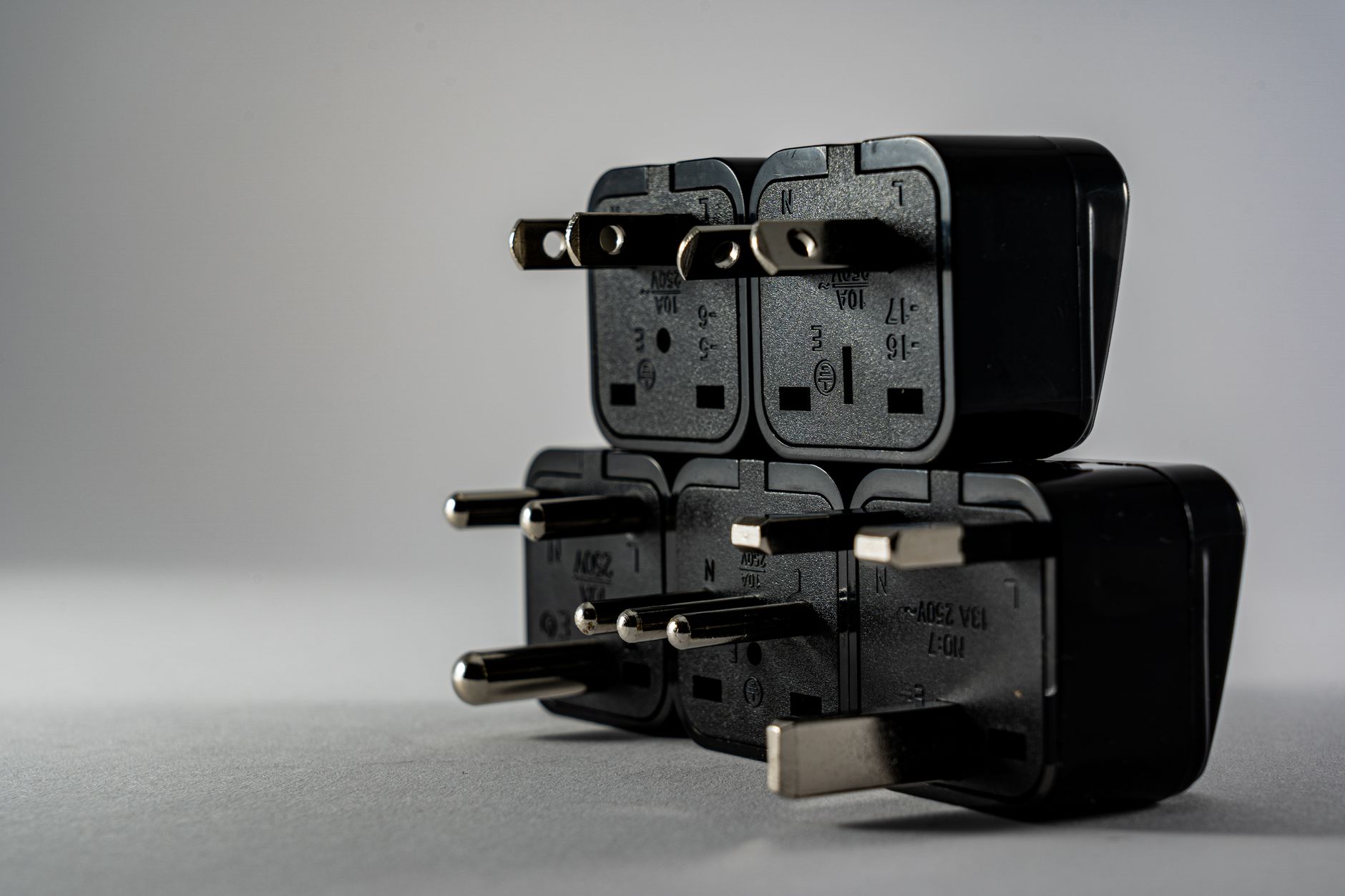
Vietnamese outlets accept the flat two-prong plugs used in the US, the round two-prong plugs used across Europe, and sometimes even the three-prong British style. This mix reflects decades of importing electrical equipment from different countries. It also creates confusion about what actually works, what needs an adapter, and what will destroy your electronics.
The short version: Vietnam runs on 220V at 50Hz, the same as most of Europe, Asia, and Australia. If you come from North America or Japan, your devices expect 100-127V. Plugging them directly into a Vietnamese outlet can damage them, sometimes with a pop, a flash, or a burned-out smell that lingers in your hotel room for days.
This guide covers exactly what you need to pack, what you can buy in Vietnam, and which devices are safe to plug straight into the wall.
The sockets: what you will actually see
Vietnam officially uses Type A (two flat parallel prongs), Type C (two round prongs), and Type D (three round prongs in a triangle). In practice, most sockets you encounter will be universal outlets that accept multiple plug types.
Here is what to expect:
| Socket type | Prongs | Used in | Where you find it in Vietnam |
|---|---|---|---|
| Type A | Two flat parallel prongs | US, Japan, Canada | Common in newer hotels, especially in tourist areas |
| Type C | Two round prongs | Europe, South Korea, most of Asia | The most common socket in Vietnam |
| Type D | Three round prongs in triangle | India, South Africa | Older buildings, some rural guesthouses |
| Universal | Multiple configurations | N/A | Most hotels built after 2010 |
The universal sockets are the reason many travelers report that their US plugs worked fine without an adapter. The socket has spring-loaded holes that accept both flat and round prongs. It works, but the connection can be loose. A heavy charger might sag or fall out. If your device keeps losing power, that is why.
Voltage: the real danger
Voltage is the difference between a working device and a fried one.
Vietnam operates on 220-240V. North American devices run on 110-120V. Plugging a 120V appliance into a 220V outlet delivers roughly double the power it was designed for. The result is usually immediate and irreversible damage.
Check every device before you plug it in. Look at the label on the charger or the base of the appliance. You are looking for one of these:
- "100-240V" or "110-240V" means the device is dual-voltage and works anywhere in the world. You only need a plug adapter.
- "100-120V" only means the device is single-voltage. You need a voltage converter, not just an adapter.
- "220-240V" only means the device was built for Vietnam and most of the world outside North America.
What is dual-voltage and what is not
Most modern electronics are dual-voltage. Phone chargers, laptop chargers, camera battery chargers, power banks, and tablets all convert voltage internally. Apple, Samsung, Dell, Lenovo, and most other major brands have shipped dual-voltage chargers for over a decade. Check the label to confirm, but chances are your phone and laptop are fine.
The problem devices are the ones with motors or heating elements:
- Hairdryers
- Curling irons and straighteners
- Electric razors
- Travel kettles
- Clothing irons
- Hair clippers
These appliances are often single-voltage because they are marketed for domestic use. A US-bought hairdryer plugged into a Vietnamese outlet will heat up dangerously fast. Some travelers report seeing sparks or hearing a loud pop. Others say the hairdryer just stopped working after a few seconds. Either way, the device is dead.
What about the 50Hz frequency?
Frequency matters for devices with motors or timers. Vietnam uses 50Hz, while North America uses 60Hz. A dual-voltage hairdryer or electric razor will work on 50Hz, but the motor will run slightly slower. You will not notice the difference with a hairdryer. You might notice a small clock running about 20% slow.
Most travelers do not need to worry about frequency. The voltage is the real issue.
The adapter: what to pack
Pack a universal travel adapter. They cost $8-15 online before your trip and save you from hunting down a specific adapter in Vietnam.
A universal adapter accepts plugs from every country and outputs a socket that accepts your device's plug. Most also include USB ports for charging phones directly.
What to look for:
- Surge protection: Vietnamese power can fluctuate, especially in rural areas. A surge-protected adapter adds a layer of safety.
- USB-C support: Many newer adapters include USB-C ports that charge phones and laptops faster than the old USB-A ports.
- Compact size: You will carry this in your day bag. Smaller is better.
What not to pack
Do not pack a voltage converter unless you specifically need one for a single-voltage appliance. Converters are heavy, bulky, and most travelers never use them. If you must bring a hairdryer, buy a dual-voltage travel model instead. They cost $20-30 and work everywhere.
Also skip the cheap single-country adapters. They only fit one plug type and are useless if you travel to multiple countries. Vietnam's neighbors Cambodia, Laos, and Thailand all use different socket configurations. A universal adapter covers them all.
Buying adapters and electronics in Vietnam
If you forget an adapter, you can buy one in Vietnam. They are widely available at:
- Airport convenience stores: Expect to pay 200,000-300,000 VND ($8-12) for a basic universal adapter.
- Electronics stores: The big chains are Thế Giới Di Động and Điện Máy Xanh. They have locations in every major city and sell adapters for 150,000-250,000 VND ($6-10).
- Hotel front desks: Most mid-range and upscale hotels keep a few adapters to lend. Ask before you buy.
- Night markets: Quality varies. Test the adapter before you trust it with expensive electronics.
The adapters sold in Vietnam are usually universal types that work with both flat and round plugs. They are not always the highest quality, so inspect the prongs for looseness before plugging in anything valuable.
Power strips: a smart investment
Hotels in Vietnam rarely have enough outlets. A typical room has two or three, often in awkward locations. Packing a small power strip with surge protection solves this. Plug the strip into the wall with your universal adapter, then charge your phone, laptop, camera, and power bank simultaneously.
A power strip with surge protection costs 200,000-400,000 VND ($8-16) at Vietnamese electronics stores. It is one of the most useful items you can buy after arriving.
Electronics that are hard to find locally can also be bought abroad and forwarded; the Shipito guide for parcels to Vietnam lists the items carriers and Vietnamese customs restrict.
Power quality and outages
Vietnamese power is generally stable in cities. Hanoi, Ho Chi Minh City, Da Nang, and other urban centers rarely experience outages. The grid has improved significantly over the past decade.
Rural areas are a different story. Power cuts happen, especially during storm season from June to November. If you are staying in a homestay in Sapa, Ha Giang, or the Mekong Delta, expect occasional interruptions. Most accommodations have backup generators, but they do not always cover every outlet.
Voltage fluctuations are more common than full outages. Older buildings and rural guesthouses sometimes deliver power that dips below 220V. Most modern chargers handle this fine. Older or cheap chargers might not. This is another argument for packing a surge-protected adapter.
Surge protectors for laptops
Laptop users should consider a dedicated surge protector. A voltage spike can damage a laptop's power supply, and replacing a MacBook charger in Vietnam costs 1,500,000-2,500,000 VND ($60-100). A surge protector costs a fraction of that and fits in your bag.
The Belkin and APC travel surge protectors are widely available online. They look like a small power strip with a built-in surge protector. Plug your laptop charger into it, then plug the whole thing into the wall.
Charging devices: practical tips
Vietnamese hotels sometimes have outlets in unexpected places. Common locations include:
- Behind the bedside table
- Near the minibar
- In the bathroom (for electric razors)
- On the desk, if there is one
Check the bathroom before assuming you need to charge your electric toothbrush elsewhere. Many hotels have a shaver outlet that accepts both flat and round plugs.
USB charging
Most modern hotels in Vietnam have USB ports built into the wall or on the bedside lamp. These are convenient for phones and tablets, but they often deliver lower amperage than a wall charger. Charging a phone overnight on a USB port might take longer than expected. For fast charging, use your own wall charger plugged into the socket.
Power banks
A power bank is essential for long days out. Vietnam's ride-hailing apps, maps, and translation tools drain phone batteries quickly. A 10,000mAh power bank charges a phone two to three times and costs 300,000-500,000 VND ($12-20) at Vietnamese electronics stores.
What to do if you fry a device
If you plug in a single-voltage appliance and it pops, unplug it immediately. Do not touch the metal prongs for a few minutes, as they can stay hot. The device is almost certainly dead. Do not try to plug it in again to test it.
Replacement costs in Vietnam:
| Device | Typical replacement cost |
|---|---|
| Hairdryer (basic) | 200,000-500,000 VND ($8-20) |
| Hairdryer (travel dual-voltage) | 500,000-1,000,000 VND ($20-40) |
| Curling iron | 300,000-800,000 VND ($12-32) |
| Laptop charger | 1,000,000-2,500,000 VND ($40-100) |
| Phone charger | 200,000-500,000 VND ($8-20) |
Most of these are available at electronics stores in any major city. A fried hairdryer is an inconvenience, not a trip-ending disaster. A fried laptop charger is more annoying, but still replaceable.
What about your travel insurance?
Check your policy before you leave. Some travel insurance plans cover electrical damage to personal electronics. Most do not. The ones that do usually require you to prove the damage was caused by a power surge, which is hard to do after the fact.
The practical approach: assume your insurance will not cover it and protect your devices accordingly.
Regional differences: Hanoi, HCMC, and everywhere else
The electrical system is the same across Vietnam. 220V at 50Hz, universal sockets in most hotels. The differences are in the quality of wiring.
- Hanoi and Ho Chi Minh City: Modern infrastructure, stable power, universal sockets in most hotels.
- Da Nang, Hoi An, Nha Trang: Tourist infrastructure is well-developed. Expect stable power in hotels and resorts.
- Rural areas and homestays: Older wiring, occasional outages, sockets may be loose or worn. Pack a surge protector.
- Islands (Phu Quoc, Con Dao, Cat Ba): Power is generally stable but can be interrupted during storms. Hotels usually have generators.
If you are staying in budget guesthouses, inspect the socket before plugging in anything valuable. Loose sockets are common and can cause intermittent power that damages chargers over time.
Packing checklist
Here is the complete list of electrical items to pack for Vietnam:
- Universal travel adapter with surge protection
- Power strip with surge protection (optional but recommended)
- Dual-voltage travel hairdryer (if you need one)
- Power bank (10,000mAh or larger)
- Your normal phone and laptop chargers, assuming they are dual-voltage
- Spare phone charger (cheap insurance if the original fails)
Leave at home:
- Voltage converters (heavy, rarely needed)
- Single-voltage hairdryers, curling irons, or razors
- Cheap adapters that only fit one plug type
Frequently asked questions
Q: Do US plugs work in Vietnam without an adapter? Many sockets in Vietnam accept US flat-prong plugs directly. The universal sockets found in most hotels have holes for both flat and round prongs. However, the connection can be loose, and you still need to check that your device is dual-voltage. A universal adapter is safer and more reliable.
Q: Can I charge my iPhone in Vietnam? Yes. Apple chargers are dual-voltage (100-240V) and work in Vietnam with a plug adapter. The iPhone itself charges via USB, which is voltage-independent. Any USB port will charge your phone, though using the original Apple charger is faster.
Q: Do I need a voltage converter for my laptop? No, as long as your laptop charger says "100-240V" on the label. Most laptop chargers from major brands are dual-voltage. Check the label before plugging in. If it only says "100-120V," you need a converter or a new charger.
Q: What happens if I plug a 120V appliance into a 220V outlet? The appliance receives roughly double the voltage it was designed for. The result is usually immediate failure, sometimes with a pop, spark, or burning smell. Hairdryers and other heating appliances can overheat dangerously. Unplug the device immediately and do not use it again.
Q: Are power outages common in Vietnam? In major cities, outages are rare. In rural areas and during storm season, they happen regularly. Most hotels and homestays have generators, but they may not power every outlet. Pack a power bank and keep your devices charged when you have the chance.
Q: Can I buy a travel adapter in Vietnam? Yes. Universal adapters are sold at airports, electronics stores, and many hotel front desks. Expect to pay 150,000-300,000 VND ($6-12). Quality varies, so inspect the adapter before using it with expensive electronics.
Q: Is 220V in Vietnam the same as in Europe? Yes, Vietnam and most of Europe both use 220-240V at 50Hz. European devices with round two-prong plugs work in Vietnam with a Type C socket. If you are traveling from Europe, you may not need an adapter at all, though the socket configuration can vary.