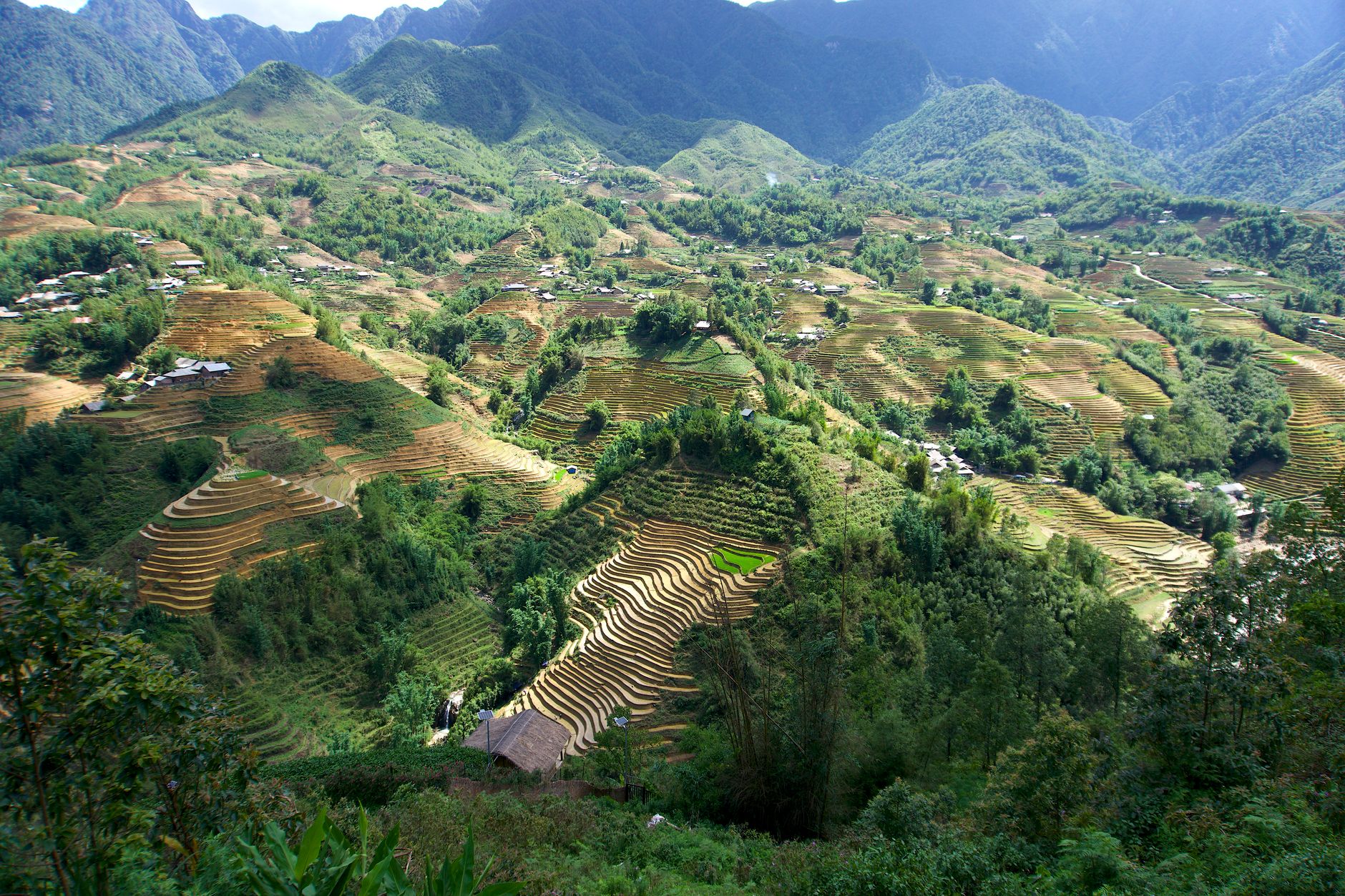
What this itinerary covers and who it is for
The route moves from Hanoi to Sapa, then to Ha Giang, then to Pu Luong, and back to Hanoi. Total walking distance across the 14 days is approximately 55 to 70 kilometres depending on route choices and detours. This is not a motorbike loop itinerary. Every kilometre is walked on foot.
This itinerary suits travellers who want to see three distinct trekking regions without rushing. It requires good physical preparation. If you cannot walk 10 kilometres on hilly terrain without joint pain or breathing difficulty, you will struggle in Ha Giang. Sapa and Pu Luong are more forgiving.
The itinerary is designed for solo travellers, couples, and small groups. It works for ages 20 to 60 provided fitness levels are realistic. Families with children under 12 should skip Ha Giang and spend extra days in Sapa and Pu Luong instead.
How to decide if this itinerary is right for you
Each destination offers a different experience. Choosing the right combination depends on what you want from the trip.
| Destination | Best for | Difficulty | Guide required | Permit needed | Best months |
|---|---|---|---|---|---|
| Sapa | First-time trekkers, rice terrace views, cultural homestays | Moderate | Not legally required but strongly recommended | No | March-May, September-November |
| Ha Giang | Remote villages, karst landscapes, challenging terrain | Hard | Yes, legally required for overnight treks | Yes, ~100,000 VND ($4) | October-November, March-April |
| Pu Luong | Quiet trails, bamboo water wheels, recovery walking | Easy to moderate | No | No (park entrance fee ~40,000 VND) | October-November, February-April |
Sapa offers the most infrastructure. Guides are easy to find. Homestays have WiFi and private rooms. The trails are well-trodden. The trade-off is crowds. In peak season (October), the main valley trails feel like a parade.
Ha Giang offers the most remote experience. Villages see few foreign trekkers. The terrain is steep and uneven. Guides speak limited English. Homestays are basic. The trade-off is that you will walk through landscapes that few tourists ever see on foot.
Pu Luong offers the quietest trails. The nature reserve is less developed than Sapa. Walking distances are shorter. The trade-off is limited food options and minimal English spoken outside the main villages.
Fitness expectations and training recommendations
This is the section no other itinerary writer includes. Here are the facts.
Daily walking hours range from 3 to 6 hours depending on the day. Elevation gain varies significantly. Sapa trails involve 200 to 400 metres of ascent per day. Ha Giang trails involve 400 to 700 metres of ascent per day. Pu Luong trails involve 100 to 300 metres of ascent per day.
Terrain types include paved village paths, dirt trails, rocky mountain passes, and sections of slippery mud after rain. In Ha Giang, some paths are loose limestone scree. In Pu Luong, sections cross streams on bamboo bridges.
Start training 8 to 12 weeks before departure. Focus on three exercises. Stair climbing builds the quadriceps and glutes needed for uphill sections. Weighted carries (a backpack with 5 to 8 kilograms) build the stabiliser muscles. Downhill conditioning is critical. Most injuries happen on descents, not ascents. Walk downhill on steep slopes during training to prepare your knees.
Altitude is a minor concern. Sapa sits at 1,500 metres. Ha Giang passes go above 1,000 metres. Pu Luong valleys sit at 300 to 800 metres. Altitude sickness is rare at these elevations. It is possible at Fansipan base if you take the cable car up. This itinerary does not include Fansipan.
Best months to walk: seasonal breakdown by region
Generic advice about northern Vietnam’s weather is useless. Each region has its own microclimate.
| Month | Sapa | Ha Giang | Pu Luong | Rice condition |
|---|---|---|---|---|
| January | Cold, foggy, 5-15°C | Cold, clear mornings, 8-18°C | Cool, occasional rain, 10-20°C | Brown, post-harvest |
| February | Cold, foggy, 8-18°C | Cool, some fog, 10-20°C | Cool, dry, 12-22°C | Bare fields, some water |
| March | Mild, fog clearing, 12-22°C | Mild, good visibility, 14-24°C | Mild, dry, 15-25°C | Green shoots appear |
| April | Warm, some rain, 15-25°C | Warm, occasional rain, 16-26°C | Warm, dry, 18-28°C | Green rice growing |
| May | Warm, rain increasing, 18-28°C | Warm, rain, 18-28°C | Warm, rain, 20-30°C | Green rice, lush |
| June | Hot, rainy, 20-30°C | Hot, heavy rain, 20-30°C | Hot, rainy, 22-32°C | Green rice, high water |
| July | Hot, rainy, 20-30°C | Hot, heavy rain, 20-30°C | Hot, rainy, 22-32°C | Green rice, flood risk |
| August | Warm, rainy, 18-28°C | Warm, heavy rain, 18-28°C | Warm, rainy, 20-30°C | Green rice, nearing harvest |
| September | Warm, less rain, 16-26°C | Warm, less rain, 16-26°C | Warm, dry, 18-28°C | Golden rice, harvest begins |
| October | Cool, clear, 12-22°C | Cool, clear, 12-22°C | Cool, dry, 14-26°C | Golden rice, peak harvest |
| November | Cool, clear, 10-20°C | Cool, clear, 10-20°C | Cool, dry, 12-24°C | Golden rice, late harvest |
| December | Cold, foggy, 5-15°C | Cold, clear mornings, 8-18°C | Cool, dry, 10-20°C | Brown, post-harvest |
October and November are the only months that work well across all three destinations. The rice is golden. The skies are clear. The temperatures are comfortable for walking.
December to February brings heavy fog to Sapa. Visibility drops to 20 metres on some days. Ha Giang remains clearer but is cold. Pu Luong is fine but the rice fields are bare.
June to August brings heavy rain to Ha Giang. Landslides occur on mountain trails. Trails become slippery and dangerous. Pu Luong gets leeches after rain. Sapa is wet but manageable.
March and April work well for green rice views. Fog is common in Sapa but usually clears by midday.
Day-by-day itinerary: 14 days
Day 1-2: Hanoi arrival and preparation (no trekking)
Arrive in Hanoi. Do not rush out of the city on day one. Jet lag, gear checks, and permit applications need time.
Use day one to buy any missing gear. Go to the Old Quarter shops for trekking poles, rain jackets, and water purification tablets. Visit the Ha Giang Immigration Office if you plan to arrange your own permit. Most travellers let their guide handle this, but it is worth knowing the process.
Book your overnight train to Sapa. The train departs Hanoi at around 9 PM and arrives in Lao Cai at 5 AM. A soft sleeper berth costs 400,000 to 600,000 VND ($16 to $24).
Pro tip: Book the train berth at least three days in advance during October and November. The trains fill up with domestic and international tourists.
Day 3-5: Sapa — Muong Hoa Valley and Cat Cat
Day three starts in Sapa town after the train arrival. Have breakfast, meet your guide, and start walking by 8 AM.
The three-day route covers the main valley trails. Day one walks from Sapa town down to Cat Cat village, then across to Y Linh Ho and Lao Chai. Distance is 10 kilometres. Elevation loss is 400 metres. The overnight homestay is in Lao Chai.
Day two walks from Lao Chai to Ta Van and then to Giang Ta Chai. Distance is 8 kilometres. The trail passes through bamboo forests and across a suspension bridge. The overnight homestay is in Ta Van.
Day three walks from Ta Van back to Sapa town. Distance is 12 kilometres. The route climbs back up the valley. Expect two hours of steady uphill walking.
Guide fees in Sapa range from $25 to $40 per day. Local guides from the Black Hmong community are the best choice. They own the homestays and know the trails intimately.
Day 6-7: Travel day and Ha Giang arrival
Day six is a travel day. Take a bus from Sapa to Ha Giang city. The journey takes 6 to 7 hours. Buses depart Sapa at 7 AM and arrive in Ha Giang by 2 PM. Cost is 150,000 to 200,000 VND ($6 to $8).
Arrive in Ha Giang city. Go to the Immigration Office to pick up your trekking permit. The office is on Nguyen Trai Street, open Monday to Friday 7:30 AM to 11:30 AM and 1:30 PM to 4:30 PM. The permit costs 100,000 VND ($4).
Arrange your guide in Ha Giang city. Do not book from Hanoi. Local guides in Ha Giang charge $30 to $50 per day. They know the villages and the permit process.
Day 8-10: Ha Giang — Dong Van Karst Plateau Geopark
Day eight walks from Quan Ba to Tam Son. Distance is 10 kilometres. The trail passes through the Quan Ba Twin Mountains and Tay villages. The overnight homestay is in a Tay stilt house.
Day nine walks from Tam Son to Yen Minh. Distance is 15 kilometres. This is the hardest day. The trail climbs over a 1,200-metre pass with loose limestone sections. The overnight homestay is in Yen Minh.
Day ten walks from Yen Minh to Dong Van. Distance is 12 kilometres. The trail follows the valley floor with views of the karst peaks. The overnight homestay is in Dong Van town.
Warning: Ha Giang guides speak limited English. Learn basic Vietnamese phrases for food, directions, and emergencies. Carry a translation app on your phone.
Day 11: Travel day from Ha Giang to Pu Luong
This is the longest travel day. Take a bus from Ha Giang to Hanoi (6 hours, 200,000 to 250,000 VND). Then take a second bus from Hanoi to Pu Luong (4 hours, 150,000 to 200,000 VND).
Total travel time is 9 to 10 hours. Break the journey with an overnight in Hanoi if you prefer. This adds a day to the itinerary.
Day 12-13: Pu Luong Nature Reserve
Day twelve walks from the reserve entrance to Kho Muong village. Distance is 8 kilometres. The trail follows the Cham River past bamboo water wheels. The overnight homestay is in Kho Muong.
Day thirteen walks from Kho Muong to Ban Sai village. Distance is 6 kilometres. The trail is flat and easy. It is designed as a recovery day after Ha Giang. The overnight homestay is in Ban Sai.
Guide fees in Pu Luong range from $20 to $30 per day. Independent walking is possible on marked trails, but a guide adds context about the local ecology and culture.
Day 14: Return to Hanoi and departure
Take a morning walk before the 4-hour bus back to Hanoi. Buses depart Pu Luong at 8 AM and arrive in Hanoi by 12 PM. Cost is 150,000 to 200,000 VND.
Book flights departing after 4 PM to allow time for traffic delays. Store your main luggage at your Hanoi hotel during the trekking days. Most hotels offer free luggage storage.
Guide and permit requirements for each region
Sapa requires no permit. A local guide is not legally required but is strongly recommended. The trails through Muong Hoa Valley are not well marked. Independent trekkers often get lost. Local guides provide access to homestays that do not accept walk-in guests.
Ha Giang requires a mandatory trekking permit for overnight treks. The permit costs 100,000 VND ($4). Obtain it from the Immigration Office in Ha Giang city. A local guide is legally required for overnight treks. Trekking without a permit risks fines of 500,000 to 1,000,000 VND ($20 to $40) and being escorted back to town.
Pu Luong requires no permit. The nature reserve charges an entrance fee of 40,000 VND ($1.60). A guide is optional. Marked trails exist but are not always well maintained.
Homestay logistics: what to expect and how to prepare
Homestay conditions vary significantly by region.
| Region | Bed type | Bathroom | WiFi | Meals included | Price range per night |
|---|---|---|---|---|---|
| Sapa | Mattress on floor or bed frame | Shared, some with hot water | Yes in most | Breakfast and dinner | $8 to $15 |
| Ha Giang | Floor mat | Shared, cold water only | No in remote villages | Breakfast and dinner | $5 to $10 |
| Pu Luong | Floor mat or low bed | Shared, basic hot water in some | Limited | Breakfast and dinner | $6 to $12 |
Sapa homestays are the most developed. Some have private rooms with attached bathrooms. WiFi works in most villages. Meals are family-style with rice, vegetables, and local meat.
Ha Giang homestays are basic. Sleeping is on floor mats with a thin blanket. Bathrooms are shared with cold water. WiFi is unavailable in remote villages. Meals are simple: rice, some vegetables, and occasionally chicken or fish.
Pu Luong homestays are rustic but improving. Some have basic hot water. Beds are low wooden frames with thin mattresses. Meals are similar to Ha Giang.
Cultural etiquette matters. Remove shoes before entering. Bring a small gift for the host family (fruit, snacks, or school supplies for children). Offer to help with meal preparation. Do not refuse food unless you have a medical reason.
Pack a sleeping bag liner, a torch, toilet paper, and ear plugs. These items make the homestay experience significantly more comfortable.
Packing list specific to multi-day trekking
This is not a generic Vietnam packing list. These items are specific to multi-day trekking.
Footwear: trail runners with good tread are better than boots for most of these trails. Boots are only necessary in Ha Giang during the wet season. Break in your shoes before the trip.
Rain gear: a lightweight, waterproof jacket is essential. Ponchos are cheaper but tear easily on bamboo and branches. Spend at least $50 on a decent jacket.
Water purification: tablets or a filter bottle. Tap water is not safe. Homestays provide boiled water but carrying purification tablets is a backup.
First-aid: focus on blisters and leeches. Bring moleskin, blister plasters, antiseptic wipes, and a leech removal tool. Do not pull leeches off. Use salt or heat to detach them.
Weight limit for porters: 5 to 7 kilograms per person. Porters carry your main pack. You carry a day pack with water, snacks, and rain gear.
Do not bring drones to Ha Giang. The geopark has restrictions. Do not bring expensive electronics to Pu Luong. Theft is rare but homestays lack secure storage.
Safety, health, and practical risks
Leeches are common in Pu Luong after rain. They attach to ankles and feet. Check your legs every 30 minutes. Do not panic. Apply salt or a heated lighter to detach them.
Landslides occur on Ha Giang trails during the wet season (June to August). Trails can become impassable. Guides will reroute but expect delays. Do not trek in Ha Giang during heavy rain.
Altitude sickness is rare at these elevations but possible at Fansipan base (3,143 metres). This itinerary does not include Fansipan. If you add it, ascend slowly and hydrate.
Food safety in remote homestays is generally good but stomach issues are common. Bring oral rehydration salts and antidiarrheal medication. Eat only cooked food. Avoid raw vegetables and unpeeled fruit.
If a guide does not show up, contact your homestay host. They can arrange a replacement. In Ha Giang, do not start trekking without a guide. The permit system requires a licensed guide.
Emergency contacts: dial 115 for an ambulance. In remote areas, evacuation is by motorbike taxi to the nearest town. In Sapa and Pu Luong, evacuation takes 30 to 60 minutes. In Ha Giang, evacuation takes 2 to 4 hours. Travel insurance with helicopter evacuation coverage is strongly recommended for Ha Giang.
Budget breakdown for the two-week trek
| Item | Sapa | Ha Giang | Pu Luong | Notes |
|---|---|---|---|---|
| Guide fee per day | $25 to $40 | $30 to $50 | $20 to $30 | Group discounts available |
| Homestay per night | $8 to $15 | $5 to $10 | $6 to $12 | Includes breakfast and dinner |
| Meals per meal | $2 to $5 | $2 to $4 | $2 to $4 | Lunch is not included |
| Transport between regions | $16 to $24 | $6 to $8 | $6 to $8 | Bus or minibus |
| Permits and entrance fees | $0 | $4 | $1.60 | Ha Giang permit required |
| Tips | $2 to $5 per day | $2 to $5 per day | $2 to $5 per day | Optional but appreciated |
Total range: $400 to $800 USD per person depending on guide choice, group size, and accommodation level. This excludes international flights, travel insurance, and Hanoi accommodation.
FAQ
Q: What is a good itinerary for 2 weeks in Vietnam? A: For trekking, the best route is Hanoi, Sapa, Ha Giang, Pu Luong, and back to Hanoi. This allows three days of walking in each region with adequate travel time between them. The itinerary prioritises quality of trekking over quantity of destinations.
Q: How many days for the Ha Giang Loop in Vietnam? A: For walking, not motorbiking, three days is the minimum to see the Dong Van Karst Plateau properly. A two-day trek is possible but requires skipping the eastern loop near Meo Vac. The full walking route through Quan Ba, Yen Minh, and Dong Van districts takes three full days.
Q: Is trekking in Vietnam safe for solo travellers? A: Yes, but solo trekkers should always hire a local guide in Ha Giang, legally required, and Sapa, strongly recommended. Pu Luong is safer for independent walking on marked trails. Solo women should check guide references and share their itinerary with someone in Hanoi.
Q: Do I need a guide to trek in Sapa? A: Not legally required, but strongly recommended. The trails through Muong Hoa Valley are not well marked. Local guides from the Black Hmong community provide access to homestays and villages that independent trekkers cannot easily reach. Guide fees support the local economy directly.
Q: What is the best month for trekking in northern Vietnam? A: October and November offer the best conditions across all three destinations: clear skies, moderate temperatures of 15 to 25 degrees Celsius, and golden rice terraces. September works but has higher rainfall. March to April is good for green rice but fog is common in Sapa.
Q: How fit do I need to be for these treks? A: Moderate fitness is sufficient for Sapa and Pu Luong with 8 to 12 kilometres per day and some hills. Ha Giang requires good fitness with 10 to 15 kilometres per day, steep elevation changes, and uneven terrain. Anyone who can walk 10 kilometres on hilly terrain without joint pain or breathing difficulty can complete this itinerary.
Q: Can I do this itinerary without a motorbike? A: Yes. This itinerary is designed entirely for walking and public transport. Travel between regions is by bus or private car. Guides can arrange motorbike transport for sections where walking is impractical, but no motorbike experience is required.
Q: What happens if I get injured on the trail? A: In Sapa and Pu Luong, evacuation is relatively straightforward by motorbike taxi to the nearest town, taking 30 to 60 minutes. In Ha Giang, evacuation times can be 2 to 4 hours depending on location. Travel insurance with helicopter evacuation coverage is strongly recommended for Ha Giang treks.