What you need to know before going to Cao Bang city
Cao Bang city is the gateway to the Non Nuoc Cao Bang UNESCO Global Geopark. The city itself is small, functional, and provincial. It sits on an island formed by two branches of the Song Bang River. The population is around 150,000, and the pace of life is noticeably slower than in Hanoi.
The city exists primarily as an administrative and transport hub for the province. Most travelers pass through on their way to Ban Gioc Waterfall, Nguom Ngao Cave, or the Cao Bang Loop. But the city deserves at least half a day of exploration.
Practical realities matter here. English is limited. Most signs are in Vietnamese. ATMs exist but are concentrated in the city center. Cash is king. Restaurants and hotels rarely accept cards. Mobile data coverage is good within the city but drops significantly on mountain roads.
The city is not beautiful in the way Hoi An or Hanoi are beautiful. It is a working provincial capital with concrete buildings, wide streets, and modest parks. Travelers expecting charm will be disappointed. Travelers expecting an authentic slice of northern Vietnamese urban life will find it.
How to get to Cao Bang city
There is no train service to Cao Bang. The only options are bus or private car. The most common route is from Hanoi.
Transport options from Hanoi to Cao Bang city
| Mode | Duration | Cost (VND/USD) | Comfort Level | Best For |
|---|---|---|---|---|
| Sleeper bus | 7-9 hours | 250,000-350,000 ($10-14) | Low-medium | Budget travelers, overnight trips |
| Limousine van | 6-7 hours | 400,000-600,000 ($16-24) | Medium-high | Those wanting more space and speed |
| Local bus | 8-10 hours | 200,000-280,000 ($8-11) | Low | Cheapest option, less comfortable |
| Private car | 5-6 hours | 2,500,000-3,500,000 ($100-140) | High | Groups, families, or those with motion sickness |
The road from Hanoi to Cao Bang is winding, especially after Bac Kan. Google Maps estimates 4-5 hours. The real drive takes 6-9 hours depending on traffic, road conditions, and how many times the bus stops for passenger breaks.
Pro tip: Take the overnight sleeper bus from Hanoi's My Dinh or Giap Bat bus stations. It leaves around 8-9 PM and arrives in Cao Bang around 4-5 AM. You save a night of accommodation and arrive early enough to start exploring.
From Ha Giang, the drive takes 4-5 hours by motorbike or 5-6 hours by bus. From Sapa, expect 7-9 hours. From Ninh Binh, the drive is 7-8 hours.
For detailed information on the Cao Bang Loop, read our guide: Cao Bang Loop self drive: The complete 2026 guide.
Getting around Cao Bang city and province
Within the city: Walking is the best option. The city center is compact. The island between the river branches is roughly 2 km long and 1 km wide. You can cross it on foot in 20 minutes.
Motorbike rental: The most popular option for exploring the province. Rental costs 150,000-250,000 VND ($6-10) per day. You need an International Driving Permit with a motorcycle endorsement. Without it, your insurance is invalid. Read our guide on Renting a Motorbike in Vietnam: The Legal Truth Nobody Tells Tourists for the full details.
Warning: Mountain roads in Cao Bang province are narrow, winding, and often in poor condition. Landslides occur during rainy season. Trucks and buses drive aggressively. This is not a good place to learn how to ride a motorbike.
Taxis: Available in the city. Flag them down on the street or ask your hotel to call one. Fares within the city are 20,000-50,000 VND ($0.80-2). To Ban Gioc Waterfall, a taxi costs 600,000-800,000 VND ($24-32) one way.
Grab: Does not operate reliably in Cao Bang. The app may show cars but drivers are rarely available. Do not rely on it.
Local buses: Buses run from Cao Bang city to Ban Gioc Waterfall and other district towns. They are cheap (50,000-100,000 VND) but infrequent and uncomfortable. Schedules are not posted online.
Easy rider services: Motorbike taxis who will drive you as a passenger to attractions. Costs 300,000-500,000 VND per day. Ask your hotel for recommendations.
For more on transport in the region, see our Cao Bang Loop Map: The complete guide to Vietnam's most underrated road trip.
Where to stay in Cao Bang city
The main accommodation cluster is on the island between the river branches, centered around Kim Dong Street and Vuon Cam Street. This area has the highest concentration of hotels, restaurants, and cafes.
Budget (150,000-300,000 VND / $6-12 per night): Homestays and basic guesthouses. Expect a private room with a fan or air conditioning, shared bathroom, and limited English. Examples include homestays on Ly Thuong Kiet Street.
Mid-range (300,000-600,000 VND / $12-24 per night): Hotels with private bathrooms, air conditioning, TV, and basic breakfast. The best value is in this range. Look on Kim Dong Street and Vuon Cam Street.
Comfortable (600,000-1,200,000 VND / $24-48 per night): Higher-end hotels with better amenities, English-speaking staff, and restaurant on site. Suitable for travelers who want more comfort after long drives.
Pro tip: Book ahead during peak season (October-April) and especially during Tet holiday. Hotels fill up and prices double. Read our guide on Tet in Vietnam: The Closure Trap That Ruins Tourist Trips to avoid problems.
What to do in Cao Bang city
The city itself has limited attractions. Budget half a day to see everything.
Riverside walking path: A paved path runs along the Song Bang River on both sides of the island. It is popular with locals for morning and evening exercise. The best section is along the southern bank near the Cao Bang Park.
Cao Bang Park (Cong Vien Cao Bang): A small park in the center of the island. Has a statue of Ho Chi Minh, some benches, and a children's play area. Not a destination but a pleasant place to sit.
Weekend walking street (Friday-Sunday evenings): From 7 PM to 10 PM on Friday, Saturday, and Sunday, the streets around the park close to traffic. Locals set up stalls selling snacks, toys, and clothes. Live music sometimes plays. This is the most lively time to be in the city.
Morning market (Cho Cao Bang): Located on Vuon Cam Street, this market operates from 5 AM to noon. Fresh produce, meat, fish, and household goods. Good for photography and seeing local life. Not a tourist market.
Night market: Smaller than the morning market. Operates from 5 PM to 10 PM on the same street. Focuses on street food and snacks.
Ho Chi Minh memorial sites: Cao Bang province has several sites related to Ho Chi Minh's time in the area during the 1940s. Within the city, there is a small museum dedicated to his life. It is free but information is mostly in Vietnamese.
For a deeper look at markets in the region, see our guide: Cao Bang Market: Complete Guide for an Authentic Visit.
What to do around Cao Bang province
The real attractions are outside the city. Here are the main day trips, organized by distance from Cao Bang city.
Attractions compared by distance from Cao Bang city
| Attraction | Distance from city | Drive time | Entrance fee | Time needed |
|---|---|---|---|---|
| Ban Gioc Waterfall | 90 km | 2 hours | 300,000 VND ($12) | 2-3 hours |
| Nguom Ngao Cave | 85 km | 1.5 hours | 100,000 VND ($4) | 1.5 hours |
| Truc Lam Phat Tich Pagoda | 85 km | 1.5 hours | Free | 30 minutes |
| Angel Eye Mountain | 30 km | 45 minutes | 50,000 VND ($2) | 1-2 hours |
| Lenin Stream and Pac Bo | 55 km | 1 hour | 30,000 VND ($1.20) | 1-2 hours |
| Thang Hen Lake | 35 km | 1 hour | Free | 1-2 hours |
| Phong Nam Valley | 70 km | 1.5 hours | Free | 2-3 hours |
| Phuc Sen blacksmithing village | 60 km | 1.5 hours | Free | 1 hour |
| Phja Thap incense village | 40 km | 1 hour | Free | 1 hour |
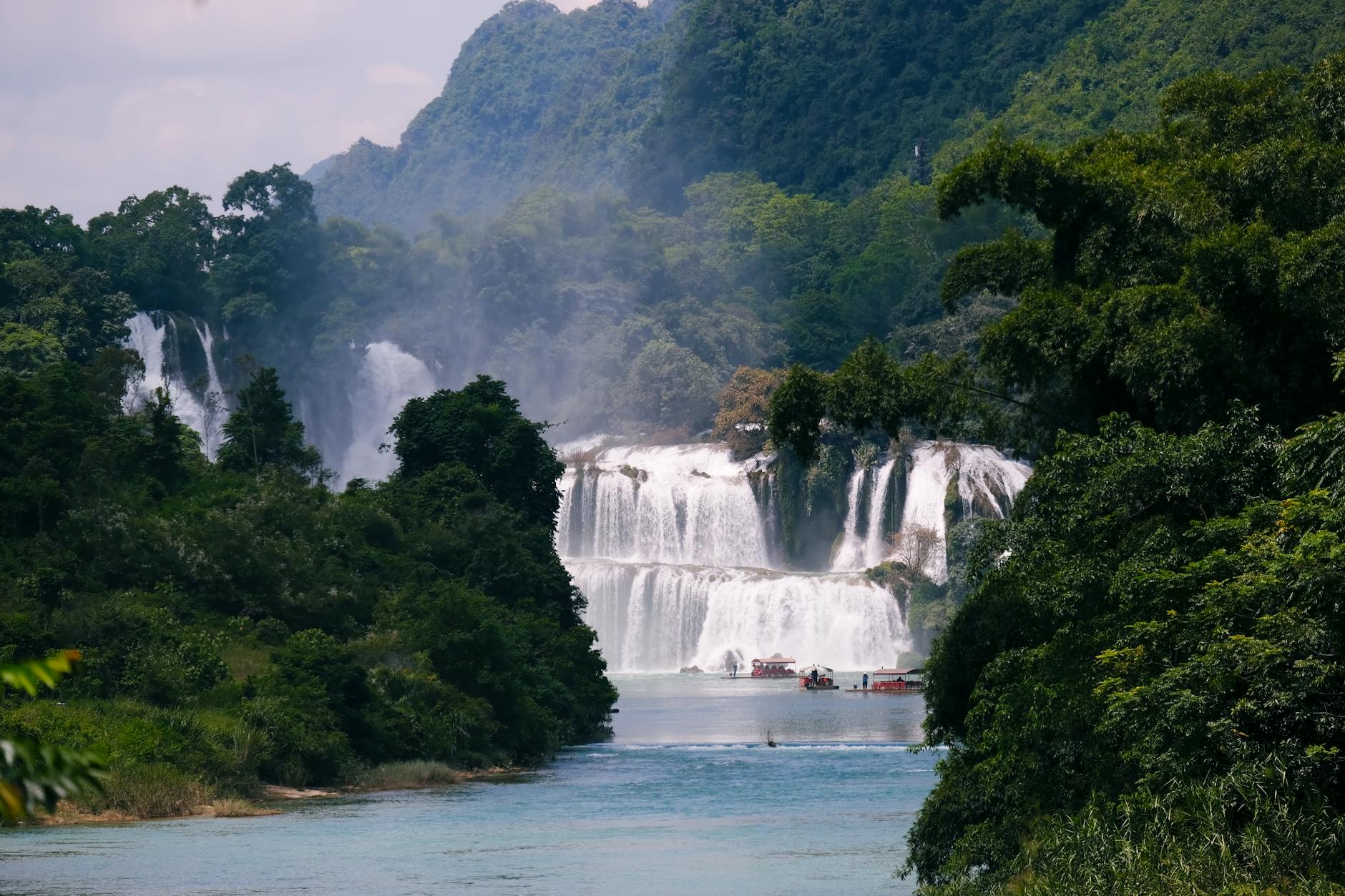
Ban Gioc Waterfall: The largest waterfall in Vietnam and the main reason most travelers come to Cao Bang. It sits on the border with China. The best time to visit is during the rainy season (May-September) when water flow is strongest. Boat rides cost 50,000 VND ($2) per person. Drones are restricted due to the border location. The waterfall is 90 km from the city, so plan for a full day trip.
Nguom Ngao Cave (Tiger Cave): Located near Ban Gioc Waterfall. A 3 km cave system with impressive stalactites and stalagmites. Well-lit with walkways. Takes about 1.5 hours to explore. Combine with Ban Gioc for a full day.
Truc Lam Phat Tich Pagoda: A modern Buddhist temple on a hill overlooking Ban Gioc Waterfall. Free to enter. Good views of the waterfall and surrounding countryside.
Angel Eye Mountain (Nui Mat Than): A mountain with a natural hole through its peak. Located 30 km from the city. The best photos are taken from the rice fields below. The road to the viewpoint is unpaved and steep.
Lenin Stream and Pac Bo historic site: Where Ho Chi Minh lived and worked after returning to Vietnam in 1941. A stream named after Lenin, a cave where he slept, and a small museum. More historically significant than visually impressive.
Thang Hen Lake: A system of 36 lakes connected by underground rivers. Only the main lake is easily accessible. Good for a picnic or swim. The road is rough.
Phong Nam Valley: A valley with rice terraces, limestone karsts, and traditional villages. Less visited than Ban Gioc. Good for hiking or motorbike exploration.
Craft villages: Phuc Sen village is known for traditional blacksmithing. Phja Thap village produces incense sticks. Both are free to visit and offer a glimpse into local craftsmanship.
For a broader perspective on the region, read our article: Is it worth going to Cao Bang?
How many days do you need in Cao Bang
2-day trip (rushed): Day 1: Arrive in Cao Bang city, explore the city in the afternoon. Day 2: Ban Gioc Waterfall and Nguom Ngao Cave. Return to Hanoi in the evening. This only works if you take an overnight bus to and from Hanoi.
3-4 day trip (comfortable): Day 1: Arrive in Cao Bang city, explore the city. Day 2: Ban Gioc Waterfall and Nguom Ngao Cave. Day 3: Angel Eye Mountain and Lenin Stream. Day 4: Return to Hanoi. This allows for a relaxed pace.
5-7 day trip (thorough): Adds Phong Nam Valley, Me Pia Pass, Thang Hen Lake, and craft villages. Also allows for rest days and weather delays. This is the best option for motorbike travelers doing the full Cao Bang Loop self drive.
When is the best time to visit Cao Bang
Dry season (October-April): The optimal time to visit. Rainfall is low. Roads are in better condition. Waterfall flow is moderate but consistent. Temperatures range from 10-25°C (50-77°F). November to February can be cold, with temperatures dropping to 10°C (50°F) or lower at night. Pack warm layers.
Rainy season (May-September): Fewer tourists. Greener landscapes. Waterfall flow is at its strongest. But roads can be slippery, landslides can close routes, and rain can last for days. Temperatures are warmer, 25-32°C (77-90°F). Pack rain gear and insect repellent.
October rice harvest: The rice terraces in Phong Nam Valley and along the route to Ban Gioc turn golden. This is the most photogenic time of year.
For a broader view of weather patterns across Vietnam, read: The Best and Worst Months to Visit Vietnam: A Region-by-Region Guide.
What to eat in Cao Bang city
Pho chua (sour noodle soup): The signature dish of Cao Bang. Rice noodles served in a sour broth made from fermented rice. Topped with pork, herbs, and peanuts. Found at street stalls on Vuon Cam Street. Costs 30,000-50,000 VND ($1.20-2).
Banh cuon (steamed rice rolls): Thin rice rolls filled with minced pork and mushrooms. Served with fried shallots, herbs, and fish sauce. Available for breakfast at stalls near the morning market. Costs 20,000-40,000 VND ($0.80-1.60).
Thit trau gac bep (smoked buffalo meat): Buffalo meat smoked over a kitchen fire. Chewy and intensely flavored. Sold as a snack or with rice. Available at markets and some restaurants.
Com lam (bamboo-tube rice): Sticky rice cooked inside bamboo tubes. Served with sesame salt. A Tay ethnic minority specialty. Found at restaurants near Ban Gioc Waterfall.
Pro tip: Vegetarian options are limited in Cao Bang. Most restaurants focus on meat dishes. Buddhist temples sometimes serve vegetarian meals, but this is not reliable. Consider bringing protein bars or cooking your own food if you have dietary restrictions.
For more on Vietnamese food, read: Beyond Pho: 15 Vietnamese Noodle Soups You've Never Heard Of.
Practical tips for visiting Cao Bang
ATMs: Limited in the city. There are a few on Kim Dong Street and near the market. None near Ban Gioc Waterfall or other rural attractions. Withdraw enough cash before leaving the city.
SIM cards and data: Viettel has the best coverage in Cao Bang province. Buy a SIM card at Hanoi airport or at a Viettel store in the city. Data is cheap, around 100,000 VND ($4) for 30 GB.
Language barriers: English is not widely spoken. Learn a few basic Vietnamese phrases. Google Translate works offline if you download the Vietnamese language pack. Pointing and smiling works most of the time.
Cash: Carry cash for everything. Cards are accepted only at higher-end hotels and a few restaurants in the city center.
What to pack: Warm layers (November-February), rain gear (May-September), sturdy shoes for caves and viewpoints, insect repellent, sunscreen, and a power bank. Buses may not have charging outlets.
Safety: Cao Bang is generally safe with low crime rates. The main risks are road accidents for motorbike riders. Read our guide: Is Vietnam Safe in 2026? An Honest Country-Wide Risk Assessment.
Etiquette in ethnic minority villages: Ask permission before taking photos. Dress modestly. Do not touch people or objects without asking. Learn about local customs before visiting.
Is Cao Bang worth visiting?
Yes, for the right traveler. Cao Bang is worth visiting if you want uncrowded natural scenery, dramatic waterfalls, caves, and mountain roads. It is less developed than Sapa or Ha Giang, which means fewer tourists but also less infrastructure.
Cao Bang is not worth visiting if you have limited time, are uncomfortable with long bus rides or motorbikes, or expect a polished tourist experience. Families with very young children should consider whether the long drives and rough roads are worth the effort.
The city itself is small and functional. The province is where the magic happens. Plan your trip accordingly.
For more on northern Vietnam alternatives, read: 10 Vietnam Towns That Quietly Outshine Halong and Hanoi.
FAQ
Q: How long should you stay in Cao Bang? A: Minimum 2 full days to see Ban Gioc Waterfall and one other attraction. 3-4 days allows for a relaxed pace including Angel Eye Mountain and Lenin Stream. 5-7 days covers the whole province including Me Pia Pass.
Q: Is $1000 enough for 2 weeks in Vietnam? A: Yes, for budget travel. A more realistic daily budget for Cao Bang is $30-50 per person including accommodation, food, transport, and entrance fees. The province is cheaper than Hanoi or Ho Chi Minh City.
Q: What is one of the biggest mistakes you can make in Vietnam? A: Underestimating travel times. The 280 km from Hanoi to Cao Bang takes 6-9 hours by bus, not the 4-5 hours Google Maps suggests. Mountain roads are winding, and buses make stops.
Q: Do I need a motorbike to see Cao Bang? A: Not necessarily. Taxis and local buses can reach Ban Gioc Waterfall and Nguom Ngao Cave. But a motorbike gives flexibility to explore Phong Nam Valley, Angel Eye Mountain, and remote viewpoints. Easy rider services are available for passengers.
Q: Is Cao Bang safe for solo travelers? A: Yes, the city and province are generally safe with low crime rates. The main risks are road accidents for motorbike riders. Solo travelers should carry cash, download offline maps, and share their itinerary with someone.
Q: What should I pack for Cao Bang? A: Warm layers November-February (temperatures can drop to 10°C/50°F), rain gear May-September, sturdy shoes for caves and viewpoints, insect repellent, sunscreen, and a power bank (outlets may be limited on buses).
Q: Can I visit Ban Gioc Waterfall and return to Hanoi in one day? A: Technically possible but not recommended. The round trip is 16-18 hours of driving. A 2-day trip from Hanoi or a 1-night stay near the waterfall is far more practical.