What you need to know before going
Cao Bang is not a resort destination. It is a remote, mountainous province on the Chinese border where infrastructure is basic and tourism is still developing. The province covers 6,700 square kilometers, but the city itself is a small administrative hub with a population under 100,000.
The entire province is part of the UNESCO Global Geopark. This means dramatic limestone karsts, deep valleys, and cave systems that rival Phong Nha in scale. But it also means limited English, scarce ATMs outside the city center, and roads that demand respect.
Most travelers visit for the Cao Bang Loop. This is a 3-4 day motorbike circuit that connects the city with Ban Gioc waterfall, Nguom Ngao Cave, God's Eye Mountain, and several ethnic minority villages. The loop is quieter than Ha Giang, less developed, and genuinely off the beaten path.
For a deeper look at crowd levels and development, read Is Cao Bang touristy? An honest look at crowds, development, and what to expect in 2026.
How many days do you actually need in Cao Bang?
Most travelers underestimate travel time. Distances are short on paper but slow on mountain roads. Here are three realistic options.
2 days (rushed, Ban Gioc only). Day 1: bus from Hanoi to Cao Bang city (6-9 hours). Day 2: rent a motorbike, ride to Ban Gioc (2.5 hours one way), visit the waterfall and cave, ride back, catch the overnight bus to Hanoi. This works only if you have no flexibility and accept you will see almost nothing.
3 days (standard loop). This is the minimum for a proper experience. Day 1: arrive in Cao Bang city, rent a bike, ride to Ban Gioc via Ma Phuc Pass. Day 2: explore Ban Gioc area, visit Nguom Ngao Cave, ride to God's Eye Mountain. Day 3: return to Cao Bang city via Pac Bo and Khau Coc Cha Pass, catch the evening bus. This covers the highlights without rushing.
4-5 days (thorough). Add a day for craft villages like Phuc Sen Blacksmithing Village and Dia Tren Paper Village. Add another day for remote valleys like Phong Nam Valley and Thang Hen Lake. This pace allows genuine cultural interaction and photography stops.
Pro tip: Do not attempt a day trip from Hanoi. The bus takes 6-9 hours each way. You will spend 12-18 hours on a bus for 2 hours at a waterfall.
Ha Giang versus Cao Bang: Which is better for you?
This is the most common comparison travelers make. Neither is objectively better. The choice depends on your priorities.
| Factor | Ha Giang | Cao Bang | Verdict |
|---|---|---|---|
| Scenery | Dramatic mountain passes, deep canyons | Waterfalls, caves, gentler karst landscapes | Ha Giang for drama, Cao Bang for variety |
| Crowds | Heavy during peak season (Oct-Apr) | Light year-round, even in peak season | Cao Bang wins for solitude |
| Road difficulty | Challenging, steep passes, loose gravel | Moderate, some steep sections, better pavement | Ha Giang is harder |
| Cultural experiences | Homestays are common but commercialized | More authentic, fewer tourists in villages | Cao Bang wins for depth |
| Cost | Slightly higher due to tourism demand | Slightly lower, fewer tourist prices | Cao Bang is cheaper |
| Overall vibe | Adrenaline, party hostels, social | Quiet, slow travel, nature-focused | Different experiences entirely |
Choose Ha Giang if you want dramatic mountain passes, social hostels, and a well-trodden backpacker route. Choose Cao Bang if you want waterfalls, caves, fewer people, and a more relaxed pace.
For a full guide to the alternative, read Ha Giang Loop: The Honest 2026 Guide.
The real cost of visiting Cao Bang in 2026
Most competitors hide costs behind affiliate links or vague estimates. Here is the transparent breakdown.
| Item | Backpacker (VND/USD) | Mid-range (VND/USD) | Comfortable (VND/USD) |
|---|---|---|---|
| Bus from Hanoi (round trip) | 500,000-800,000 ($20-32) | 500,000-800,000 ($20-32) | 500,000-800,000 ($20-32) |
| Motorbike rental (per day) | 150,000-200,000 ($6-8) | 200,000-250,000 ($8-10) | N/A (private car) |
| Fuel (per 100km) | 50,000 ($2) | 50,000 ($2) | N/A |
| Accommodation (per night) | 150,000-200,000 ($6-8) | 300,000-400,000 ($12-16) | 500,000-700,000 ($20-28) |
| Food (per day) | 150,000-200,000 ($6-8) | 250,000-350,000 ($10-14) | 400,000-500,000 ($16-20) |
| Entrance fees (total) | 90,000-135,000 ($4-5) | 90,000-135,000 ($4-5) | 90,000-135,000 ($4-5) |
| Border permit | Free | Free | Free |
| 3-day total (excl. bus) | 1,500,000-2,000,000 ($60-80) | 3,000,000-4,000,000 ($120-160) | 5,000,000-7,000,000 ($200-280) |
For a complete breakdown, read How much does a Cao Bang loop cost? A complete 2026 budget breakdown.
How to get to Cao Bang
Bus from Hanoi. The most common option. Buses depart from My Dinh station and arrive at Cao Bang station. Journey time is 6-9 hours depending on road conditions. Cost: 250,000-400,000 VND ($10-16). Book through 12Go.asia or directly at the station. Sleeper buses are available but the road is winding, so motion sickness is common.
Bus from Ha Giang. If you are coming from the Ha Giang Loop, buses run directly. Journey time is 5-6 hours. Cost: 200,000-300,000 VND ($8-12). The road passes through the stunning Khau Coc Cha Pass.
Private car. For groups of 3-4 people, a private car from Hanoi costs 2,500,000-3,500,000 VND ($100-140). This is faster (5-6 hours) and more comfortable.
Motorbike self-drive. Experienced riders can drive from Hanoi in 2 days. The route follows QL3 through Thai Nguyen and Bac Kan. The road is busy with trucks. Only attempt this if you have significant mountain riding experience.
Organized tours. Several operators offer 3-day Cao Bang Loop tours. Prices range from 3,000,000-5,000,000 VND ($120-200) including transport, accommodation, and guide. These are suitable for non-riders.
Warning: The Khau Coc Cha Pass and Ma Phuc Pass are steep with blind corners. Truck traffic on QL3 and QL4A is heavy. Inexperienced riders should hire an easy rider instead.
For transport comparisons to other destinations, read Night bus or train to Sa Pa: which is the better option in 2026?.
Getting around Cao Bang: Transport options compared
Renting a motorbike or scooter. This is the most popular option. Rental shops in Cao Bang city charge 150,000-250,000 VND ($6-10) per day for a semi-automatic scooter. A 110cc or 125cc engine is sufficient for the loop. A 150cc bike is better for the steeper passes. You need an International Driving Permit with a motorcycle endorsement. Without it, you risk fines at checkpoints.
Hiring an easy rider. This means riding pillion on a local driver's motorbike. Cost: 400,000-600,000 VND ($16-24) per day including the bike, fuel, and driver. This is the safest option for solo travelers or inexperienced riders.
Private car with driver. Best for families, groups, or anyone who does not ride. Cost: 1,500,000-2,500,000 VND ($60-100) per day. The driver knows the roads and handles all logistics.
Local buses. Limited routes connect Cao Bang city with Ban Gioc and other towns. Buses are cheap (50,000-100,000 VND per trip) but unreliable. Schedules are not published online.
Safety warning: Roads in Cao Bang are narrow, winding, and shared with heavy trucks. Fog is common from December to February. Rain makes roads slippery and increases landslide risk. For detailed safety information, read Is the Cao Bang Loop safe to drive?.
The best time to visit Cao Bang
The dry season runs from October to April. This is the best time for road conditions, clear skies, and comfortable temperatures (15-25°C). However, fog is common from December to February, especially in the mornings.
The rainy season runs from May to September. Temperatures are warmer (25-35°C) but rain is frequent. Roads become slippery and landslides are possible. The advantage is fewer tourists and lush green landscapes.
| Month | Temp range | Rainfall | Crowds | Best for |
|---|---|---|---|---|
| Jan-Feb | 10-18°C | Low | Low | Clear skies, cold mornings |
| Mar-Apr | 15-25°C | Moderate | Medium | Spring flowers, pleasant weather |
| May-Jun | 22-32°C | High | Low | Green landscapes, few tourists |
| Jul-Aug | 24-34°C | Very high | Low | Waterfall at full flow |
| Sep-Oct | 20-28°C | Moderate | Medium | Rice harvest, golden fields |
| Nov-Dec | 12-22°C | Low | High | Peak season, best weather |
Ban Gioc waterfall timing. During the dry season, the Chinese dam upstream releases water between 10:30am and 1:00pm. Visit during this window for the strongest flow. Outside these hours, the waterfall is significantly reduced. During the rainy season, the dam is open all day.
For more on seasonal planning, read The Best and Worst Months to Visit Vietnam: A Region-by-Region Guide.
The Cao Bang Loop: A realistic 3-day itinerary
Day 1: Cao Bang city to Ban Gioc (115km, 3-4 hours driving). Leave Cao Bang city after breakfast. Ride south on QL3, then turn onto QL4A toward Ban Gioc. The highlight is Ma Phuc Pass, a steep climb with views over the Quay Son River valley. Stop at the Phong Nam Valley viewpoint for photos. Arrive at Ban Gioc by lunchtime. Visit the waterfall in the afternoon when the dam release is active. Stay overnight at a homestay near the waterfall.
Day 2: Ban Gioc area to God's Eye Mountain (85km, 2-3 hours driving). Morning: visit Nguom Ngao Cave (Tiger Cave). The cave is 3km long with impressive stalactites. Entrance fee: 45,000 VND ($2). Allow 1.5 hours. Afternoon: ride to God's Eye Mountain (Nui Mat Than), a natural arch formation. The road is unpaved for the last 5km but manageable on a scooter. Stay overnight in a homestay near the mountain.
Day 3: Return to Cao Bang via Pac Bo (140km, 4-5 hours driving). Morning: visit Pac Bo Historical Complex, where Ho Chi Minh lived after returning from China in 1941. The site includes a cave, a stream, and a small museum. Entrance is free. Afternoon: ride the Khau Coc Cha Pass back to Cao Bang city. This pass has 14 switchbacks and offers stunning views. Arrive in time for the evening bus to Hanoi.
Pro tip: If you have 4 days, add a detour to Thang Hen Lake and the craft villages of Phuc Sen (blacksmithing) and Dia Tren (paper making). These are off the main loop but offer the most authentic cultural experiences.
Things to do in Cao Bang: What is worth your time
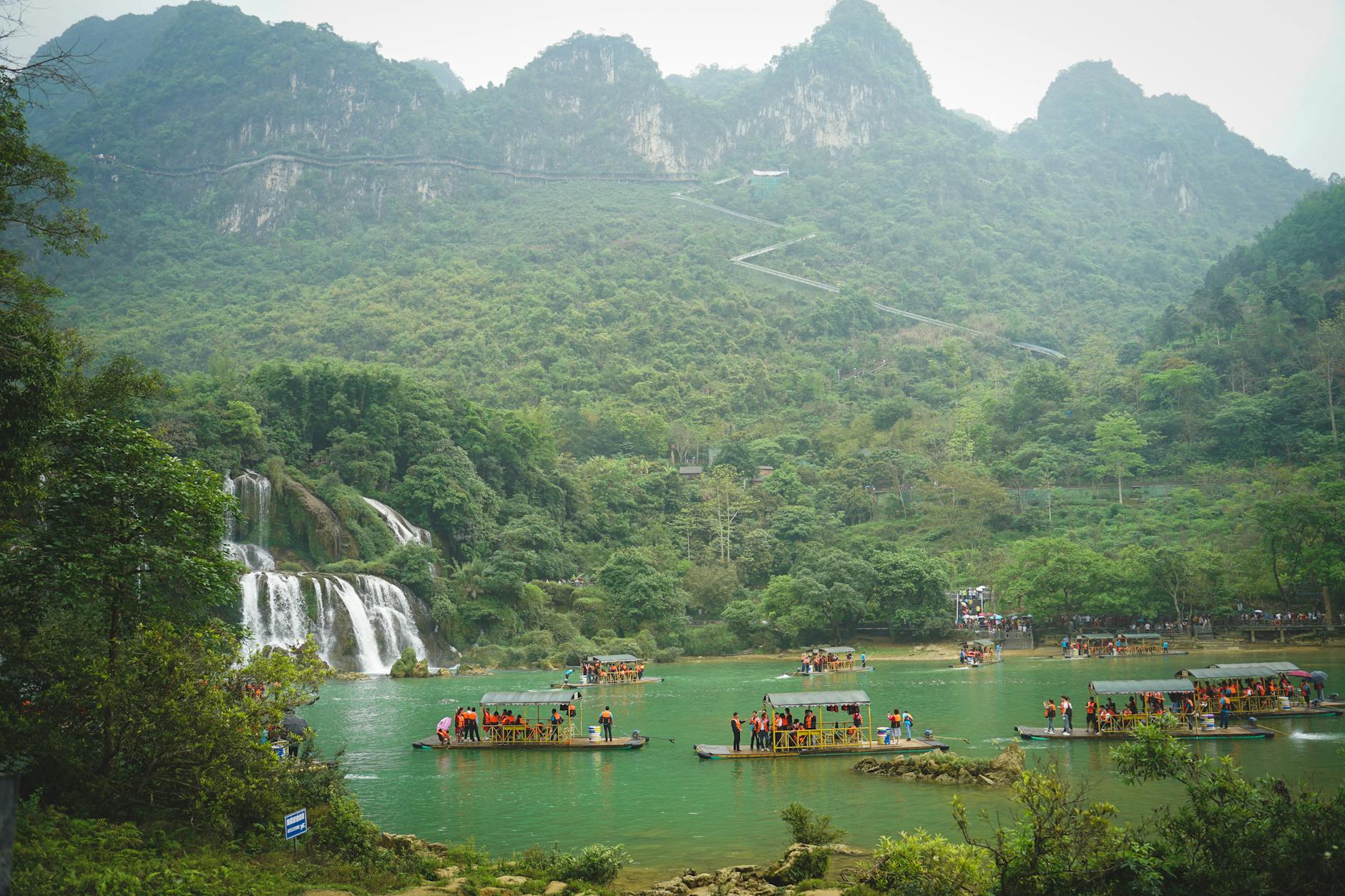
Ban Gioc Waterfall. The main attraction. At 300 meters wide, it is the largest waterfall in Southeast Asia. Visit between 10:30am and 1:00pm for the strongest flow. Entrance fee: 45,000 VND ($2). Allow 1-2 hours. The waterfall is worth the journey, but manage expectations. It is impressive, not life-changing.
Nguom Ngao Cave (Tiger Cave). A 3km cave system with well-lit paths and impressive formations. Entrance fee: 45,000 VND ($2). Allow 1.5 hours. Worth visiting if you have not seen caves in Phong Nha. For comparisons, read Which cave is best to visit in Phong Nha?.
God's Eye Mountain (Nui Mat Than). A natural rock arch shaped like an eye. The site is free and takes 30 minutes to explore. The road is unpaved but passable on a scooter. Worth the detour for the photo opportunity.
Phong Nam Valley. A scenic valley with rice paddies and limestone karsts. Best viewed from the Ma Phuc Pass viewpoint. Free. Allow 30 minutes for photos.
Thang Hen Lake. A series of 36 interconnected lakes surrounded by karst mountains. Best visited in the morning when the water is calm. Free. Allow 1 hour.
Pac Bo Historical Complex. A historical site with a cave, stream, and museum dedicated to Ho Chi Minh. Free. Allow 1 hour. Interesting for history buffs, skippable for others.
Craft villages. Phuc Sen (blacksmithing) and Dia Tren (paper making) offer hands-on cultural experiences. Both are free to visit. Allow 1-2 hours each. These are the most authentic experiences in Cao Bang.
Cao Bang night market. Located in the city center. Open Friday to Sunday evenings. Local food, handicrafts, and street performances. Worth a visit if you are in the city on a weekend.
Where to stay in Cao Bang
Cao Bang city. Best for access to bus stations, rental shops, and restaurants. Options range from basic guesthouses (150,000-200,000 VND per night) to mid-range hotels (300,000-500,000 VND). The city is convenient but has no charm.
Near Ban Gioc waterfall. Homestays are the best option. Prices range from 150,000-300,000 VND per night. Most include breakfast and dinner. Staying here allows early morning access to the waterfall before crowds arrive.
Phong Nam Valley. A few homestays offer stunning valley views. These are quieter than Ban Gioc but require a motorbike to reach restaurants and attractions.
Khuoi Ky Stone Village. A unique option. Stay in a 400-year-old stone house in a Tay ethnic minority village. Prices range from 200,000-400,000 VND per night. This is the most authentic accommodation in Cao Bang.
What to eat and drink in Cao Bang
Pho chua (sour noodle soup). A Cao Bang specialty. Rice noodles served with pork, herbs, peanuts, and a sour broth. Found at street stalls in the city center. Cost: 30,000-50,000 VND ($1-2).
Banh cuon (steamed rice rolls). Thin rice rolls filled with minced pork and mushrooms. Served with fresh herbs and fish sauce. Cost: 20,000-40,000 VND ($1-2).
Thit trau gac bep (smoked buffalo meat). Buffalo meat smoked over a wood fire. Chewy, smoky, and intensely flavored. Sold at markets and restaurants. Cost: 50,000-100,000 VND ($2-4) per portion.
Xoi (sticky rice). A breakfast staple. Served with mung bean paste, shredded chicken, or fried shallots. Cost: 15,000-30,000 VND ($0.50-1).
Local rice wine. Made from fermented sticky rice. Strong (40-50% alcohol) and often infused with herbs. Offered at homestays and restaurants. Drink cautiously.
For food safety advice, read Vietnamese Street Food Safety: How to Eat Everywhere Without Getting Sick.
Safety, permits, and practical tips
Border permit. Required to visit Ban Gioc waterfall and the border zone. The permit is free. Visit the Immigration Office in Cao Bang city (23 Kim Dong Street) with your passport. Processing takes 30 minutes. Tour operators can handle this for you. Without the permit, you will be turned away at checkpoints.
Road safety. The main risks are truck traffic on QL3 and QL4A, fog from December to February, and slippery roads after rain. Do not ride at night. Carry a paper map and download offline GPS (Maps.me or Google Maps offline).
Health risks. Altitude sickness is unlikely (maximum elevation is 1,000 meters). Cold weather is real in winter. Pack layers, a windproof jacket, and rain gear. Mosquitoes are present year-round. For health advice, read Mosquitoes, Dengue and Malaria in Vietnam: The Realistic Risk Map for Travelers.
What to pack. Cash (ATMs are scarce outside the city), a power bank, a headlamp (for caves), earplugs (for roosters at homestays), and a reusable water bottle.
Cultural etiquette. When visiting ethnic minority villages (Tay, Nung, Dao), dress modestly, ask before taking photos, and do not touch religious objects. A simple "xin chao" (hello) is appreciated.
For general safety advice, read Is Vietnam Safe in 2026? An Honest Country-Wide Risk Assessment.
Is Cao Bang worth it? The final verdict
Yes, but only if you fit the profile.
Visit Cao Bang if you are an adventure traveler who enjoys motorbike riding. Visit if you want to see one of Southeast Asia's largest waterfalls without the crowds. Visit if you have already done Ha Giang and want a quieter alternative. Visit if you value authentic cultural experiences over tourist infrastructure.
Skip Cao Bang if you are a beginner rider uncomfortable with mountain roads. Skip if you need luxury accommodations and fine dining. Skip if you are traveling with very young children (the roads are dangerous). Skip if you only have 2 days for northern Vietnam (spend them in Ha Giang instead).
Cao Bang is not a destination for everyone. But for the right traveler, it offers one of the most authentic and rewarding experiences in northern Vietnam. The scenery is dramatic. The people are welcoming. The roads demand respect. The rewards are real.
FAQ
Q: Is Cao Bang worth visiting? A: Yes, for travelers who want dramatic mountain scenery, few crowds, and authentic cultural experiences. No, for anyone who wants luxury accommodations, easy transport, or a quick day trip from Hanoi. The answer depends entirely on travel style and available time.
Q: How long do you need in Cao Bang? A: Minimum 3 days and 2 nights for the standard Cao Bang Loop. A rushed 2-day trip only covers Ban Gioc waterfall and the nearby cave. A thorough trip with craft villages and remote valleys requires 4-5 days. Day trips from Hanoi are not realistic.
Q: Is Ha Giang or Cao Bang better? A: Ha Giang offers more dramatic mountain passes and a more developed tourist infrastructure. Cao Bang offers fewer crowds, more cultural depth, and a quieter experience. Ha Giang is better for adrenaline seekers. Cao Bang is better for travelers who want to slow down and connect with local communities.
Q: Is Cao Bang safe for solo travelers? A: Yes, with precautions. The main risks are road accidents (trucks on QL3 and QL4A, fog, slippery roads in rain) and the remoteness of some areas. Solo travelers should carry a paper map, download offline GPS, share their itinerary, and consider hiring an easy rider if not confident on a motorbike.
Q: Do you need a permit for Cao Bang? A: Only to visit Ban Gioc waterfall and the border zone. The border permit is free but requires a visit to the Immigration Office in Cao Bang city with your passport. Tour operators can handle this for you. Without the permit, you will be turned away at checkpoints.
Q: When is the best time to visit Ban Gioc waterfall? A: October to April for dry weather. Visit between 10:30am and 1:00pm during dry season when the Chinese dam releases water, significantly increasing the waterfall's flow. The waterfall is impressive year-round but less dramatic during the dry season mornings.
Q: Can you do Cao Bang without a motorbike? A: Yes, but it is significantly harder. Options include hiring a private car with driver (1,500,000-2,500,000 VND per day / $60-100), joining an organized tour, or using local buses (limited routes and schedules). A motorbike or easy rider offers the most flexibility.
Q: How much does a trip to Cao Bang cost? A: A backpacker can manage 3 days for approximately 1,500,000-2,000,000 VND ($60-80) excluding transport from Hanoi. A mid-range trip costs 3,000,000-4,000,000 VND ($120-160). A comfortable trip with private car and boutique accommodation costs 5,000,000-7,000,000 VND ($200-280).