Paragliding in Sa Pa and Mu Cang Chai at a glance
- Where: Sa Pa (Sapa) in Lao Cai, with launches above the Muong Hoa valley; Khau Pha Pass above Mu Cang Chai in Yen Bai; and Vien Nam mountain as the closest site to Hanoi.
- Cost: a standard Sa Pa tandem is 2,390,000 VND (about US$90).
- Airtime: about 10 to 15 minutes in the air, depending on conditions.
- Best scenery: the rice harvest in September and October, especially at Mu Cang Chai.
- Biggest planning risk: weather cancellations, so keep a spare day in your itinerary.
The two headline destinations serve different travellers. Sa Pa is the easy option: a tourist town with hotels, transfers and several operators working the same valley. Khau Pha is the scenic option, a mountain pass where the terraces are the main subject and the flying calendar revolves around the harvest. Vien Nam is the compromise for a short trip out of Hanoi.
| Site | Nearest base | Landscape | Best months for scenery | How to get there | Best for |
|---|---|---|---|---|---|
| Sa Pa | Sa Pa town | Muong Hoa valley, terraces, villages | September and October; clear winter days | Bus or private car from Hanoi or Lao Cai | First flights, easy logistics, combining with trekking |
| Khau Pha Pass | Mu Cang Chai | High rice terraces on steep slopes | September and October harvest | Mountain road via Mu Cang Chai, bus or private car | Photography, festival atmosphere, remote setting |
| Vien Nam | Hanoi | Lower hills, farmland | Spring and autumn | Day trip from Hanoi | Travellers short on time |
How a tandem paragliding flight works
A paraglider is an unpowered fabric wing. There is no engine and no rigid frame. The wing inflates as you move, and the pilot steers it with two brake lines.
On a tandem flight, the passenger is clipped into a harness in front of, or below, a pilot who controls everything. You do not steer, and you do not need any experience. Takeoff is a short run down a slope with the pilot beside you. The flight follows the rising air over the valley. Landing is a gentle run-out in a field, usually a few steps before the wing settles behind you.
Tandem paragliding, paramotor and parasailing compared
Paramotor. A paraglider wing with a motor on the pilot's back. It can take off from flat ground and depends less on slope winds, so it flies in conditions that would keep a tandem on the ground. Some operators in the Sa Pa area offer it as an alternative.
Parasailing. A canopy towed by a boat, usually over water. It has nothing to do with paragliding beyond the shape of the canopy, and it is not offered in these mountains.
Skydiving. A different activity altogether, involving free fall from an aircraft. Paragliding has no free fall at any point.
What the flight feels like
Takeoff is calm rather than a jump. You run a few steps, the wing lifts, and the ground drops away gradually. Published guidance is clear that a fear of heights does not automatically rule someone out, because you are sitting in a harness with your feet supported rather than standing on an edge.
The extreme spins and steep dives in social media videos are optional manoeuvres that the pilot performs on request. They increase G-force and the chance of motion sickness. Passengers can ask for a gentle flight, and most pilots will default to one unless asked otherwise.
Paragliding in Sa Pa: launch sites, landing and flight time
Launch areas above town
Operators fly from the Ham Rong area above Sa Pa town, or from near Hang Da village further along the ridge. The choice depends on the wind direction on the day, and the pilot decides at the launch.
One operator markets a takeoff at 1,750 m on a peak it calls Rồng Mountain as "the highest takeoff in Vietnam." That is a marketing claim rather than an independently established fact, and it should be read as such. Published sources do not establish whether that peak and the Ham Rong area are the same place.
Landing in the Muong Hoa valley near Ta Van
The flight crosses the Muong Hoa valley, with rice terraces, scattered villages and the valley floor below. Most flights land near Ta Van, which makes it easy to combine the flight with a valley walk or a homestay in Ta Van rather than returning straight to town.
Ask the operator where you will land before you book. A Ta Van landing changes your day: you can walk on from there, but you will need to arrange your own transport back to Sa Pa.
How long the flight really lasts
Airtime is about 10 to 15 minutes. One operator quotes 12 to 15 minutes "in suitable conditions," which is the honest way to put it. The time varies with rising air, wind strength and how comfortable the passenger is. A nervous passenger on a calm day may come down sooner than a confident one on a strong thermal day.
The whole outing takes far longer than the flight. Pickup, the drive up to the launch, the briefing, waiting for a weather window and the return all add up. Do not schedule a flight immediately before a bus or train.
Prices and what is included
Typical tandem prices in Sa Pa
A standard tandem flight is published at 2,390,000 VND (about US$90) on an operator blog dated August 2026. A booking platform lists a comparable flight including hotel pickup and drop-off at US$87.34, roughly 2.3 million VND.
Platform prices move with exchange rates and promotions, so compare the total rather than the headline. A cheaper flight without pickup can cost more once you add a taxi to the launch and back.
What the price usually covers
Most Sa Pa offers bundle the same items, but not always at the same standard. Ask each question before paying.
| Item | Often included? | Question to ask before paying |
|---|---|---|
| Hotel pickup and drop-off | Usually | Is pickup from my hotel, or a meeting point in town? |
| GoPro video | Often, on standard flights | Is it included or an extra, and in what format is it delivered? |
| Photos | Sometimes | Are stills included, or only video? |
| Insurance | Usually | What does it cover: medical costs, evacuation, liability? |
| Flight certificate | Often | Is it printed or digital? |
| Rebooking after a cancellation | Varies | Can I rebook, and is the deposit refundable? |
Paramotor flights as an alternative
A paramotor is worth considering if you want a different route over the valley or a flight that depends less on slope conditions. The trade-off is real: engine noise replaces the silent glide, and the feel is closer to a powered aircraft than to a paraglider riding thermals. Ask the operator whether paramotor flights are available on your dates, since not every company runs them.
Khau Pha Pass and Mu Cang Chai: flying over the rice terraces
Why pilots and passengers go to Khau Pha
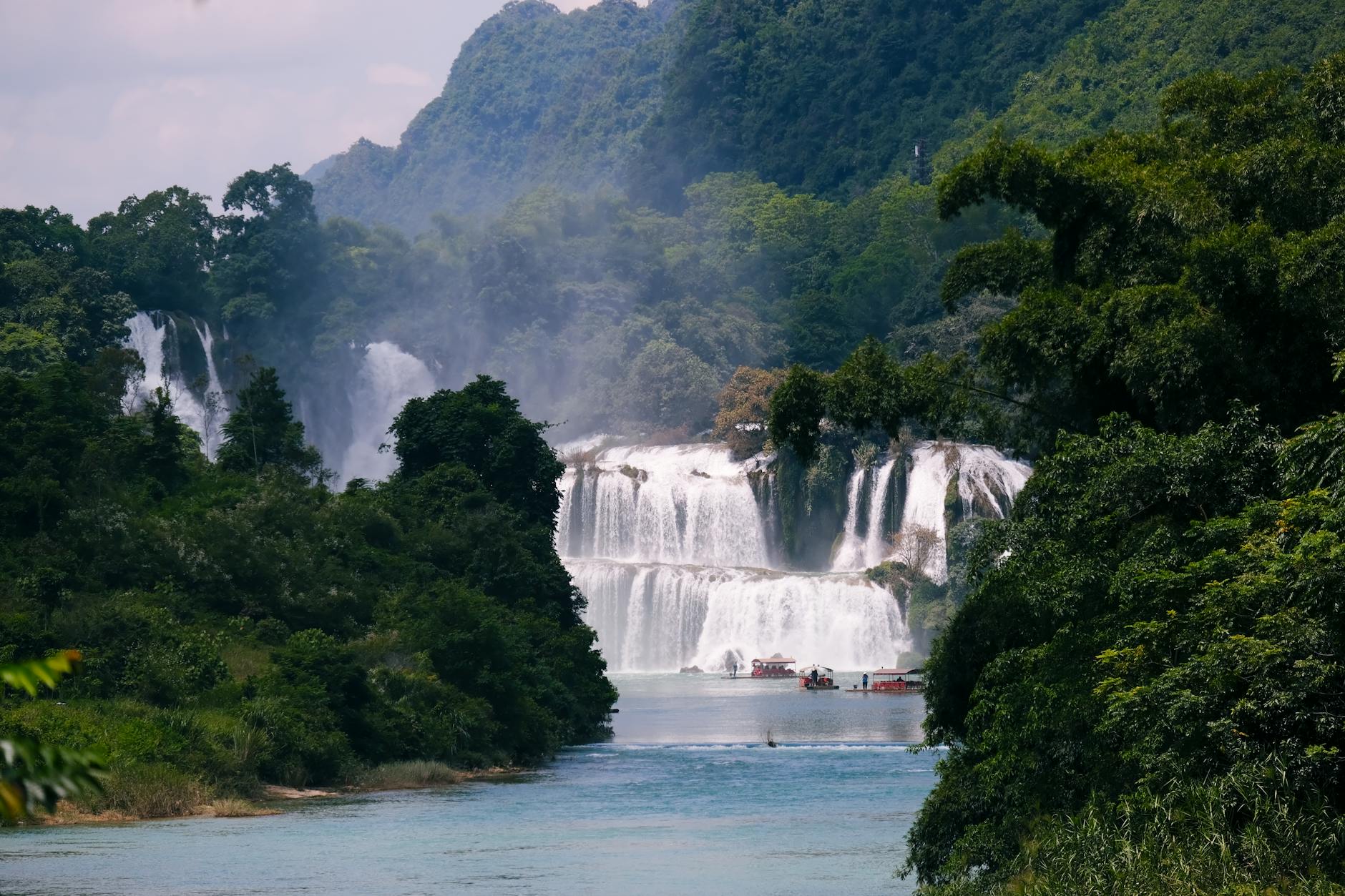
Khau Pha Pass, on the mountain road above Mu Cang Chai, is one of the best-known flying sites in Vietnam. Flights pass over terraced valleys that step down the slopes in long curves, and in the harvest season the whole landscape turns gold.
The difference from Sa Pa is the setting. Sa Pa is a town with a valley attached. Khau Pha is remote, the terraces are the main subject, and the flying day is built around the landscape rather than around town logistics.
The paragliding festival in the harvest season
An annual paragliding festival is held at Khau Pha during the rice harvest, usually in September and October. The 2026 edition has already taken place. The next one is expected in the harvest season of September to October 2027.
Exact dates are announced by the local organisers closer to the time, so follow official local announcements rather than planning around a date you saw on a tour page. Festival weeks bring crowds and fully booked accommodation in Mu Cang Chai, so book beds well ahead if you want to be there.
Getting there from Sa Pa or Hanoi
Khau Pha sits on the mountain road into Mu Cang Chai, so most visitors stay at least one night rather than trying to fly and return the same day.
Options are a sleeper or regular bus, a private car with driver, or an organised multi-day tour that handles the driving and the flight together. Mountain roads in the rainy season call for flexible plans and a check of the official weather forecast before setting out.
If your trip allows only one flying site, choose by landscape rather than by price. Sa Pa gives you the valley and the town. Khau Pha gives you the terraces and the festival, at the cost of a longer, rougher journey.
Paragliding near Hanoi: Vien Nam mountain for comparison
Vien Nam is the option for travellers short on time who cannot fit Sa Pa or Mu Cang Chai into their route. It is closer to Hanoi and works as a day out, but it does not offer the high-mountain rice-terrace scenery of the northwest.
In the south, Langbiang near Da Lat is the highlands option; a separate guide covers it. Neither site replaces the northwest if terraces are what you came for.
Best season and weather: when flights go and when they are cancelled
Choosing the month
The landscape peaks during the September and October harvest, when the terraces turn gold. This matters most at Mu Cang Chai, where the terraces are the reason to fly.
Operators advertise year-round flights, and one promotes "daily flights 365/365." Read that as availability, not as a weather guarantee: the company is open every day, but the sky decides whether you fly.
Winter in Sa Pa is colder than most of Vietnam. Dress for cold air at launch even if the town feels mild.
What cancels a flight
| Condition | Usually flies? | Why |
|---|---|---|
| Low cloud or mist in the valley | Often yes | The launch can be clear while the valley is filled in |
| Cloud sitting on the launch | No | The pilot cannot see the landing area or judge the air |
| Rain | No | Wet wing, poor visibility, unstable air |
| Strong or gusty wind | No | Takeoff and landing become unsafe |
| Thunderstorm | No | Lightning risk and violent air currents |
The pilot decides on the day, sometimes at the launch itself after watching the conditions for a while.
Planning around cancellations
Book the flight early in your stay, keep a spare day, and avoid scheduling it on your departure day. Ask before paying about the rebooking and refund policy and about deposit terms. A company that will not discuss refunds before you have paid is telling you something.
Who can fly: weight, age, health and fear of heights
Why weight and age limits exist
The tandem wing is certified to work within a weight range, and the passenger may need to run a few steps at takeoff. Children must be able to follow instructions and run.
Limits differ by operator and by wing, so ask at booking and declare your weight honestly. An under-declared weight affects the wing loading and the pilot's ability to land safely.
Health questions
Published guidance focuses on medication: what matters is whether your medication causes drowsiness or dizziness, not the condition itself. Get medical advice where relevant.
Ask a doctor before flying if you are pregnant, or if you have a heart condition, a back or neck injury, or recent surgery. For motion sickness, eat light beforehand and ask for a gentle flight.
Glasses, contact lenses and fear of heights
Glasses and contact lenses are usually fine if they are secured. Nervous first-timers can talk to the pilot before takeoff; most have flown plenty of anxious passengers and will adjust the flight accordingly.
How to check a pilot and operator before booking
Paragliding is an air sport. Accidents happen, and price should never be the deciding factor.
Pilot qualifications
Ask for the pilot's tandem qualification specifically. IPPI P4 and P5 are pilot skill ratings, and neither one, on its own, qualifies a pilot to fly paying tandem passengers. A commercial tandem pilot needs a tandem rating on top of skill certification.
Equipment
Ask whether the harness has a reserve parachute and back protection, and whether the passenger gets a helmet. EN ratings from A to D describe how a wing behaves in standard tests; they are not simple safety scores, and a rating is not a guarantee.
Insurance and procedures
Ask what the included insurance covers: medical costs, evacuation and liability, and at what amounts. Ask whether there is a safety briefing before takeoff and what the weather policy is.
| Check | Good answer | Red flag |
|---|---|---|
| Tandem qualification | Names a specific tandem rating and shows it | Vague talk of "many years of experience" |
| Reserve parachute | Yes, and it is packed and in date | No answer, or "not needed" |
| Passenger helmet | Provided as standard | Bring your own or go without |
| Insurance | Explains what is covered and the amounts | "Insurance included" with no detail |
| Weather policy | Clear rebooking and refund terms | Pressure to fly in visibly bad weather |
| Price | Itemised, with extras named | Unusually low, with vague inclusions |
Travel insurance for paragliding
Many travel policies exclude air sports, or list paragliding as an optional add-on that must be bought before departure. Search the policy wording for "paragliding," "air sports" and "hazardous activities."
Check whether a tandem flight with a qualified pilot is covered, and whether medical evacuation is included. The operator's included insurance does not replace personal travel cover: it typically covers the flight itself, not your whole trip.
On the day: what to wear, bring and film
What to wear
Closed shoes with grip, not sandals. Long trousers. Layers and a windproof jacket, because the launch is colder than town. Secure your glasses. Bring sunscreen and leave loose items out of your pockets.
Filming the flight
GoPro footage is usually filmed by the pilot and delivered after landing; ask in what format. Policies on passengers holding a phone vary by operator, so ask before takeoff.
Flying a personal drone over the valley requires a permit from the Vietnamese authorities through the official application process. For most visitors, the operator's footage is the simplest option.
Timing on the day
Morning and afternoon slots depend on conditions, and the pilot will tell you which is better for your date. In the rainy season, check the official weather forecast and local road updates before travelling to the launch.
FAQ
Q: Is there paragliding in Sa Pa? Yes. Several operators run tandem flights from the Ham Rong area or near Hang Da village, landing in the Muong Hoa valley near Ta Van. Flights last about 10 to 15 minutes and depend on the day's weather.
Q: How much does paragliding in Sa Pa cost? A standard tandem flight is listed at 2,390,000 VND (about US$90), and a booking platform lists a flight with hotel pickup at US$87.34. Compare what is included (pickup, video, insurance) rather than the headline price alone.
Q: Can you describe paragliding? A fabric wing with no engine, a short run to take off, and a glide on rising air with the pilot in full control. It is not skydiving, and there is no free fall.
Q: When is the Mu Cang Chai paragliding festival? It usually takes place during the rice harvest in September and October at Khau Pha Pass. The 2026 edition has passed, and the next is expected in September to October 2027, with dates announced by local organisers.
Q: Is it safe to go to Sa Pa, Vietnam now? Flights and tourism operate normally. The main practical risks are mountain weather and roads in the rainy season. Check the official forecast and choose a qualified, insured operator.
Q: Will my travel insurance cover paragliding? Not automatically. Many policies exclude air sports unless they are added. Check the wording for paragliding, and for medical evacuation, before flying.
Q: What happens if my flight is cancelled because of the weather? The pilot decides on the day. Rain, gusts and cloud on the launch usually stop flights, while valley mist may not. Ask about rebooking and refunds before paying, and keep a spare day.
Your questions and tips
A question, an update, an experience to share? Our team reads every message before it is published.
No comments yet. Ask the first question or share a tip!