Mu Cang Chai at a glance: the honest verdict
Worth the detour for landscape and photography lovers, but only with correct timing and at least one night on site, ideally two.
Who will love it: photographers chasing mist and scale, slow road trippers, and anyone who prefers open farmland to ticketed attractions.
Who may be disappointed: travellers with a single free day from Hanoi, anyone arriving between December and April (brown, cold, foggy fields), and anyone expecting a quiet village experience on a late-September weekend. The terraces are one of Vietnam's busiest domestic photo destinations, not a secret.
Key facts. There is no entrance gate and no official ticket. The terraces are open access around the clock, roughly 280 to 300 km from Hanoi. About 2,200 ha of terraces cover the former district, with roughly 500 ha in the nationally ranked core.
Date check. Today is 16 October 2026, so the 2026 golden harvest is effectively over. The next windows are late May to mid-June 2027 for flooded fields, and about 15 September to 5 October 2027 for gold.
Where Mu Cang Chai is and what the name covers today
Mu Cang Chai lies in the Hoang Lien Son range of northwest Vietnam, between Sapa and Son La. The terraces sit at roughly 800 to 1,500 m, high enough that the growing season is short and the mornings are cold from November onward.
The administrative facts changed recently, and most guides have not caught up. Mu Cang Chai was a district of Yen Bai Province. Following the 1 July 2025 reorganisation, provincial boundaries shifted, Yen Bai merged into Lao Cai Province, the district tier was removed and communes were consolidated. Older maps still say "Yen Bai". Google and Expedia now list Lao Cai. Check current commune names before publishing anything with a specific address.
Three communes carry the 2007 national landscape ranking: La Pan Tan, Che Cu Nha and De Xu Phinh. Other terraced areas include Lao Chai, Pung Luong, Ho Bon and Nam Khat. Treat these names as provisional, since the 2025 reform redrew boundaries.
Tu Le, just east across Khau Pha pass, is a different landscape entirely. It is a Thai valley of flat paddies known for green rice flakes (com) in autumn, not carved terraces. Useful for a stop, not a substitute.
The story of the terraces: who built them and why they matter
The terraces are not a monument. They are working farmland, built and maintained by Hmong households who migrated from southern China into northern Vietnam over several centuries, with major settlement of this area in the 19th century. Some Thai communities farm the valley floors below.
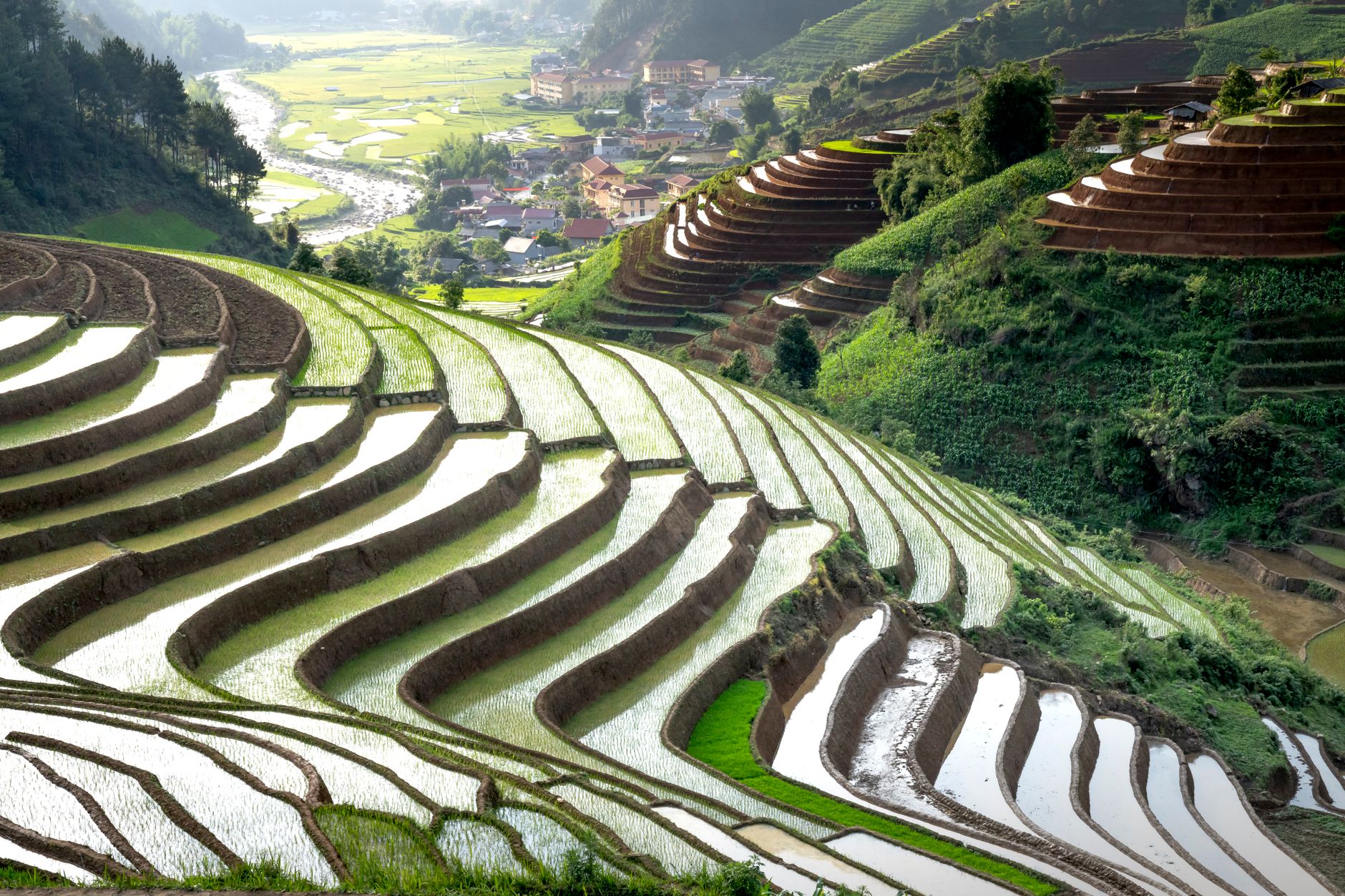
A terrace is made by hand. Farmers cut benches that follow the contour, plough with buffalo, and build earth bunds that hold water. Gravity does the rest: a network of channels and bamboo pipes carries water down from forest springs above the fields. This is why forest cover matters so much here. Strip the trees above a valley and the whole irrigation system suffers.
At this altitude there is one rice crop a year, mostly local upland and sticky varieties. That single harvest shapes the entire visiting calendar. There is no second green season, no off-cycle planting. When the fields are brown, they stay brown for months.
In 2007, the terraces of La Pan Tan, Che Cu Nha and De Xu Phinh were ranked a national landscape. The designation is protective, not commercial. It does not come with a gate, a ticket office or a visitor centre. It signals that the state recognises the landscape as nationally significant, and it has been used to justify both conservation and tourism development.
The destination boom arrived in the 2010s. Paragliding took off at Khau Pha pass, the autumn "golden season" cultural week became a fixture, homestays multiplied, and photographers spread the image nationwide. The downsides came with it: trampled bunds, litter, price spikes in peak week, and farmers who now charge small fees for field access in some spots.
The area also has a hard weather history. The August 2017 floods and landslides hit these valleys badly, and storm seasons still cut QL32 regularly. Typhoon Yagi in September 2024 caused severe damage across the northwest. Landslide risk from June to September is not a theoretical warning.
The name "Mu Cang Chai" has a Hmong origin, but online etymologies conflict. Do not treat any single version as settled.
When to go: the rice calendar and the 2027 windows
| Month | Field stage | Look | Weather | Crowds | Verdict |
|---|---|---|---|---|---|
| Late Nov to Mar | Harvested stubble | Brown, bare | Cold, fog, frost at altitude | Very low | Skip unless you want moody mist |
| Apr to early May | Ploughing, preparation | Brown and muddy | Warming, dry-ish | Low | Least photogenic period |
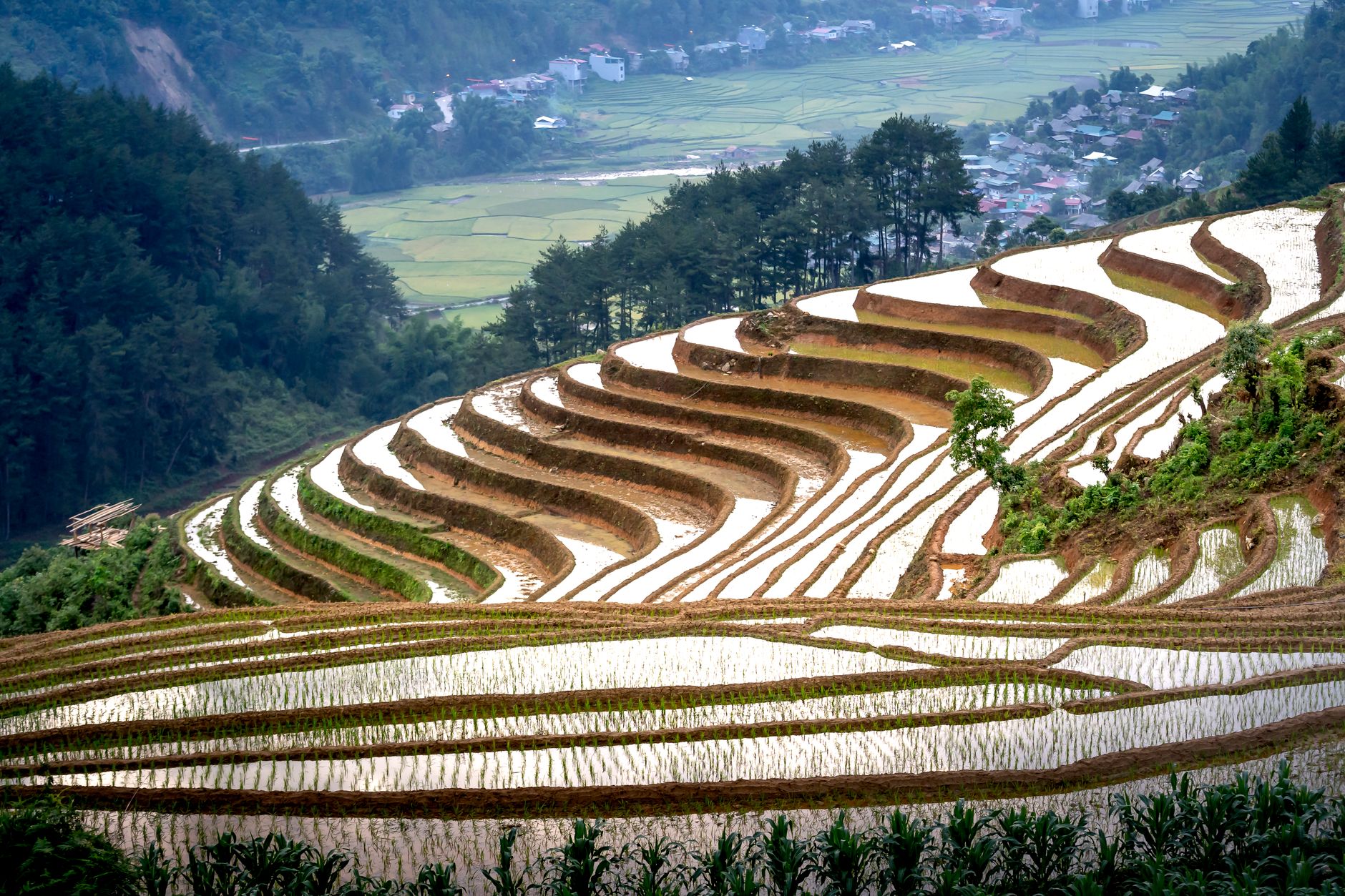
| Late May to mid-Jun | Flooded after transplanting | Mirror reflections | Rain increasing | Low | Second-best window |
| Jul to Aug | Deep growth | Intense green | Peak rain, landslide risk | Moderate | Views often clouded |
| 15 Sep to 5 Oct | Ripening | Gold | Mixed, cooler | Highest | The golden peak |
| Mid to late Oct | Late harvest | Gold fading to straw | Clear, cool | Moderate | Gamble for colour, good visibility |
Lower terraces ripen first and higher ones later, so the gold moves up the valley over about three weeks. Arriving at the start of the window means some fields are still green; arriving at the end means some are already cut.
Today is 16 October 2026. The 2026 gold season is over. The next windows are late May to mid-June 2027 for water and mid-September to early October 2027 for gold.
The local autumn cultural-tourism week and paragliding events usually fall around September or early October, with dates announced late. Check the local authority page closer to the time rather than relying on a past date.
How to get to Mu Cang Chai
Lead with the road reality: about 280 to 300 km from Hanoi, normally 6 to 7 hours of driving plus stops. Weekends, rain and landslides all add time. Many guides say 7 to 8 hours, so treat 6 to 8 as the honest range.
From Hanoi by bus. Sleeper and limousine buses and minivans run from My Dinh and other departure points to Mu Cang Chai town. Indicative fare is about 250,000 to 400,000 VND (10 to 15 USD). Bus quality varies widely, and the last stretch over Khau Pha is slow and curvy. Late-September weekends sell out, so book a day or two ahead.
From Hanoi by private car with driver. One way runs about 3 to 5 million VND (115 to 190 USD) depending on car size and season.
By train plus road. The Hanoi to Lao Cai line stops at Yen Bai, then 3 to 4 hours onward by road.
From Sapa. About 160 km via Than Uyen, Tu Le or the Tram Tau corridor, 4 to 5 hours. Scenic but tiring, and the Sapa side around O Quy Ho pass often sits in fog.
From Nghia Lo or Tu Le. About 60 km, roughly 1.5 hours via Khau Pha pass on QL32.
There is no Grab in Mu Cang Chai. Ride-hailing is not reliable here, so arrange transport in advance or rent on site.
Getting around on site
Viewpoints are spread over 10 to 40 km of mountain road, so a car or motorbike is essential. Walking works only for the village trails around La Pan Tan.
Automatic scooters rent for about 150,000 to 300,000 VND a day (6 to 12 USD). Manual bikes handle the passes better. You need a valid licence recognised in Vietnam plus an IDP, and the rules under the 2025 road law and the 1968 Vienna Convention are worth checking before you travel. Many insurers exclude riders without a proper licence.
Local rider-guides cost roughly 300,000 to 600,000 VND a day. A private car with driver for the loop runs about 1.5 to 2.5 million VND a day.
ATMs are few and cash runs out in busy periods. Petrol is available in town. Mobile signal disappears in the deeper valleys.
Khau Pha pass has tight bends, fog and trucks that cut corners. Fatal tourist accidents have occurred on rented scooters, and rain makes the road slick. Anyone with limited mountain riding experience should take a car or a local driver.
The terraces spot by spot, in visiting order from Khau Pha
| Spot | Commune | Distance from town | Best hour | Crowds | Small fees |
|---|---|---|---|---|---|
| Khau Pha pass | QL32, about 1,200 m | Arrival point | Early morning | High | Parking only |
| Lao Chai and Ho Bon | Lao Chai, Ho Bon | 5 to 15 km | Morning | Moderate | Sometimes |
| Mu Cang Chai town | Town centre | Base | Any | Market hours | None |
| Che Cu Nha | Che Cu Nha | 15 to 20 km | Morning, low light | Low | Sometimes |
| De Xu Phinh | De Xu Phinh | 20 to 25 km | Morning | Low | Sometimes |
| La Pan Tan | La Pan Tan | 10 to 15 km | Sunrise, sunset | High | 10,000 to 30,000 VND |
| Mam Xoi viewpoint | La Pan Tan area | 12 to 18 km | Sunrise | High | 10,000 to 30,000 VND |
| Pung Luong | Pung Luong | 25 to 35 km | Any | Very low | None |
1. Khau Pha pass. The arrival point on QL32 at about 1,200 m. Morning sea of clouds, and the paragliding take-off is here, seasonal around September and October. One of Vietnam's "four great passes" alongside Ma Pi Leng, O Quy Ho and Pha Din. Busy, but it gives you the scale of the place in one view.
2. Lao Chai and Ho Bon valley. Large sweeping curves close to the main road, often the first terraces you see. Good for a quick stop and relatively accessible.
3. Mu Cang Chai town. A functional base with homestays, a market, fuel and ATMs. Check the Hmong market day locally rather than trusting a weekday from an old blog.
4. Che Cu Nha. Terraces carved along a river valley, steep and sculptural, with Hmong villages. Best in the morning and in lower light.
5. De Xu Phinh. One of the three nationally ranked areas. Wide curves, usually less crowded than La Pan Tan.
6. La Pan Tan. The most photographed and most commercial. Homestays, trail starts, and hillside walks of roughly 45 minutes one way from the known homestay cluster. Weekend crowds are real.
7. Mam Xoi and other named spots. The "tray" or "platter" viewpoint, plus marketing names like "Horseshoe" and "Dinosaur spine". Some are private land with small fees, typically 10,000 to 30,000 VND. Verify each on a map, since names and communes shift.
8. Sunset viewpoints. The direction of light matters more than the name of the spot. Work out which slope faces west in each valley and stand above it, not in it.
9. Pung Luong and other quieter villages. The alternative for calmer light and fewer visitors.
What most visitors miss: the first hour after sunrise, when mist fills the valleys. Walk through a village rather than only stopping at roadside viewpoints, and look at the irrigation channels. Not every road leads to a viewpoint, and the terraces are working farmland.
Photography, crowds and insider tips
Choose elevated roadside curves rather than the paddies themselves. Standing on bunds damages the structure and angers farmers.
Best hours are roughly 6:00 to 8:30 for mist and soft light, and the last 90 minutes before sunset for colour. Midday is harsh and hazy.
To avoid crowds, arrive Tuesday to Thursday, start before sunrise, stay overnight rather than day-tripping, and skip La Pan Tan on Saturday late morning. In peak week, expect traffic on QL32 and booking pressure.
Some locals offer Hmong costume photo rentals and pay-to-pose, usually 20,000 to 100,000 VND. Ask before photographing anyone and respect refusals.
Vietnam requires permission for many drone flights. Crowd noise and farmer complaints are also an issue, so avoid flying near homes.
Check forecasts for fog, which can hide everything. Mist is good, thick cloud is not. Pack layers for 10 to 18 degrees C at dawn in October, a rain shell, and grippy shoes, as paths are slippery.
Etiquette, rules and safety
The terraces are open land with no official gate or ticket. Small private charges can apply at some viewpoints, homestay trails and parking spots, usually 10,000 to 50,000 VND (under 2 USD).
There is no formal dress code, but cover up in villages, remove shoes if invited into a home, and ask before entering a field or photographing someone.
Do not walk along terrace edges, take rice, or give sweets or cash to children.
Carsickness on the pass, leeches on wet trails, sun at altitude and slippery paths are the everyday risks. Landslides and flash floods are real from June to September. Check road status before travelling.
Confirm motorbike coverage and licensing with your insurer before renting. Carry cash for homestays and viewpoints, since ATMs are few and run dry in peak periods.
Where to stay and eat
Base in Mu Cang Chai town for services and convenience, La Pan Tan for viewpoint access and homestays, or Pung Luong for resort-style stays.
Price bands in 2026:
- Dorms and basic guesthouses: about 150,000 to 350,000 VND (6 to 13 USD).
- Mid-range homestays and hotels: about 400,000 to 900,000 VND (15 to 35 USD).
- Upper-end resort-style stays: several million VND per night. One Expedia snapshot showed a luxury property at ฿5,741 a night, roughly 4.3 million VND (about 165 USD). Treat this as a snapshot, not a rate.
Peak late-September weekends can double rates.
Food options are limited and there is little Western food. Homestay dinners are the norm. Town restaurants serve noodle soup, hot pot and grilled river fish. "Thang co" is an acquired taste involving horse meat and offal. In autumn, look for green sticky rice flakes (com) in Tu Le.
Book ahead from mid-September, bring cash, and expect early dinner times.
Combine with and compare with other terraces
Combine Mu Cang Chai with Tu Le valley for green rice flakes and Thai villages, Nghia Lo for Muong Lo Thai culture, Than Uyen tea hills, Tram Tau, and Sapa via Tram Ton and O Quy Ho pass for a loop of about 160 km, with 50 km on the pass and a summit above 2,000 m.
| Place | Scale | Drama | Crowds | Access | Best month | Best for |
|---|---|---|---|---|---|---|
| Mu Cang Chai | Huge, open | Highest | High in peak | 6 to 7 h from Hanoi | Sep to early Oct | Photographers, road trippers |
| Hoang Su Phi | Intricate | High | Low | 6 to 7 h from Hanoi | Sep to Oct | Quiet, detailed terraces |
| Sapa | Large valley | Moderate | Very high | Overnight train or highway | Sep to Nov | Easiest access, mixed trip |
| Pu Luong | Gentler | Moderate | Moderate | 4 h from Hanoi | May to Jun, Sep to Oct | Short trips, forest and limestone |
| Y Ty | Remote | High | Very low | 7 h plus from Hanoi | Sep to Oct | Cloud seas, solitude |
Mu Cang Chai's edge is open scale and drama. Hoang Su Phi is more intricate and quieter. Sapa is the easiest from Hanoi but the most commercial. Pu Luong is the gentlest. Y Ty is for travellers who want remoteness more than convenience.
Sample itineraries and how long to allow
One night is the minimum, which means two days with a night on site. Two nights is ideal, with sunrise and sunset in different valleys.
- Overnight from Hanoi: leave early, evening in town, dawn at Khau Pha or La Pan Tan, return the next day.
- Two nights: adds De Xu Phinh and Che Cu Nha plus a village walk.
- Three-day loop to Sapa: via Than Uyen and O Quy Ho pass.
A same-day round trip from Hanoi means about 12 to 14 hours in a vehicle. It is not worth it.
Practical FAQ
Q: Where is Mu Cang Chai located? In the mountains of northwest Vietnam, about 280 to 300 km from Hanoi. It was part of Yen Bai Province and is now in Lao Cai Province after the 2025 reorganisation. Khau Pha pass sits to the east, Tu Le beyond it, and Than Uyen and Sapa to the west and north.
Q: How do you get to Mu Cang Chai from Hanoi? By sleeper bus or minivan from Hanoi, about 6 to 8 hours and roughly 250,000 to 400,000 VND (10 to 15 USD), or by private car with a driver for 3 to 5 million VND (115 to 190 USD). The last stretch over Khau Pha is slow, and landslides can delay trips in the rainy season.
Q: What is there to do in Mu Cang Chai? Photograph the terraces at sunrise and sunset, walk village trails around La Pan Tan, drive Khau Pha pass, watch or try paragliding in season, and sleep in a Hmong homestay. There are few indoor attractions.
Q: Where is the best place to see rice terraces in Vietnam? Mu Cang Chai is the most dramatic for scale and the easiest to photograph from roads. Hoang Su Phi is more intricate and quieter, Sapa is easiest from Hanoi, and Pu Luong is the gentlest. See the comparison table above.
Q: Is there an entrance fee for the Mu Cang Chai terraces? There is no official gate or ticket. Some private viewpoints, parking spots and homestay trails charge small fees, usually 10,000 to 50,000 VND (under 2 USD). Paragliding and tours are separate paid services.
Q: When is the best time to visit Mu Cang Chai? Mid-September to early October for gold, and late May to mid-June for flooded terraces and fewer people. Today is 16 October 2026, so the 2026 gold season is over and the next windows are in 2027.
Q: Can you ride a motorbike there, and is it safe? Yes, with a valid licence and insurance, but the mountain roads are demanding, and rain, fog and trucks raise the risk. Beginners should hire a car or a local driver.