The good news: Hue is compact. A Grab motorbike ride from the Citadel to the south bank costs 20,000-30,000 VND ($1-1.20). You can walk across the Trang Tien Bridge in 15 minutes. But the character of each area differs enough that your choice will shape your trip.
This guide breaks down the main areas, what each one suits, and specific hotels at every price point.
Practical tip: don't forget travel insurance before heading to Vietnam — Heymondo applies an automatic 15% discount through our partner link, no code needed.
The three main areas: a quick overview
| Area | Vibe | Best for | Nightlife | Food access |
|---|---|---|---|---|
| Citadel (north bank) | Historic, quiet, local | History buffs, photographers, slow travelers | Limited | Good, local-focused |
| South bank (city center) | Lively, convenient, tourist-friendly | First-time visitors, food lovers, nightlife | Active | Excellent |
| Thuan An Beach (east) | Remote, coastal, sleepy | Beach lovers, families, digital detox | None | Basic |
There is a fourth option worth mentioning: the area around Vinh Ninh and the backpacker strip on Pham Ngu Lao Street. This overlaps with the south bank but has its own identity. Budget travelers and solo backpackers will find the densest concentration of hostels and cheap guesthouses here.
Staying inside the Citadel: history at your doorstep
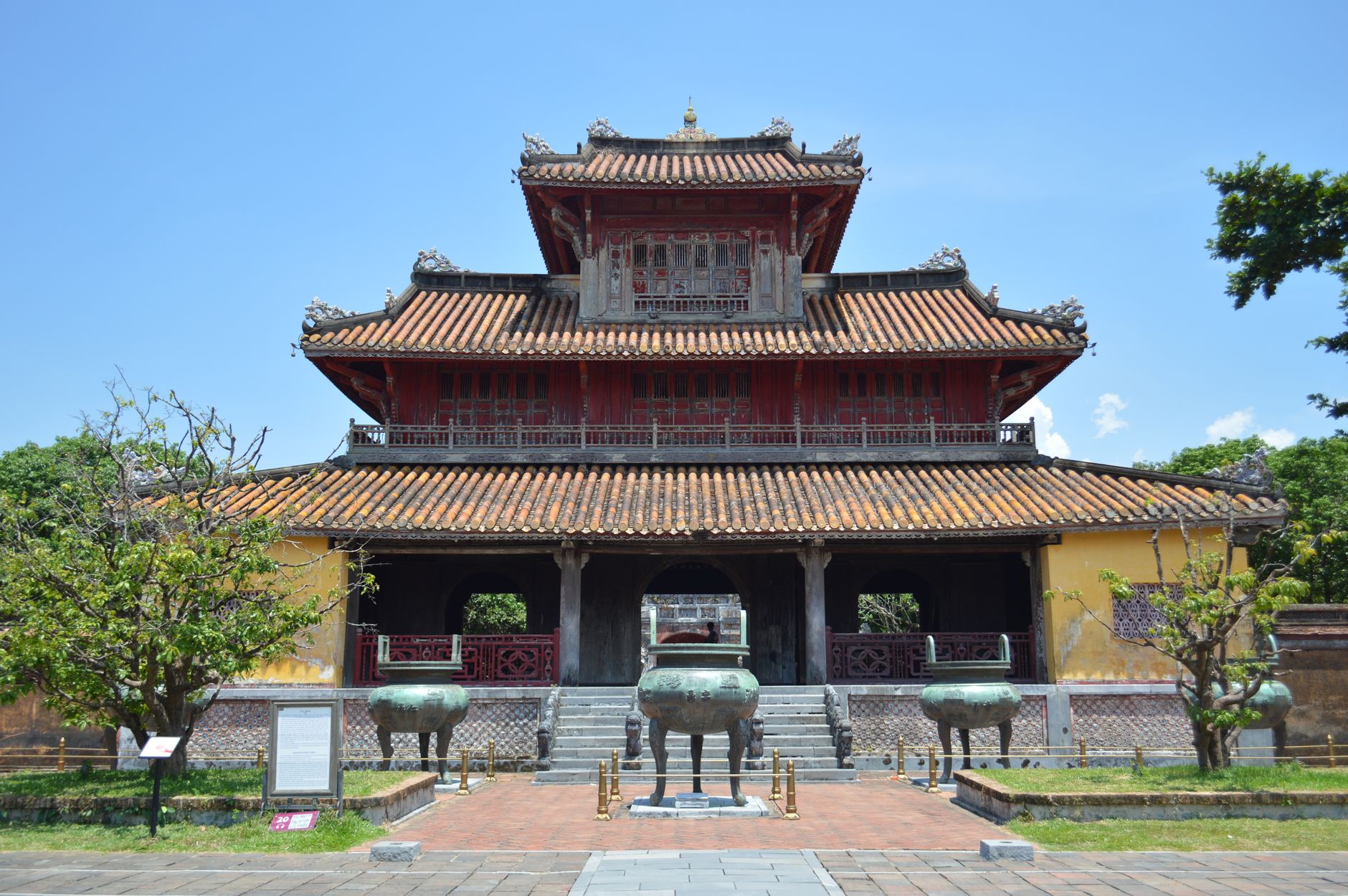
The Citadel is the heart of old Hue. The massive fortress complex, built in 1804, contains the Imperial City, the Forbidden Purple City, and a maze of streets that have been continuously inhabited for two centuries.
Inside the walls, life moves slower. Narrow lanes hide family homes, small temples, and the occasional coffee shop. Many buildings have survived war and weather, though some are crumbling. This is authentic Vietnam, not a preserved theme park.
What works well:
- You can visit the Imperial City at opening time, before the tour groups arrive. The ticket office opens at 6:30 AM, and the first hour is magical.
- The area is walkable. The main gate, Ngo Mon, is a 10-minute walk from most guesthouses.
- Local restaurants here are cheaper and less polished than their south bank counterparts. A bowl of bun bo Hue costs 35,000-45,000 VND ($1.40-1.80).
What works less well:
- Restaurants and cafes close early. By 9 PM, the streets are mostly dark.
- Some buildings lack proper insulation. Summer heat can be intense inside old structures.
- The area is less convenient for nightlife, cooking classes, and the better-known restaurants.
Budget pick: Tam Homestay
Tam Homestay occupies a renovated traditional house on a quiet lane inside the Citadel. Rooms start at 350,000 VND ($14) per night. The owner speaks English well and can arrange motorbike rentals and DMZ tours. Breakfast is included and served on a lovely courtyard. The walls are thick, which keeps rooms cooler than most.
Mid-range pick: Heritage Hue Hotel
Despite the name, Heritage Hue Hotel is a boutique property rather than a grand resort. It sits just outside the Citadel walls, a five-minute walk from the main gate. Rooms go for 900,000-1,200,000 VND ($36-48) per night. The rooftop pool offers views over the fortress. The restaurant serves solid Vietnamese food, including an excellent banh khoai (Hue-style crispy pancake).
Luxury pick: Azerai La Residence
Azerai La Residence is technically on the south bank, but it deserves mention here because it's the closest luxury option to the Citadel. The hotel occupies a 1930s Art Deco building that served as the French governor's residence. Rooms start at 3,500,000 VND ($140) per night. The pool, the river views, and the colonial atmosphere justify the price for those who want it.
Who should stay here: History buffs, photographers, couples wanting a quiet romantic base, and anyone who wants to experience the Citadel after the day-trippers leave.
The south bank: where most visitors should stay
The south bank is modern Hue. This is where the train station, bus station, most restaurants, bars, and hotels are concentrated. The area around Pham Ngu Lao Street and Vo Thi Sau Street forms the tourist core.
What works well:
- Everything is convenient. The night market on Vo Thi Sau opens at dusk. The famous restaurants like Hanh, Madam Thu, and Nook are within walking distance.
- The riverfront promenade is perfect for evening walks. The Trang Tien Bridge lights up at night.
- Grab cars and motorbikes are plentiful. Getting to the Citadel takes 10 minutes and costs 30,000 VND ($1.20).
- The food scene is exceptional. Hue is famous for its imperial cuisine, and the south bank has the best concentration of restaurants serving it.
What works less well:
- The tourist core can feel generic. Pham Ngu Lao is lined with the same souvenir shops, massage parlors, and bars you'll find in every Vietnamese city.
- Traffic is busier and noisier than the Citadel.
- Street noise can be a problem, especially on weekend nights.
Budget pick: Hue Nino Hotel
Hue Nino Hotel is a step above the typical budget guesthouse. Rooms are clean, modern, and quiet, with good air conditioning. Doubles cost 350,000-450,000 VND ($14-18) per night. The staff are helpful and can book buses and tours. It's a five-minute walk from the night market.
Mid-range pick: Moonlight Hotel Hue
Moonlight Hotel Hue sits on the riverfront, with many rooms offering direct views of the Perfume River and the Citadel across the water. Rooms go for 1,200,000-1,600,000 VND ($48-64) per night. The rooftop bar is a good spot for sunset drinks. The location is ideal: close enough to the tourist core but far enough to avoid the noise.
Luxury pick: Indochine Palace
Indochine Palace is the most polished luxury option in central Hue. The hotel is a modern interpretation of imperial architecture, with spacious rooms, a large pool, and a spa. Rooms start at 2,800,000 VND ($112) per night. The breakfast buffet is one of the best in the city, with local specialties like bun bo Hue and banh beo prepared fresh.
Who should stay here: First-time visitors, food lovers, anyone who wants easy access to restaurants and nightlife, and travelers who prefer convenience over atmosphere.
The backpacker strip: Pham Ngu Lao and around
Pham Ngu Lao Street is the budget traveler hub. Hostels, cheap guesthouses, travel agencies, and casual restaurants line the street and its side alleys.
What works well:
- The cheapest beds in the city: dorm beds from 100,000-150,000 VND ($4-6) per night.
- Easy to meet other travelers. Most hostels organize group activities, bar crawls, and day trips.
- Travel agencies can book buses, trains, and tours with minimal effort.
What works less well:
- It's loud. Bars play music until late, and the street is busy with motorbikes.
- Quality varies wildly. Read recent reviews carefully before booking.
- The area feels disconnected from the rest of Hue. It's easy to spend your whole trip here without seeing the real city.
Budget pick: Hue Happy Homestay
Hue Happy Homestay offers dorm beds for 120,000 VND ($5) per night and private rooms for 300,000 VND ($12). The common area is social without being chaotic. The staff organize family dinners and can help with bus tickets to Hoi An, Da Nang, and beyond. For hostel advice in general, check the guide to hostels in Vietnam.
Mid-range pick: Jade Hotel
Jade Hotel is a budget hotel that acts like a mid-range one. Rooms are small but well-designed, with good bathrooms and comfortable beds. Doubles cost 600,000-800,000 VND ($24-32) per night. The rooftop terrace is a quiet escape from the street below.
Who should stay here: Solo backpackers, budget travelers, groups of friends, anyone who wants to meet other travelers.
Thuan An Beach: the quiet escape
Thuan An Beach sits about 15 kilometers east of central Hue. It's a long stretch of sand where the Perfume River meets the South China Sea. The area is undeveloped compared to Da Nang or Nha Trang. There are a handful of hotels and seafood restaurants, but no nightlife and limited services.
What works well:
- Genuine tranquility. Even in high season, the beach rarely feels crowded.
- Seafood is excellent and cheap. Local restaurants serve whatever the fishing boats brought in that morning.
- Sunsets over the water are spectacular.
What works less well:
- The beach is not the best in Vietnam. The water can be rough, and the sand is darker than at Da Nang.
- You need transport. Grab cars from central Hue cost 250,000-350,000 VND ($10-14) each way. Renting a motorbike is the better option if you're comfortable riding. See the guide to driving in Vietnam for legal requirements.
- Limited dining options outside seafood restaurants.
Budget pick: Canary Hotel Thuan An
Canary Hotel is a simple beachfront property with clean rooms and direct beach access. Doubles cost 400,000-500,000 VND ($16-20) per night. The restaurant serves decent Vietnamese food, and the staff can arrange boat trips to nearby lagoons.
Mid-range pick: Vedana Lagoon Resort
Vedana Lagoon Resort is technically a luxury property, but it often has promotions that bring prices down to around 1,800,000 VND ($72) per night. The resort sits on a lagoon between the beach and the city, with overwater bungalows and a stunning infinity pool. It's a 20-minute drive from both the beach and the city center.
Who should stay here: Families with children, couples wanting a romantic escape, anyone who wants to avoid the city entirely.
Practical tips for choosing your Hue base
Think about your itinerary. If you're only in Hue for one night, stay on the south bank. You'll want easy access to restaurants and the night market. If you have two or three nights, consider splitting between the Citadel and the south bank. The Citadel is magical at dawn and dusk.
Book ahead during festivals. The Hue Festival runs every two years and fills hotels months in advance. The next edition is scheduled for June 2026. Prices double or triple during the festival period.
Consider the weather. Hue gets heavy rain from September to November. During this period, choose a hotel on the south bank with easy access to indoor attractions. The Citadel area can flood, and some budget properties lack proper drainage. The weather in central Vietnam is worth understanding before you book.
Check the room before you commit. Vietnamese hotels often have rooms that look great in photos but have no windows, thin walls, or mold issues. Read recent reviews on Google Maps and Booking.com. Look for mentions of noise, air conditioning, and water pressure.
How to get around after you've settled
Hue is walkable in the center, but you'll need transport for the royal tombs and other sights outside the city.
- Grab motorbike: The best option for solo travelers. Download the app before you arrive. Fares are 15,000-30,000 VND ($0.60-1.20) for most trips within the city.
- Grab car: Comfortable for couples and groups. Fares are 40,000-80,000 VND ($1.60-3.20) within the city.
- Rental motorbike: 120,000-150,000 VND ($5-6) per day. Most hotels and guesthouses can arrange one. Check the bike's condition before you take it.
- Cyclo: Tourist-oriented and expensive. Negotiate the price before you get in. A 30-minute ride should cost 100,000-150,000 VND ($4-6).
The royal tombs are spread out. The most efficient way to see them is to hire a driver for the day. Expect to pay 700,000-1,000,000 VND ($28-40) for a car and driver for 8 hours. This is cheaper than booking a tour and gives you flexibility.
Where to eat near your hotel
Hue's food scene is one of the best in Vietnam. The city is known for its imperial cuisine, which features small, beautifully presented dishes. Here's where to go based on your neighborhood:
Inside the Citadel: Look for small family restaurants serving bun bo Hue and banh khoai. The area around the Dong Ba Market has excellent street food stalls. Try the banh beo (steamed rice cakes) from the vendors near the market's east gate.
South bank: The concentration of good restaurants is highest here. Hanh Restaurant on Pham Thi Lien is famous for bun bo Hue. Madam Thu serves a wide range of imperial dishes. Nook is a modern option with a lovely garden setting.
Backpacker strip: The street food stalls on Pham Ngu Lao offer cheap versions of Vietnamese classics. For something more substantial, walk to the nearby streets where locals eat. The banh mi from the cart on the corner of Vo Thi Sau and Nguyen Tri Phuong is excellent.
Day trips from your Hue base
Hue is a good base for several day trips. The DMZ tours to the former demilitarized zone are popular. The Vinh Moc Tunnels and the Hien Luong Bridge are worth seeing for history buffs.
The abandoned water park at Thuy Tien Lake is a strange and photogenic spot, about 30 minutes from the city center. The jungle is reclaiming the site, and the dragon-shaped building is a favorite for Instagram photos.
For a different experience, head to the beaches of Lang Co or the fishing village of Vinh Hien. Both are about an hour from the city by motorbike.
How Hue compares to other central Vietnam destinations
Many travelers visit Hue as part of a central Vietnam loop that includes Da Nang and Hoi An. Each city has a different character.
Da Nang is the modern coastal city with beaches and bridges. It's the best base for day trips and has the most international restaurants. See the Da Nang neighborhood guide for details.
Hoi An is the lantern-lit ancient town, romantic and touristy. It's smaller and more walkable than Hue, but more expensive. The Hoi An accommodation guide breaks down the options there.
Hue is the historical heavyweight. It's less polished than the other two, but it offers the deepest cultural experience. The food is also the most distinctive. For a full comparison, read the guide to Hoi An vs Hue.
Final recommendations
For first-time visitors: Book a mid-range hotel on the south bank. Moonlight Hotel Hue or a similar property gives you the best combination of location, comfort, and value. Spend one full day exploring the Citadel and one day visiting the tombs.
For budget travelers: Stay in a hostel or guesthouse on the backpacker strip. The social atmosphere makes it easy to find travel companions and split costs. Budget 250,000-350,000 VND ($10-14) per day for accommodation, food, and transport.
For history lovers: Stay inside the Citadel. The experience of waking up within the old fortress walls is worth the minor inconveniences. Tam Homestay is an excellent choice.
For families: Consider the south bank for convenience, or Vedana Lagoon Resort if you want a resort experience. The lagoon is calm and safe for children.
For couples: The south bank offers the most romantic restaurants and river views. Splurge on a river-view room at a mid-range hotel.
Hue is a city that demands time. The imperial capital's best moments come when the tour groups have left and the streets return to their slow rhythm. Choose your base carefully, and the city will reveal itself.
FAQ
Q: How many nights should I stay in Hue? Two nights is the minimum for seeing the Citadel and one or two tombs. Three nights allows a relaxed pace and a day trip. Four nights is too many for most travelers unless you want to use Hue as a base for the DMZ and other sights.
Q: Is it better to stay on the north or south side of the Perfume River? The south bank is more convenient for restaurants, nightlife, and transport. The north bank (Citadel) is more atmospheric and historic. Most first-time visitors should choose the south bank, with a day trip to the Citadel.
Q: What is the cheapest way to get from Hue to Hoi An? The local bus costs 80,000-100,000 VND ($3.20-4) and takes about 3.5 hours. The private minibus costs 150,000-200,000 VND ($6-8) and is faster. The scenic route over the Hai Van Pass by motorbike is the most memorable option. See the transport guide to Hoi An for details.
Q: Do I need to book hotels in Hue in advance? In low season (December to February), you can often find walk-in rates cheaper than online prices. In high season (March to August) and during festivals, book at least a week ahead. During the Hue Festival, book months in advance.
Q: Is Hue safe at night? Hue is generally safe, but the usual precautions apply. Keep valuables out of sight, use Grab for late-night transport, and avoid walking alone in poorly lit areas. The safety guide for Vietnam covers the broader picture.
Q: What is bun bo Hue and where should I try it? Bun bo Hue is the city's signature dish: a spicy beef noodle soup with lemongrass, shrimp paste, and pork. Unlike pho, it has a rich, reddish broth. Try it at Hanh Restaurant on Pham Thi Lien or from the stalls near Dong Ba Market. A bowl costs 35,000-50,000 VND ($1.40-2).
Q: Can I visit Hue as a day trip from Da Nang? Technically yes, but it's not recommended. The drive takes 2-3 hours each way, leaving barely enough time to see the Citadel and one tomb. You'll spend most of the day in transit. Stay overnight in Hue instead.