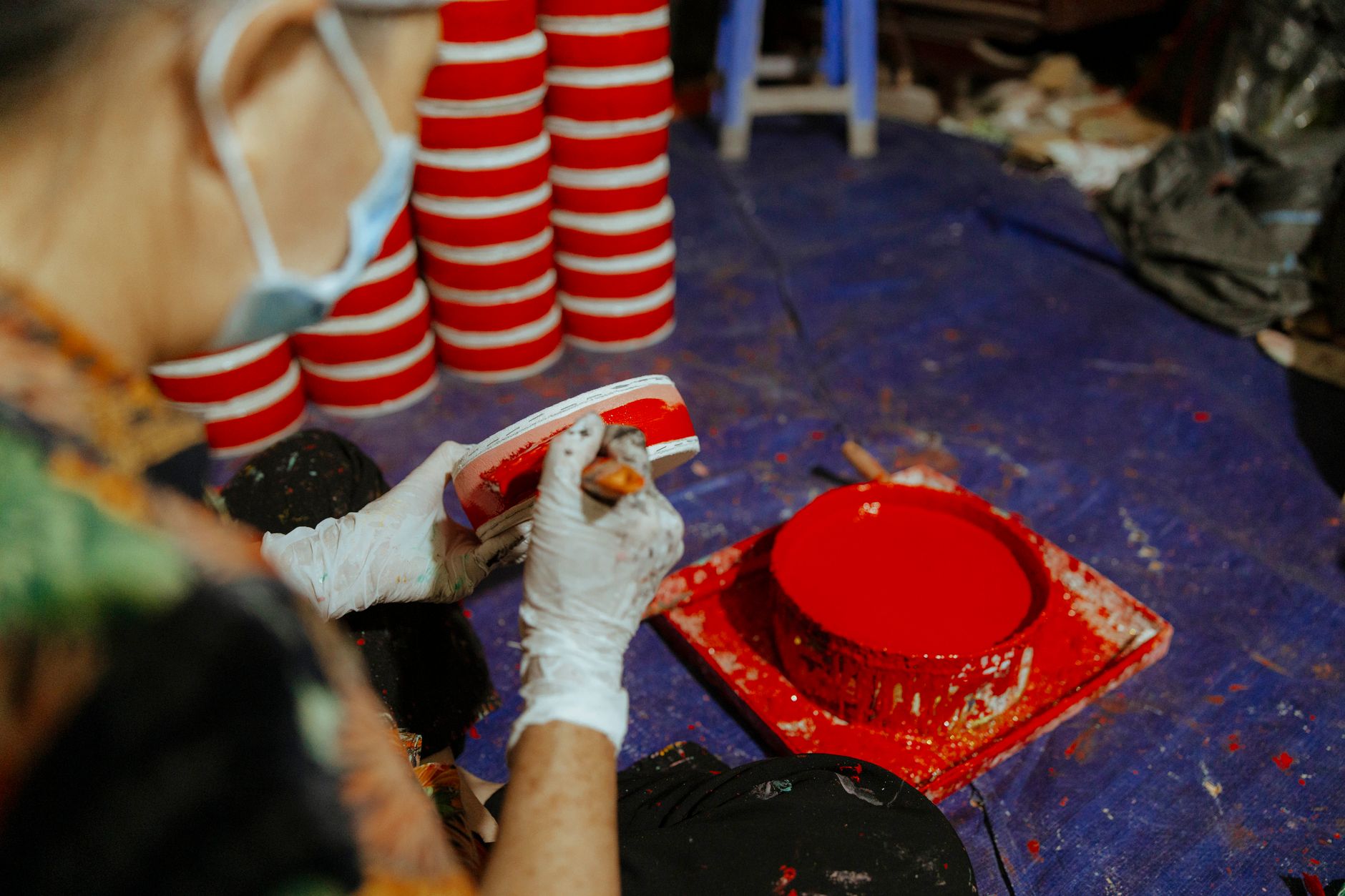
Vietnam produces some of the world's finest lacquerware. The art form dates to the 1925 École Superieure de Beaux Arts d'Indochine, where Vietnamese artists transformed a functional craft into a fine art tradition. Today, travelers encounter lacquerware in every tourist market, but the market is flooded with fakes.
This guide explains how real lacquerware is made, where to watch artisans at work, what prices to expect in 2026, and how to tell a genuine piece from a printed souvenir.
What is Vietnamese lacquerware and why does it matter for travelers
Lacquerware includes both functional objects and fine art. Bowls, trays, jewelry boxes, and chopsticks fall into the functional category. Lacquer paintings, often featuring landscapes, lotus flowers, or abstract compositions, represent the fine art side.
Vietnamese lacquerware stands apart from Japanese and Chinese lacquerware for two reasons. First, the Vietnamese son mai technique uses more layers (typically 15-20 versus 8-12 in Chinese lacquerware). Second, Vietnamese artists pioneered the use of eggshell and mother-of-pearl inlay, creating distinctive textured surfaces.
For travelers, lacquerware is one of Vietnam's most meaningful souvenirs. A genuine piece carries the story of a craft village, the skill of an artisan, and a tradition that predates French colonization. But buying real lacquerware requires knowledge. The difference between a $20 souvenir and a $200 investment is invisible to the untrained eye.
The son mai process: how real lacquerware is made in 20 steps
The son mai process transforms raw tree sap into a surface as hard and smooth as polished stone. Every step requires patience. Each layer must dry completely before the next can be applied.
Step 1-3: Wood selection and base preparation
Artisans select seasoned wood, typically jackfruit wood or pine. The wood is carved or assembled into the desired shape. A base coat of raw lacquer mixed with clay powder seals the wood.
Step 4-8: Layering, gauze application, and initial sanding
A layer of cotton gauze is pressed into the wet lacquer. This prevents cracking as the piece ages. Artisans apply 8-12 layers of lacquer, each one water-sanded after drying. The sanding uses progressively finer grits of stone powder or sandpaper.
Step 9-15: Decorative techniques — eggshell, mother-of-pearl, gold leaf, and hand painting
This is where the piece becomes art. Artisans press crushed eggshell or cut mother-of-pearl into wet lacquer. Gold leaf is applied for metallic accents. Mineral pigments are hand-painted onto the surface. Each technique requires its own drying time and skill set.
Step 16-20: Final sanding, polishing, and quality control
The final layers are sanded with increasingly fine abrasives. The last polish uses ash or fine clay powder rubbed by hand for hours. The result is a surface that reflects light like a mirror.
Pro tip: A genuine piece requires a minimum of 100 days. If a seller claims a piece was made in two weeks, it is either factory-produced or missing layers.
Three types of lacquerware you will encounter in Vietnam
Travelers will see three main decorative techniques in Vietnamese shops and galleries.
Mother-of-pearl inlay
Seashells are cut into thin pieces (about 2mm thick) and embedded into wet lacquer. The shell pieces catch light and shift color as the viewing angle changes. Mother-of-pearl work is more common in Hoi An due to coastal access to seashells.
Eggshell inlay
Duck eggshell from hatched ducks is crushed and pressed into the lacquer. Vietnamese artisans prize duck eggshell for its whiteness and thickness. Chicken eggshell is thinner and less durable. Eggshell inlay creates a distinctive crackled pattern.
Painted lacquer
Artists hand-paint designs using mineral pigments mixed with lacquer. Traditional colors include black, red, brown, and gold. Modern works use a wider palette. Painted lacquer pieces show subtle brush strokes on close inspection.
| Technique | Materials used | Visual appearance | Price impact | Durability |
|---|---|---|---|---|
| Mother-of-pearl inlay | Seashells, 2mm thick | Iridescent, shifts color with light | High (shells are expensive) | Very durable |
| Eggshell inlay | Duck eggshell | Crackled white pattern | Medium | Durable |
| Painted lacquer | Mineral pigments | Smooth, brush strokes visible | Medium to high (artist skill) | Good, but fades in direct sun |
How to tell a hand-finished lacquerware piece from a printed souvenir
This is the most important skill for any traveler buying lacquerware. Factory-made souvenirs use printed designs covered with a thin layer of clear lacquer. They look convincing at first glance. These tests reveal the truth.
Check the back of the piece. Real lacquerware has layered buildup on the back and edges. The sanding process creates visible rings or ridges. Printed souvenirs have a flat, uniform back with no layered texture.
Run your fingers across the surface. Real lacquer feels warm and smooth like polished stone. Printed lacquer feels cold and plasticky. The difference is noticeable within seconds.
Examine the edges for brush marks. Hand-painted pieces show subtle brush strokes or slight unevenness in color application. Printed pieces have perfect uniformity. No human hand can achieve perfect uniformity.
Check mother-of-pearl or eggshell edges. Real inlay feels slightly raised. You can catch a fingernail on the edge of a shell piece. Printed imitations of inlay are perfectly flat.
Warning: Some factories spray real lacquer over printed images to mimic depth. This is the "lacquer over print" scam. The tests above (checking the back for layered buildup and feeling the surface temperature) still work.
What a real piece costs: price ranges by size, technique, and origin
Prices in 2026 vary dramatically. Here is a realistic breakdown by category.
| Type | Size | Souvenir price (market) | Gallery price | Master price |
|---|---|---|---|---|
| Coasters, chopsticks, small bowls | 5-10 cm | $5-20 | $20-50 | N/A |
| Trays, jewelry boxes, small paintings | 30x40 cm | $20-50 | $50-200 | $200-500 |
| Medium paintings, large trays | 40x60 cm | $50-100 | $150-500 | $500-1,500 |
| Large hand-painted works | 60x80 cm+ | $100-200 | $300-3,000 | $3,000-20,000+ |
Why do prices vary so much? Three factors matter.
Number of layers. A genuine piece has 15-20 layers. Each layer adds materials and labor time. Factory pieces often have 3-5 layers.
Materials. Mother-of-pearl costs more than eggshell. Gold leaf costs more than mineral paint. A piece with extensive shell inlay will cost 2-3 times more than a painted piece of the same size.
Artist reputation. Named artists with gallery representation charge premium prices. Their works are investments, not souvenirs.
Warning: The TripAdvisor complaint about "OVERPRICED SCAM" at Thu Huong Lacquer Arts in Hanoi is a real cautionary tale. A traveler paid $500 for what turned out to be a factory piece. Always verify authenticity before paying premium prices.
Where to buy lacquerware in Hanoi: workshops, galleries, and markets
Hanoi offers the widest selection of lacquerware in Vietnam. Three tiers of purchasing exist.
Craft villages: Ha Thai lacquer village
Ha Thai village sits 20 km south of Hanoi. A taxi costs about 300,000 VND ($12) each way. Buses run from Giap Bat station. Visitors can walk through workshops, watch artisans at every stage of production, and buy directly. Prices here are 30-50% lower than Hanoi galleries.
Reputable galleries in the Old Quarter
Hanoia on Hang Gai street offers certified pieces with documented provenance. Ngoc Thanh on Lo Su street has been in business for 25 years. These galleries charge premium prices but provide authenticity guarantees. Expect to pay $100-500 for a medium-sized piece.
Tourist markets
Dong Xuan Market and the Old Quarter night market sell lacquerware at bargain prices. A set of coasters costs $5-10. A small painting costs $15-30. Quality is inconsistent. Many pieces are factory-made with printed designs. Buy here for souvenirs, not investments.
Warning: Many shops on Hang Trong street sell factory-made pieces at gallery prices. Some "workshop visits" in the Old Quarter are showrooms with production happening elsewhere. Always ask to see the workshop.
Where to buy lacquerware in Hoi An: a quieter but equally rich market
Hoi An's lacquerware scene is less concentrated than Hanoi but offers excellent value, especially for mother-of-pearl work.
The Hoi An Handicraft Workshop on Nguyen Thai Hoc street is a cooperative where visitors can watch artisans at work. Prices are fair and transparent. A small mother-of-pearl tray costs $30-50. A medium painting costs $100-200.
Galleries on Nguyen Thai Hoc street offer higher-end pieces. The Hoi An Central Market has budget options but requires careful inspection.
Warning: Many "antique" lacquer pieces sold in Hoi An are artificially aged using sandpaper and shoe polish. Real antique lacquerware has consistent patina, not patchy wear. Avoid pieces that look deliberately distressed.
| Location | Best for | Price range | Authenticity risk | Workshop visits possible |
|---|---|---|---|---|
| Ha Thai village, Hanoi | Direct from artisans | $10-500 | Low | Yes |
| Old Quarter galleries, Hanoi | Certified pieces | $50-3,000 | Low to medium | Sometimes |
| Tourist markets, Hanoi | Budget souvenirs | $5-50 | High | No |
| Hoi An Handicraft Workshop | Fair prices, demonstrations | $20-300 | Low | Yes |
| Hoi An Central Market | Bargain hunting | $5-100 | High | No |
What to avoid: common scams, fakes, and overpriced traps
Travelers report several recurring scams. Knowing them prevents costly mistakes.
Lacquer over print. A printed image is covered with a thin layer of real lacquer. The piece looks glossy and deep but the design is not hand-painted. Use the tests described above to catch this.
The artist in the back trick. A workshop shows one elderly artisan working on a piece. The shop sells copies of different pieces that were factory-made elsewhere. Ask to see the specific piece being made.
Meaningless certificates of authenticity. Many shops print their own certificates. They carry no authority. Only buy from galleries that provide documentation from a recognized craft association.
Discount for cash pressure. Sellers pressure buyers with "special cash discount" offers. This rush tactic prevents careful inspection. Take your time.
Shipping bait-and-switch. The shop offers to ship the piece home. A different, lower-quality piece arrives. Photograph the exact piece you buy. Get the shop's address and phone number.
Warning: If a price seems too good to be true for a hand-painted piece, it is. Real lacquerware requires 100 days of labor. A $20 "hand-painted" painting is not hand-painted.
How to care for lacquerware so it lasts decades
Genuine lacquerware is durable but requires proper care. Follow these guidelines.
Keep out of direct sunlight. UV light causes fading and micro-cracking. Display lacquerware away from windows.
Avoid extreme heat and humidity. Do not place near stoves, radiators, or air conditioner vents. Temperature fluctuations cause the lacquer to crack.
Clean with a dry or slightly damp cloth only. Never use chemicals, alcohol, or abrasive cleaners. They damage the lacquer surface.
For functional pieces (bowls, plates). Wash with mild soap and warm water. Dry immediately. Do not soak. Avoid dishwashers.
Store pieces separately. Place soft cloth between stacked items to prevent scratching.
Pro tip: If shipping lacquerware home, carry it in cabin luggage. Checked baggage in summer heat can reach 60°C (140°F). The pressure and temperature changes cause cracking. Wrap pieces in soft cloth and place them in the center of your bag, away from hard objects.
Is Vietnamese lacquerware worth the investment?
Genuine Vietnamese lacquerware is among the world's finest. It compares favorably to Japanese and Chinese lacquerware but costs significantly less. A $200 piece from a Hanoi gallery would cost $500-800 in Tokyo.
The craft faces challenges. Younger Vietnamese workers leave craft villages for factory jobs. Handcrafted lacquerware is becoming increasingly scarce. Prices have risen 15-20% since 2022 and will likely continue climbing.
A $100-300 piece from a reputable workshop is a fair investment in both art and cultural preservation. It will last decades with proper care. Pieces under $20 are almost certainly factory-made. Buy them as souvenirs, not investments.
The best purchase is a piece that speaks to you personally. A tray you will use daily. A painting that reminds you of Vietnam's landscapes. A jewelry box that carries your travel memories. That is value no price tag can measure.
FAQ
Q: How can I tell if lacquerware is real or fake? A: Run your fingers across the surface. Real lacquer feels warm and smooth like polished stone, not cold and plasticky. Check the back and edges for layered buildup from the sanding process. Look for subtle brush strokes in painted areas. Perfect uniformity means it is printed.
Q: How much is a Vietnamese lacquer painting worth? A: Small souvenir paintings (20x30 cm) cost $20-50 at markets. Medium works (40x60 cm) from reputable galleries cost $150-500. Large hand-painted pieces by known artists (60x80 cm and above) start at $500 and can reach $3,000-20,000 for museum-quality works.
Q: Is lacquerware still being made today in Vietnam? A: Yes, but the craft is changing. Traditional workshops in villages like Ha Thai near Hanoi still produce handcrafted pieces using the 20-layer son mai process. However, many younger artisans leave for factory jobs, making genuine handcrafted lacquerware increasingly rare.
Q: Is made in Vietnam high quality for lacquerware? A: Genuine Vietnamese lacquerware is world-class, comparable to Japanese and Chinese lacquerware. Quality depends on the workshop. Pieces from established galleries and craft villages are excellent. Mass-produced souvenirs from tourist markets often have fewer layers and printed designs.
Q: Can I visit a lacquerware workshop in Vietnam? A: Yes. Ha Thai lacquer village (20 km south of Hanoi) welcomes visitors to watch artisans at work and buy directly. In Hoi An, the Hoi An Handicraft Workshop on Nguyen Thai Hoc street offers demonstrations. Some Hanoi galleries have viewing areas, but confirm production happens onsite.
Q: How long does it take to make real Vietnamese lacquerware? A: A genuine piece requires a minimum of 100 days. Each of the 20 layers must dry completely before the next is applied. Water-sanding between layers adds time. A large painting can take 6-12 months from start to finish.
Q: Can I bring lacquerware home in my luggage? A: Yes, but carry it in cabin luggage if possible. Checked baggage in summer heat can cause lacquer to crack due to pressure and temperature changes. Wrap pieces in soft cloth and place them in the center of your bag, away from hard objects.