Understanding the museum's purpose
The museum presents the war from the Vietnamese perspective. This is not a neutral Western-style museum. It is a curated narrative of suffering, resistance, and eventual victory. Visitors should come prepared for graphic images and emotional content.
The museum attracts over 1.5 million visitors annually. It ranks as one of the most visited sites in Ho Chi Minh City. Foreign visitors make up roughly 60% of attendance, with Vietnamese school groups and domestic tourists filling the rest.
What to expect inside
The museum occupies three floors in a concrete building from the 1960s. The building itself was originally the US Information Service headquarters. This irony is not lost on visitors who recognize the location's history.
Ground floor: International solidarity and war consequences
The ground floor focuses on global anti-war movements. Photographs show protests in the United States, Europe, and Australia. Letters from American veterans who later opposed the war are displayed alongside Vietnamese accounts.
This section also covers the aftermath of Agent Orange. Photographs of children with birth defects are difficult to view. The museum does not soften these images. Visitors should prepare themselves emotionally before entering.
First floor: Historical timeline and war photography
The first floor presents a chronological timeline of the war. It starts with French colonial rule and moves through the 1954 Geneva Accords. The escalation of American involvement from 1965 onward dominates the middle sections.
War photography from both sides fills the walls. The work of photojournalists like Eddie Adams and Nick Ut appears here. Their images defined how the world saw the war. The museum contextualizes these photographs within the Vietnamese experience.
Pro tip: Visit the first floor first. The timeline provides essential context for the more intense exhibits upstairs. Many visitors make the mistake of starting on the third floor and becoming overwhelmed immediately.
Second floor: The prison system and the tiger cages
The second floor documents the South Vietnamese prison system. The "tiger cages" on Con Son Island (now Con Dao) are a central focus. These tiny cells held political prisoners during the war. Prisoners were shackled and fed lime to prevent them from sitting.
Reconstructions of these cages occupy one room. The original cages on Con Dao remain as a memorial site. For travelers interested in this history, the Con Dao vs Phu Quoc: Why Vietnam's Prison Archipelago Wins for Real Escapes article provides further context.
Third floor: Agent Orange and the lasting legacy
The third floor is the most emotionally challenging. It details the long-term effects of chemical defoliants. The United States sprayed approximately 20 million gallons of herbicides over Vietnam between 1961 and 1971.
Display cases hold preserved fetal specimens in formaldehyde. These show severe birth defects linked to dioxin exposure. The museum estimates that 4.8 million Vietnamese people were exposed to Agent Orange. Many continue to suffer from health problems today.
The outdoor display area
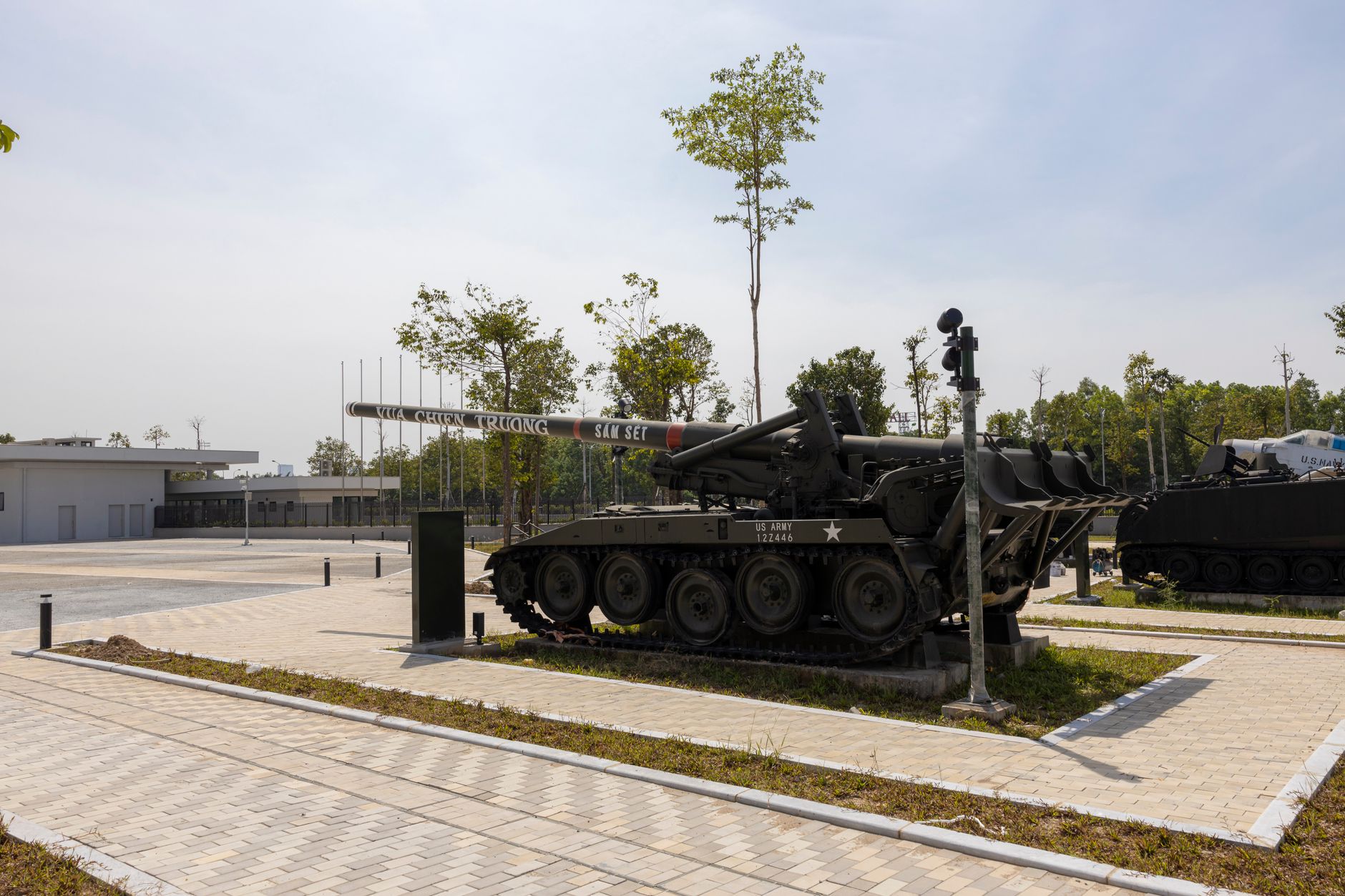
The courtyard contains military hardware from both sides. American tanks, helicopters, and fighter jets sit alongside Vietnamese anti-aircraft guns. Children often climb on these vehicles, which some visitors find jarring given the context.
The most photographed object is the "Huey" helicopter. This UH-1 Iroquois served as the workhorse of the American war effort. Next to it sits a McDonnell Douglas F-4 Phantom II fighter jet. These machines represent the technological gap between the two sides.
A separate building houses the "Requiem" exhibition. This permanent display honors war photographers who died covering conflicts in Indochina. The collection includes work by 134 photojournalists from 11 countries. The exhibition was curated by Tim Page, a British photographer wounded in Vietnam.
How to prepare for your visit
The museum presents difficult material. Graphic images of war injuries, executions, and birth defects appear throughout. Children under 12 may find the content disturbing. Parents should consider this before bringing young children.
Warning: The third floor contains preserved human remains and fetal specimens. If you are sensitive to such displays, skip this floor entirely. The museum does not provide warnings before entering each section.
Visitors should plan for 2-3 hours minimum. This allows time to read the English translations on most displays. Audio guides provide additional context and cost 20,000 VND ($0.80). Guided tours are available but must be booked in advance for groups of 10 or more.
The museum has air conditioning, but it is not powerful. Saigon heat makes the upper floors warm by midday. Bring water and a small fan if you visit during the hot season. The museum cafe sells drinks and light snacks.
Practical information
The museum is located at 28 Vo Van Tan Street in District 3. It sits within walking distance of the Reunification Palace and Notre-Dame Cathedral. These three sites form a logical half-day walking tour of central Saigon.
Opening hours: 7:30 AM to 6:00 PM daily, including Tet holiday. The museum closes only for lunch between 11:30 AM and 1:30 PM on some days. Check the official website before visiting.
Entry fee: 40,000 VND ($1.60) per person. This is among the cheapest museum entries in Ho Chi Minh City. Students with valid ID pay 20,000 VND ($0.80). Children under 6 enter free.
Getting there: The museum is accessible by taxi, Grab, or bus. From Ben Thanh Market, the walk takes 15 minutes. The nearest bus stop is on Cach Mang Thang Tam Street. For airport arrivals, read the Grab vs Cash Taxis at Tan Son Nhat: The Saigon Airport Truth guide.
Best time to visit: Arrive at opening time (7:30 AM) to avoid crowds. The museum fills up by 10:00 AM with school groups and tour buses. Weekdays are less crowded than weekends. Avoid Vietnamese public holidays when local attendance spikes.
Comparison with other war sites in Vietnam
| Site | Location | Focus | Time needed | Entry fee |
|---|---|---|---|---|
| War Remnants Museum | Ho Chi Minh City | Full war history, Agent Orange | 2-3 hours | 40,000 VND ($1.60) |
| Cu Chi Tunnels | Cu Chi District | Tunnel systems, guerrilla warfare | Half day | 110,000 VND ($4.40) |
| Vinh Moc Tunnels | Quang Tri Province | Civilian tunnel life | 1-2 hours | 40,000 VND ($1.60) |
| DMZ Tours | Hue | Demilitarized zone, Khe Sanh | Full day | 500,000-800,000 VND ($20-32) |
| Hoa Lo Prison | Hanoi | Colonial and war prisons | 1-2 hours | 30,000 VND ($1.20) |
The War Remnants Museum offers the most comprehensive overview of the war. The The DMZ from Hue: Vinh Moc Tunnels, Khe Sanh and the Truth About Vietnam War Tours article covers the northern sites in detail.
How to combine the museum with other Saigon attractions
The museum sits in District 3, close to several major sites. A logical walking route starts at the Reunification Palace (10 minutes walk). The palace offers tours of the Presidential Palace where the war ended in 1975. From there, walk to Notre-Dame Cathedral and the Central Post Office (5 minutes).
The Visiting Ho Chi Minh City: The Complete Travel Guide to Saigon article provides a full city itinerary. The museum fits naturally into a morning or afternoon block.
For lunch after the museum, try the nearby Banh Mi Huynh Hoa on Le Thi Rieng Street. This legendary banh mi shop opens at 2:30 PM. The Eating for $1 in Saigon: The Plastic Stool Economy Explained article covers budget eating options near the museum.
Cultural sensitivity and appropriate behavior
The museum is a place of national memory for Vietnamese people. Visitors should dress respectfully. Shoulders and knees should be covered. Loud conversations and phone calls disturb other visitors. Photography is allowed in most areas, but flash photography damages old photographs. No photography is permitted in the Agent Orange section on the third floor.
Pro tip: Vietnamese visitors often leave offerings of incense or flowers at certain displays. Do not touch these offerings. They are personal expressions of remembrance, not museum props.
The museum sells books and documentaries in its gift shop. Proceeds support war victims and their families. Consider buying a book or making a donation. The museum also accepts donations for Agent Orange victims directly.
Nearby accommodation and dining
Several hotels within walking distance cater to museum visitors. The Liberty Central Saigon Citypoint on Pasteur Street offers mid-range rooms from 1,200,000 VND ($48) per night. The Amanaki Saigon Boutique Hotel on Truong Dinh Street provides budget options from 500,000 VND ($20) per night.
For dining, the area around the museum has excellent street food. Com Tam Bui on Vo Van Tan Street serves broken rice with grilled pork for 40,000 VND ($1.60). The Com Tam in District 4: The Saigon Locals' Lunch Map article covers more options.
Vegetarian visitors will find options nearby. The Which City Has the Strongest Vegan Presence in Vietnam? Complete 2026 Guide article lists Saigon's best plant-based restaurants.
Weather considerations for your visit
Saigon is hot year-round. The dry season runs from November to April. The rainy season lasts from May to October. Afternoon downpours are common during rainy months. The museum provides shelter, but walking between sites becomes difficult.
The How to dress for Vietnam in October: A complete packing guide for every region article covers appropriate clothing for Saigon's climate. Light cotton clothing and comfortable walking shoes are essential.
Frequently asked questions
Q: Is the War Remnants Museum suitable for children? The museum contains graphic images of war injuries and birth defects. Children under 12 may find the content disturbing. The outdoor military vehicles are popular with children. Parents should preview the third floor alone before deciding whether to bring children.
Q: How long should I spend at the museum? Plan for 2-3 hours minimum. Visitors who read all exhibit labels and watch the documentary films may need 4 hours. The museum offers free Wi-Fi for downloading the audio guide app.
Q: Can I take photographs inside the museum? Photography is allowed in most areas without flash. The third floor Agent Orange section prohibits photography. Video recording is not permitted in any indoor exhibition space. Selfie sticks are banned inside the building.
Q: Is the museum biased toward the communist perspective? The museum presents the war from the North Vietnamese perspective. This is clearly stated at the entrance. The museum does not pretend to offer a balanced account. Visitors should supplement their understanding with other sources for a complete picture.
Q: What is the best time of day to visit? Arrive at 7:30 AM when the museum opens. Morning light is better for photography. The museum becomes crowded by 10:00 AM with school groups. Afternoon visits during rainy season risk getting caught in downpours.
Q: Are there English translations for all exhibits? Most exhibits have English translations. Some older displays have Vietnamese only. The audio guide covers all sections in multiple languages. Download the museum app before visiting for offline access.
Q: Can I visit the museum as part of a larger tour? Yes. Many tour companies include the museum in half-day city tours. The Visiting Cu Chi: A Complete Travel Guide from Ho Chi Minh City article covers combination tours that include both sites. Independent visits are easy and recommended for more time.
Final practical notes
The museum accepts cash only for entry fees. VND is preferred, but US dollars are accepted at a poor exchange rate. ATMs are available on Vo Van Tan Street. The nearest ATM is 100 meters from the entrance.
Restrooms are located on each floor. They are clean but basic. Toilet paper is not always available. Carry tissues or wet wipes.
The museum has a small cafe on the ground floor. It serves coffee, soft drinks, and packaged snacks. Prices are reasonable at 15,000-25,000 VND ($0.60-1.00) for drinks.
For visitors arriving from other parts of Vietnam, the Visiting Ho Chi Minh City: The Complete Travel Guide to Saigon article covers transportation options. The museum is a 20-minute drive from Tan Son Nhat International Airport.
The War Remnants Museum is not an easy visit. It is essential for understanding modern Vietnam. The country's relationship with the war shapes its politics, economy, and culture today. The museum provides the framework for that understanding. Visit with an open mind and a prepared heart.