The honest answer is yes, mostly. But not all drinks carry the same risk. This guide covers four iconic Vietnamese street drinks. It tells you what they cost, what is in them, and which ones are safest for travelers. No tour promotions. No vague advice. Just practical information.
What this guide covers (and what it doesn't)
This article covers four drinks: nuoc mia (sugarcane juice), sinh to (fruit shakes), ca phe sua da (Vietnamese iced coffee), and coconut coffee. It explains how each is made, what it tastes like, and where to find it. It gives a straight answer on safety, including specific risks for each drink.
This guide does not cover boba tea, smoothie bowls, or alcoholic drinks. It does not recommend specific tours or vendors. It is written for the first-time traveler who wants to drink like a local without getting sick.
Nuoc mia (sugarcane juice): the king of street drinks
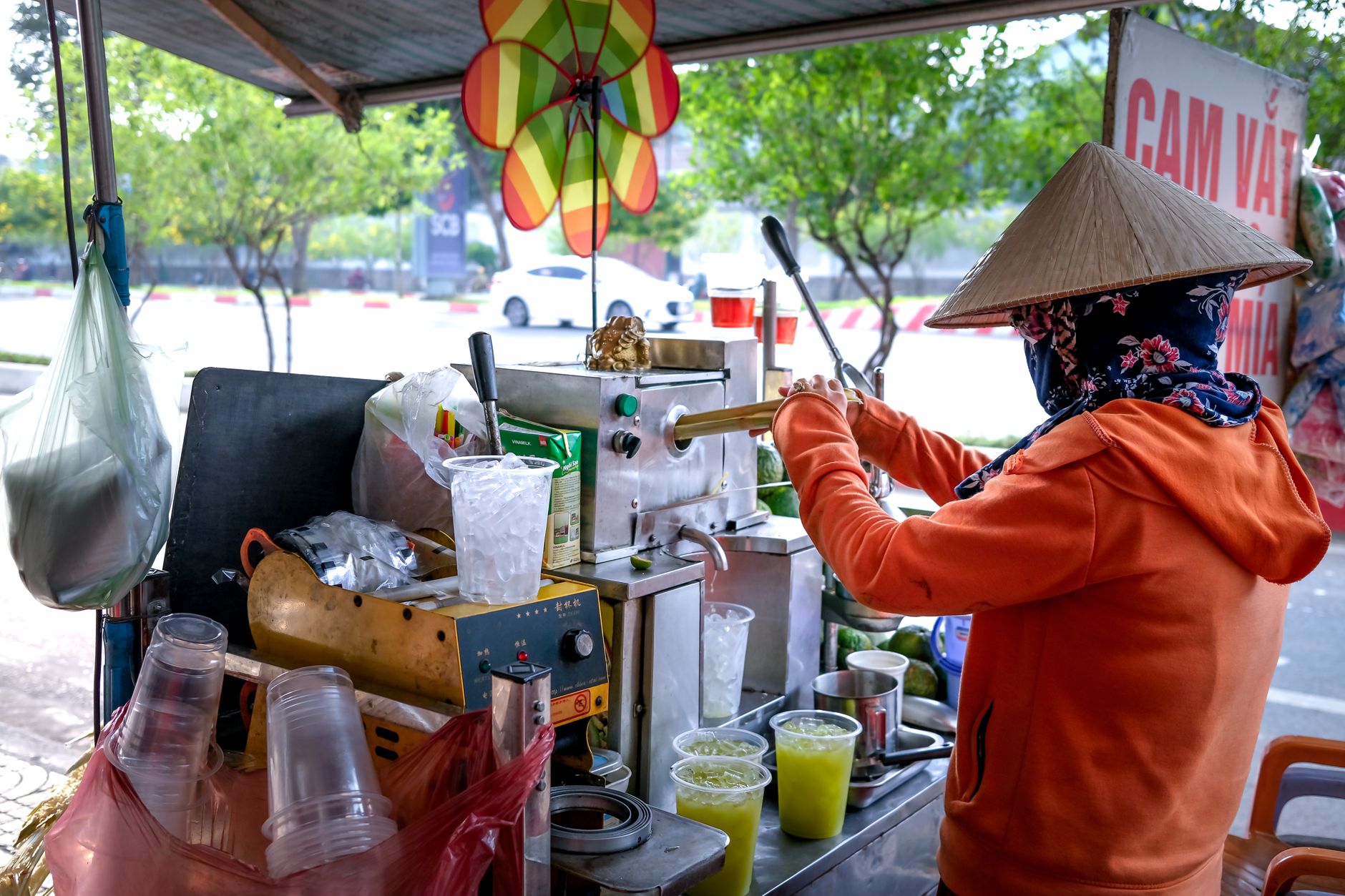
Nuoc mia is Vietnam's most popular street drink. Vendors feed whole sugarcane stalks through a motorized press. Green juice flows out. It is poured over ice and often flavored with kumquat or a pinch of salt. The entire process takes less than 30 seconds.
A standard cup costs 10,000 to 20,000 VND ($0.40 to $0.80). That makes it the cheapest drink on this list. It is also one of the most nutritious. A 240ml cup contains 183 calories, along with potassium, calcium, magnesium, and iron. The sugar content is high at about 50 grams per cup. Diabetics should avoid it.
The juice is pressed fresh in front of the customer. This is a good sign for hygiene. You can see exactly what goes into your cup.
What nuoc mia tastes like
The flavor is sweet and grassy with a milky texture. If the vendor adds kumquat, there is a hint of citrus. The taste changes quickly after pressing. Fresh juice is cloudy and thick. Within minutes it turns clear and loses some sweetness. Drink it immediately.
Where to find the best nuoc mia
Look for stalls on street corners, near schools, and outside markets. Busy stalls with long lines are a good sign. High turnover means fresh juice and clean equipment.
In Hanoi, the stall at 69 Hang Dieu street has been operating for decades. In Saigon, stalls along Nguyen Trai street in District 5 are popular. These are well-known spots, but every neighborhood has at least one good stall.
Is nuoc mia safe to drink?
Generally yes, but there are two risks. First, the machine may not be cleaned between uses. Sugarcane residue can build up and carry bacteria. Second, the sugarcane skin may not be peeled properly. Dirt and bacteria on the skin can transfer to the juice.
Watch the vendor peel the cane. If they skip this step or rush through it, move to another stall. Avoid stalls where the machine looks rusty or dirty. Look for clean surfaces and fresh sugarcane that is stored off the ground.
Sinh to (Vietnamese fruit shakes): fresh, cheap, and risky
Sinh to is a blended drink made with fresh fruit, condensed milk, ice, and sometimes yogurt. It is thicker and sweeter than Western smoothies. Common fruits include avocado, durian, jackfruit, mango, dragon fruit, and soursop.
Prices range from 20,000 to 45,000 VND ($0.80 to $1.80). Avocado shakes are usually the cheapest. Durian shakes are the most expensive.
The fruit washing problem
The main safety concern is unwashed fruit. Vendors often assume that fruit will be peeled, so they skip the washing step. But the knife and cutting board can transfer bacteria from the skin to the flesh. This is especially risky for fruits like mango and dragon fruit, which are peeled and then cut.
Thick-skinned fruits like avocado and durian are safer. The vendor cuts through the skin to reach the flesh, so bacteria on the surface rarely contaminate the inside. Watch the vendor peel the fruit. If they wash it first, that is a good sign.
Ice in sinh to: the real risk
Ice is the second major risk. Factory-made ice (da cay) is safe. It is made from filtered water and sealed in plastic bags. Homemade ice (da banh) may be made from tap water and stored in open buckets.
Factory ice is clear, cylindrical, and often has a hole in the middle. Homemade ice is cloudy, irregular, and melts faster. If the vendor scoops ice from an open bucket, ask for no ice or choose a different drink.
Which sinh to flavors are safest for travelers
| Fruit | Skin thickness | Typically pre-cut? | Safety rating | Recommendation |
|---|---|---|---|---|
| Avocado | Thick | No | Safe | Best choice for travelers |
| Durian | Thick | No | Safe | Good if you like the flavor |
| Jackfruit | Thick | Sometimes | Moderate | Ask vendor to cut it fresh |
| Mango | Thin | Often | Risky | Avoid unless you see it washed |
| Dragon fruit | Thin | Often | Risky | Avoid unless you see it washed |
Ask the vendor to wash and peel the fruit in front of you. If they refuse, order something else.
Ca phe sua da (Vietnamese iced coffee): the national obsession
Ca phe sua da is Vietnam's signature drink. Strong dark roast coffee drips through a small metal filter (phin) into a cup. It is mixed with sweetened condensed milk and poured over ice. The result is thick, sweet, and intensely caffeinated.
A cup costs 15,000 to 40,000 VND ($0.60 to $1.60). Street stalls charge the lower end. Cafes in tourist areas charge the higher end.
The coffee itself: is it safe?
The coffee is brewed with boiling water, which kills bacteria. The condensed milk is shelf-stable and does not require refrigeration. These two factors make ca phe sua da one of the safest street drinks available.
The only risk comes from stalls that use fresh milk instead of condensed milk. Fresh milk can spoil if not refrigerated properly. Stick to condensed milk versions. Ask for "sua dac" (condensed milk) to be sure.
Ice in ca phe sua da
Most cafes use factory-made ice. Street stalls are less reliable. Check the ice before ordering. If it is clear and block-shaped, it is safe. If it is cloudy or crushed, ask for "khong da" (no ice) and drink it hot.
Hot ca phe sua da (ca phe sua nong) is a good alternative. It is served without ice and tastes just as good.
Ca phe trung (egg coffee): a special mention
Egg coffee is a Hanoi specialty. Egg yolks are whisked with condensed milk until frothy, then poured over hot coffee. It is served hot, so there is no ice risk. The egg yolk is cooked by the hot coffee and milk mixture.
A cup costs 35,000 to 55,000 VND ($1.40 to $2.20). It is a safe option for travelers who want to try something unique.
Coconut coffee: the new trend
Coconut coffee has become popular in Vietnamese cafes over the last few years. Espresso or drip coffee is blended with coconut milk and ice. Some versions include coconut cream on top. The flavor is creamy and nutty, less sweet than ca phe sua da.
Prices range from 35,000 to 55,000 VND ($1.40 to $2.20). It is more expensive than traditional coffee because of the coconut milk.
Is coconut coffee safe?
Coconut milk is shelf-stable and safe. The coffee is brewed hot. The main risk is the ice, which follows the same rules as other drinks. Order from established cafes rather than street stalls. The blending process requires clean equipment, and cafes are more likely to maintain hygiene standards.
Coconut coffee vs. coconut water
Fresh coconut water (nuoc dua tuoi) is sold in whole coconuts. The vendor opens the coconut in front of you, so the water is safe. Avoid pre-cut coconut water in bottles. It may be diluted with tap water or contaminated during bottling.
Ice in Vietnam: the honest truth
Ice safety is the most common concern for travelers. Here is the honest truth: factory-made ice is safe. Homemade ice is not.
Factory ice is produced by companies like Tuong An and Hai Ha. They use filtered water and sealed packaging. The ice is clear, cylindrical, and often has a hole in the middle. It is sold in plastic bags at convenience stores and markets.
Homemade ice is made by individuals using tap water. It is cloudy, irregular, and stored in open containers. It may contain bacteria from the water or the container.
How to check if ice is safe
Use this checklist:
- Look at the ice shape. Clear and cylindrical = safe. Cloudy and irregular = risky.
- Ask the vendor "Da cay hay da banh?" (Factory ice or homemade ice?).
- Watch where the ice is stored. Sealed plastic bag = safe. Open bucket = risky.
- If unsure, order drinks without ice or with a sealed bottle of water.
What about bottled drinks?
Bottled water, canned sodas, and sealed juices are always safe. But some street stalls refill bottles with tap water. Check that the seal is intact before drinking. If the cap is loose or the bottle looks reused, do not drink it.
Which drinks are safest for travelers with sensitive stomachs
| Drink | Safety rating (1-5) | Main risk | Best for | Avoid if |
|---|---|---|---|---|
| Hot ca phe sua da | 5 | None | Everyone | You dislike strong coffee |
| Coconut coffee (cafe) | 4 | Ice quality | Coffee lovers | You are on a tight budget |
| Nuoc mia (busy stall) | 3 | Dirty machine | Thirsty travelers | You have diabetes |
| Sinh to (pre-cut fruit) | 2 | Unwashed fruit, bad ice | Adventurous eaters | You have a weak stomach |
Safest: hot ca phe sua da. No ice, no fresh fruit, no raw ingredients. The heat kills bacteria.
Safe: coconut coffee from a clean cafe. Coffee and coconut milk are shelf-stable. Ice is usually factory-made.
Moderate risk: nuoc mia from a busy stall. Fresh-pressed juice is generally safe if the sugarcane is peeled and the machine is clean.
Higher risk: sinh to with pre-cut fruit. Fruit may not be washed. Ice may be homemade. Knives and blenders may carry bacteria.
What to do if you get sick
Traveler's diarrhea is common in Vietnam. It usually resolves within 24 to 48 hours. Take these steps if it happens:
- Drink bottled water to stay hydrated.
- Take oral rehydration salts. They are available at any pharmacy for about 5,000 VND ($0.20) per packet.
- Avoid dairy and spicy food until symptoms pass.
- See a doctor if symptoms persist longer than 48 hours or if you have a fever.
Most cases are mild and do not require medical attention. But if you have a pre-existing condition or a weakened immune system, be more cautious with street drinks.
The cost of street drinks in Vietnam (2026 prices)
| Drink | Typical price (VND) | Typical price (USD) | Where to find it |
|---|---|---|---|
| Nuoc mia | 10,000-20,000 | $0.40-$0.80 | Street corners, markets |
| Sinh to | 20,000-45,000 | $0.80-$1.80 | Street stalls, markets |
| Ca phe sua da | 15,000-40,000 | $0.60-$1.60 | Cafes, street stalls |
| Coconut coffee | 35,000-55,000 | $1.40-$2.20 | Cafes only |
| Ca phe trung | 35,000-55,000 | $1.40-$2.20 | Cafes in Hanoi |
Prices are higher in tourist areas like Hoan Kiem in Hanoi and District 1 in Saigon. Local markets and residential neighborhoods charge less.
How to order like a local
Learn these phrases. Vendors will appreciate the effort.
- "Mot ly nuoc mia" (One cup of sugarcane juice)
- "Mot ly sinh to bo" (One avocado shake)
- "Mot ly ca phe sua da" (One iced coffee with milk)
- "Khong da" (No ice)
- "Da cay hay da banh?" (Factory ice or homemade ice?)
Pronunciation tips: "nuoc" sounds like "nook." "Mia" sounds like "mee-ah." "Ca phe" sounds like "ka feh."
Final verdict: should you drink street drinks in Vietnam?
Yes, but with caution. Street drinks are a highlight of Vietnamese food culture. The flavors are intense and the prices are low. Missing them would be a mistake.
Start with the safest options: hot ca phe sua da and coconut coffee from clean cafes. Then try nuoc mia from a busy stall. Save sinh to for last, and only from vendors who wash and peel fruit in front of you.
Use common sense. Watch the vendor. Check the ice. If something looks dirty, walk away. There is always another stall nearby.
What was your experience with street drinks in Vietnam? Share in the comments.
FAQ
Q: Is it safe to drink fruit juice in Vietnam?
A: It depends on the type of juice. Fresh-pressed sugarcane juice (nuoc mia) is generally safe if the sugarcane is peeled and the machine is clean. Fruit shakes (sinh to) carry higher risk because the fruit may not be washed and the ice may be homemade. Hot coffee is always safe.
Q: Who should not drink sugarcane juice?
A: People with diabetes should avoid sugarcane juice because it contains about 50 grams of sugar per 240ml cup. People with weak immune systems or sensitive stomachs should also be cautious, as the juice is not pasteurized.
Q: What is Vietnamese sugarcane drink called?
A: It is called "nuoc mia" (nước mía) in Vietnamese. It is fresh-pressed sugarcane juice, often flavored with kumquat (tac) or a pinch of salt. It is served over ice in a plastic cup.
Q: What to avoid eating and drinking in Vietnam?
A: Avoid tap water, ice from unknown sources (cloudy, irregular shapes), pre-cut fruit that looks like it has been sitting out, and drinks from stalls with dirty equipment. Stick to bottled water, hot coffee, and fresh-pressed drinks from busy stalls.
Q: Can you drink the ice in Vietnam?
A: Yes, if it is factory-made ice (da cay). Factory ice is clear, cylindrical, and often has a hole in the middle. Avoid homemade ice (da banh), which is cloudy, irregular, and may be made from tap water.
Q: Is coconut coffee safe in Vietnam?
A: Generally yes, especially if ordered from a clean cafe. The coconut milk is shelf-stable and the coffee is brewed hot. The main risk is the ice, so check that it is factory-made.
Q: How much does sugarcane juice cost in Vietnam?
A: A cup of sugarcane juice costs between 10,000 and 20,000 VND ($0.40 to $0.80). Prices are higher in tourist areas and lower in local markets. Some stalls charge extra for kumquat or salt.
Q: What is the safest street drink in Vietnam?
A: Hot ca phe sua da (Vietnamese iced coffee without ice) is the safest because the coffee is brewed hot and the condensed milk is shelf-stable. Coconut coffee from a clean cafe is also very safe.