This guide separates the two things travellers mean by "Ha Giang to Cao Bang". One is a one-day point-to-point transfer. The other is a multi-day combined loop through two UNESCO Global Geoparks: Dong Van Karst Plateau, listed in 2010, and Non Nuoc Cao Bang, listed in 2018. The times, costs and logistics are different for each.
Ha Giang to Cao Bang at a glance
| Item | Detail |
|---|---|
| Direct distance via QL34 | 260 to 290 km |
| Scenic route via Dong Van and Meo Vac | 350 to 370 km |
| Time by bus or car | 7 to 9 hours |
| Time by motorbike | 1 to 2 days |
| Cheapest option | Public bus, from about 200,000 VND (USD 8) |
| Most expensive option | Private car, up to 5,000,000 VND (USD 190) |
| Cao Bang city to Ban Gioc | 85 to 90 km, about 2 hours |
| Natural overnight stop | Bao Lac |
The direct road runs via Bac Me, Bao Lam, Bao Lac and Nguyen Binh. The scenic version adds the Dong Van plateau, the Ma Pi Leng pass and Meo Vac before rejoining the direct road at Bao Lac. Both end in Cao Bang city, which is still another two hours from the waterfall most people are heading for.
Decide before booking whether you are transferring or touring. A bus ticket and a three-day loop are not the same product, and treating them as one is where most planning goes wrong.
Before you go: place names, permits and documents
New province names since July 2025
Vietnam's provincial merger took effect on 1 July 2025. Ha Giang province merged into Tuyen Quang province, and Ha Giang city is now divided into wards. Cao Bang province was not merged. Bac Kan, where Ba Be Lake sits, merged into Thai Nguyen.
District-level government was abolished at the same time. Names like "Meo Vac district" or "Bao Lac district" survive on maps, tickets and in everyday speech, but not in administration. Bus signs and booking apps may use either the old or the new names, sometimes on the same screen. Do not treat a mismatch as a scam.
Border area permit
Ha Giang's northern districts require a border area permit for foreigners. Commonly quoted fees are around 200,000 to 250,000 VND (USD 8 to 10). Guesthouses usually arrange it with a passport scan, often on the same day.
The permit is normally issued for the Ha Giang side. Whether it covers a one-way exit towards Bao Lac and onward into Cao Bang depends on current practice, which has changed over time. Cao Bang has its own rules for Ban Gioc and the Pac Bo border zone. Confirm both sides with the provincial immigration office or police before setting out, and carry the paper copy rather than a photo.
Documents to carry
- Passport original, not a copy. Checkpoints and hotel check-in both require it.
- Visa or e-visa printout.
- Travel insurance policy details, including the motorbike cover terms. Read the exclusions before renting anything.
The routes between Ha Giang and Cao Bang
| Route | Key towns | Approx. distance | Time | Difficulty | Highlights |
|---|---|---|---|---|---|
| 1. Direct via QL34 | Bac Me, Bao Lam, Bao Lac, Nguyen Binh | 260 to 290 km | 7 to 9 hours | Moderate | Gam River valleys, Khau Coc Cha pass |
| 2. Scenic via Dong Van | Quan Ba, Yen Minh, Dong Van, Ma Pi Leng, Meo Vac | 350 to 370 km | 1 to 2 days | Hard | Karst plateau, Ma Pi Leng, Nho Que river |
| 3. Border road | Me Pia pass, Ha Quang, Pac Bo, Tra Linh | 300 to 340 km | 1 to 2 days | Very hard | Switchbacks, border scenery, Pac Bo |
| 4. Southern detour | Bao Lac, Ba Be, Cho Ra, Na Phac | 380 to 420 km | 2 days | Hard in rain | Ba Be Lake, quiet provincial roads |
Route 1, the direct road via Bac Me and Bao Lac
This is the bus route. It is the fastest and least touristic option, with long sections following the Gam River through valley floors. Road surfaces are mostly paved, with potholes after rain and trucks on blind bends. Bac Me and Bao Lam are small service towns rather than stops in their own right. Bao Lac is the natural midpoint.
Route 2, the scenic road via Dong Van, Ma Pi Leng and Meo Vac
QL4C runs through Quan Ba, Yen Minh, Dong Van, the Ma Pi Leng pass and Meo Vac, then descends to the Nho Que and Gam confluence before joining QL34 at Bao Lac. About 360 km in total. This turns the Ha Giang Loop into a one-way exit east instead of a return to Ha Giang city.
Route 3, the border road via Me Pia pass, Pac Bo and Ban Gioc
From Bao Lac, the Me Pia pass switchbacks lead towards Ha Quang and Pac Bo, then along narrow border roads via Tra Linh and Trung Khanh. This suits experienced riders heading straight to Ban Gioc without passing through Cao Bang city. Surfaces are variable, and some sections are single-lane.
Route 4, the southern detour via Ba Be Lake
From Bao Lac, provincial roads run south through Da Vi towards Ba Be, then Cho Ra, Na Phac and QL3 to Cao Bang. Longer, with rough sections in rain. Ba Be is now administratively in Thai Nguyen province, so tickets and signs may reflect the new name.
Some published sources quote 280 to 320 km "to Ban Gioc". That figure does not add up once the Cao Bang to Ban Gioc leg is included. Plan segment by segment and check each distance on a current map.
By bus: what actually runs
The direct Ha Giang to Cao Bang bus
A direct service has historically left Ha Giang bus station early in the morning, around 5:00 to 6:00, following QL34. Travel time is 7 to 9 hours with frequent cargo and passenger stops. Published fares range from 150,000 to 300,000 VND (USD 6 to 12).
At the time of writing, the operator, departure time and fare should be confirmed the day before at the station or through your guesthouse. Services on this route start, stop and change vehicles without much notice.
The two-stage option via Bao Lam or Bao Lac
Older accounts describe a minibus to Bao Lam, an overnight stop, and an onward bus at 6:00 the next morning. Treat this as the fallback if the direct service is full or cancelled. Bao Lac has simple hotels and guesthouses, which makes it a reasonable place to be stuck for a night.
Limousine vans and shared transfers
Nine-seat and eleven-seat vans, plus tour-operator shuttles, increasingly cover the route with hotel pickup. Fares run higher than the public bus. Ask whether the price includes pickup from your guesthouse and drop-off at your hotel in Cao Bang, since "door to door" is often only door to door within the city limits.
Backtracking via Hanoi
| Option | Total hours | Departures per day | Overnight possible | Reliability |
|---|---|---|---|---|
| Direct bus via QL34 | 7 to 9 | 1, sometimes 2 | No | Low to moderate |
| Private car via QL34 | 7 to 8 | On demand | No | High |
| Via Hanoi, sleeper both legs | 12 to 15 | Many | Yes | High |
The arithmetic: Ha Giang to Hanoi is about 300 km and 6 to 7 hours by sleeper or limousine. Hanoi to Cao Bang is about 280 km and 6 to 8 hours. That comes to 12 to 15 hours in total. Overnight sleepers absorb part of it. The Hanoi route is longer but often more predictable, with many daily departures on both legs.
Booking, comfort and luggage
Domestic bus-booking apps list some services, but the cross-province route is often sold only by phone or at the station. Little English is spoken at counters, so a translation app helps. Large backpacks may go on the roof or in the aisle. Motion sickness is common on QL34, so take tablets before departure rather than after the first pass.
Private car and limousine transfers
Published private car prices are 3,500,000 to 5,000,000 VND (USD 140 to 190) per vehicle. Per person, that is roughly 1,750,000 to 2,500,000 VND for two passengers, 1,150,000 to 1,650,000 VND for three, and 875,000 to 1,250,000 VND for four.
The direct route takes 7 to 8 hours. Going straight to Ban Gioc adds about 2 hours. Agree in advance on the route (QL34 or via Meo Vac), the number and length of photo stops, and whether tolls, the driver's meal and the driver's return trip are included. A one-way price usually includes the empty return, which is why it does not halve when you book only half the distance.
Ride-hailing coverage in both provinces is patchy. Check the app on arrival rather than relying on it for a morning departure.
By motorbike: self-ride or easy rider
Licence and insurance: the uncomfortable truth
Vietnam recognises International Driving Permits issued under the 1968 Vienna Convention, not the 1949 Geneva version. Travellers from countries that only issue the 1949 permit are, in practice, riding without a valid licence.
Most travel insurers refuse claims for riding without a valid licence. That matters more than the police fine. Fines rose significantly under Decree 168/2024, in force since 1 January 2025, and police checks targeting foreign riders on the Ha Giang Loop have been reported. There is zero alcohol tolerance for riders.
If your licence situation is unclear, hire an easy rider. The cost of a hospital evacuation without insurance cover dwarfs the difference in price.
Riding with an easy rider
Published rates are around 1,500,000 to 2,200,000 VND (USD 60 to 85) per day. Clarify what is included: fuel, the driver's food and lodging, and the return fee for a one-way trip ending in Cao Bang. A driver who has to ride back to Ha Giang will charge for that day, and it is fair to ask how much before agreeing.
One-way rental and returning the bike
Some Ha Giang rental shops accept drop-off in Cao Bang for a surcharge, or ship bikes back by bus or truck. Others require a return to Ha Giang. Verify typical surcharges at the time of booking, agree to the arrangement in writing, and photograph the bike's condition before leaving.
Bike choice and road conditions
Semi-automatic 110cc bikes are fine on paved QL34. Manual bikes give better control on steep descents such as Ma Pi Leng and Me Pia. Expect potholes, gravel after rain, trucks on blind bends, livestock on the road, and fog on the passes from November to February.
Fuel, repairs and timing
Fill up in Meo Vac, Bao Lac and Nguyen Binh, as stations thin out between towns. Basic repair shops exist in towns but not between them. Do not ride after dark. Plan the 270 to 370 km over two days, with Bao Lac as the natural overnight stop.
Coming from Sapa: the sleeper bus question
Sapa to Ha Giang runs by van and limousine along the northern route, about 250 km and 6 to 8 hours. Verify current fares locally, as they shift with demand.
A "direct" Sapa to Cao Bang sleeper is the harder question. Many tickets sold as direct involve a transfer in Hanoi, and some involve a change of vehicle at a roadside stop with no English signage. Ask explicitly whether the ticket is one vehicle or includes a transfer, and where the transfer happens.
Time comparison: Sapa to Hanoi to Cao Bang overnight comes to about 12 to 14 hours. Sapa to Ha Giang, overnight in Ha Giang, then on to Cao Bang the next day takes two days but breaks the journey at a sensible point.
Lao Cai province, where Sapa sits, also absorbed Yen Bai in 2025, so the name "Lao Cai" now covers a larger area than older maps suggest.
Suggested itineraries
One day, direct transfer. Bus or private car via QL34, leaving early, arriving in Cao Bang city in the evening. Continue to Ban Gioc the next morning.
Two days, the scenic exit. Day 1: Dong Van to Meo Vac to Bao Lac, about 95 km, slow because of photo stops and the Ma Pi Leng descent. Day 2: Bao Lac to Cao Bang, about 130 km, via the Khau Coc Cha pass.
Four to five days, Ha Giang Loop plus Ban Gioc. Days 1 and 2 on the Ha Giang Loop. Day 3 to Bao Lac. Day 4 over the Me Pia pass to Pac Bo or Phia Thap. Day 5 to Ban Gioc and Nguom Ngao, returning via Mat Than (Thung Mountain) to Cao Bang city.
The long day from Meo Vac to Pac Bo, roughly 150 km on mountain roads, is demanding rather than easy. Some itineraries describe it as a comfortable ride. It is not, especially with luggage.
Best time to go
| Months | Weather | Road risk | Ha Giang highlight | Ban Gioc flow |
|---|---|---|---|---|
| Sep to early Oct | Mild, clear | Moderate | Rice harvest | Strong |
| Late Oct to Nov | Cool, dry | Low | Buckwheat flowers | Strong to moderate |
| Dec to Feb | Cold, foggy nights near 5°C | Moderate | Quiet roads | Low |
| Mar to May | Dry, clear | Low | Flowering | Low to moderate |
| Jun to Sep | Hot, wet | High, landslides | Green terraces | Strongest |
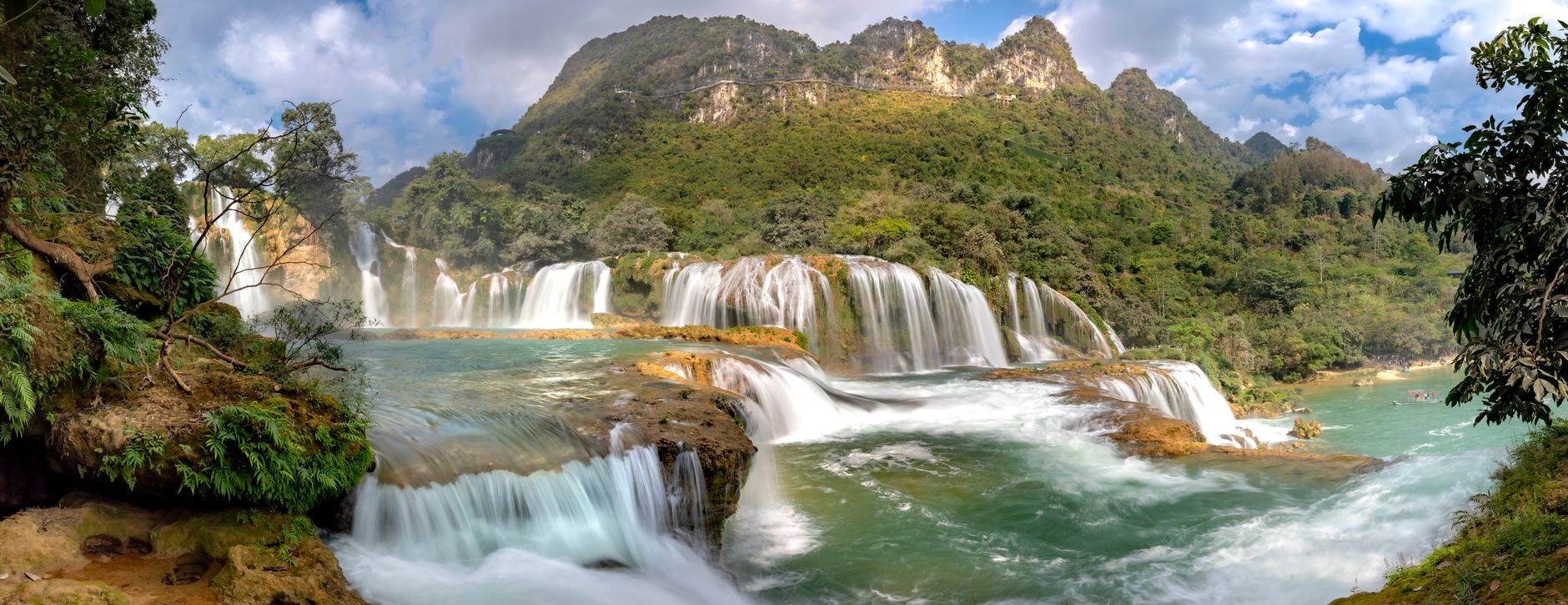
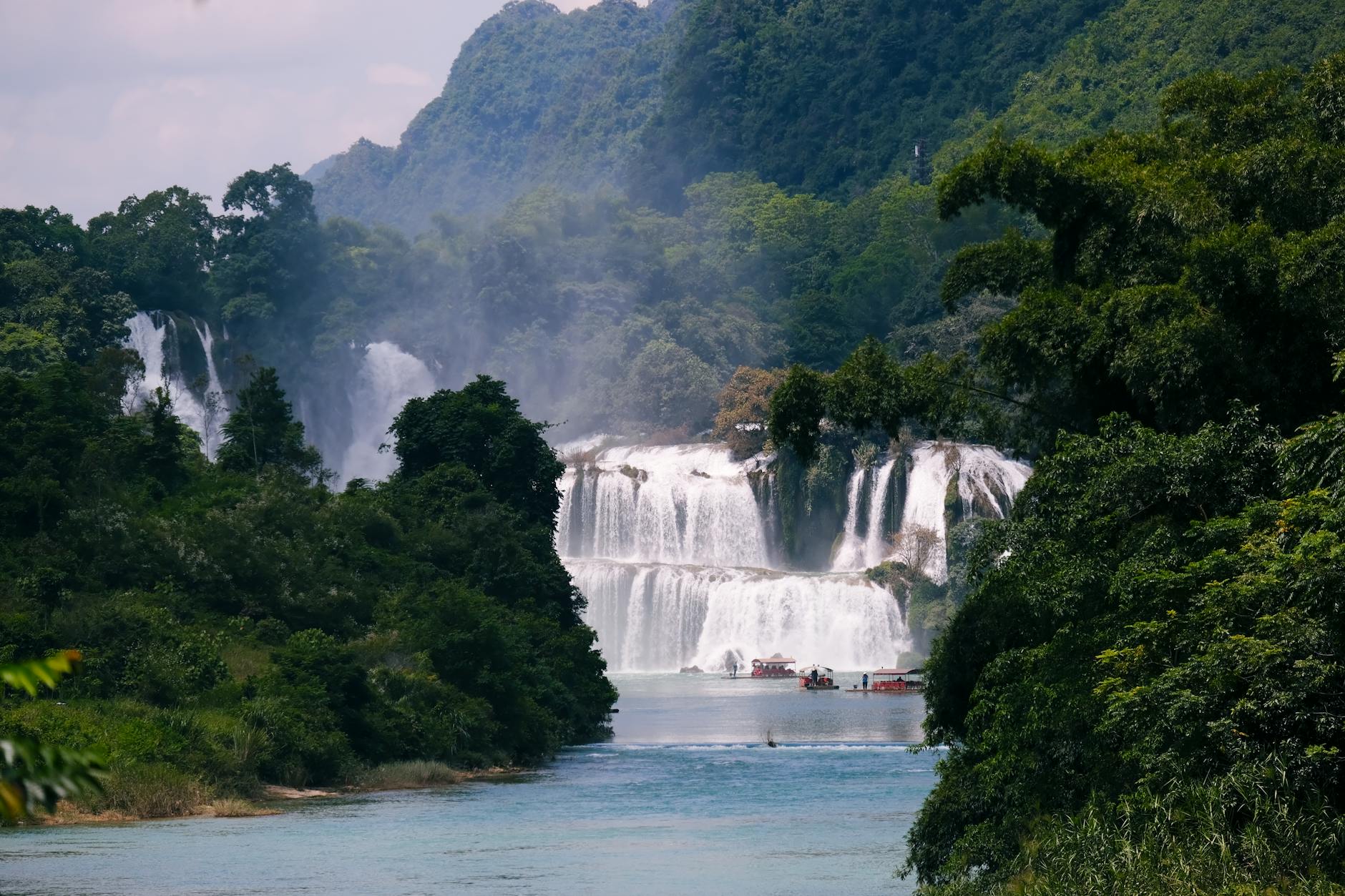
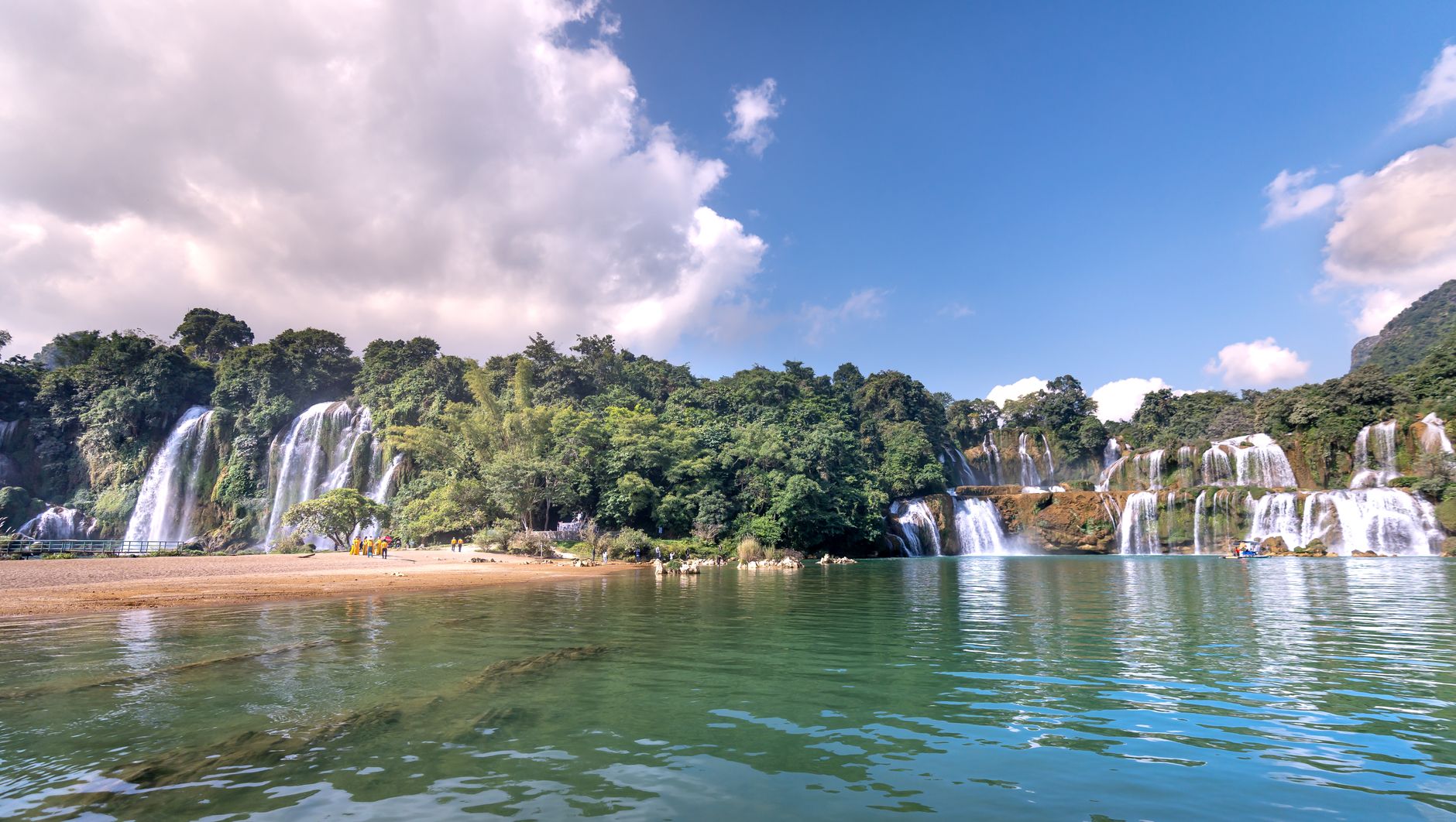
Ban Gioc water flow is strongest roughly from July to October and much reduced from February to April. Set expectations accordingly if the waterfall is the main reason for the trip.
Landslide context matters here. Typhoon Yagi in September 2024 caused deadly landslides in Cao Bang. During heavy rain, check local news and ask bus staff about closures before departure.
Tet falls in early February in 2027. Buses fill and prices rise roughly a week either side. Vietnamese holiday weekends, around 30 April to 1 May and 2 September, are also busy.
Dong Van and Meo Vac hold markets on Sundays. Published sources disagree on the Bao Lac market schedule, whether fixed weekday or lunar cycle, so ask locally. The Khau Vai love market is held on the 27th day of the third lunar month, which falls in spring.
Costs: a realistic budget
| Item | Budget (bus) | Mid-range (easy rider) | Comfort (private car) |
|---|---|---|---|
| Transport, one way | 150,000 to 300,000 VND | 1,500,000 to 2,200,000 VND per day | 3,500,000 to 5,000,000 VND per vehicle |
| Bike rental | n/a | 200,000 to 500,000 VND per day | n/a |
| Fuel | included | about 20,000 VND per litre | included |
| Border permit | 200,000 to 250,000 VND | same | same |
| Overnight, Bao Lac | from 300,000 VND per room | same | same |
| Ban Gioc and Nguom Ngao entry | 45,000 VND each | same | same |
ATMs are found in Ha Giang city, Meo Vac, Bao Lac and Cao Bang city. Carry cash for Ban Gioc and the villages in between, where cards are rarely accepted.
Safety, health and staying connected
Medical care between Ha Giang and Cao Bang is basic. Serious cases go to Cao Bang or Hanoi, so evacuation cover matters more than the daily premium suggests.
Motorbike accidents are the main risk for visitors. Bus passengers face motion sickness and, rarely, landslide closures. Mobile signal is strongest with the largest national network and drops out in valleys, so download offline maps before leaving.
At Ban Gioc, do not cross border markers. The Vietnam-China shared scenic area opened in 2023, but access rules for foreign nationals should be checked on arrival. Do not fly drones near the border.
Bring layers and rain gear in every season. Ask before photographing people, especially at markets.
Arriving in Cao Bang and continuing to Ban Gioc
Buses from Cao Bang city to Ban Gioc take about 2 hours, with published fares around 70,000 to 100,000 VND (USD 3 to 4). Verify departure points and times locally. Alternatives are a taxi or renting a bike in Cao Bang, though rentals there are fewer than in Ha Giang.
Sleep in Cao Bang city for convenience, or in homestays near the falls in the Dam Thuy area. Staying near the falls allows an early visit before the day-trip crowds arrive.
For the return, buses from Cao Bang to Hanoi take 6 to 8 hours, with several daily departures including sleepers.
FAQ
Q: Is there a direct bus from Ha Giang to Cao Bang? A: A direct early-morning service has historically run from Ha Giang bus station along QL34, taking 7 to 9 hours with fares of 150,000 to 300,000 VND (USD 6 to 12). Confirm the current operator, departure time and fare the day before at the station or through your guesthouse, and keep the Bao Lam or Bao Lac two-stage option as a fallback.
Q: How long does it take to get from Ha Giang to Cao Bang? A: 7 to 9 hours by bus or car on QL34, and one to two days by motorbike via Meo Vac. Any listing showing under two hours is wrong for these roads.
Q: How do I get from Hanoi to Cao Bang? A: About 280 km and 6 to 8 hours by sleeper bus, limousine or private car via QL3, with several departures daily. There is no train.
Q: How far is Ha Giang from Hanoi, and how do I get there? A: About 300 km and 6 to 7 hours by sleeper bus or limousine, with day and night departures. Expressway sections opening over time may shorten the trip, so check current schedules rather than older guides.
Q: Can I ride a rented motorbike from Ha Giang and drop it in Cao Bang? A: Some shops allow it for a surcharge or ship the bike back, others require a return to Ha Giang. Agree in writing in advance. A valid licence matters for both police checks and insurance claims.
Q: How many days do I need to see both Ha Giang and Cao Bang? A: A minimum of four days, with five to six more comfortable. Travellers who have already done the Ha Giang Loop can take the two-day scenic exit via Meo Vac and Bao Lac.
Q: Do I need a permit to travel from Ha Giang to Cao Bang? A: Ha Giang's northern districts require a border area permit for foreigners, usually 200,000 to 250,000 VND (USD 8 to 10) and arranged through your guesthouse. Rules on the Cao Bang side, including Ban Gioc and Pac Bo, should be confirmed with the provincial immigration office before travel. Always carry the original passport.
Your questions and tips
A question, an update, an experience to share? Our team reads every message before it is published.
No comments yet. Ask the first question or share a tip!