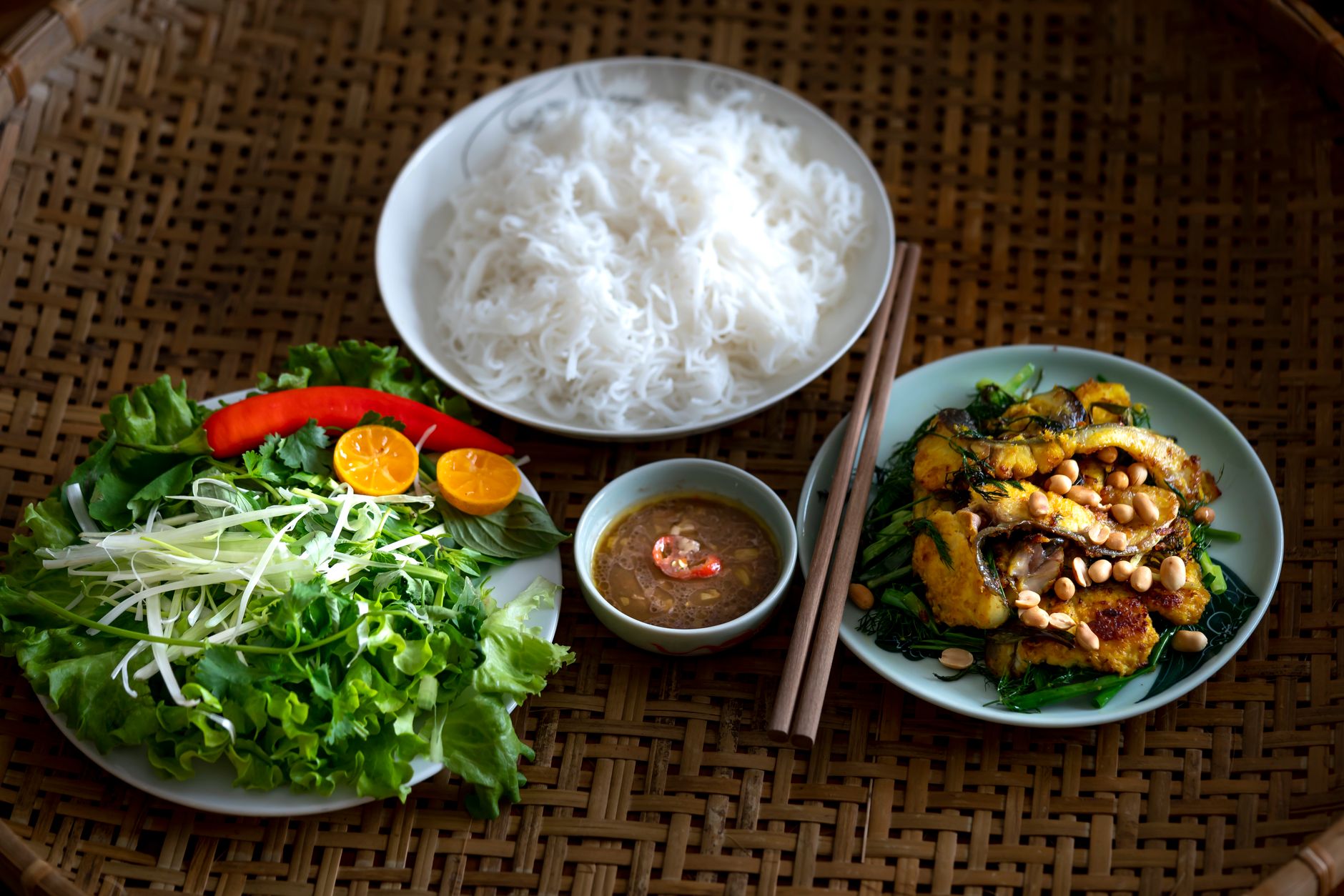
The dish carries the name of a street in Hanoi's Old Quarter. That street, Cha Ca Street, was named after the restaurant that has served this dish since the 1870s. The Doan family started selling cha ca from their home. The recipe passed down through four generations. Today, the original restaurant still operates at number 14, and the street itself bears the dish's name.
Cha ca la Vong is not a subtle dish. The fish, usually hemibagrus or a firm white river fish, gets cut into thick chunks and marinated in turmeric, galangal, fish sauce and shrimp paste. It arrives at the table raw, arranged on a plate. A small charcoal brazier or gas burner comes next, topped with a shallow pan of hot oil. The fish goes in first, hissing and spitting. Then come the spring onions and dill, added in handfuls. Everything gets tossed together until the fish flakes apart and the herbs wilt into the oil.
The eating part is interactive. Each diner gets a small bowl of rice noodles, a handful of roasted peanuts, and a dish of mam tom, the pungent fermented shrimp paste that divides opinion. The cooked fish and herbs get spooned over the noodles. Peanuts go on top. A squeeze of lime and a slice of fresh chilli finish it off. For the uninitiated, mam tom is an acquired taste. It is salty, funky and powerful. Mix it sparingly into a small bowl with lime juice and chilli before adding it to the noodles. That tames it without losing the character.
The history of a Hanoi icon
Cha ca la Vong's story begins in the late 19th century. The Doan family lived near Hoan Kiem Lake and began serving their turmeric fish to neighbours and traders. The dish gained popularity quickly. By the early 20th century, it had become a fixture of Hanoi's dining scene. The French colonial period brought new ingredients and techniques to Vietnamese cooking, but cha ca remained resolutely local. It used fish from the Red River, herbs from the delta and spices that had been traded through the region for centuries.
The restaurant at 14 Cha Ca Street became the standard. Its name, Cha Ca La Vong, references a legendary fisherman who appears in Vietnamese literature. The dish and the restaurant became inseparable. In 2006, the original restaurant was recognised as a Vietnam culinary heritage site. The street itself, once called Hang Son, was renamed Cha Ca in honour of the dish.
The recipe has changed little in over a century. The Doan family still uses the same marinade, the same cooking method and the same accompaniments. Some restaurants have tried to modernise the dish with different fish or added ingredients. Most fail. The original formula works because it is balanced. Turmeric gives the fish colour and a gentle earthiness. Galangal adds a citrusy sharpness. Dill brings freshness. The shrimp paste ties everything together with its umami depth.
How cha ca la Vong is served
The full cha ca experience follows a standard sequence. First, the table gets set with bowls, chopsticks, and small dishes of condiments. A plate of rice noodles arrives, cold and slightly chewy. Then comes the raw fish, cut into thick slices, each one coated in a yellow marinade. The herbs come next, piled high. Spring onions, dill and sometimes a few leaves of rau ram, Vietnamese coriander.
The cooking happens in a wide, shallow pan. The pan sits on a portable burner in the middle of the table. Oil heats first, then the fish goes in. It needs about five minutes to cook through, flipping once. The fish should be opaque and flaky, not dry. Just before serving, the herbs go in. They wilt quickly, releasing their aroma into the oil. The whole pan gets brought to a gentle sizzle and then it is time to eat.
Each person builds their own bowl. A portion of noodles goes in first. Then a few pieces of fish, some wilted herbs, and a spoonful of the flavoured oil from the pan. Peanuts add crunch. Lime adds acidity. Fresh chilli adds heat. The mam tom, diluted with lime and a splash of the pan oil, gets added sparingly. Some people skip it entirely. That is fine, but it means missing half the flavour.
Pro tip: Do not add all the mam tom at once. Mix a small spoonful with lime juice and a little oil from the pan. Taste it. Then decide how much more you want. The flavour grows on you by the third bite.
The dish is meant to be eaten slowly. The burner stays on, keeping the pan hot. Additional herbs and oil can be added to the pan as the meal progresses. This is not a quick lunch. It is a meal to linger over, preferably with a cold glass of bia hoi nearby.
Where to eat cha ca la Vong in Hanoi
The original restaurant remains the benchmark. Cha Ca La Vong at 14 Cha Ca Street is a multi-storey operation that can feel chaotic during peak hours. Staff rush between tables with pans and plates. The menu is simple: one dish, one price. You get the fish, the noodles, the herbs, the peanuts and the mam tom. Nothing else. The price in 2026 is around 350,000 VND ($14) per person. It is not cheap by Hanoi standards, but it is the original.
The restaurant has its critics. Some say the quality has declined as it grew. Others find the service brusque and the atmosphere touristy. The building itself is old and worn, with rickety stairs and plastic tablecloths. None of that matters when the pan arrives. The fish is still excellent, the marinade still fragrant, and the experience still feels special.
For those who want a more refined version, several other Hanoi restaurants serve cha ca with their own interpretations.
| Restaurant | Location | Price per person | Notable feature |
|---|---|---|---|
| Cha Ca La Vong | 14 Cha Ca Street, Hoan Kiem | 350,000 VND ($14) | The original, over 150 years old |
| Cha Ca Thang Long | 6B Duong Thanh Street, Hoan Kiem | 250,000 VND ($10) | Less crowded, more comfortable seating |
| Cha Ca Anh Vu | 120 Khuong Thuong, Dong Da | 220,000 VND ($9) | Popular with locals, no tourist markup |
| Nha Hang Cha Ca Lao Ngu | 27 Duong Thanh Street, Hoan Kiem | 280,000 VND ($11) | Serves seafood variations alongside the classic |
Cha Ca Thang Long is a solid alternative for first-timers. The staff speak some English, the dining room is cleaner, and the dish is prepared with the same care. The fish comes slightly less oily than the original. Some prefer that.
Cha Ca Anh Vu, in the Dong Da district, is where locals go. It is further from the tourist trail, the menu is in Vietnamese, and the prices are lower. The quality is excellent. The dining room fills with office workers at lunchtime and families in the evening. It feels like a neighbourhood restaurant rather than a pilgrimage site.
Beyond Hanoi: cha ca around Vietnam
Cha ca la Vong is a Hanoi dish. Outside the capital, it appears on menus but rarely with the same devotion. Da Nang has a version that uses a different fish. Ho Chi Minh City has a handful of restaurants that serve it, mostly aimed at homesick northerners. None of them match the original.
The dish does share DNA with other Vietnamese turmeric fish preparations. Mi Quang, the central Vietnamese noodle dish, uses turmeric in its broth and often includes fish. Banh xeo, the crispy pancake, gets its yellow colour from turmeric too. But cha ca la Vong is distinct. It is the only one where the fish is the star, cooked at the table, with herbs playing a supporting role.
For travelers planning a longer trip, the dish is worth seeking out in Hanoi before heading elsewhere. The Vietnam food itinerary guide on this site suggests starting in the capital specifically to eat the northern classics before moving south. Cha ca should be on that list.
What to drink with cha ca la Vong
The dish is rich and oily. The herbs cut through the fat, but the meal still calls for something crisp and cold. Bia hoi, Hanoi's fresh draft beer, is the traditional pairing. It is light, low in alcohol and served by the glass at street corners across the city. The bia hoi culture guide on this site explains where to find it. A glass costs around 10,000 VND ($0.40). It is the perfect palate cleanser between bites of fish.
Green tea is another option. Most cha ca restaurants serve it automatically, hot and slightly bitter. It works well, especially if you are eating the dish with mam tom. The tea resets the palate between bites.
For those who want something stronger, a cold bottle of Hanoi Beer or a crisp white wine works. The turmeric and galangal in the marinade can overwhelm delicate wines. A sauvignon blanc or a dry riesling handles the flavours better than a chardonnay.
When to eat cha ca la Vong
The dish is available year-round. The fish is always in supply, and the herbs are grown in the Red River Delta throughout the year. But the best time to eat it is between September and November. That is when dill is at its peak in northern Vietnam. The herb is more fragrant, more tender and more plentiful. Restaurants use it generously during these months.
The weather matters too. Cha ca is a hot, sizzling dish. Eating it in the middle of a Hanoi summer, when temperatures hit 35°C and the humidity is suffocating, can be uncomfortable. The cooler months, from October to March, are more pleasant. The dish warms you up without feeling oppressive. For those planning a trip during the rainy season, a cha ca meal is a good way to spend a rainy afternoon.
Lunch is the traditional time to eat cha ca. The original restaurant fills up between 11:30 am and 1:30 pm. Dinner service runs from 5:30 pm to 9:00 pm. The lunch crowd is a mix of tourists and locals. The dinner crowd skews more local, especially at the neighbourhood restaurants.
Pro tip: Go early for lunch, around 11:00 am. You get a table without waiting, and the fish is at its freshest. By noon, the queues at the original restaurant can stretch down the street.
The etiquette of eating cha ca
Vietnamese dining etiquette applies to cha ca like any other meal. Use chopsticks for everything. Do not stick your chopsticks vertically into a bowl of rice, as that resembles incense sticks at a funeral. Do not point with your chopsticks. When serving yourself, use the serving spoon or your own chopsticks to take food from the communal pan.
The table and chopsticks etiquette guide on this site covers the basics. For cha ca specifically, there are a few additional points. The pan is communal. Everyone takes from it. Do not hoard the fish or the herbs. The mam tom dish is shared, so spoon some into your own small bowl before dipping. Do not double-dip.
Tipping is not expected at cha ca restaurants. The bill is the bill. Some places add a service charge automatically. Check before paying. If the service was exceptional, rounding up to the nearest 10,000 VND is a kind gesture, but it is not required. The tipping guide on this site explains the norms in more detail.
How cha ca fits into Hanoi's food scene
Hanoi's food culture is defined by dishes that require participation. Pho is ordered and eaten quickly. Bun cha involves grilling pork at the table. Cha ca takes that idea further. The cooking happens in front of you, and you control the pace. It is theatre and dinner at the same time.
The dish also reflects Hanoi's character. It is old, proud and resistant to change. The recipe has not been modernised because it does not need to be. The city's French colonial heritage influenced many of its foods, but cha ca is purely Vietnamese. It uses local ingredients and local techniques. It has survived wars, economic shifts and changing tastes. It remains exactly what it was a century ago.
For visitors, cha ca offers a way to understand Hanoi beyond the surface. It is not a quick street snack. It is a meal that demands time and attention. The sizzling pan, the pungent shrimp paste, the fresh herbs, the cold beer. Together, they tell a story about a city that values tradition and flavour above convenience.
Frequently asked questions
Q: What does cha ca la Vong taste like? The dominant flavours are turmeric, which gives the fish a warm earthiness, and dill, which adds freshness. The shrimp paste contributes a salty, funky depth. The fish itself is firm and flaky, absorbing the marinade while staying moist. The overall effect is savoury, slightly bitter from the herbs, and rich from the oil.
Q: Is cha ca la Vong spicy? Not inherently. The dish has no chilli in the marinade. Heat comes from fresh chilli slices served on the side, which diners add to their own bowls. The mam tom has a strong flavour but not a spicy one. Those who want heat can add as much chilli as they like.
Q: Can vegetarians eat cha ca la Vong? The dish is fundamentally about fish. Some restaurants offer a tofu version, but it is not the same. The marinade also contains fish sauce, so even the tofu version is not strictly vegetarian. Those avoiding animal products should skip cha ca and try other Hanoi dishes like bun rieu or pho with vegetable broth.
Q: How much does cha ca la Vong cost in 2026? At the original restaurant, expect to pay around 350,000 VND ($14) per person. Smaller neighbourhood restaurants charge between 200,000 and 280,000 VND ($8 to $11). The price includes fish, noodles, herbs, peanuts and mam tom. Drinks are extra.
Q: Is cha ca la Vong gluten-free? The dish contains no wheat. The marinade uses fish sauce, turmeric, galangal and shrimp paste. Rice noodles are naturally gluten-free. However, some restaurants may use soy sauce in the marinade, which contains wheat. Ask the staff before ordering if gluten is a concern.
Q: What is the difference between cha ca la Vong and cha ca other regions? Cha ca la Vong is the Hanoi original. Other regions have their own turmeric fish dishes, but they use different fish, different herbs and different cooking methods. The Hanoi version is defined by the tableside cooking, the dill and spring onions, and the mam tom dipping sauce. Versions elsewhere are often cooked in the kitchen and served ready to eat.
Q: Is it worth going to the original restaurant at 14 Cha Ca Street? Yes, for the experience. The building is old, the service is brisk, and the price is higher than elsewhere. But the dish is excellent, and eating it at the source of the recipe carries a certain weight. For a more comfortable meal, try one of the alternatives listed above. The food is comparable, and the atmosphere is calmer.