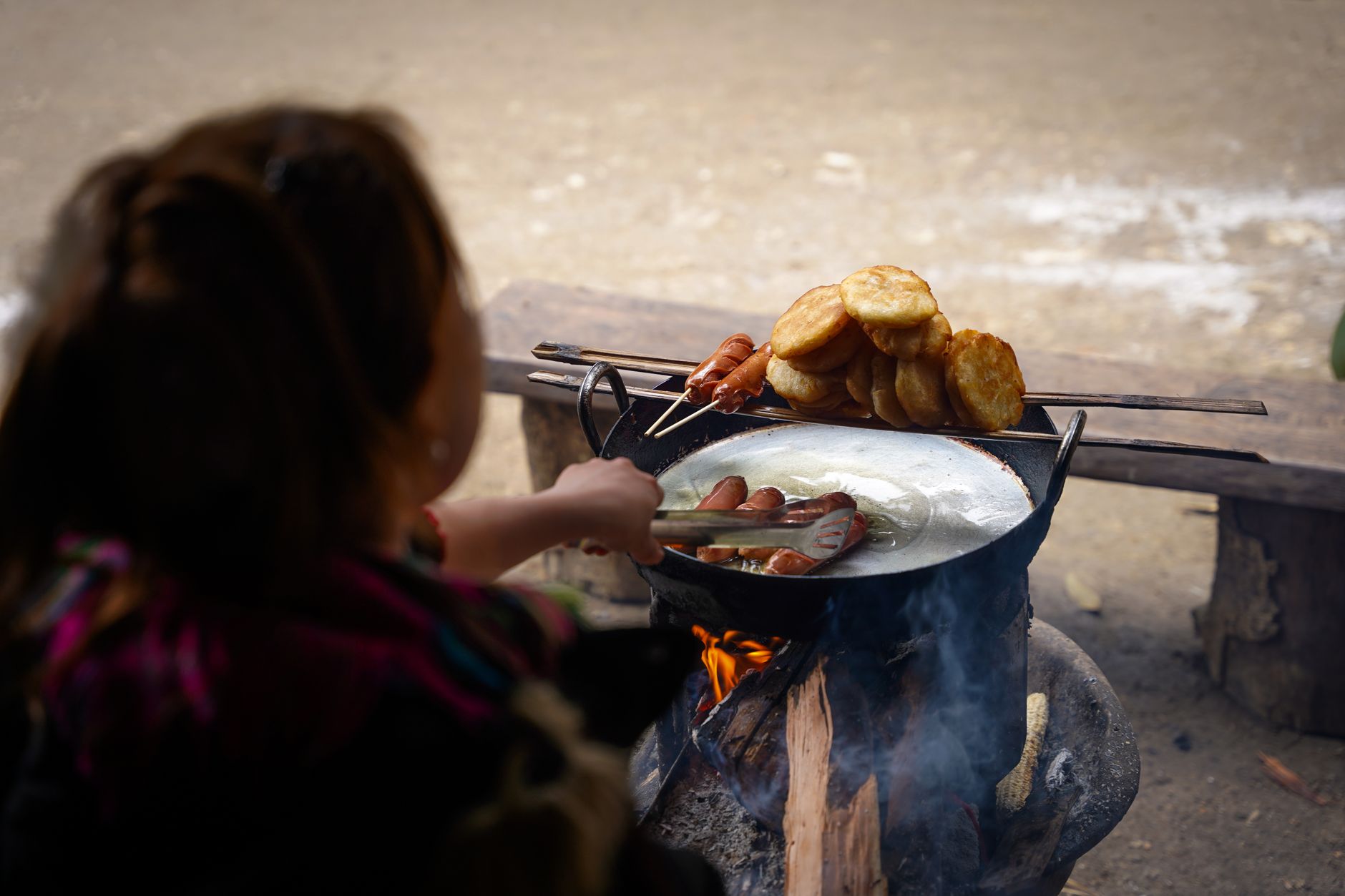
Why Mai Chau's cuisine is different from the rest of Vietnam
Mai Chau is not Hanoi, nor even Sapa. The influence of the White Thai (Thai Trang) ethnic group dominates the region. Their cuisine relies on specific techniques and ingredients from the northwestern mountains.
The terroir explains it all. Glutinous rice (nếp) is the dietary staple. It grows in the terraced rice paddies that make the valley famous. The forest provides aromatic herbs, game, and wild vegetables. The streams supply fresh fish.
The cool climate also influences preservation methods. Fermentation and grilling are ubiquitous. The Thai people know how to use wood fires to give food smoky aromas you won't find anywhere else.
The 7 must-try dishes of Mai Chau
Com Lam: Glutinous rice cooked in bamboo
The emblematic dish of Mai Chau. Glutinous rice (nếp) is stuffed into a green bamboo tube, then cooked over a wood fire. The bamboo imparts a subtle fragrance, and the rice takes on a sticky, lightly smoky texture.
Eat it plain or with sesame salt (muối vừng). Some accompany it with grilled meat. The tube is split open, the charred bamboo is peeled away, and the rice is cut into sections.
Price: 10,000-20,000 VND per tube ($0.42-0.84 USD). Available everywhere, but best when it comes straight off the fire. Don't take it if it's already cold and dry.
Ruou Can: Rice wine drunk through a bamboo straw
A ritual drink of the Thai people. Glutinous rice ferments with medicinal herbs (ginger, lemongrass, forest leaves) in earthenware jars. It is drunk in a group using bamboo straws.
The taste is slightly sweet and herbaceous. The alcohol content is around 15-20%. Each person dips their straw into the communal jar. It's a convivial and cultural moment.
Warning: Artisanal alcohol can contain methanol. Consume it at a trusted host's place. Avoid jars offered by strangers on the roadside.
Grilled Thai chicken (Gà nướng bản)
Free-range farm chicken marinated with honey, lemongrass, chili, and cham chéo (local herb sauce). It is grilled over charcoal.
The skin becomes crispy, the meat remains firm and flavorful. It's one of the most accessible dishes for Western palates.
Price: 150,000-250,000 VND per half chicken ($6.30-10.50 USD). To share between two or three people.
Grilled stream fish (Cá suối nướng)
Small fish caught in the valley's streams are grilled whole or on skewers. The flesh is delicate, with a slightly earthy aftertaste.
They are served with fresh herbs and a sweet and sour sauce. The bones are small; you can eat them carefully.
Price: 50,000-80,000 VND per portion ($2.10-3.36 USD).
Five-color glutinous rice (Xôi ngũ sắc)
Glutinous rice dyed with natural colorants. Green comes from pandan or galangal leaves. Red from gac fruit or logwood. Yellow from turmeric. Purple from noni leaves. White is natural.
Each color represents an element: earth, water, fire, metal, wood. Steamed, it is eaten with sesame salt or as a side dish.
Price: 15,000-25,000 VND per portion ($0.63-1.05 USD).
Bitter bamboo shoots with bee nymphs (Măng đắng xào nhộng ong)
An entry-level dish for adventurous palates. Bitter bamboo shoots are stir-fried with bee larvae (nhộng ong). The texture is crunchy for the shoots, soft and creamy for the larvae. The umami flavor is pronounced.
Season: March-May, when the larvae are available.
Price: 80,000-120,000 VND ($3.36-5.04 USD).
Good to know: Bitter bamboo shoots aren't for everyone. If you don't like bitterness, skip this one.
Grilled wild boar (Lợn rừng nướng)
Meat from wild boar or semi-free-range black pigs. Marinated with local spices, grilled over charcoal. Leaner and more flavorful than farmed pork.
Served in thin slices with a chili and lime sauce.
Price: 120,000-180,000 VND per portion ($5.04-7.56 USD).
Essential side dishes and condiments
Cham Chéo: Thai herb sauce
A pounded mixture of green chili, lemongrass, coriander leaves, garlic, and salt. It systematically accompanies grilled dishes. Very spicy, use sparingly.
Muối vừng: Sesame salt
Toasted sesame seeds pounded with salt. Accompanies glutinous rice and com lam. A possible variation includes peanuts.
Rau rừng: Wild forest vegetables
Leaves, shoots, and flowers foraged from the surrounding forest. Blanched or stir-fried. Bitterness varies by species. Served as a salad or side dish.
Where to eat these specialties: Guide by establishment type
At a local's home (homestay): The most authentic experience
The majority of meals in Mai Chau are eaten at a local's home. Hosts prepare family-style dishes, often served in communal portions. Advantage: total immersion, dishes cooked with local ingredients. Disadvantage: set menu, little choice.
Price for a full meal: 80,000-150,000 VND per person ($3.36-6.30 USD).
Restaurants in Mai Chau town
A few establishments in the center offer tourist menus. More choice, cooking is sometimes standardized. Check local patronage, avoid empty restaurants.
Price: 100,000-250,000 VND per dish ($4.20-10.50 USD).
Stalls at Pa Co market (Sunday morning)
Unique experience: an ethnic market where Thai, Hmong, and Muong people sell their products. You'll find com lam, grilled skewers, fritters, and ruou can. Arrive early (6-7 AM) to enjoy the best products.
Very low prices.
Eateries at Thung Khe Pass
On the road from Hanoi to Mai Chau, a nearly mandatory stop. Small stalls selling boiled corn, sweet potatoes, quail eggs. Nothing exceptional but convenient for a break.
Drinking in Mai Chau: What you need to know
Ruou Can: How to drink and precautions
Ruou can is drunk in a group. Each person receives a bamboo straw. You dip into the common jar. The order of drinkers doesn't matter, but showing respect for the drink is appreciated.
Health precautions: Ruou can is fermented, not distilled. The risk of methanol is lower than for artisanal distilled spirits. Consume at a recommended host's place. Drink in moderation.
Local green tea (Chè xanh)
Green tea is the daily drink in Mai Chau. Served in thermoses at the table, often free. Slightly smoky taste, less bitter than teas from Moc Chau.
Beer and industrial drinks
Available in restaurants and homestays. Hanoi, Saigon, Tiger beer.
Price: 10,000-20,000 VND per bottle ($0.42-0.84 USD).
When to eat what: Seasonal specialties
| Season | Available dishes | Seasonal ingredients | Advice |
|---|---|---|---|
| Spring (March-May) | Bitter bamboo shoots with bee nymphs, wild vegetables | Bee larvae, young shoots | Try insect-based dishes; this is the only season |
| Summer (June-August) | Stream fish, green vegetables | Fish abundant in streams | Enjoy the grilled fish |
| Autumn (September-November) | Com lam, forest mushrooms | Freshly harvested rice | Com lam is at its peak quality |
| Winter (December-February) | Grilled dishes, ruou can | Cool temperatures (10-15°C / 50-59°F) | Atmosphere around the fire; grilled dishes reign supreme |
Food budget in Mai Chau: What it really costs
| Meal type | Budget per person | What's included | Authenticity level |
|---|---|---|---|
| Meal at a homestay | 80,000-150,000 VND ($3.36-6.30 USD) | 3-4 dishes, rice, tea | Very authentic |
| Town restaurant | 150,000-300,000 VND ($6.30-12.60 USD) | Main dish + side + drink | Touristic |
| Pa Co market | 30,000-60,000 VND ($1.26-2.52 USD) | Com lam + skewer + drink | Very authentic |
| Thung Khe Pass | 10,000-30,000 VND ($0.42-1.26 USD) | Snack (corn, sweet potato) | Convenient |
Hygiene and food safety: What you need to know
Water: Do not drink tap water
Tap water is not drinkable. Opt for bottled water (5,000-10,000 VND, $0.21-0.42 USD). Boiled tea is safe.
Ice cubes: Generally safe
Commercially sold ice cubes are made from filtered water. For those at homestays, ask.
Raw or undercooked dishes: Be cautious
Salads with wild vegetables, raw fish (if offered): ask if the ingredients have been washed with drinkable water. When in doubt, choose cooked dishes.
Allergies: Making yourself understood
Allergy to peanuts, shellfish, gluten: learn the words in Vietnamese. "Tôi bị dị ứng" (I am allergic). Fish sauce (nước mắm) is gluten-free.
Frequently asked questions about food in Mai Chau
Q: Is the food spicy in Mai Chau?
Less so than in Hanoi or Central Vietnam. Dishes are seasoned but rarely scorching hot. Cham chéo (chili sauce) is served on the side: you control the amount yourself.
Q: Can you find vegetarian dishes?
It's difficult. Thai cuisine uses a lot of fish, meat, and fish sauce. Some homestays can adapt if notified in advance. Stir-fried vegetables and glutinous rice are safe options.
Q: Can children eat the local cuisine?
Yes, if the dishes are adapted (less chili). Com lam, glutinous rice, grilled chicken, and stir-fried vegetables are suitable. Avoid overly spicy dishes or those based on insects.
Q: Should you take medication for digestive issues?
Recommended. The change in gut flora can cause discomfort. Plan for probiotics as a preventive measure and an anti-diarrheal (Smecta or equivalent). Pharmacies in Mai Chau are limited.
Q: What is the most typical dish not to be missed?
Com lam (rice in bamboo) is the absolute must-try. For a more authentic experience, try grilled Thai chicken with cham chéo. Ruou can is a unique cultural experience.
Q: What is the best season for gastronomy in Mai Chau?
Autumn (September-November) is ideal: new rice for com lam, forest mushrooms, cool temperatures for grilling and ruou can. Spring (March-May) is the season for bamboo shoots and bee nymphs.
Q: Can you visit Mai Chau in one day from Hanoi?
Yes, it's possible. Leave early in the morning, arrive for lunch, stroll in the afternoon, and return in the evening. You'll have time to taste the local specialties. For a more complete experience, plan an overnight stay.