This guide covers exclusively the areas to stay, the types of accommodation available, price ranges, and how to choose according to your traveler profile. For an overview of the region, check out our complete guide to Mai Chau.
The Four Accommodation Zones: Which One to Choose?
Pom Coong: The Beating Heart of Homestays
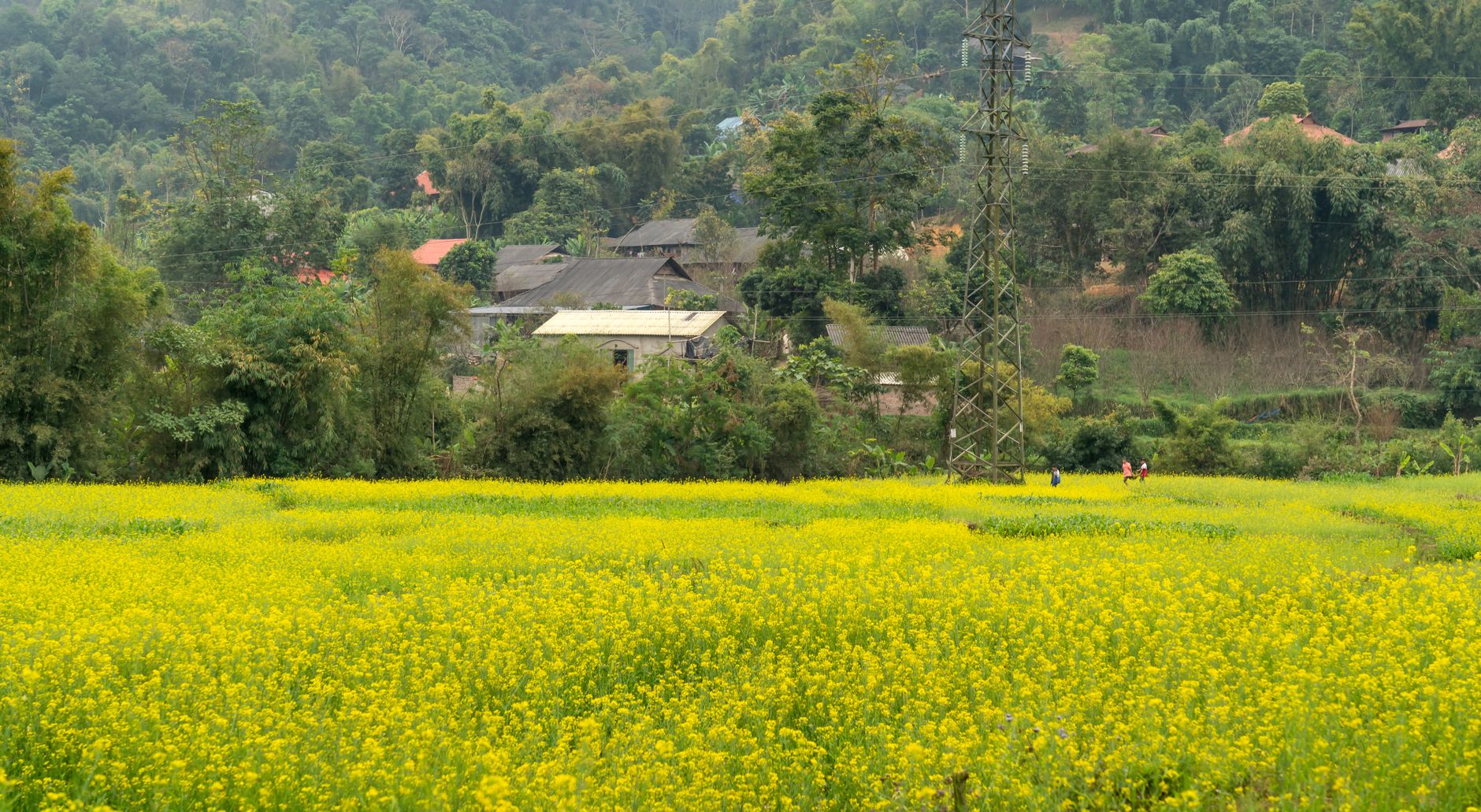
Pom Coong is the most developed village for tourism. Wooden stilt houses line the main road, surrounded by rice paddies. This is where the majority of traditional Thai homestays are concentrated.
Advantages: Proximity to restaurants, bicycle rentals, and the night market. Nights are quiet after 10 PM. Host families are accustomed to foreign travelers.
Disadvantages: Less authenticity than more remote hamlets. Some houses have been modernized with concrete and tiles.
Average Prices: 200,000 to 400,000 VND ($8-16 USD) per night with breakfast.
Pro tip: Request a room at the back of the house, facing the rice paddies. Rooms facing the road can be noisy in the morning with scooters.
Lac: The Central Village
Lac is the main town of the valley. Larger, livelier, with restaurants, grocery stores, and a daily market. Accommodation here is more varied: from homestays to small family hotels.
Advantages: Easy access to transport, ATMs, and services. Ideal for solo travelers or those wanting a central base.
Disadvantages: Less rural charm. The rice paddies are farther from the center.
Average Prices: 250,000 to 600,000 VND ($10-24 USD) for a homestay. Simple hotels start at 400,000 VND ($16 USD).
Ban Buoc: Preserved Authenticity
Ban Buoc is a small hamlet 2 km north of Lac. Fewer tourists, more rice paddies, families who still live off agriculture. Homestays here are often run by families who speak little English but compensate with sincere hospitality.
Advantages: More authentic experience. Meals are prepared with garden vegetables. Bike rides traverse preserved landscapes.
Disadvantages: No independent restaurants. You eat with your host. Public lighting is limited.
Average Prices: 150,000 to 300,000 VND ($6-12 USD) per night.
The Rice Paddies: For the Luxury of Silence
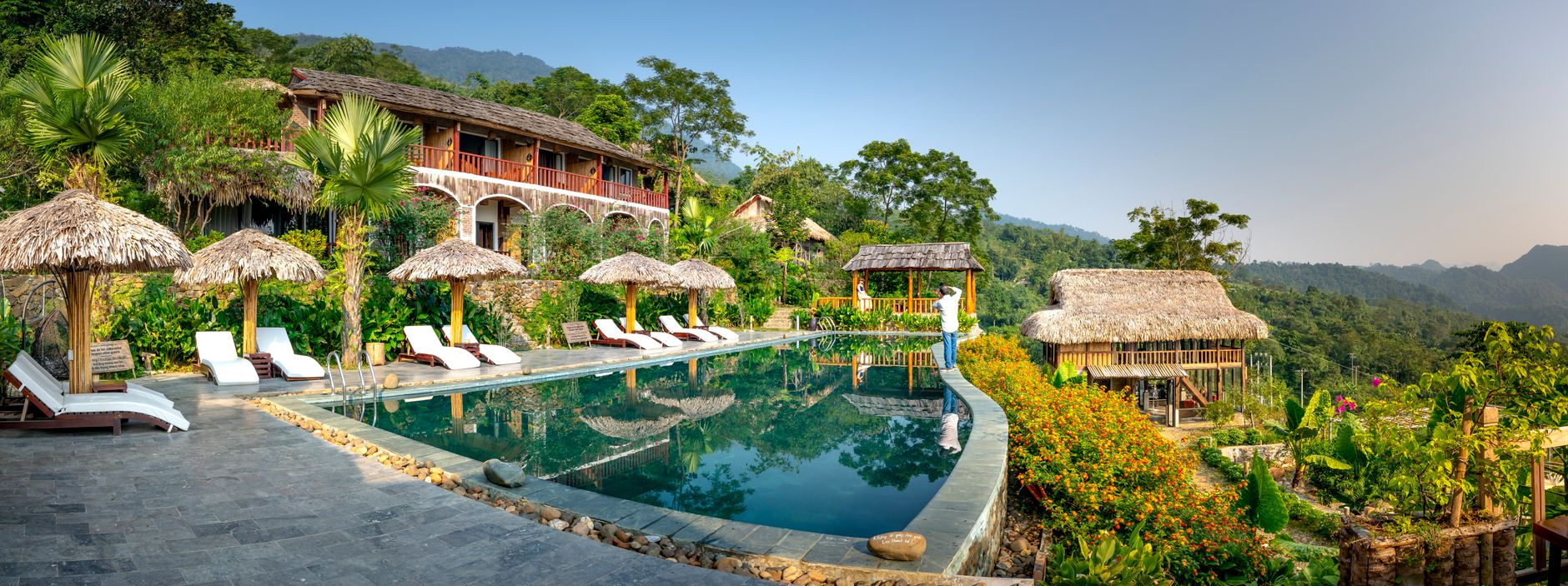
A few ecolodges and resorts have settled on the edge of the rice paddies, far from the villages. These establishments offer panoramic views, infinity pools, and absolute calm.
Advantages: Breathtaking mountain views. High-end services. Total silence at night.
Disadvantages: Isolation. No village nearby to walk to. Meals are taken on-site.
Average Prices: 800,000 to 2,500,000 VND ($32-100 USD) per night.
Traditional Thai Homestays: The Immersive Experience
Homestays are the main reason travelers come to Mai Chau. Sleeping in a teak wood stilt house, eating with the family, participating in cooking.
What you need to know:
- Houses are built on stilts to protect against floods and animals. The ground floor serves as living and storage space.
- Rooms are alcoves with bamboo partitions. Soundproofing is virtually non-existent. Bring earplugs.
- Mattresses are thin, placed directly on the floor. Some homestays offer mattress toppers, others don't. If you have a sensitive back, ask before booking.
- Bathrooms are often shared, with solar-heated hot water. In winter, water can be lukewarm rather than hot.
- Breakfast is included: pho, eggs, bananas, and filter coffee.
The best homestays:
- Mai Chau Sun (Pom Coong): Run by a three-generation family. Evening meals are a feast of 7 dishes. Expect 300,000 VND ($12 USD).
- Homestay Hoa Ban (Ban Buoc): The most authentic. The grandmother prepares sticky rice in bamboo baskets. 200,000 VND ($8 USD).
- Mai Chau Ecolodge (rice paddies): A hybrid between homestay and ecolodge. Private rooms with a view. 600,000 VND ($24 USD).
Pro tip: Book at least one night with an evening meal at the host's home. It's the chance to taste cá nướng (grilled fish in banana leaves) and xôi nếp (colored sticky rice).
Ecolodges: Comfort Without Losing Nature
The ecolodges of Mai Chau are designed to minimize environmental impact while offering modern comfort. Constructions using local materials, solar energy, waste management.
What you need to know:
- Ecolodges are more expensive than homestays but cheaper than luxury hotels.
- Most are located on the edge of rice paddies, with private terraces.
- Some offer included activities: cooking classes, guided walks, weaving workshops.
- Food is often organic and local.
The best ecolodges:
- Mai Chau Hidden Charm: 12 bamboo bungalows on stilts. Natural spring-fed pool. 1,200,000 VND ($48 USD) per night.
- Avana Retreat: 35 villas scattered in a banyan forest. Spa, yoga, hikes. 1,800,000 VND ($72 USD).
- Mai Chau Valley Retreat: Only 8 rooms. Vegetarian cuisine on request. 900,000 VND ($36 USD).
Pro tip: Ecolodges are often fully booked in high season (November-February). Reserve at least 2 weeks in advance.
Hotels: The Standard for Demanding Travelers
Hotels in Mai Chau are concentrated in the village of Lac. Most are family-run establishments with 10 to 20 rooms. Comfort is basic but clean.
What you need to know:
- 2-star hotels are the most common. Air conditioning, TV, private bathroom, hot water.
- Breakfast is included but often simple: bread, eggs, instant coffee.
- Some hotels have a restaurant serving Vietnamese and Western dishes.
The best hotels:
- Mai Chau Lodge: The oldest hotel in the valley. Spacious rooms, garden, pool. 700,000 VND ($28 USD).
- Sao Homestay & Hotel: A mix of hotel and homestay. Modern rooms with balcony. 500,000 VND ($20 USD).
- Mai Chau Sky Resort: Slightly more upscale. Panoramic view, bar, restaurant. 1,000,000 VND ($40 USD).
Comparison Table: Homestay vs Ecolodge vs Hotel
| Criteria | Traditional Homestay | Ecolodge | Standard Hotel |
|---|---|---|---|
| Price per night | 150,000-500,000 VND ($6-20 USD) | 800,000-2,500,000 VND ($32-100 USD) | 400,000-1,000,000 VND ($16-40 USD) |
| Comfort | Basic, thin mattress | Good to excellent | Decent |
| Authenticity | Maximum | Average | Low |
| Food | With the family | On-site restaurant | Restaurant or external |
| Privacy | Low (shared rooms) | High | High |
| Included activities | Walks, cooking | Hikes, workshops | Generally no |
| Ideal for | Backpackers, families | Couples, nature lovers | Business travelers, families |
How to Choose According to Your Profile
You are a solo backpacker: Pom Coong or Ban Buoc, homestay at 200,000 VND ($8 USD). You'll meet other travelers and the host family will adopt you.
You are a couple: Ecolodge in the rice paddies. The calm, the view, a candlelit dinner. Budget: 1,200,000 VND ($48 USD).
You are traveling with children: Hotel in Lac. The kids will have space, a pool, and you'll be close to restaurants. Budget: 600,000 VND ($24 USD).
You are seeking maximum authenticity: Ban Buoc, Homestay Hoa Ban or equivalent. No WiFi, no modern comfort, but memories for a lifetime. Budget: 200,000 VND ($8 USD).
You are on a tight budget: Pom Coong, shared homestay. Sleeping in a dormitory of 6 to 8 people. 100,000 VND ($4 USD) per night.
You want luxury: Avana Retreat or Mai Chau Hidden Charm. Personalized service, spa, gastronomy. Budget: 2,000,000 VND ($80 USD).
Pro tip: Don't neglect the season. In December-January, nights drop to 10°C. Homestays have no heating. Bring warm clothes. In July-August, the monsoon brings daily rains. The rice paddies are magnificent but the paths become muddy. Check out our guide on the best time to visit Vietnam for more details.
Reservations and Practical Tips
How to book:
- Homestays can be booked through platforms like Booking.com or Agoda. Some have no online presence. In that case, call or send a WhatsApp message.
- Ecolodges and hotels have websites with direct booking. Sometimes cheaper than platforms.
- In low season (May-September), you can arrive without a reservation and negotiate on-site. In high season, book in advance.
Payment:
- Most homestays accept cash only. Withdraw money in Hanoi before leaving. There is an ATM in Lac but it often breaks down.
- Ecolodges and hotels accept credit cards.
- From Hanoi, direct buses leave from My Dinh bus station. Expect 120,000-200,000 VND ($5-8 USD) for a 3.5-hour journey.
- By private car, count 1,500,000 VND ($60 USD) round trip.
- Once there, rent a bicycle (50,000 VND/$2 USD per day) or a scooter (150,000 VND/$6 USD per day).
Pro tip: If you arrive by bus, get off at the Lac stop. From there, the homestays of Pom Coong are a 10-minute walk. Hosts often come to pick you up by scooter if you call them.
FAQ: Where to Sleep in Mai Chau
Q: Do I need to book a homestay in Mai Chau in advance?
Yes, especially between November and February. The best homestays are fully booked several weeks in advance. In low season, you can find a room on the same day.
Q: Are homestays suitable for people with reduced mobility?
No, most stilt houses have steep stairs. Bathrooms are often on the ground floor. A few ecolodges like Avana Retreat have accessible rooms.
Q: What is the best homestay for families with young children?
Mai Chau Sun in Pom Coong. The family is very welcoming with children. There is a garden to play in and adapted meals.
Q: Can I cook in a homestay?
Most homestays offer cooking classes, but you cannot freely use the family kitchen. Ask in advance if you have dietary restrictions.
Q: Are there accommodations with reliable WiFi?
Ecolodges and hotels in Lac have good WiFi. In remote homestays like Ban Buoc, the signal is weak or non-existent. Enjoy disconnecting.
Q: What is the difference between a homestay and a bungalow?
A homestay is a family house where you sleep with the family. A bungalow is a small individual house, often in a tourist complex. Bungalows offer more privacy but less interaction.
Q: Can I sleep in a real Thai house without electricity?
A few very authentic homestays in Ban Buoc don't have electricity in the rooms. Lighting is by candle. The experience is unique but requires some comfort with minimalism.