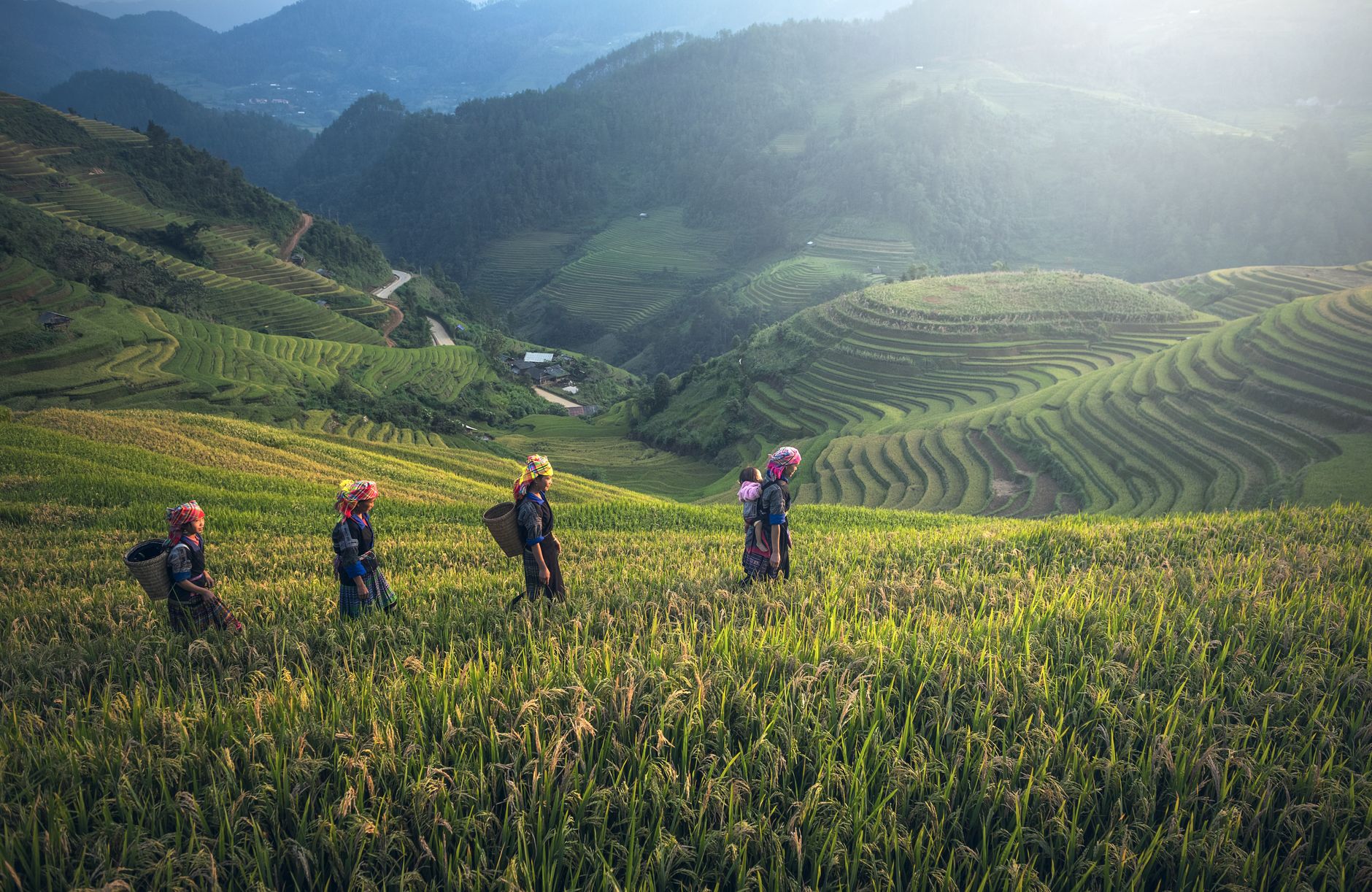
What you need to know before planning a Vietnam-Laos trip
This section covers the foundational decisions: which country to start in, how many days each deserves, and the key logistical constraints that shape any 21-day itinerary.
Why three weeks works (and what to sacrifice)
Three weeks gives you 12-14 days in one country and 7-9 in the other. That is enough for the highlights of both. But you cannot do everything. You will need to skip either the far north of Vietnam (Ha Giang, Cao Bang) or the deep south of Laos (the 4000 Islands). Trying to add Cambodia or Thailand to the same trip is a mistake. The border crossings and transport connections eat too much time.
Vietnam first or Laos first? The case for each direction
Start in Vietnam if you want to fly into Hanoi, see the north, cross into Laos, take the slow boat, and fly out of Luang Prabang. This direction is smoother because Vietnam has better flight connections and more frequent buses to the border.
Start in Laos if you are coming from Thailand. Cross at the Friendship Bridge in Nong Khai, travel north through Vang Vieng and Luang Prabang, then cross into Vietnam at Tay Trang and fly out of Hanoi. This direction works well for travelers already in Southeast Asia.
Seasonal considerations: best months and months to avoid
November through February offers the best weather in both countries: dry and cool in Laos, dry in most of Vietnam. March through May is hot but still manageable. Avoid July through September. Heavy rain causes landslides on Lao roads. Border crossings can close for hours. The slow boat runs but the Mekong is high and the scenery is less dramatic.
Budget overview: daily costs in each country (2026)
| Category | Vietnam (USD) | Laos (USD) |
|---|---|---|
| Budget backpacker | $30-40 | $25-35 |
| Mid-range | $50-70 | $40-60 |
| Comfort | $80-120 | $70-100 |
Laos is slightly cheaper for accommodation and food. Vietnam is cheaper for transport and domestic flights. Both countries are affordable compared to Thailand.
Visa requirements for Vietnam and Laos in 2026
A practical breakdown of current visa policies for common nationalities (US, UK, AU, CA, EU).
Vietnam visa options: e-visa, visa on arrival, and exemptions
Vietnam offers an e-visa for 80 nationalities. Apply online at the official government portal. Cost is $25 USD. Processing takes 3 working days. The e-visa is valid for 90 days, single or multiple entry. It is accepted at all international airports and most land borders.
Visa on arrival is available only if you arrive by air and have a pre-approval letter from a travel agency. Do not try visa on arrival at a land border. It does not work.
Some nationalities get visa exemptions. Citizens of Japan, South Korea, and several European countries can enter visa-free for 15-45 days depending on nationality. Check the latest list before you book.
Laos visa options: visa on arrival at land borders vs. e-visa
Laos offers visa on arrival at most international airports and land borders. Cost is $30-45 USD depending on nationality. You need two passport photos and cash in US dollars. The process takes 10-20 minutes.
Laos also offers an e-visa for $50 USD. It is accepted at Wattay International Airport in Vientiane and the First Thai-Lao Friendship Bridge. It is not accepted at most Vietnam-Laos land borders. For overland travel, visa on arrival is the better option.
Visa runs and extensions: what is actually possible
Vietnam visa extensions are possible but require a travel agent. Cost is $50-80 USD. Processing takes 3-5 working days. Do not overstay. Fines are $10-15 USD per day.
Laos visa extensions are easier. Go to the immigration office in any major town. Cost is $2 USD per day for up to 30 days. Processing takes one hour.
Passport validity and entry stamp pitfalls to check
Your passport must be valid for at least six months from your date of entry. Some travelers have been turned away with less than six months. Check before you fly.
Always check your entry stamp before leaving the immigration counter. Mistakes happen. If the stamp says 15 days instead of 30, fix it immediately. Leaving the border without correcting it causes problems later.
All Vietnam-Laos land border crossings compared
The core reference section. Every open land border between Vietnam and Laos, ranked by usability for travelers.
| Border name | Vietnamese side | Lao side | Hours | Visa on arrival | Transport connections | Best for |
|---|---|---|---|---|---|---|
| Tay Trang | Dien Bien Phu | Muang Khua | 7:00-17:00 | Yes | Buses to Dien Bien Phu, songthaews to Muang Khua | Northern route, slow boat connection |
| Nam Can | Vinh | Lak Sao | 7:00-17:00 | Yes | Buses from Vinh to Lak Sao, then to Phonsavan | Phonsavan and Plain of Jars |
| Cau Treo | Vinh | Lak Sao | 7:00-17:00 | Yes | Buses from Vinh to Lak Sao, then to Phonsavan | Same as Nam Can, more frequent buses |
| Lao Bao | Hue/Da Nang | Dansavan | 7:00-17:00 | Yes | Buses from Hue to Savannakhet | Central route, 4000 Islands |
| Bo Y | Kon Tum | Attapeu | 7:00-17:00 | Sometimes | Limited transport on both sides | Southern Laos, rarely used |
| Ha Tien | Ha Tien | Prek Chak | 7:00-17:00 | No (Cambodia border) | Buses to Phnom Penh | Not a direct Vietnam-Laos crossing |
| Cha Lo | Phong Nha | Na Phao | 7:00-17:00 | Yes | Limited transport, requires private car | Minor crossing near Phong Nha |
Tay Trang (Dien Bien Phu to Muang Khua)
The most popular border for travelers. Connects northern Vietnam to northern Laos. Buses run daily from Dien Bien Phu to the border. On the Lao side, songthaews (shared pickups) wait to take you to Muang Khua. From Muang Khua, you can take a boat to Luang Prabang or a bus to Nong Khiaw. Visa on arrival is reliable for all major nationalities.
Nam Can and Cau Treo (Vinh to Lak Sao/Phonsavan)
Two borders near each other. Both connect Vinh in central Vietnam to Lak Sao in Laos. From Lak Sao, buses run to Phonsavan (Plain of Jars) and Vientiane. Cau Treo has more frequent transport. Nam Can is quieter. Both accept visa on arrival.
Lao Bao to Dansavan (Hue/Da Nang to Savannakhet)
The best option for the central route. Buses run from Hue to the border. On the Lao side, minivans take you to Savannakhet. From Savannakhet, you can reach Pakse and the 4000 Islands. Visa on arrival is reliable.
Bo Y to Ngoc Hoi (Kon Tum to Attapeu)
A remote crossing in the south. Transport is limited on both sides. Visa on arrival is not guaranteed. Only use this border if you have a private driver and have confirmed visa policy with the Lao embassy.
Ha Tien to Prek Chak (Mekong Delta to southern Laos via Cambodia)
This is not a direct Vietnam-Laos crossing. You must go through Cambodia. Useful for travelers who want to visit the Mekong Delta and then enter Laos from Cambodia. Not recommended for the 21-day itinerary unless you have extra time.
Cha Lo to Na Phao (minor crossing near Phong Nha)
A small border near Phong Nha-Ke Bang National Park. Transport is limited. You will need a private car or motorbike. Visa on arrival is available but the border officials are less experienced. Use only if you are already in Phong Nha and want to cross into central Laos.
Which border is best for your itinerary? Decision flowchart
- Going from Hanoi to Luang Prabang? Use Tay Trang.
- Going from Hue to the 4000 Islands? Use Lao Bao.
- Going from Hanoi to Phonsavan? Use Nam Can or Cau Treo.
- Going from Phong Nha to central Laos? Use Cha Lo (with private transport).
- Going from Ho Chi Minh City to southern Laos? Fly to Pakse.
The slow boat on the Mekong: How it fits into a 21-day trip
The slow boat from Huay Xai to Luang Prabang is one of Southeast Asia's classic journeys. It takes two days with an overnight stop in Pak Beng.
Slow boat logistics: schedule, duration, and what to bring
The boat departs Huay Xai at 8:00 AM daily. It arrives in Pak Beng at 5:00 PM. Day two departs Pak Beng at 8:00 AM and arrives in Luang Prabang at 5:00 PM. Total travel time is 18-20 hours on the water.
Cost is 220,000-250,000 LAK ($11-13 USD). Buy your ticket the day before from any travel agency in Huay Xai. Bring snacks, water, a cushion, and a jacket. The boat has wooden benches and gets cold in the afternoon.
Pro tip: Book accommodation in Pak Beng in advance. The town has limited guesthouses and prices spike on boat arrival days.
Speed boat alternative: risks and time savings
The speed boat takes 6-7 hours from Huay Xai to Luang Prabang. Cost is $25-30 USD. It is faster but dangerous. Speed boats are open-topped, travel at high speed, and accidents are common. Several travelers die each year. The slow boat is safer and more scenic.
Connecting the slow boat to Vietnam via the Mekong Delta
The slow boat route connects to Vietnam through the Tay Trang border. From Luang Prabang, take a bus to Muang Khua (6-8 hours). Cross into Vietnam at Tay Trang. From Dien Bien Phu, take a bus to Hanoi (10-12 hours). This is the classic northern loop.
Route option 1: Classic north-to-south loop (Hanoi to Luang Prabang)
The most popular route for first-time visitors.
Days 1-4: Hanoi, Halong Bay, and Sapa
Start in Hanoi. Spend two days exploring the Old Quarter, Hoan Kiem Lake, and the Temple of Literature. On day three, take a day trip to Halong Bay or Ninh Binh. On day four, take the night train to Sapa. Hike the rice terraces on day five. Return to Hanoi on day six.
Days 5-6: Dien Bien Phu and the Tay Trang border crossing
Take the bus from Hanoi to Dien Bien Phu (10-12 hours, $10-15 USD). Spend the night. Visit the Dien Bien Phu Museum in the morning. Take a bus to the Tay Trang border (1 hour). Cross into Laos. Take a songthaew to Muang Khua (30 minutes).
Days 7-9: Muang Khua to Luang Prabang via slow boat
From Muang Khua, take a local boat to Nong Khiaw (3-4 hours, $5 USD). Spend the night in Nong Khiaw. Hike to the viewpoint. The next day, take another boat to Luang Prabang (6-8 hours, $10-15 USD). Alternatively, take the slow boat from Huay Xai if you are coming from Thailand.
Days 10-13: Luang Prabang, Kuang Si Falls, and Nong Khiaw
Spend three days in Luang Prabang. Visit Kuang Si Falls, the night market, and the temples. Take a day trip to the Pak Ou Caves. On day 13, take a bus to Nong Khiaw (3 hours). Hike to the viewpoint and relax by the river.
Days 14-17: Vang Vieng and Vientiane
Take a bus from Nong Khiaw to Vang Vieng (6-8 hours). Spend two days tubing, kayaking, and exploring the caves. On day 16, take a bus to Vientiane (4 hours). Visit the Buddha Park and the Patuxai Arch.
Days 18-21: Return to Vietnam via Cau Treo border or fly out
Take a bus from Vientiane to Vinh (10-12 hours). Cross into Vietnam at Cau Treo. From Vinh, take a train to Hanoi (6 hours). Spend your final days in Hanoi. Alternatively, fly from Vientiane to Hanoi or Ho Chi Minh City.
Route option 2: Southern loop (Hue/Da Nang to 4000 Islands)
For travelers who want fewer crowds and more time on the Mekong.
Days 1-5: Hue, Hoi An, and Da Nang
Start in Hue. Spend two days visiting the Imperial Citadel and the tombs. Take a bus to Hoi An (3 hours). Spend three days in Hoi An: the Old Town, An Bang Beach, and a cooking class. Day trip to Da Nang for the Marble Mountains.
Days 6-7: Lao Bao border crossing to Savannakhet
Take a bus from Hue to the Lao Bao border (4 hours, $5-8 USD). Cross into Laos. Take a minivan to Savannakhet (2 hours, $3-5 USD). Spend the night.
Days 8-11: Pakse, Bolaven Plateau, and 4000 Islands
Take a bus from Savannakhet to Pakse (4 hours, $5-8 USD). Spend two days on the Bolaven Plateau visiting waterfalls and coffee plantations. On day 11, take a bus to the 4000 Islands (3 hours, $4-6 USD). Stay on Don Det or Don Khon.
Days 12-14: Back to Vietnam via Bo Y border or fly to Ho Chi Minh City
From the 4000 Islands, take a bus to Attapeu (5 hours, $6-8 USD). Cross into Vietnam at Bo Y. From Kon Tum, take a bus to Ho Chi Minh City (10-12 hours). Alternatively, fly from Pakse to Ho Chi Minh City ($80-120 USD).
Days 15-21: Ho Chi Minh City, Mekong Delta, and Cu Chi Tunnels
Spend three days in Ho Chi Minh City. Visit the War Remnants Museum, Ben Thanh Market, and the Cu Chi Tunnels. Take a day trip to the Mekong Delta. Fly out of Ho Chi Minh City.
Route option 3: The deep north (Hanoi to Phonsavan to Vientiane)
For travelers who want to see the Plain of Jars and avoid the tourist trail.
Days 1-4: Hanoi and northern Vietnam highlights
Same as route 1. Hanoi, Halong Bay, and Sapa.
Days 5-7: Nam Can border to Phonsavan (Plain of Jars)
Take a bus from Hanoi to Vinh (6 hours, $8-10 USD). Take a bus to the Nam Can border (3 hours, $4-6 USD). Cross into Laos. Take a bus to Phonsavan (4 hours, $5-8 USD). Spend two days exploring the Plain of Jars.
Days 8-11: Vang Vieng and Vientiane
Take a bus from Phonsavan to Vang Vieng (8-10 hours, $10-12 USD). Spend two days in Vang Vieng. Take a bus to Vientiane (4 hours, $4-6 USD). Spend one day in Vientiane.
Days 12-15: Return to Vietnam via Cau Treo, then Phong Nha
Take a bus from Vientiane to Vinh (10-12 hours). Cross into Vietnam at Cau Treo. From Vinh, take a bus to Phong Nha (4 hours, $5-8 USD). Spend two days exploring Phong Nha-Ke Bang National Park.
Days 16-21: Phong Nha, Hue, and Hoi An
Take a bus from Phong Nha to Hue (4 hours, $5-8 USD). Spend two days in Hue. Take a bus to Hoi An (3 hours, $4-6 USD). Spend three days in Hoi An. Fly out of Da Nang.
Transport within Vietnam and Laos: What to expect
Vietnam: Open bus tours, trains, and domestic flights
Vietnam has excellent transport. The open bus tour (Sinh Tourist, The Sinh Tourist) connects all major cities. Trains run from Hanoi to Ho Chi Minh City along the coast. Domestic flights are cheap ($30-60 USD one way). Buses are frequent and reliable.
Laos: Minivans, VIP buses, and the reality of Lao roads
Laos has poor roads. A 200km bus journey takes 6-8 hours. Minivans are faster but less comfortable. VIP buses have air conditioning and reclining seats. Book through your guesthouse or a travel agency.
Hiring a private driver: when it makes sense and what it costs
Private drivers cost $50-100 USD per day in both countries. They make sense for remote border crossings (Bo Y, Cha Lo) or for groups of 3-4 people. Negotiate the price in advance.
Safety on the road: accident rates, night travel, and seatbelts
Road accidents are common in both countries. Buses and minivans rarely have functioning seatbelts. Avoid night travel on Lao roads. In Vietnam, the night train is safer than the night bus.
Border crossing procedures: Step-by-step guide
Required documents checklist
- Passport with 6+ months validity
- Two passport photos (for Laos visa on arrival)
- $30-45 USD cash (for Laos visa fee)
- Vietnam e-visa printout (if applicable)
- Exit form from your departure country
Unofficial fees and how to handle them
Some border officials ask for "stamping fees" of $1-5 USD. These are unofficial. You can pay them to speed things up or politely refuse. Do not pay more than $5 USD. If an official demands a large fee, ask for a receipt or speak to a supervisor.
What to do if your visa is rejected at the border
Visa rejection is rare at Tay Trang, Lao Bao, and Cau Treo. If it happens, ask why. Common reasons: wrong passport validity, missing photos, or incorrect cash. If you cannot resolve it, return to the nearest town and contact your embassy.
Crossing with a motorbike: temporary import permits
You can take a motorbike from Vietnam into Laos. You need a Carnet de Passage or a temporary import permit from Vietnamese customs. The Lao Bao and Tay Trang crossings process motorbikes most reliably. Expect to pay $20-30 USD for paperwork.
Packing for an overland Vietnam-Laos trip
Essential items for the slow boat
- Cushion or inflatable seat pad (the benches are hard wood)
- Snacks and water (limited options on board)
- Jacket or sweater (it gets cold on the river)
- Sunscreen and sunglasses
- Earplugs (the boat engine is loud)
Clothing for temples, treks, and cities
Pack lightweight, long-sleeved clothing for temple visits. Shorts and tank tops are not allowed in Lao temples. Bring hiking shoes for Sapa and the Bolaven Plateau. Sandals for the 4000 Islands.
Health kit: what pharmacies in Laos and Vietnam do not stock
Pharmacies in both countries stock most common medications. Bring your own: diarrhea medication, antihistamines, and a basic first-aid kit. Malaria pills are recommended for rural Laos. Buy them before you travel.
Common mistakes travelers make on this route
Underestimating travel times on Lao roads
A 200km bus journey in Laos takes 6-8 hours. Plan for it. Do not schedule a border crossing and a long bus ride on the same day.
Trying to do too much in 21 days
Three weeks is enough for 12-14 days in Vietnam and 7-9 in Laos. Do not try to add Cambodia, Thailand, or Myanmar. Focus on one region.
Not accounting for border crossing delays
Border crossings take 30 minutes to 2 hours. Add buffer time. Do not book a flight on the same day as a border crossing.
Assuming you can get a visa on arrival at every border
Bo Y and Cha Lo do not always process visa on arrival. Confirm with the Lao embassy before using these borders.
Booking non-refundable accommodation before crossing
Crossings can be delayed by weather, landslides, or visa issues. Book refundable accommodation or book 1-2 days ahead.
Frequently asked questions about Vietnam and Laos combined trips
Q: How do I cross the border from Vietnam to Laos? A: There are six open land borders. The most popular for travelers is Tay Trang (Dien Bien Phu to Muang Khua) for the northern route, and Lao Bao (Hue to Savannakhet) for the central route. Each border has different visa-on-arrival policies and transport connections.
Q: Can I get a Laos visa on arrival at any Vietnam-Laos border? A: No. Most borders accept visa on arrival for major nationalities, but some minor crossings (Cha Lo, Bo Y) may not have the facility. The Tay Trang, Lao Bao, and Cau Treo borders reliably process visa on arrival.
Q: What is the best month to travel between Vietnam and Laos? A: November through February offers the best weather in both countries: dry and cool in Laos, and dry in most of Vietnam. Avoid July through September when heavy rain causes landslides on Lao roads and delays at border crossings.
Q: How long does the slow boat from Huay Xai to Luang Prabang take? A: The slow boat takes two full days with an overnight stop in Pak Beng. Total travel time including the stop is approximately 18-20 hours on the water. The journey costs around 220,000-250,000 LAK ($11-13 USD).
Q: Is three weeks enough for both Vietnam and Laos? A: Yes, but only with a focused itinerary. Three weeks allows for 12-14 days in Vietnam and 7-9 days in Laos, or vice versa. Trying to add Cambodia or Thailand to the same trip is not recommended.
Q: What is the biggest mistake travelers make on this route? A: Underestimating travel times in Laos. A 200km bus journey in Laos can take 6-8 hours due to mountain roads, while the same distance in Vietnam takes 3-4 hours. Many travelers plan too many destinations and spend half their trip on buses.
Q: Do I need to book accommodation in advance for this route? A: Only for the night in Pak Beng during the slow boat journey, as accommodation is limited. For all other stops, booking 1-2 days ahead is sufficient outside peak season (December-January).
Q: Can I take my motorbike from Vietnam into Laos? A: Yes, but the process requires a Carnet de Passage or a temporary import permit from the Vietnamese customs office. Not all border crossings process motorbike imports. The Lao Bao and Tay Trang crossings are the most reliable for motorbikes.